How Long Does It Take to Pan 1 oz of Gold? An Expert Analysis
The allure of the modern gold rush is undeniable. Armed with a plastic pan and a shovel, thousands of enthusiasts wade into cold mountain streams every year, chasing the exact same dream that built empires in the 1800s. The most frequent question we hear from ambitious prospectors and commercial upstarts alike is: how long does it take to pan 1 oz of gold? The industry is full of romanticized myths and exaggerated claims from reality television. It is time to inject commercial and practical judgment into this discussion.

From our experience engineering high-volume recovery systems at Oromineral, we must be brutally honest. Manual panning is an exceptional tool for geological sampling, but it is an economically disastrous method for physical production. To answer how long does it take to pan 1 oz of gold, we have to look past luck and focus strictly on the mathematics of specific gravity, cubic yardage, and manual human output. In this comprehensive guide, we will break down the exact math behind manual gold panning, evaluate its limitations, and explain the necessary operational leap required to achieve profitable gold extraction.
Quick Answer: The Mathematical Reality
Assuming you are working a moderately rich placer deposit yielding roughly 0.1 grams of gold per cubic yard, and a skilled panner can process approximately 10 pans per hour, it will take between 150 to 300 hours of continuous, back-breaking manual labor to extract 1 troy ounce (31.1 grams) of gold.
If you factor in digging, classifying the material, and physical fatigue, an average individual might pan for several months before accumulating a full ounce. In most professional situations, a gold pan is never used for production; it is used exclusively to sample ground before deploying heavy-duty mechanized equipment.
Table of Contents
- What is Manual Gold Panning?
- How It Works: The Physics of Specific Gravity
- The Math: How Long Does It Take to Pan 1 oz of Gold?
- Benefits of the Gold Pan
- Limitations and Operational Bottlenecks
- Who Should Use It & Who Does Not Need It
- Pros and Cons Table
- Comparison Table: Manual vs. Mechanized
- Common Mistakes Prospectors Make
- Buying Considerations: Scaling Your Operation
- Expert Recommendation: Oromineral
- Frequently Asked Questions (FAQ)
What is Manual Gold Panning?
Manual gold panning is the oldest and simplest form of gravity separation used in placer mining. A placer deposit is an accumulation of valuable minerals formed by gravity separation during sedimentary processes. Panning involves taking a sample of sand, gravel, and clay, placing it in a shallow dish, and submerging it in water. By agitating the pan, the prospector fluidizes the bed of material, allowing the heavier minerals to sink to the bottom while washing the lighter waste material (tailings) over the edge.
This rudimentary technique forms the foundational theory behind all mineral processing techniques and equipment. Whether you are using a 14-inch plastic pan or a massive 100-ton-per-hour wash plant, the underlying physical principle remains identical: stratification by density.
How It Works: The Physics of Specific Gravity
Gold panning works exclusively because of specific gravity (SG). The specific gravity of pure gold is 19.3, meaning it is 19.3 times heavier than an equal volume of water. In contrast, standard quartz gravel and silica sand have a specific gravity of roughly 2.6. Even black sand (magnetite), which often frustrates panners, only has an SG of about 5.2.
When you shake a gold pan underwater, you suspend the particles. Gravity dictates that the densest material (gold) will immediately plummet through the fluidized matrix to the very bottom riffles of the pan. The lighter gravel stays on top. As you tip the pan forward and introduce a gentle water current across the surface, the light quartz is swept away. If done correctly, the gold remains safely trapped at the bottom.
The Math: How Long Does It Take to Pan 1 oz of Gold?
Let us answer the search intent directly with hard data. A troy ounce of gold is 31.1 grams. To calculate the time required, we must define the variables: volume capacity, human speed, and ground richness.
- Volume Capacity: A standard 14-inch gold pan holds roughly 0.005 cubic yards of material (or about a standard shovel load).
- Human Speed: An experienced panner working aggressively can thoroughly wash, classify, and pan out one load in about 6 minutes, equaling 10 pans per hour.
- Volume Per Hour: 10 pans x 0.005 yards = 0.05 cubic yards processed per hour.
- Ground Richness: A highly respectable, rich recreational claim might yield 0.1 grams of gold per cubic yard.
If the ground yields 0.1 grams per yard, and you process 0.05 yards per hour, you are recovering 0.005 grams of gold per hour. To reach 31.1 grams (1 oz), you divide 31.1 by 0.005. The result is an astonishing 6,220 hours of panning.
Even if you find exceptionally rich paydirt yielding 1 full gram per cubic yard, it will still take you roughly 622 hours of continuous panning to yield one ounce. This mathematical reality destroys the myth of rapid wealth via manual labor. If your goal is to extract commercial volumes of gold, you cannot rely on human hands alone; you must look toward the top mining equipment manufacturers global networks offer to mechanically scale your throughput.
Benefits of the Gold Pan
Despite the dismal production rates, the gold pan remains an indispensable tool. Its primary benefit is mobility and absolute precision. A pan costs less than twenty dollars, requires zero fuel, and can be carried in a backpack deep into undocumented wilderness. From our experience, you never haul a massive wash plant onto a site without first utilizing a gold pan to establish the viable pay streak. It is the ultimate diagnostic tool for exploration geologists.
Limitations and Operational Bottlenecks
The limitations of manual panning are severe. Humans fatigue quickly. Cold water numbs the hands, and crouching over a stream causes acute back pain. Furthermore, manual panning lacks the aggressive scrubbing action required to break apart heavy, sticky clays that trap fine gold. When dealing with clay-heavy deposits, panning will result in significant gold loss because the clay balls will roll right out of the pan, carrying the gold flakes with them. In these scenarios, understanding the proper sand washing plant working principle becomes critical, as mechanical scrubbers are required to liberate the gold.
Pros and Cons Table: Manual Gold Panning
| Pros (Advantages) | Cons (Limitations) |
|---|---|
| Virtually zero capital expenditure required to start. | Terrible throughput volume (fractions of a yard per day). |
| Highly portable; can reach remote wilderness areas. | Physically exhausting and prone to human error when fatigued. |
| Excellent for sampling and identifying pay streaks. | Cannot process hard clay or cemented gravels effectively. |
| Causes zero environmental damage; requires no permits. | Commercially unviable for actual production operations. |
Who Should Use It & Who Does Not Need It
Who should use it: For beginners, hobbyists, weekend prospectors, and commercial geologists conducting initial site surveys, the gold pan is mandatory. It is the cheapest, most effective way to learn how to read a river and understand gold deposition physics.
Who does not need it: For commercial users aiming to turn a profit, manual panning is entirely useless for production. If you have secured a proven claim, your next step is automation. You need to upgrade your operation by consulting gold processing equipment manufacturers to implement sluices, trommels, and magnetic separation circuits.
Comparison Table: Manual vs. Mechanized Recovery
To put the operational scale into perspective, compare the capacity of a human with a pan against standard mechanized alternatives.
| Processing Method | Average Throughput (Per Hour) | Water Requirement | Best Application |
|---|---|---|---|
| Manual Gold Pan | 0.05 Cubic Yards | Minimal (Still water OK) | Sampling, cleaning concentrates |
| Motorized Highbanker | 1.0 – 2.5 Cubic Yards | High (Continuous pump) | Small-scale production, remote claims |
| Industrial Trommel Plant | 50.0 – 300.0+ Cubic Yards | Massive (Recirculating ponds) | Commercial mining operations |
Common Mistakes Prospectors Make
In our testing and observation of field operations, the most common mistake beginners make is failing to classify their material. If you put fist-sized rocks into a gold pan alongside fine sand, the large rocks will disrupt the fluid bed and physically knock fine gold out of the pan. Always use a classifier screen (typically 1/4 inch or 1/2 inch) to size your material before panning.
The second fatal error is stopping too early when dealing with black sands. Because magnetite is heavy, it settles alongside the gold. Many beginners get frustrated trying to separate the gold from the black sand by hand and end up throwing the entire concentrate away, losing significant fine gold. To solve this, you must understand the magnetic separation process guide.
Buying Considerations: Scaling Your Operation
When you realize that wondering how long does it take to pan 1 oz of gold is the wrong question, and the right question is “how do I process 100 yards a day,” you enter the commercial buying phase. You must evaluate capital expenditure against expected recovery.
If you are upgrading, your first bottleneck will not be digging the dirt; it will be dealing with the heavy concentrates (the black sands) generated by your sluice or wash plant. You cannot separate 50 pounds of highly magnetic black sand from gold using a plastic pan. You require industrial-grade separation. We recommend looking closely at the magnetic separator machine working principle to understand how high-gauss magnets pull the waste magnetite away, leaving clean gold behind.
Expert Recommendation: Oromineral Permanent Magnetic Separator
In most professional situations, the final stage of gold recovery is the most critical. You have spent thousands of dollars moving tons of dirt to capture a few ounces of fine gold trapped in dense black sand. Manual separation at this stage is financial suicide. We recommend automating your clean-up room.

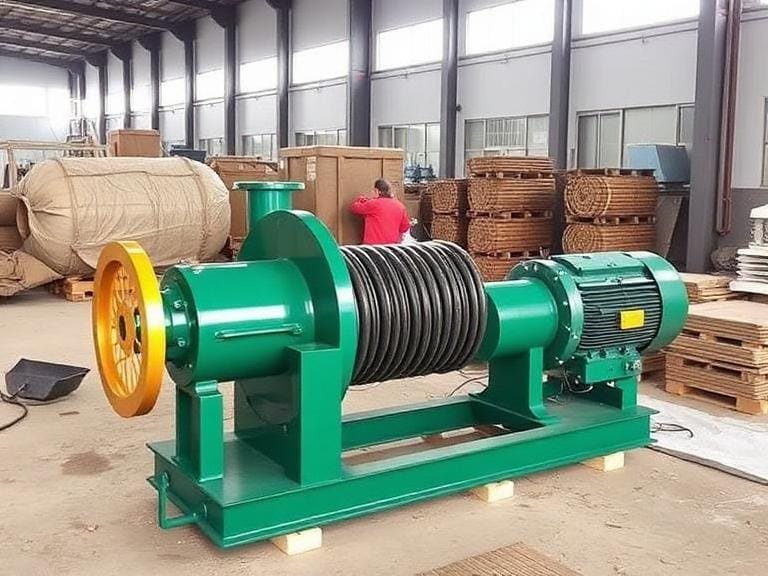
Permanent Magnetic Separator
For heavy-duty applications and commercial gold recovery, Oromineral’s Permanent Magnetic Separator represents the pinnacle of concentrate processing. Engineered to continuously extract highly magnetic black sands (magnetite) from non-magnetic gold and heavy minerals, this unit eliminates the bottleneck of manual panning entirely.
- Magnetic Intensity: 10,000 to 15,000 Gauss
- Material Construction: Stainless Steel / Neodymium
- Processing Capacity: Up to 300 Tons Per Hour
- Operational Temp: -10°C to 80°C
As one of the premier magnetic separator manufacturers worldwide, we guarantee optimal recovery rates without the massive energy costs associated with electromagnets.
By implementing a proper washing method, as detailed in our sand washing methods guide, and integrating magnetic separation, you transform a hobby into an industrial, scalable mining operation.
Frequently Asked Questions (FAQ)
Is it possible to make a living just by panning for gold?
In modern times, no. The labor-to-yield ratio is far too low. Unless you are incredibly lucky and locate a virgin pocket of coarse nuggets, the volume of dirt a single human can pan in a day will not yield enough fine gold to sustain a living wage. Commercial mining relies entirely on volume and mechanization.
What is the black sand left in my gold pan?
The black sand is primarily composed of heavy iron oxides, specifically magnetite and hematite. Because their specific gravity is much higher than standard quartz sand, they settle to the bottom of the pan right next to the gold. Separating them requires either tedious manual washing, chemical processes, or the use of industrial magnetic separators.
Do I need a permit to pan for gold?
In most jurisdictions, manual gold panning with a simple plastic pan and a hand trowel on public lands designated for recreation does not require a formal mining permit. However, the moment you introduce mechanized equipment (pumps, sluices, dredges) or attempt to mine on claimed or private land, strict environmental and operational permits are required by law.
Can I use a magnet to remove black sand from my gold?
Yes, running a strong neodymium magnet encased in plastic over your dried concentrates will pick up the magnetic black sands. However, if done carelessly, the magnetic sand can cluster and trap fine gold particles inside the cluster, causing you to lose gold. It must be done carefully, which is why commercial operations use specialized wet magnetic separator drums.
Authoritative References & Industry Standards
To ensure strict adherence to geological and operational standards, we base our analyses on data from the following authoritative bodies:
- U.S. Geological Survey (USGS): Providing official guidelines on placer gold deposition, specific gravity, and historical prospecting methodologies. Visit USGS
- Mine Safety and Health Administration (MSHA): Outlining the necessary safety standards and regulatory compliance required when transitioning from manual panning to mechanized mineral processing. Visit MSHA
- Society for Mining, Metallurgy & Exploration (SME): Peer-reviewed research on gravity separation techniques, mass balance calculations, and commercial gold recovery efficiencies. Visit SME