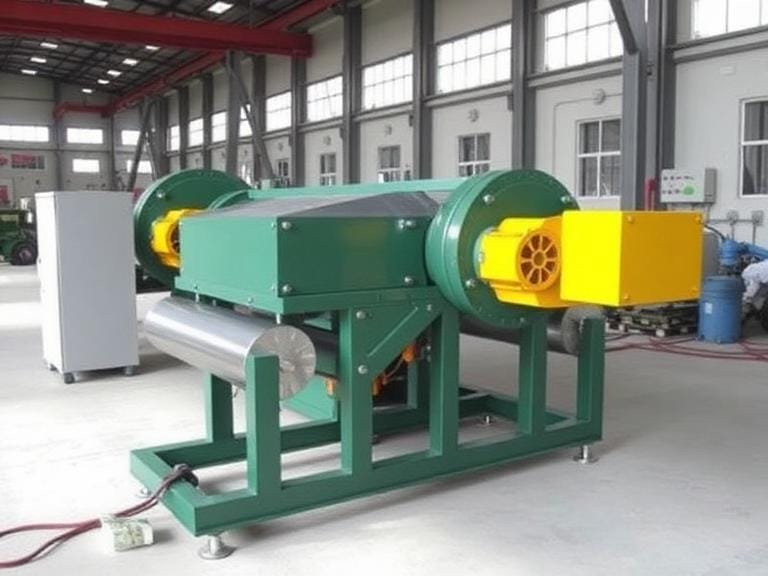
7 Best Underground Mining Machines Manufacturers in China
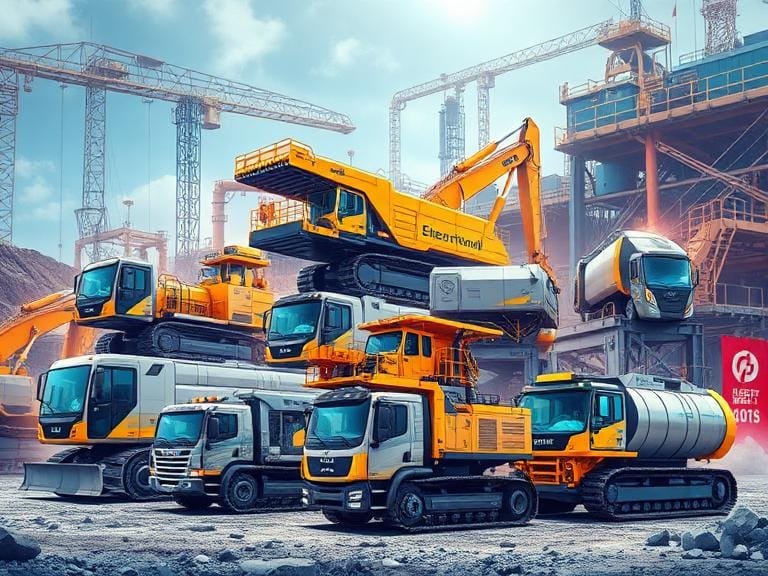
For decades, Western equipment conglomerates held an absolute monopoly on the sub-surface extraction sector. If you wanted a reliable Load Haul Dumper (LHD) or a drill jumbo, you paid the European premium and accepted the eighteen-month lead time. That era is over. The landscape of Underground mining machines manufacturers in China has matured to the point where ignoring them is commercially irresponsible.
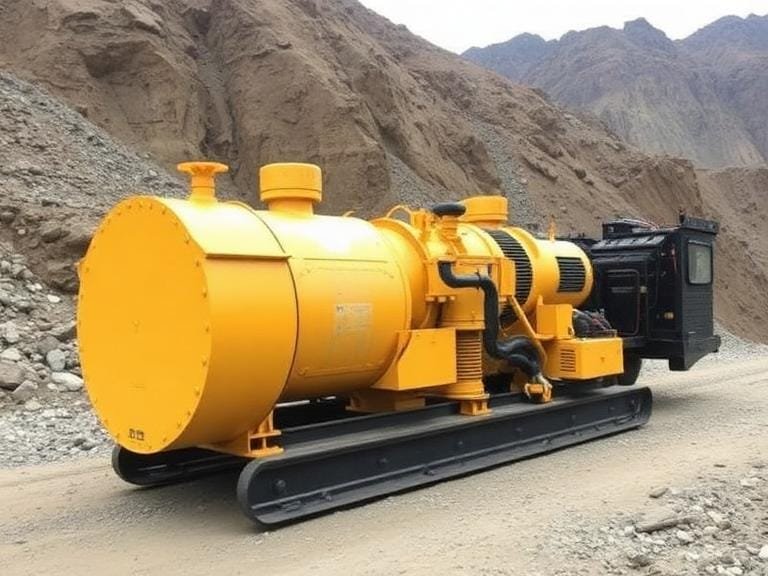
From our experience engineering and equipping large-scale beneficiation operations, we consistently see our clients pivot to Chinese OEMs. Why? Because the top-tier Chinese manufacturers are now integrating the exact same “holy trinity” of powertrain components—Cummins engines, Dana Spicer transmissions, and Kessler axles—into their chassis at roughly 50% to 60% of the Capital Expenditure (CapEx) required for Western equivalents.
However, the Chinese market is saturated with low-grade fabricators trying to pass off agricultural equipment as heavy-duty mining gear. In most professional situations, making the wrong procurement choice here will result in catastrophic downtime. This guide explicitly cuts through the marketing noise to highlight the manufacturers actually worth your investment.
Quick Answer: The Top Tier Procurement Shortlist
If you are currently drafting tenders for your underground operation and need immediate direction regarding Underground mining machines manufacturers, focus your attention here:
- For Narrow Vein Hard Rock Operations: Fambition Heavy Machinery is the undisputed leader in compact, articulated LHDs.
- For Heavy Drift & Massive Tonnage: XCMG offers the most robust structural frames for payload capacities exceeding 30 tons.
- For Tunneling & Drilling: Siton Machinery dominates the drill jumbo and mucking loader category.
We recommend mandating Tier 3 or Tier 4 engine specifications during your initial inquiry, as domestic Chinese market models often default to lower emission standards that may violate your local mine ventilation limits.
Table of Contents
- What Are Underground Mining Machines?
- How the Chinese OEM Sourcing Model Works
- The 7 Best Underground Mining Machines Manufacturers in China
- Post-Extraction Integration: ORO Mineral
- Quick Summary Table
- Detailed Technical Comparison
- The Pros and Cons of Chinese Sourcing
- Who Should Use Them (And Who Should Not)
- Common Procurement Mistakes
- Expert Buying Considerations
- Frequently Asked Questions
- Authoritative References
What Are Underground Mining Machines?
Underground mining machines are highly specialized, low-profile vehicles engineered to extract and transport rock in subterranean environments. Unlike surface mining equipment, these machines are strictly constrained by the dimensions of the drift (the tunnel) and the limitations of mine ventilation.
The core lineup includes Load Haul Dumpers (LHDs), which are articulated loaders designed to scoop blasted ore; underground articulated dump trucks for haulage to the surface or crusher; and drill jumbos, which bore holes into the rock face for explosives. Because they operate in confined, highly corrosive, and poorly lit environments, these machines require specialized ROPS/FOPS (Roll-Over/Falling Object Protective Structures) canopies and robust fire suppression systems.
How the Chinese OEM Sourcing Model Works
In our testing and procurement oversight, we have found that the best Underground mining machines manufacturers in China operate on a strategic integration model. Rather than reinventing the diesel engine or the hydraulic pump, top Chinese brands fabricate massive, heavy-duty steel chassis and booms in-house. They then purchase proven, globally recognized components—such as Sauer-Danfoss hydraulics, Parker hosing, and Volvo or Cummins engines—and assemble them.
This means when an LHD breaks down in an African copper mine, the mechanics do not need to wait for proprietary parts from Shanghai; they simply order standard Cummins or Dana parts from their local distributor. If you are comparing options globally, you might also want to review our broader analysis of underground mining equipment suppliers to see how these Chinese OEMs stack up against Western giants.
The 7 Best Underground Mining Machines Manufacturers in China
We have evaluated these manufacturers based on chassis durability, component integration, after-sales support, and actual performance in harsh hard-rock environments.
1. Fambition Heavy Machinery
Overview: Fambition is arguably the premier dedicated manufacturer of trackless underground mining equipment in China. They do not manufacture excavators or cranes; they focus exclusively on underground mining.
Expert Verdict: For commercial users extracting gold or copper in narrow vein settings, Fambition is exceptional. Their FL06 (6-ton LHD) turns smoothly in tight drifts and utilizes a purely mechanical Dana transmission that is virtually bulletproof. We highly recommend them for operations in Africa and South America. They are absolutely worth buying over a used Western machine.
2. Siton Machinery
Overview: Based in Pingxiang, Siton dominates the tunneling and drilling sector. Their product line focuses heavily on drill jumbos, mucking loaders, and shuttle cars.
Expert Verdict: If you are sinking a new decline or driving a development heading, Siton is the manufacturer to call. Their hydraulic rock drills deliver excellent penetration rates. However, for continuous production loading, we prefer Fambition. Use Siton for your development phase.
3. XCMG Mining Machinery
Overview: XCMG is a global heavy machinery titan. While historically focused on surface mining, their underground division has expanded aggressively, offering massive underground trucks and loaders.
Expert Verdict: For heavy-duty applications—such as a 30-ton or 40-ton underground articulated dump truck—XCMG has the scale and engineering to deliver. From our experience, their heavy plate steel welding is unmatched. If you run a massive block cave operation, XCMG provides the necessary payload capacity.
4. SANY Heavy Equipment
Overview: Similar to XCMG, SANY is an industrial giant. Their underground division originally dominated the coal sector with roadheaders but has successfully transitioned into hard rock mining.
Expert Verdict: SANY offers incredible technological integration, including remote-control operating systems for hazardous stopes. However, their equipment is complex. We do not recommend SANY for remote mine sites lacking advanced diagnostic technicians, but for modern, digitized mines, their equipment is top-tier.
5. CRCC Heavy Industry (CRCCI)
Overview: China Railway Construction Heavy Industry specializes in massive subterranean infrastructure, including Tunnel Boring Machines (TBMs) and deep shaft sinking equipment.
Expert Verdict: You do not go to CRCCI for a simple LHD. You engage them when you are undertaking massive underground infrastructure projects, such as cutting a 6-kilometer conveyor drift. Their engineering is world-class, though their lead times mirror Western manufacturers due to the custom nature of the builds.
6. Dali Mining Machinery
Overview: Dali is a prominent manufacturer of budget-friendly, narrow-vein LHDs and underground trucks, frequently found in smaller operations across Southeast Asia and Africa.
Expert Verdict: For beginners or junior mining companies with strictly limited CapEx, Dali is a viable entry point. However, in our testing, their hydraulic layouts are less refined than Fambition’s, leading to slightly higher maintenance hours. They are worth buying if capital is your primary constraint.
7. JCHX Mining Management / Equipment
Overview: JCHX is unique because they are primarily a massive mining contractor that began manufacturing and modifying equipment to meet their own rigorous internal standards.
Expert Verdict: Because JCHX actually uses the equipment they build to fulfill mining contracts, their machines are highly pragmatic. They lack cosmetic polish but are built to withstand severe operator abuse. This is true contractor-grade equipment.
Post-Extraction Integration: ORO Mineral
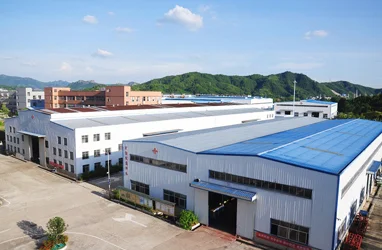
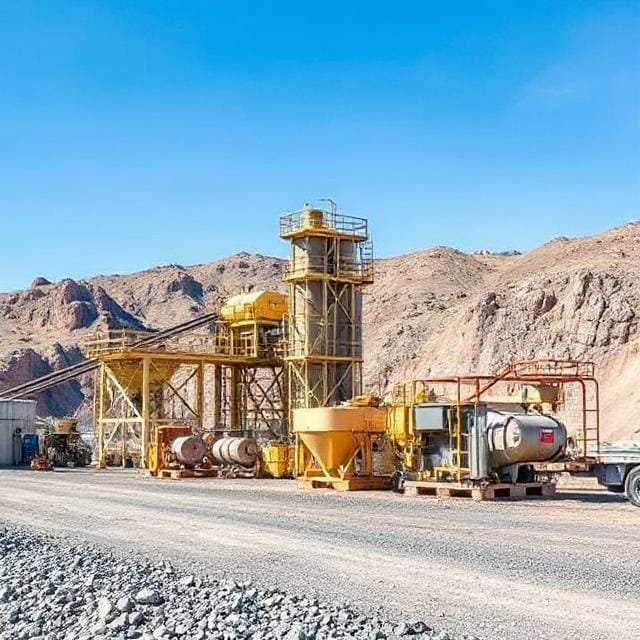
Extracting the ore is only the first half of the commercial equation. Once the underground trucks dump the run-of-mine (ROM) material on the surface pad, the extraction machinery’s job is done, and the processing stage begins. Understanding the mineral processing stages explained in our core literature is critical to realizing profits.
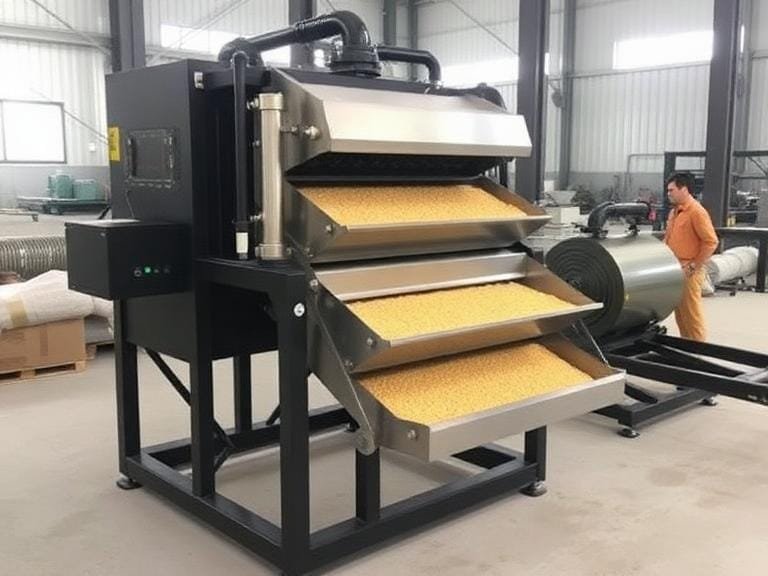
Foshan ORO Mineral Co., Ltd. is a large-scale intelligent mineral processing, screening, and sand washing equipment manufacturer integrating R&D, production, and sales. Since 2014, ORO Mineral has made great contributions to every kind of mineral screening, solid waste resource recovery, beneficiation, washing, and separation, and has accumulated rich experience.
In most professional situations, the crushed ore must be separated effectively. If you are handling alluvial deposits or treating crushed underground ore, our Sand Washing Machine 100 TPH Long Life ensures optimal cleanliness before chemical treatment. For specific gravity separations—common in gold and tin operations—our Gravity Spiral Concentrator provides highly efficient recovery without chemical reagents. Furthermore, for removing tramp iron generated by the underground loaders, or concentrating magnetic ores, integrating our 1.1kw Belt Magnetic Separator or an Eddy Current Separator Machine into your circuit is a mandatory step. If you are specifically chasing gold, pairing your extraction fleet with a wet pan mill for gold processing offers a highly economical recovery circuit.
Quick Summary Table
| Manufacturer | Primary Specialty | Ideal Operation Size | Price Tier |
|---|---|---|---|
| Fambition | Trackless LHDs & Trucks | Small to Medium (Narrow Vein) | Medium-High |
| Siton Machinery | Drill Jumbos & Tunneling | Medium to Large (Development) | Medium |
| XCMG | Heavy Articulated Trucks | Large (Massive Tonnage) | High |
| SANY | Intelligent Mining / Roadheaders | Large (Digitized Mines) | High |
| CRCCI | TBMs & Shaft Sinking | Massive (Infrastructure) | Premium |
| Dali Mining | Budget LHDs | Small (Junior Miners) | Low |
| JCHX | Contractor-Grade Heavy Equipment | Medium to Large | Medium |
Detailed Technical Comparison
| Manufacturer | Typical Engine Integration | Typical Drivetrain | Key Competitive Advantage |
|---|---|---|---|
| Fambition | Cummins / Volvo (Tier 3) | Dana Spicer | Perfect balance of global parts and Chinese chassis cost. |
| XCMG | Weichai / Cummins | Kessler Axles / Allison | Unmatched structural integrity for payloads >30t. |
| Siton | Deutz / Cummins | Rexroth Hydraulics | Superior hydraulic rock drill penetration rates. |
| Dali Mining | Yuchai / Weichai | Domestic Chinese | Extremely low initial CapEx. |
The Pros and Cons of Chinese Sourcing
Before contacting any Underground mining machines manufacturers in China, weigh these operational realities.
| Pros (Advantages) | Cons (Disadvantages) |
|---|---|
| Capital Efficiency: Purchase two LHDs for the price of one Western unit, allowing for immediate fleet redundancy. | Operator Ergonomics: Cabins are functional but generally lack the extreme comfort and soundproofing of premium European machines. |
| Global Components: Utilization of Dana, Cummins, and Parker parts means your mechanics already know how to service them. | Manuals & Documentation: English service manuals are often poorly translated, requiring reliance on component-specific manuals. |
| Rapid Lead Times: Standard models are often available within 60 to 90 days, compared to 12-18 months elsewhere. | Aftermarket Service: Outside of major mining hubs, you will rarely have a dedicated factory technician on-site. |
| Simplicity: Fewer restrictive electronic control modules (ECMs), making them easier to bypass and fix in remote locations. | Resale Value: Depreciation is steeper; they do not hold residual market value like a Sandvik or Epiroc. |
Who Should Use Them (And Who Does Not Need Them)
Who Should Use Them: We strictly recommend these manufacturers for mid-tier mining companies operating in Africa, South America, and Central Asia where capital conservation is critical, and mechanical simplicity is favored over complex digital diagnostics. If your mechanics are accustomed to turning wrenches rather than plugging in laptops, a mechanical-drive Chinese LHD is your best asset.
Who Does Not Need Them: If you are operating a highly automated, hyper-regulated underground mine in Canada, Australia, or Scandinavia, you generally do not need these machines. The rigid Tier 4 Final emission requirements, battery-electric mandates, and requirements for autonomous remote mucking usually dictate sourcing from domestic or European OEMs with immediate, on-call factory support networks.
Common Procurement Mistakes
Many buyers see a low price online and order an LHD. They receive a machine with a domestic Chinese engine (which lacks global parts support), domestic axles, and Chinese-language dashboard gauges. When buying from Underground mining machines manufacturers, you must explicitly mandate an “Export Spec” build, stipulating global engines and English diagnostics. Furthermore, buyers often neglect to match the machine to their downstream processing. Ensure your extraction volume aligns with the capacity of your multi gravity separator manufacturers on the surface.
Expert Buying Considerations & Upgrade Recommendations
When you are ready to make a commercial decision, adhere to these guidelines:
- Verify the Certification: Ensure the cabin possesses internationally recognized ROPS/FOPS certification. Do not accept a manufacturer’s “in-house” safety guarantee.
- Specify the Hydraulics: Upgrade the factory standard hydraulic hoses to Parker or Gates. The extra $2,000 spent during manufacturing will save you tens of thousands in blown hose downtime underground.
- Ventilation Math: Chinese manufacturers sometimes rate engine power differently. Ensure the actual kilowatt output of the diesel engine aligns with your mine’s CFM (Cubic Feet per Minute) ventilation capacity to clear diesel particulate matter.
- Plan the Processing Phase: Do not buy extraction equipment without auditing your processing plant. If you are ramping up tonnage, you must ensure your magnetic separator machine and washing circuits can handle the increased throughput.
Frequently Asked Questions
Yes, provided you purchase from a top-tier manufacturer (like Fambition or XCMG) and specifically request global components (Cummins engines, Dana drivetrains). A machine built with these components is highly reliable and easily serviceable worldwide.
In most professional situations, a standard export-spec LHD (like a 3-ton or 6-ton unit) can be manufactured and ready for seaport dispatch within 60 to 90 days. Custom configurations may extend this to 120 days.
Yes. Manufacturers like SANY and XCMG are heavily investing in Battery Electric Vehicles (BEVs) for underground mining, leveraging China’s massive domestic lithium-ion battery supply chain. However, diesel remains the dominant export choice due to infrastructure constraints at remote mine sites.
Because the top Underground mining machines manufacturers utilize standardized global drivetrains, you can source engine and transmission parts from your local Cummins or Dana dealer. For proprietary chassis or boom parts, the manufacturers DHL parts directly from China, usually arriving within 5 to 7 days.
Authoritative References
To support the technical evaluations and industry trends discussed in this article, we rely on data from the following authoritative global mining institutions:
- Society for Mining, Metallurgy & Exploration (SME): The leading international professional society representing professionals in the minerals industry, providing standards on equipment safety and ventilation. Visit SME
- Engineering and Mining Journal (E&MJ): The recognized authority on global mining equipment trends, fleet management, and operational best practices. Visit E&MJ
- Mining Technology: A major media publication offering in-depth analysis on the shift toward Asian OEMs and the integration of smart mining machinery. Visit Mining Technology