9 Best Gold Gravity Separation Equipment: A Commercial Mining Guide
In the highly volatile and capital-intensive world of commercial mining, achieving optimal recovery rates without destroying your profit margins on chemical reagents is the ultimate operational challenge. Before you ever introduce cyanide or mercury into your flow sheet—chemicals that pose massive environmental and regulatory liabilities—you must maximize your physical recovery. The foundation of profitable extraction relies on deploying the Best gold gravity separation equipment to capture free-milling gold immediately after the crushing and grinding circuits.
From our experience engineering advanced processing plants at ORO Mineral, we see countless operators losing ultra-fine gold straight to their tailings ponds simply because they misapply their separation technology. You cannot run unclassified slurry over a standard sluice box and expect commercial viability. You must use commercial and practical judgment to align your ore’s specific gravity, particle size distribution, and throughput requirements with the correct machinery. In this comprehensive guide, we will cut through the marketing noise, explain exactly what the Best gold gravity separation equipment is, and provide you with a ruthless breakdown of what is actually worth using, buying, or upgrading in your current processing plant.
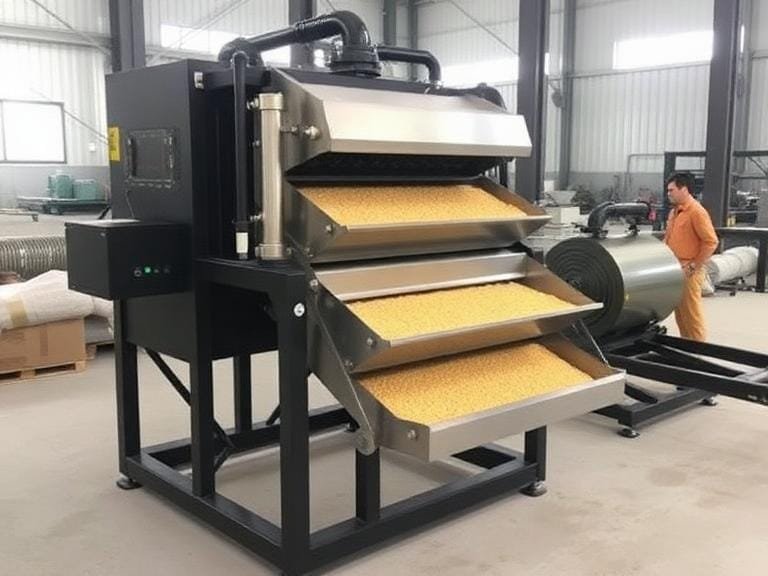
Quick Answer: The Best Gold Gravity Separation Equipment
If you are looking to maximize recovery of free-milling gold, the Best gold gravity separation equipment lineup includes Centrifugal Concentrators for capturing ultra-fine gold (-10 microns) at high capacities, Shaking Tables for upgrading rougher concentrates to smeltable grade, and Mineral Jigs for capturing coarse gold immediately out of the grinding circuit. For commercial users aiming to eliminate toxic chemicals, combining a centrifugal concentrator with a shaking table provides the highest recovery rates for placer and hard rock applications. If you are operating on a tight budget, Spiral Concentrators offer an excellent low-cost, zero-power roughing solution.
Table of Contents
- What is Gravity Separation?
- How It Works in Gold Mining
- The 9 Best Gold Gravity Separation Equipment
- Strategic Benefits of Gravity Circuits
- Limitations to Consider
- Who Should Use It
- Who Does Not Need It
- Common Processing Mistakes
- Critical Buying Considerations
- Essential Comparison Tables
- Expert Recommendation from ORO Mineral
- The Bottom Line
- Frequently Asked Questions
- Authoritative References
What is Gravity Separation?
Gravity separation is the oldest and most environmentally sound method of mineral beneficiation. It relies on the principle that different minerals have different specific gravities (density). Gold has a massive specific gravity of 19.3, making it exceptionally heavy. The gangue materials surrounding it—typically quartz, silicates, and clays—have a specific gravity of around 2.6 to 2.8.
The Best gold gravity separation equipment manipulates these density differences using water and mechanical agitation. By subjecting the crushed ore slurry to centrifugal force, vertical pulsation, or horizontal shaking, the heavy gold particles sink or are trapped, while the lighter waste rock is washed away into the tailings. Understanding the mineral processing stages explained by industry engineers is critical; gravity separation is almost always the primary recovery stage before flotation or leaching.
How It Works in Gold Mining
In most professional situations, the flow sheet begins with crushing and grinding. Once the ore is reduced to a fine powder (liberating the gold from the host rock), water is added to create a slurry. This slurry is fed into gravity equipment. The efficiency of this process is defined by the Concentration Criterion (CC). Because the density gap between gold and quartz is so massive, gravity separation is highly effective for free gold. However, if the gold is microscopic or locked inside sulfide minerals (refractory ore), standard gravity methods will fail, and you must look into chemical extraction like the copper leaching process guide methodologies applied to precious metals.
The 9 Best Gold Gravity Separation Equipment
When consulting with top gold mining equipment manufacturers, operators are often overwhelmed by choices. Here are the 9 machines that define modern, high-yield gravity recovery circuits.
1. Centrifugal Concentrators (Knelson/Falcon Style)
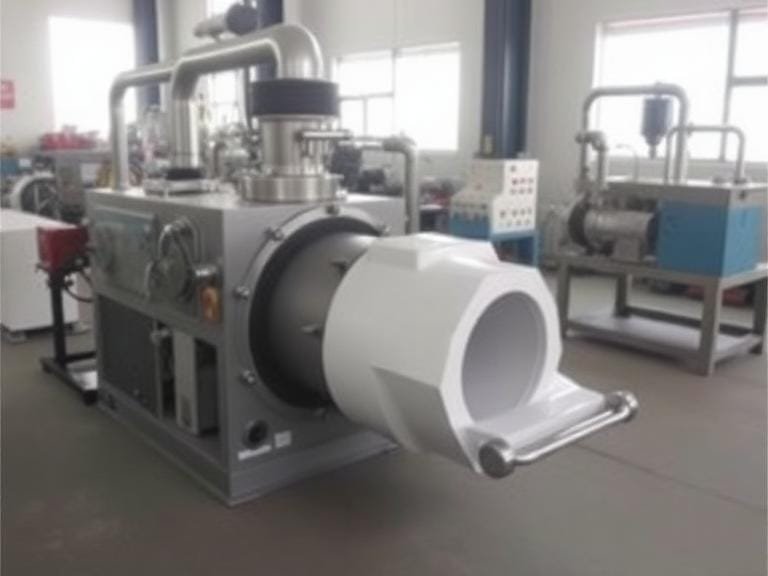
From our experience, the centrifugal concentrator is the undisputed king of modern gold recovery. By spinning a fluid bed at high speeds, these machines generate up to 200 Gs of centrifugal force. This forces even microscopic, ultra-fine gold particles (down to 10 microns) into the ribbed concentration cone, while lighter waste is flushed upward. If you run a commercial hard-rock or placer operation, investing in a centrifugal concentrator is non-negotiable for maximizing your yield.
2. Shaking Tables (6S Wilfley Tables)
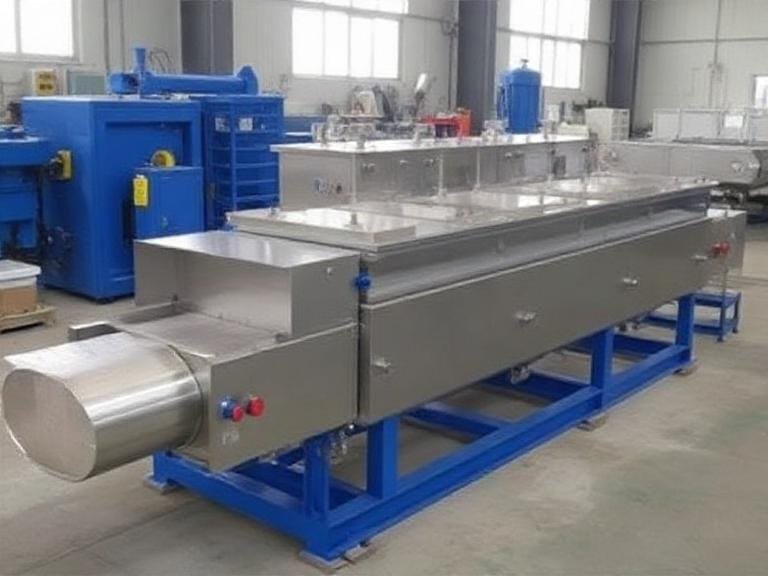
The shaking table is the ultimate “clean-up” tool. It consists of a slightly inclined deck with horizontal riffles. The table shakes laterally, driving heavy gold particles along the riffles to the concentrate discharge, while wash water pushes the lighter gangue over the riffles into the tailings. We recommend shaking tables exclusively for upgrading rougher concentrates generated by jigs or centrifugal concentrators. Do not use them as primary roughers; their throughput capacity is too low.
3. Mineral Jig Separators
Jigs separate minerals using a vertical pulsating water current through a screen bed. The heavy gold sinks through the ragging (bedting material) into the hutch, while lighter waste is pushed out the overflow. Jigs are incredibly robust and can handle coarse feed sizes (up to 25mm). They are the Best gold gravity separation equipment to place directly in the grinding circuit to prevent coarse gold from over-grinding in the ball mill.
4. Spiral Concentrators
Spirals are a masterpiece of low-cost engineering. Slurry flows down a helical trough, and centrifugal force pushes lighter materials to the outer edge, while heavy gold hugs the inner curve. They require zero moving parts and zero electricity (gravity-fed). For massive tonnage, low-grade operations, spiral concentrators are the best commercial solution for primary roughing.
5. Wet Pan Mills
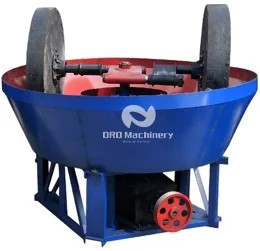
Widely used in small to medium-scale artisanal mining, a wet pan mill for gold processing simultaneously grinds and amalgamates/separates gold. Heavy rollers crush the ore in a basin of water. While effective for basic operations, they are being rapidly phased out in heavy-duty commercial plants due to their low throughput compared to ball mill/centrifuge combinations.
6. Hydrocyclones
While primarily a classification tool, hydrocyclones act as rudimentary gravity separators. Slurry is pumped in at high pressure, creating a vortex. Heavy and coarse particles exit the bottom underflow, while fine, light particles exit the top overflow. They are essential for sizing your ore before sending it to a shaking table.
7. Gold Trommels and Rotary Scrubbers
For placer mining (alluvial deposits), the trommel is the first line of defense. It is a rotating cylindrical screen that washes the gravel, breaking up clay balls and rejecting large boulders. The fine, gold-bearing slurry that passes through the screen is then directed to sluices or centrifuges. Proper mineral processing techniques and equipment mandate that you wash and size placer ore before concentration.
8. Industrial Sluice Boxes
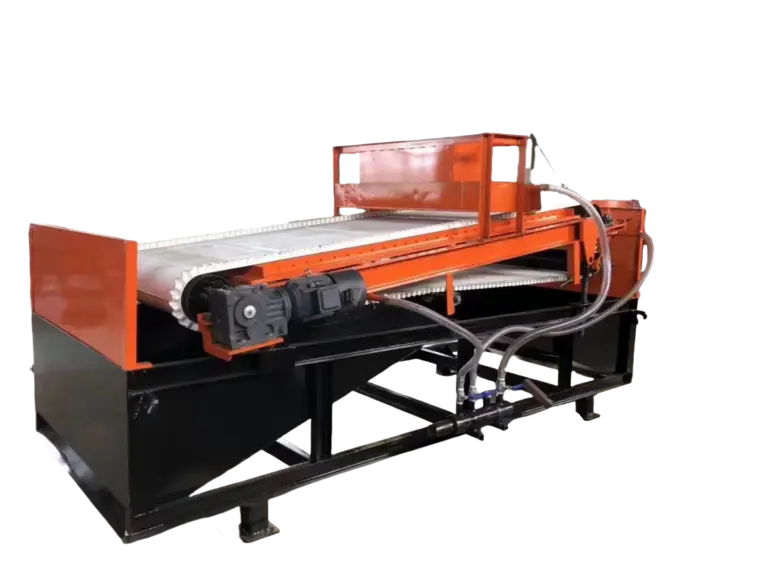
Do not confuse these with hobbyist tools. Industrial sluice boxes span tens of feet and feature advanced hydraulic riffle designs and specialized miner’s moss. They offer massive throughput for alluvial mining. However, they struggle to capture fine gold compared to centrifugal concentrators, making them best suited for coarse placer deposits.
9. Multi-Gravity Separators (MGS)
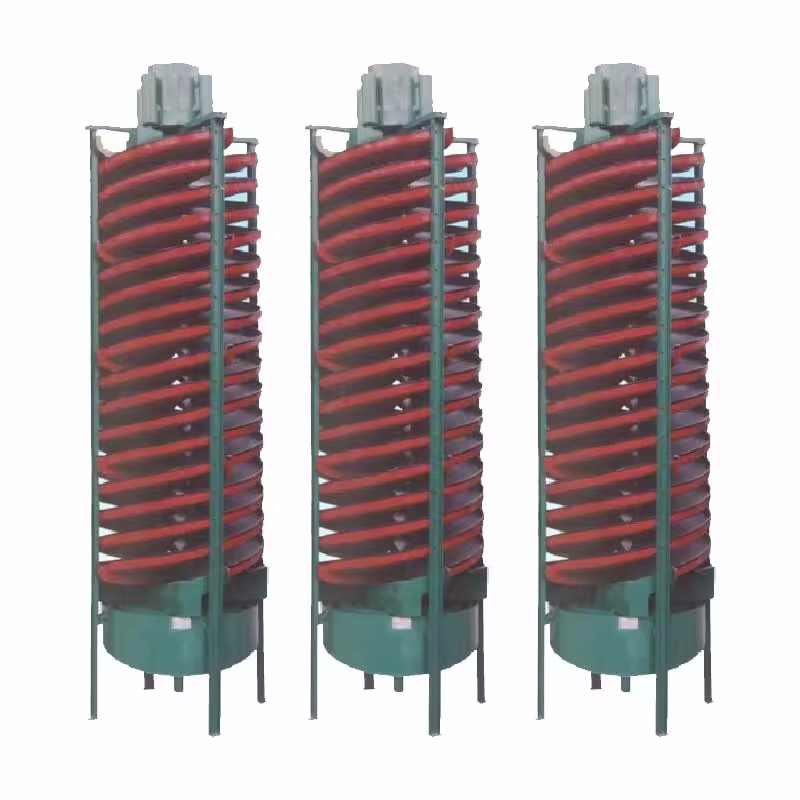
The MGS acts like a shaking table rolled into a drum and spun. It exerts multiple G-forces while scraping the material, allowing for the recovery of incredibly fine gold (down to 1 micron) that would otherwise be lost. This is a highly specialized piece of equipment for operations dealing with extreme fine-gold challenges.
Strategic Benefits of Gravity Circuits
Implementing the Best gold gravity separation equipment offers massive commercial advantages:
- Early Revenue Generation: Gravity circuits allow you to recover free gold immediately, generating fast cash flow while the rest of the ore proceeds to slower leaching circuits.
- Chemical-Free Operation: Gravity separation requires only water and electricity. Eliminating cyanide reduces your environmental permitting costs and liability.
- Low Operating Costs (OPEX): Machines like spirals and jigs have incredibly low wear-part replacement costs compared to complex flotation cells.
Limitations to Consider
In our testing, gravity separation cannot do it all. The primary limitation is “locked” gold. If your gold particles are sub-microscopic and physically encased inside pyrite or arsenopyrite rock, gravity separation will fail. You must grind the ore impossibly fine to liberate it, at which point the particles become too light to settle via gravity. In these heavy-duty applications, you must transition to chemical leaching or roasting.
Who Should Use It
For commercial users and placer miners: If you are operating an alluvial mine, a river dredging operation, or a hard-rock mine with high concentrations of “free-milling” gold, investing heavily in centrifugal concentrators and shaking tables is an absolute requirement for profitability.
Who Does Not Need It
If core samples show your deposit is 100% refractory (the gold is entirely locked within sulfides and requires oxidation/leaching), spending capital on gravity concentrators is a waste of money. The gold will simply wash into your tailings.
Common Processing Mistakes
The most catastrophic mistake operators make is failing to classify their feed. If you feed a shaking table a mixture of 2mm sand and 50-micron slime, the water pressure required to wash the 2mm sand will instantly blow your fine gold off the table. You must use screens and hydrocyclones to provide a narrowly classified feed to your gravity equipment.
Critical Buying Considerations
When procuring the Best gold gravity separation equipment, apply strict commercial judgment:
- Throughput Capacity (Tons Per Hour): Do not bottleneck your plant. Ensure your centrifugal concentrator can handle the discharge rate of your cyclone underflow.
- Water Availability: Gravity separation requires massive amounts of water. If you operate in an arid region, you must invest in thickeners and water recycling infrastructure.
- Feed Size Constraints: Match the machine to the grind. Use jigs for coarse gold (up to 20mm), centrifuges for medium to fine (2mm to 10 microns), and shaking tables for final upgrading.
Essential Reference Tables
Quick Summary Table: The 9 Best Gold Gravity Separation Equipment
| Equipment Type | Primary Function | Optimal Particle Size |
|---|---|---|
| Centrifugal Concentrator | High-capacity fine gold recovery | 10 microns to 2mm |
| Shaking Table | Final concentrate upgrading/cleaning | 20 microns to 2mm (Classified) |
| Mineral Jig | Coarse gold roughing in grinding circuit | 100 microns to 25mm |
| Spiral Concentrator | Low-cost, high-volume roughing | 30 microns to 1mm |
| Trommel Scrubber | Washing and oversize rock rejection | Placer gravels (Bulk) |
Comparison Table: Centrifugal Concentrator vs. Shaking Table
| Metric | Centrifugal Concentrator | Shaking Table (6S) |
|---|---|---|
| Role in Circuit | Primary Rougher / Scavenger | Final Cleaner |
| Throughput Capacity | Very High (Up to 400 TPH per unit) | Low (1-2 TPH per unit) |
| Water Consumption | High (Requires fluidization water) | Moderate |
| Concentrate Grade | Medium (Requires further upgrading) | Very High (Direct to smelting) |
Pros and Cons Table: Gravity Separation
| Pros | Cons |
|---|---|
| Environmentally safe; requires zero toxic chemicals like cyanide or mercury. | Ineffective for sub-microscopic or refractory “locked” gold. |
| Low operating expenditure (OPEX) and minimal maintenance requirements. | Requires access to significant, clean water sources. |
| Rapid recovery of coarse gold prevents loss in downstream circuits. | Cannot achieve 100% recovery; tailings often require chemical scavenging. |
Buying Guide Table: Plant Tonnage Requirements
| Plant Size | Recommended Gravity Circuit Setup |
|---|---|
| Small Scale (1-10 TPH) | Trommel -> Sluice Box -> Small Shaking Table |
| Medium Scale (10-50 TPH) | Hydrocyclone -> Centrifugal Concentrator -> Shaking Table |
| Large Commercial (50+ TPH) | Ball Mill -> Mineral Jig -> Centrifugal Concentrator Bank -> Multi-Gravity Separator |
Expert Recommendation from ORO Mineral
In most professional situations, purchasing a single piece of equipment will not solve your recovery issues. Gold recovery is an integrated system. ORO Mineral Co., Ltd. is a large-scale intelligent mineral processing, screening, and sand washing equipment manufacturer integrating R&D, production and sales. Since 2014, ORO Mineral has made great contributions to every kind of mineral screening, solid waste resource recovery, beneficiation, washing, and separation, and has accumulated rich experience.
We recommend that commercial operators design their gravity circuits redundantly. Place a mineral jig immediately after your ball mill discharge to trap coarse nuggets before they are flattened and smeared into the mill liners. Route your cyclone underflow through a high-G centrifugal concentrator to capture the fine gold, and finally, upgrade that concentrate on a 6S shaking table. If you are also dealing with magnetic impurities, exploring magnetic separator manufacturers worldwide to install an overhead magnet will protect your gravity equipment from tramp iron damage.
The Bottom Line
Are the heavy-duty machines on this list of the Best gold gravity separation equipment actually worth buying? Absolutely. Failing to capture free gold mechanically before sending your ore to a leach pad or flotation cell is a massive failure of plant design. Gravity equipment represents a low-cost, high-reward investment that pays for itself rapidly by capturing gold that would otherwise be lost to inefficiencies in downstream chemical processing. Evaluate your ore’s liberation size, secure your water supply, and deploy a combination of centrifugal force and shaking tables to dominate your recovery metrics.
Frequently Asked Questions
Can gravity separation recover 100% of the gold in my ore?
No. In most commercial applications, gravity separation recovers between 30% and 70% of the total gold, depending entirely on how much of the gold is “free-milling” (physically liberated from the host rock). The remaining gold, which is often microscopic or locked inside sulfide structures, must be recovered downstream using froth flotation or cyanide leaching.
Is gravity separation better than using mercury?
Yes, unequivocally. Using mercury (amalgamation) is highly toxic to operators and the environment, and is becoming globally illegal. Modern centrifugal concentrators and shaking tables can recover the same fine gold without the severe health risks and regulatory liabilities associated with mercury.
Why do I need a shaking table if I have a centrifugal concentrator?
A centrifugal concentrator is a “rougher.” It processes massive amounts of ore quickly, but the resulting concentrate still contains a significant amount of heavy black sand (magnetite/hematite) alongside the gold. The shaking table acts as a “cleaner.” It processes that rough concentrate slowly and precisely, separating the pure gold from the black sand so it can be smelted directly into bullion.
Authoritative References & Industry Standards
To ensure our operational advice aligns with global mineral processing standards and environmental regulations, we reference data from the following authoritative bodies:
- U.S. Environmental Protection Agency (EPA) – Guidelines on Mercury-Free Artisanal and Small-Scale Gold Mining
- United States Geological Survey (USGS) – Gold Extraction and Mineral Statistics
- Society for Mining, Metallurgy & Exploration (SME) – Standards in Gravity Concentration and Mineral Beneficiation