The 6 Best Feldspar Beneficiation Equipment for 2026
Let us confront a brutal reality in the industrial minerals sector: raw, run-of-mine feldspar is practically worthless to the high-end glass and ceramics industries if it is contaminated with iron oxides, mica, and excess quartz. To achieve the stringent chemical specifications required for premium glassmaking—where even a fraction of a percent of Fe2O3 can ruin the optical clarity of the melt—you must engineer a flawless processing circuit. From our experience at Oromineral, the widespread practice of purchasing cheap, uncalibrated processing machinery is the fastest route to operational failure. You cannot extract premium value from pegmatite ores without investing in the absolute best feldspar beneficiation equipment.
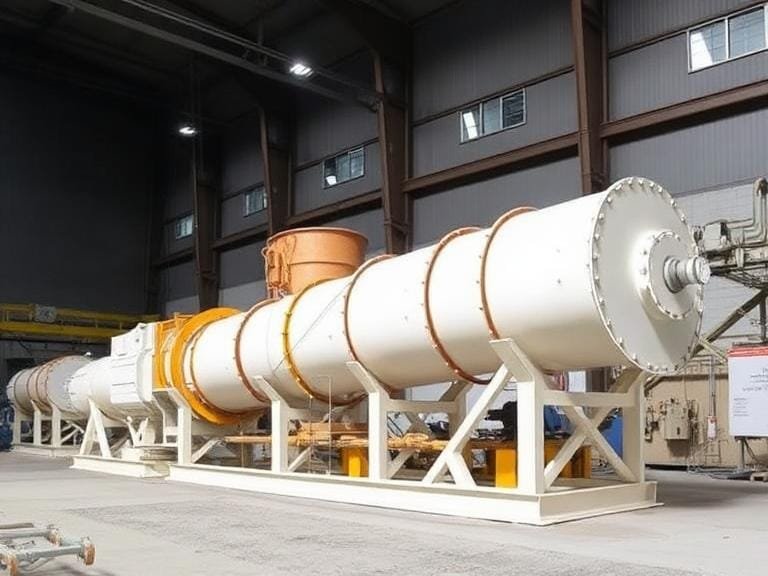
Feldspar beneficiation is a complex, multi-stage metallurgical process requiring precise comminution, gravity separation, magnetic sorting, and froth flotation. Each stage must operate in perfect harmony to achieve maximum mineral liberation while minimizing the production of unusable ultra-fine slimes. In this relentlessly practical guide, we will dissect the six most critical pieces of feldspar beneficiation equipment necessary to build a world-class processing plant in 2026. We will expose the mechanical flaws of outdated machinery and provide you with an authoritative roadmap for upgrading your mineral recovery rates.
Table of Contents
- 1. Engineering Durability: The Tolerance Cross-Over
- 2. Primary & Secondary Jaw Crushers: The Initial Break
- 3. Precision Ball Mills: Controlled Liberation
- 4. Oromineral Gravity Spiral Chute Separator
- 5. High-Gradient Magnetic Separators (HGMS)
- 6. Advanced Froth Flotation Cells
- 7. Oromineral Eddy Current Separator Machine
- 8. Summary Table: Processing Circuit Matrix
- 9. Frequently Asked Questions (FAQs)
- 10. Industry References
1. Engineering Durability: The Tolerance Cross-Over
Before we detail the specific feldspar beneficiation equipment, we must address the philosophy of industrial durability. Mining equipment is subjected to relentless kinetic shock, abrasion, and thermal stress. We often draw analogies to the extreme sports industry, where absolute safety margins and impact absorption are non-negotiable. For instance, the structural integrity required in a primary crusher chassis is remarkably similar to the energy-dissipation engineering found in an FMX airbag landing. When tons of raw granite and pegmatite are dropped into a steel hopper, the equipment must absorb the catastrophic shock without fracturing.
When plant managers attempt to save capital by procuring sub-standard machinery, they expose their entire operation to devastating downtime. We strongly recommend viewing your procurement strategy through the lens of extreme reliability. Upgrading your processing circuit requires a rigorous audit, much like seeking out the best airbag landing systems 2026. You must demand uncompromising performance. The shift from outdated, manual processing plants to fully automated, sensor-driven circuits is as dramatic and necessary as the safety evolution highlighted in a foam pit vs airbag comparison. At Oromineral, we partner with specialized metallurgists and top-tier industrial fabricators—operating with the same exacting standards as elite trampoline park equipment manufacturers—to ensure our feldspar beneficiation equipment never fails under load.
2. Primary & Secondary Jaw Crushers: The Initial Break
The beneficiation process begins at the ROM (Run-of-Mine) pad. Feldspar is typically hosted in hard rock pegmatites alongside quartz. To liberate these minerals, the rock must be aggressively reduced in size. As the first stage of feldspar beneficiation equipment, the primary jaw crusher is your frontline workhorse. It must withstand massive compressive forces, handling impact loads akin to a dirt bike airbag landing.
We recommend utilizing deep-cavity jaw crushers equipped with high-manganese steel toggle plates. If your primary crusher fails, your entire plant starves. Attempting to save money here by acquiring poorly refurbished machinery is a fatal error—as risky as ignoring buy used airbag landing tips when safety is on the line. Once the ore is reduced to a manageable size (typically minus 150mm), secondary cone crushers are employed to further reduce the feed down to the critical 10mm to 20mm range required for the milling circuit.
3. Precision Ball Mills: Controlled Liberation
Comminution does not end at the crusher. To physically detach the feldspar crystals from the quartz and mica matrix, the ore must be ground down to its specific liberation size (usually between 20 and 40 mesh). The ball mill is the most energy-intensive piece of feldspar beneficiation equipment in your plant.
From our experience, over-grinding is the absolute enemy of feldspar processing. If the ore is reduced to ultra-fine slimes, it becomes unresponsive to froth flotation and impossible to dewater effectively. We strictly specify grate-discharge ball mills lined with high-alumina ceramic or rubber liners. Unlike traditional steel liners and forged steel grinding balls, which introduce unacceptable levels of iron contamination into the feldspar pulp, alumina ceramic grinding media ensures that the optical purity of the final product remains uncompromised.
4. Oromineral Gravity Spiral Chute Separator
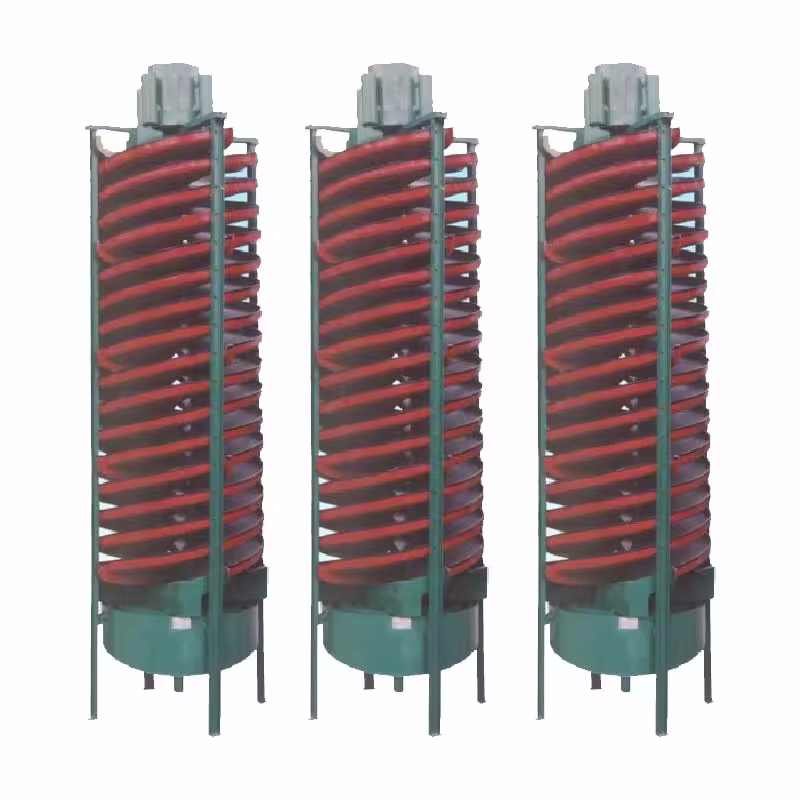
Once the ore is liberated, gravity separation is utilized as a highly cost-effective method to remove heavy mineral impurities such as garnet, rutile, and coarse iron oxides before the energy-intensive magnetic and flotation stages. The undisputed champion in this category is the Oromineral Gravity Spiral Chute Separator.
- Reasonable Structure & Small Occupation Area: The Oromineral Gravity Spiral Chute Separator boasts a well-thought-out design that maximizes efficiency while minimizing space utilization. Its compact footprint makes it ideal for installation in even the most constrained environments.
- High Recovery, High Efficiency, & Precise Separation: Engineered for optimal performance, the chute ensures high recovery rates and precise separation of materials. Its advanced design allows for efficient classification and separation, reducing waste and enhancing productivity.
- Lightweight, Rust & Corrosion Resistant: Constructed from high-quality, lightweight materials, the Oromineral Gravity Spiral Chute Separator is built to last. Its rust and corrosion-resistant properties ensure long-term durability and reliability, even in harsh operational conditions.
- Simple Installation & Minimal Maintenance Requirements: Installation of the Oromineral Gravity Spiral Chute is quick and straightforward, requiring minimal downtime. With minimal maintenance needs, you can focus on your core operations without the hassle of constant repairs and upkeep.
- Low Operating Cost & Long Operating Life: The chute’s energy-efficient design ensures low operating costs, saving you money in the long run. Coupled with its durable construction, the Oromineral Gravity Spiral Chute offers an extended operational lifespan, maximizing your investment.
- Reliable Running with Minimal Operator Attention: Designed for reliability, the chute requires minimal operator intervention, allowing for seamless integration into your existing processes. Its dependable performance ensures consistent results and reduced downtime, mirroring the autonomous safety mechanisms found in professional bike airbag landing systems.
- Strong Adaptability: The Oromineral Gravity Spiral Chute Separator demonstrates exceptional adaptability to fluctuations in feeding amount, density, size, and grade. This ensures consistent performance and separation accuracy across a wide range of operational conditions.
5. High-Gradient Magnetic Separators (HGMS)
Feldspar targeted for the ceramics and high-end glass industry must typically maintain a ferric oxide ($Fe_2O_3$) content of less than 0.1%. Because iron-bearing minerals like biotite, tourmaline, and muscovite are only weakly magnetic (paramagnetic), standard drum magnets are completely useless. You require specific, highly engineered feldspar beneficiation equipment.
We recommend deploying High-Gradient Magnetic Separators (HGMS) operating at magnetic field strengths exceeding 10,000 Gauss (1 Tesla). These machines utilize a specialized electromagnetic matrix (often expanded steel mesh or grooved plates) that concentrates the magnetic flux, literally ripping the weakly magnetic impurities out of the wet slurry. Operating this equipment requires stringent safety protocols and parameter monitoring, analogous to adhering to a strict mountain bike airbag landing guide to ensure absolute operational security and optimal recovery rates.
6. Advanced Froth Flotation Cells
After magnetic separation, you are left with a mixture of feldspar and quartz. Because these two minerals share nearly identical specific gravities and magnetic susceptibilities, physical separation is impossible. You must rely on chemical separation. Froth flotation cells are the most critical feldspar beneficiation equipment for this final purification stage.
Historically, the industry relied on the highly toxic hydrofluoric acid (HF) method to depress quartz and float feldspar using cationic amine collectors. Due to severe environmental regulations in 2026, we mandate the transition to HF-free flotation circuits. Modern mechanical agitation flotation cells, constructed with acid-resistant polyurethane stators and rotors, allow for the use of mixed anionic/cationic collector regimes in a neutral or slightly acidic pH environment. This equipment introduces finely dispersed air bubbles into the chemically conditioned slurry, causing the hydrophobic feldspar particles to attach to the bubbles and rise to the surface as a froth, leaving the hydrophilic quartz behind in the tailings.
7. Oromineral Eddy Current Separator Machine

While typically associated with municipal recycling, advanced Eddy Current Separators play a highly specific, protective role in modern feldspar beneficiation circuits. When processing stockpiled tailings or secondary recycled glass/feldspar streams, rogue non-ferrous metals (like aluminum pull tabs or brass fragments) can severely contaminate the final product and physically damage downstream grinding equipment.
- High Separation Efficiency: The powerful magnetic field and adjustable drum and belt speeds ensure maximum separation of non-ferrous metals, completely neutralizing rogue contaminants before they enter the milling circuit.
- Robust Construction: Built with high-quality materials for extreme durability and long-term performance under continuous industrial load.
- Easy Maintenance: Designed for easy access and rapid maintenance, drastically reducing downtime and lowering your facility’s overall operational costs.
- Customizable Options: Various models and configurations are available to meet the specific throughput and application requirements of your processing plant.
8. Summary Table: Processing Circuit Matrix
To assist your procurement and engineering teams, we have condensed the optimal feldspar processing workflow into this uncompromising reference matrix.
| Equipment Type | Primary Function | Targeted Impurity / Mineral | Oromineral Recommendation |
|---|---|---|---|
| Jaw & Cone Crushers | Primary size reduction of ROM ore. | Bulk Pegmatite / Granite | Deep-cavity, high-manganese steel impactors. |
| Ball Mills | Fine grinding to liberation size (20-40 mesh). | Interlocked Mineral Matrix | Alumina-lined mills with ceramic grinding media to prevent iron contamination. |
| Oromineral Spiral Chute | Gravity-based heavy mineral rejection. | Garnet, Rutile, Coarse Iron | High-recovery, lightweight, corrosion-resistant fiberglass chutes. |
| HGMS Magnetic Separator | Removal of weakly magnetic silicates. | Biotite, Tourmaline, Muscovite | Wet high-intensity separators (>1.0 Tesla). |
| Froth Flotation Cells | Chemical separation of silicates. | Quartz Separation | Acid-resistant mechanical agitation cells utilizing HF-free chemistry. |
| Oromineral Eddy Current | Protective non-ferrous metal removal. | Rogue Aluminum / Brass | High-speed adjustable drum separators for recycled streams. |
9. Frequently Asked Questions (FAQs)
Why must I use ceramic grinding media instead of forged steel balls when milling feldspar?
From our experience, the friction inside a ball mill naturally grinds away the media over time. If you use forged steel balls, microscopic iron particles will be introduced directly into your feldspar slurry. This drastically increases the $Fe_2O_3$ content, ruining the feldspar’s value for the glass and ceramics industry. Alumina ceramic media prevents this contamination entirely.
Can gravity separation completely replace magnetic separation in a feldspar plant?
Absolutely not. While the Oromineral Gravity Spiral Chute is exceptionally efficient at removing dense, heavy minerals like garnet and coarse iron oxides, it cannot separate minerals that have a similar specific gravity to feldspar but still contain iron (such as biotite). High-Gradient Magnetic Separation (HGMS) is a non-negotiable requirement for achieving premium grade purity.
Is froth flotation strictly necessary for all feldspar beneficiation?
It depends entirely on your raw ore and your target market. If your raw pegmatite is naturally very low in quartz, or if you are selling to a lower-grade ceramics market that accepts a mixed feldspar-quartz product, you might bypass flotation. However, to command top-tier pricing in the specialized glass industry, you must cleanly separate the quartz from the feldspar, and froth flotation is the only industrially viable method to achieve this.
10. Industry References
To ensure your processing circuit complies with the highest metallurgical standards, we recommend reviewing documentation from the following authoritative bodies:
- Society for Mining, Metallurgy & Exploration (SME) – The definitive global resource for advanced mineral processing, comminution strategies, and froth flotation chemistry guidelines.
- U.S. Geological Survey (USGS) – Feldspar Statistics and Information – Comprehensive data detailing global feldspar purity requirements, industrial applications, and market specifications for the ceramics and glass manufacturing sectors.