7 Best Gold Panning Mining Supplies USA: Expert Industry Guide
The fundamentals of gravity separation have not changed since the gold rushes of the 19th century. Whether you are engineering a multi-million-dollar wash plant capable of processing hundreds of tons of ore per hour, or you are crouching by a remote stream with a 14-inch plastic pan, the physics remain identical. Heavy elements sink; lighter silicates wash away. However, the modern prospector has access to engineered polymers and hydrodynamic designs that drastically improve recovery rates compared to the steel pans of the past.
From our experience designing large-scale intelligent mineral processing equipment at ORO Mineral, we know that successful extraction always begins with accurate sampling. Prospecting and artisanal mining require reliable, field-tested tools to verify the presence of viable ore bodies before heavy machinery is ever deployed. In most professional situations, a geologist relies on a standard panning kit to run field assays. The market is currently flooded with cheap, brittle plastic toys disguised as mining gear. If you want to efficiently separate placer gold from black sand, you must exercise commercial and practical judgment when selecting your tools. In this guide, we will analyze the mechanics of small-scale separation and review the 7 Best Gold panning mining supplies usa to ensure you are buying professional-grade equipment that actually works.

Quick Answer: The Best Gold Panning Mining Supplies USA
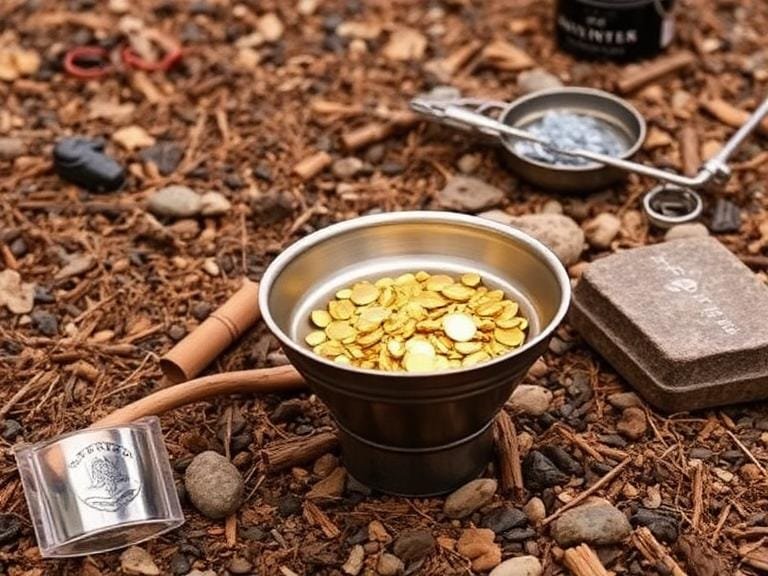
If you are looking for the absolute Best Gold panning mining supplies usa, you must invest in high-impact ABS plastic equipment designed for extreme durability and hydrodynamic efficiency. The essential kit includes: 1) A 14-inch drop-riffle gold pan (preferably high-contrast green or blue), 2) A 1/4-inch classifying screen to remove oversized cobble, 3) A lightweight aluminum stream sluice box, 4) A polyethylene snuffer bottle for fine gold extraction, 5) Crevice tools for bedrock cleaning, 6) A heavy-duty steel trowel, and 7) Glass storage vials. We recommend prioritizing high-contrast colors and deep riffle designs to maximize the recovery of ultra-fine flour gold.
Table of Contents
- What Are Gold Panning Supplies?
- How Gravity Separation Works
- The 7 Best Gold Panning Mining Supplies USA
- Benefits of High-Quality Gear
- Limitations vs. Industrial Processing
- Who Should Use It & Who Does Not Need It
- Common Mistakes in the Field
- Critical Buying Considerations
- Essential Reference Tables
- Expert Recommendation from ORO Mineral
- The Bottom Line
- Frequently Asked Questions (FAQ)
- Authoritative References
What Are Gold Panning Supplies?
Gold panning supplies are manual, hand-operated tools designed to separate heavy precious metals from lighter alluvial deposits (sand, gravel, and clay) found in streams, rivers, and dry washes. These tools represent the most fundamental form of gravity concentration. While modern mineral processing companies worldwide utilize advanced centrifugation and flotation circuits, the gold pan remains the universal tool for site sampling, exploration, and hobbyist extraction.
A professional panning kit moves beyond a simple bowl. It encompasses a systematic approach to material reduction, utilizing classifiers to unify particle size, sluice boxes to increase material processing volume, and specialized extraction tools to recover microscopic flakes of gold that human fingers cannot manipulate.
How Gravity Separation Works
To understand why specific supplies are better than others, you must understand the physics of specific gravity (SG). The specific gravity of pure gold is an incredibly dense 19.3. By contrast, the average quartz sand and gravel found in a riverbed has a specific gravity of roughly 2.6. Black sands (magnetite and hematite) sit in the middle at roughly 5.0 to 5.3.
When you place unclassified paydirt into a pan submerged in water and agitate it, you induce liquefaction. The rapid shaking causes the denser gold to sink directly to the bottom of the pan, pushing the lighter silicates to the top. By tilting the pan forward and washing water over the lip, the lighter surface materials are carried away, leaving the heavy gold trapped behind the pan’s riffles. This exact stratification principle is scaled up massively in the industrial sector. For instance, top multi gravity separator manufacturers use centrifugal force to mimic this shaking action at high speeds, recovering fine minerals that ordinary gravity circuits lose.
The 7 Best Gold Panning Mining Supplies USA
In our testing and field experience, assembling a functional kit requires commercial judgment. Buying random components from unverified vendors leads to lost gold and broken tools. Here are the 7 Best Gold panning mining supplies usa that you must include in your inventory.
1. The 14-Inch Drop-Riffle Gold Pan
The foundation of your kit must be a 14-inch pan manufactured from high-impact ABS plastic. Steel pans rust, transfer cold to your hands, and are highly reflective, making gold hard to see. We recommend pans with a deep 90-degree drop riffle on one side and micro-riffles on the other. Crucially, the pan must be deep green or dark blue. These colors provide maximum visual contrast against both yellow gold and black magnetite sand.
2. The 1/4-Inch Classifier (Mesh Screen)
Classification is the secret to successful panning. If you have large rocks in your pan, they will create turbulent water flows that wash your fine gold out of the pan. A classifier is a high-grade plastic sieve with stainless steel mesh (usually 1/4-inch or 1/2-inch gaps) designed to fit perfectly over a standard 5-gallon bucket. It filters out useless cobble before you even begin panning.
3. Portable Aluminum Sluice Box
If you want to move beyond sampling and actually process a moderate volume of gravel, a sluice box is mandatory. We recommend a 30 to 50-inch aircraft-grade aluminum sluice box equipped with a flared intake, expanded metal riffles, and miner’s moss underneath. The stream’s natural current does the washing for you, allowing you to process dirt ten times faster than a single pan.
4. The Polyethylene Snuffer Bottle
Once you have reduced your pan down to a spoonful of black sand and gold flakes, trying to pick up the gold with tweezers is a frustrating waste of time. A snuffer bottle is a specialized squeeze bottle with a suction tube that allows you to vacuum up the gold flakes alongside a small amount of water, securely trapping them inside the bottle’s inner chamber.
5. Bedrock Crevice Tools
Gold is heavy, meaning it sinks until it hits an immovable barrier—bedrock. The richest deposits are often trapped in deep cracks and fissures at the bottom of a river. Heavy-duty steel crevice tools, picks, and specialized hooks are required to pry out the compacted clay and gravel hidden deep within these natural gold traps.
6. Heavy-Duty Steel Trowel or Shovel
Digging in a riverbed is abusive to tools. A cheap garden spade will bend or snap within an hour. You require a heavy-gauge steel trowel or a specialized prospector’s hand shovel. It must be strong enough to pry apart compacted river cobble without yielding.
7. Glass Gold Storage Vials
Never store your recovered gold in plastic bags or cheap containers. Small glass vials with leak-proof screw caps are the industry standard for safely storing and displaying your hard-earned flour gold, nuggets, and picker flakes.
Benefits of High-Quality Gear
We recommend prioritizing professional-grade supplies because the margin of error in fine gold recovery is razor-thin. If your pan’s riffles are poorly molded, or your classifier mesh rusts after one season, you are actively losing money. High-impact ABS plastics resist the abrasion of sharp gravel, and marine-grade aluminum sluices resist corrosion. For commercial users doing site exploration, the reliability of these hand tools dictates the accuracy of your ore body assays.
Limitations vs. Industrial Processing

We must apply commercial and practical judgment here: gold panning is for prospecting and recreation. It is not a viable method for commercial extraction. A human using a gold pan can process perhaps 0.25 cubic yards of material in a grueling ten-hour day. In contrast, evaluating an iron ore processing plant cost or a gold wash plant involves machinery that processes 100 to 500 cubic yards per hour. Panning is strictly the diagnostic precursor to deploying heavy machinery, not the operational baseline.
Who Should Use It & Who Does Not Need It
Who should use it: Recreational hobbyists, amateur prospectors, and professional geologists conducting stream sediment surveys. It is the perfect entry point for anyone wanting to understand the mechanics of density separation before diving into the heavy-duty mineral processing books list.
Who does not need it: Mine operators looking to process bulk tonnage. If you own an established claim with proven reserves, hand tools are obsolete. You need to be consulting with underground mining equipment suppliers and procuring trommels, shaking tables, and centrifugal concentrators.
Common Mistakes in the Field
From our experience, beginners routinely make three critical errors when using the Best Gold panning mining supplies usa. First, they fail to break up the clay. Clay is sticky and will literally steal your gold, floating it out of the pan. You must aggressively knead the material in water before washing. Second, they pan too fast. Gravity takes time to stratify materials; rushing the wash cycle ensures fine gold is flushed over the rim. Third, they neglect classification. Trying to pan a mixture of boulders and fine sand disrupts the hydrodynamic flow, making efficient separation impossible.
Critical Buying Considerations
When purchasing your kit, do not buy based solely on price. Consider the following structural elements:
- Material Durability: The pan and classifier must be UV-resistant. Cheap plastics become brittle when left in the sun and will shatter upon impact with bedrock.
- Riffle Design: Look for pans that offer dual riffles—large deep drop riffles for initial roughing, and fine micro-riffles for the final clean-up phase.
- Portability: If you are hiking miles into the backcountry, weight matters. A folding aluminum sluice box is vastly superior to a rigid, heavy steel one.
If you find heavy concentrations of black magnetic sand in your pan, you will also need a strong rare-earth magnet to extract the iron away from the gold. Understanding methods to separate iron and steel translates perfectly from industrial applications down to the hobbyist level.
Essential Reference Tables
Quick Summary Table: Core Panning Kit Checklist
| Equipment Type | Primary Function | Recommended Specification |
|---|---|---|
| Gold Pan | Gravity stratification and washing | 14-inch, ABS Plastic, Green/Blue color |
| Classifier | Material sizing and rock removal | 1/4″ Stainless Steel Mesh |
| Sluice Box | High-volume material processing | Lightweight Aluminum, Flared Intake |
| Snuffer Bottle | Extraction of fine flour gold | Soft polyethylene, tight-sealing internal tube |
Comparison Table: Plastic Pans vs. Steel Pans
| Feature | High-Impact Plastic Pans | Traditional Steel Pans |
|---|---|---|
| Weight | Ultra-lightweight | Heavy, causes rapid arm fatigue |
| Rust Resistance | 100% Rust-proof | Prone to rust if not oiled/seasoned |
| Riffles | Engineered 90-degree drop riffles | Usually smooth-sided (requires expert technique) |
| Visibility | Excellent contrast (Green/Blue) | Poor contrast (Dark grey/silver reflection) |
Pros and Cons Table: Recreational Gold Panning
| Pros | Cons |
|---|---|
| Extremely low cost of entry. | Highly labor-intensive and physically demanding. |
| Highly portable for remote backcountry access. | Yields incredibly low processing volume per hour. |
| Perfect for geological assay sampling. | Not commercially viable for sustained profit. |
| Environmentally low-impact; permitted on most public lands. | Requires significant time to master the correct wrist motion. |
Buying Guide Table: Expanding Your Setup
| Expansion Stage | Required Equipment | When to Upgrade |
|---|---|---|
| Stage 1: Beginner | Basic Pan, Classifier, Snuffer Bottle | Immediately upon starting to learn fluid dynamics. |
| Stage 2: Intermediate | River Sluice Box, Crevice Tools | When you locate a productive stream and want to increase volume. |
| Stage 3: Advanced | Gas-powered Highbanker or Dredge | When local laws permit mechanized gear and you require maximum yardage. |
Expert Recommendation from ORO Mineral
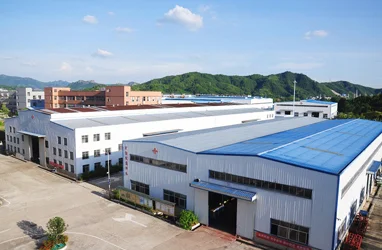
In most professional situations, the equipment you choose dictates the efficiency of your extraction process. ORO Mineral Co., Ltd. is a large-scale intelligent mineral processing, screening, and sand washing equipment manufacturer integrating R&D, production and sales. Since 2014, ORO Mineral has made great contributions to every kind of mineral screening, solid waste resource recovery, beneficiation, washing, and separation, and has accumulated rich experience.
While we engineer massive industrial plants, our expertise in gravity separation allows us to confidently state that securing the Best Gold panning mining supplies usa is critical for site diagnostics. We recommend that prospectors prioritize classification above all else. Do not dump raw riverbed directly into your pan or sluice. By aggressively screening your paydirt down to 1/4 inch, you drastically improve the hydrodynamic flow over your riffles, capturing the micro-fine gold that untrained hobbyists consistently wash downriver. Scale up your thinking before you scale up your machinery.
The Bottom Line
Is investing in the Best Gold panning mining supplies usa actually worth it? Unequivocally, yes. The difference between a cheap tourist pan and a professional, deep-riffle ABS pan is the difference between losing your gold to the river and securely capturing it in your snuffer bottle. Whether you are an amateur hunting for weekend flakes or a professional geologist evaluating a potential claim prior to researching a copper processing plant cost 2025, rely on high-contrast colors, rigid classification screens, and lightweight aluminum sluices to maximize your recovery efficiency. Do not let poorly designed tools negate your hard work in the field.
Frequently Asked Questions
Why do new plastic gold pans need to be “seasoned”?
During the manufacturing process, plastic pans are coated with release agents (oils) to help them slide out of their molds. These oils cause water to bead up and can cause fine gold to float out of the pan. Seasoning involves scrubbing the pan with dish soap, hot water, and a mild abrasive (like fine sand) to remove these oils and slightly rough up the surface, ensuring the gold grips the plastic rather than sliding off.
Do I need a permit to pan for gold in the USA?
In most cases, non-mechanized recreational gold panning (using only a pan, shovel, and small hand tools) on public lands managed by the BLM or Forest Service does not require a permit. However, you must ensure the area is open to the public and not an active, legally staked private mining claim. Always verify local, state, and federal regulations, as rules regarding sluice boxes and motorized equipment are much stricter.
What is the difference between a drop riffle and a micro-riffle?
Drop riffles are deep, 90-degree steps molded into the side of a pan designed for the “roughing” stage. They catch large nuggets and heavy black sand while rapidly washing away lighter gravel. Micro-riffles are very fine, shallow ridges on the opposite side of the pan used during the final “clean-up” phase. They allow the prospector to carefully separate fine flour gold from the remaining black magnetic sands using a gentle water wash.
References & Authoritative Standards
To ensure our operational advice aligns with federal geology standards and public land use policies, we reference data from the following authoritative organizations: