
Spiral Gold Panning Machine Price 2026: The Definitive Commercial Guide
Upgrading your gravity separation infrastructure is one of the most critical capital expenditure decisions a placer mining operation will face. For decades, the industry has been flooded with a confusing mix of cheap, plastic hobbyist wheels and highly engineered industrial fiberglass concentrators, all marketed under overlapping terminology. If you are scaling a recovery plant, misunderstanding the current market dynamics surrounding the Spiral Gold Panning Machine price can result in catastrophic downtime and severe fine gold losses.
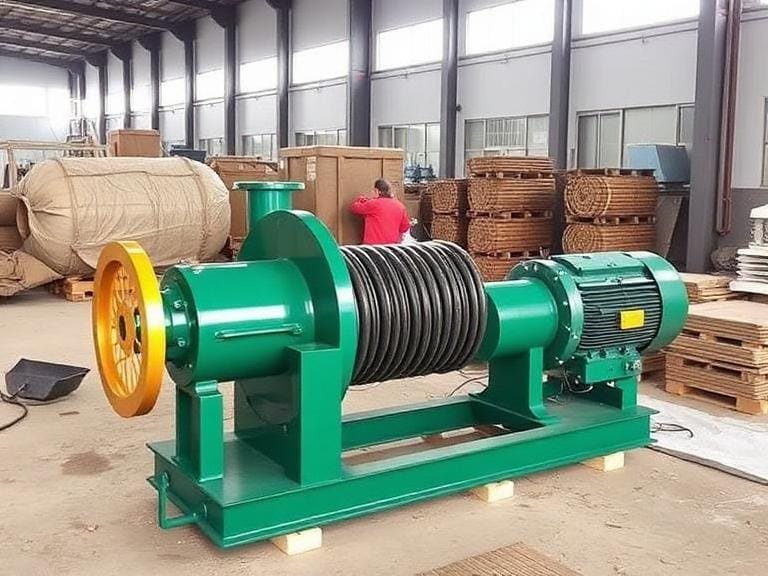
From our experience working with global gold processing equipment manufacturers, operators often purchase small, motorized panning wheels for commercial throughputs, only to watch them fail under the abrasive strain of raw alluvial slurry. In this comprehensive guide, we dissect the true costs, mechanics, and procurement strategies for spiral gravity separators in 2026. We will explain exactly what separates a $400 toy from a $10,000 industrial asset, and whether you actually need to upgrade.
Quick Answer: 2026 Spiral Gold Panning Machine Price Breakdown
In most professional situations, the price of spiral gold recovery equipment depends entirely on your classification: motorized hobby wheel vs. industrial gravity chute. In 2026, the Spiral Gold Panning Machine price falls into three distinct tiers:
- Portable Motorized Panning Wheels (12 to 24-inch diameter): $300 to $800. These are small, 12-volt battery-operated units designed purely for prospectors panning concentrates.
- Commercial Pilot-Scale Spiral Separators: $1,500 to $3,500. Medium-capacity, multi-turn fiberglass chutes handling 1 to 3 tons per hour.
- Industrial Gravity Spiral Chute Banks (2000mm+ diameter): $4,000 to $15,000+ per unit. Heavy-duty, zero-energy concentrators handling up to 12 tons per hour per column, typically utilized by major mining conglomerates.
Our Verdict: If you process more than one ton of material per day, discard the motorized panning wheels immediately. You must invest in a static, high-capacity gravity spiral chute. The zero electrical cost and extreme durability of fiberglass chutes will offset their higher initial procurement price within the first month of continuous operation.
Table of Contents
- What is a Spiral Gold Panning Machine?
- How Gravity Spiral Chutes Work
- Commercial Benefits of Spiral Concentrators
- Limitations and Operational Constraints
- Who Should Use It & Who Does Not Need It
- Common Mistakes Buyers Make
- Quick Summary Table: Pricing & Applications
- Comparison Table: Motorized Wheel vs. Gravity Chute
- Buying Considerations & Specifications
- Expert Recommendation & Product Spotlight
- Frequently Asked Questions (FAQ)
- Authoritative References
What is a Spiral Gold Panning Machine?
The terminology in the mining sector is notoriously imprecise. When someone searches for a spiral gold panning machine, they are usually conflating two entirely different pieces of equipment. The first is a small, motorized plastic wheel with spiraled riffles. These are active devices that require a 12V motor to rotate the pan, dragging heavy gold particles up the spiral while washing away lighter sand. They are strictly for cleaning final concentrates.
The second, and vastly more important for commercial users, is the Gravity Spiral Chute Separator. This is a towering, stationary structure made of high-density fiberglass and lined with wear-resistant polyurethane. It contains no moving parts and requires no electricity. By utilizing the natural forces of gravity, centrifugal acceleration, and fluid dynamics, these massive chutes separate heavy minerals from gangue (waste) continuously as the slurry flows downward. As a premier industry solution provider, Oromineral engineers these static industrial chutes to form the backbone of modern gravity recovery circuits.
How Gravity Spiral Chutes Work
Understanding the physics behind these machines is essential before evaluating the Spiral Gold Panning Machine price. For heavy-duty applications, a gravity spiral chute operates through a precise interaction of centrifugal force and specific gravity.
A specialized slurry pump delivers a pre-screened mixture of ore and water (typically 20% to 45% solids by weight) to the top of the chute. As the slurry spirals downward, a transverse secondary circulation current is generated. Lighter, low-density materials (like quartz and clay) are pushed to the outer, faster-moving edge of the spiral. Conversely, heavy minerals with a high specific gravity (like gold, platinum, or heavy black sands) are trapped in the slower, inner portion of the chute due to friction. At the bottom of the column, adjustable splitters physically separate the stream into concentrate, middlings, and tailings.
This identical physical principle is often applied across various mineral processing techniques and equipment, proving its reliability across decades of metallurgical advancement.
Commercial Benefits of Spiral Concentrators
We recommend static spiral chutes over motorized alternatives for several uncompromising commercial reasons:
- Zero Energy Consumption: Once the slurry is pumped to the feed box, the separation process relies entirely on gravity. This drastically reduces operational expenditures compared to high-draw centrifuges or shaking tables.
- Exceptional Fine Gold Recovery: Industrial spirals excel at capturing ultra-fine gold particles down to 0.04mm (roughly 400 mesh), which traditional sluice boxes routinely wash away.
- Zero Chemical Reagents: Spirals are entirely environmentally friendly, utilizing no cyanide or mercury, mitigating severe regulatory and ecological liabilities.
- Continuous Operation: Unlike batch-processing centrifuges that must be stopped to flush out concentrates, spirals run continuously 24/7, maximizing plant throughput.
Limitations and Operational Constraints
Despite their efficiency, spiral separators are not magic. In our testing, the most common reason for failure is poor feed preparation. Spiral chutes are extremely sensitive to oversize material. Any rock larger than 4mm will disrupt the fluid dynamics, bounce across the inner channels, and wash fine gold into the tailings.
Furthermore, spirals require a strictly controlled slurry density. If the water-to-ore ratio fluctuates wildly, the separation profile collapses. You must pair your spiral setup with high-quality hydrocyclones and slurry pumps to maintain a steady 25% to 45% solid feed. Because of these requirements, integrating spirals impacts your overall plant budget, much like calculating an eddy current separator cost or factoring in the copper processing plant cost 2025 metrics.
Who Should Use It & Who Does Not Need It
For commercial users: Any alluvial mining operation, sand washing plant, or hard rock milling facility that requires bulk upgrading of heavy minerals prior to final concentration must deploy spiral chutes. They are the ultimate primary concentration tool for high-tonnage environments.
Who does not need it: Recreational prospectors processing a few buckets of dirt on the weekend do not need a multi-story industrial spiral. For these hobbyists, a small $400 12-volt motorized panning wheel is completely sufficient. Additionally, if your target ore has a very low specific gravity differential (where the waste rock is almost as heavy as the target mineral), gravity separation will fail. In those highly specific instances, operators might need to research complex chemical leaching or review a magnetic separation process guide.
Common Mistakes Buyers Make
The most expensive error operators make is under-sizing their equipment. Trying to force 20 tons of material per hour through a spiral bank rated for 10 tons will result in massive losses of fine gold.
Another prevalent mistake involves ignoring the wash water system. Many modern spirals require a secondary wash water line to keep the inner concentrate band clean. Failing to install properly filtered water lines leads to clogged nozzles, causing mud and silica to contaminate the high-grade gold concentrate. To understand how clean water systems integrate into mining, operators should study a standard sand washing plant working principle before finalizing their plumbing designs.
Quick Summary Table: Pricing & Applications
| Equipment Category | Average 2026 Price Range | Typical Throughput | Target End-User |
|---|---|---|---|
| Motorized Auto-Panning Wheel | $300 – $800 | 10 – 50 lbs per hour | Hobbyists, Weekend Prospectors |
| Single Column Pilot Spiral Chute (600mm) | $800 – $1,500 | 0.8 – 1.2 Tons per hour | Artisanal Miners, Lab Testing |
| Standard Industrial Gravity Spiral (1200mm) | $1,500 – $3,500 | 4 – 6 Tons per hour | Small to Medium Placer Operations |
| Heavy-Duty Multi-Turn Bank (2000mm) | $4,000 – $15,000+ | 10 – 15 Tons per hour (per column) | Commercial Mining Conglomerates |
Comparison Table: Motorized Wheel vs. Gravity Chute
| Specification | Motorized Panning Wheel (12V) | Industrial Gravity Spiral Chute |
|---|---|---|
| Energy Required | Continuous 12V DC power | Zero (Gravity driven) |
| Footprint / Mobility | Highly portable, fits in a truck bed | Fixed installation, requires vertical clearance (6m+) |
| Maintenance | High (Bearings, belts, motor brushes) | Extremely Low (No moving parts) |
| Wear Resistance | Low (Basic plastics) | Extreme (Fiberglass with polyurethane/corundum lining) |
| Primary Function | Final cleaning of super-concentrates | Bulk roughing and primary scavenging |
Buying Considerations & Specifications
When assessing a Spiral Gold Panning Machine price quote from mining equipment manufacturers global networks, pay close attention to the structural specifications. The pitch (distance between spiral turns) and the lateral slope dramatically dictate the separation efficiency.
For fine gold, you require a shallower pitch and a precise lateral slope (typically around 9 degrees). The surface lining is also non-negotiable. Bare fiberglass will wear through in months under the abrasion of quartz sand. Ensure your supplier quotes machines lined with high-wear polyurethane or emery/corundum coatings. These premium linings increase the initial price by 15% to 20% but extend the equipment’s lifespan by years.
Expert Recommendation & Product Spotlight
From our experience, building a profitable recovery circuit requires equipment that scales efficiently without driving up maintenance overhead. We strongly recommend abandoning small motorized systems if your goal is commercial viability. Instead, invest your capital in robust, static gravity separation architecture utilized by leading mineral processing companies worldwide.
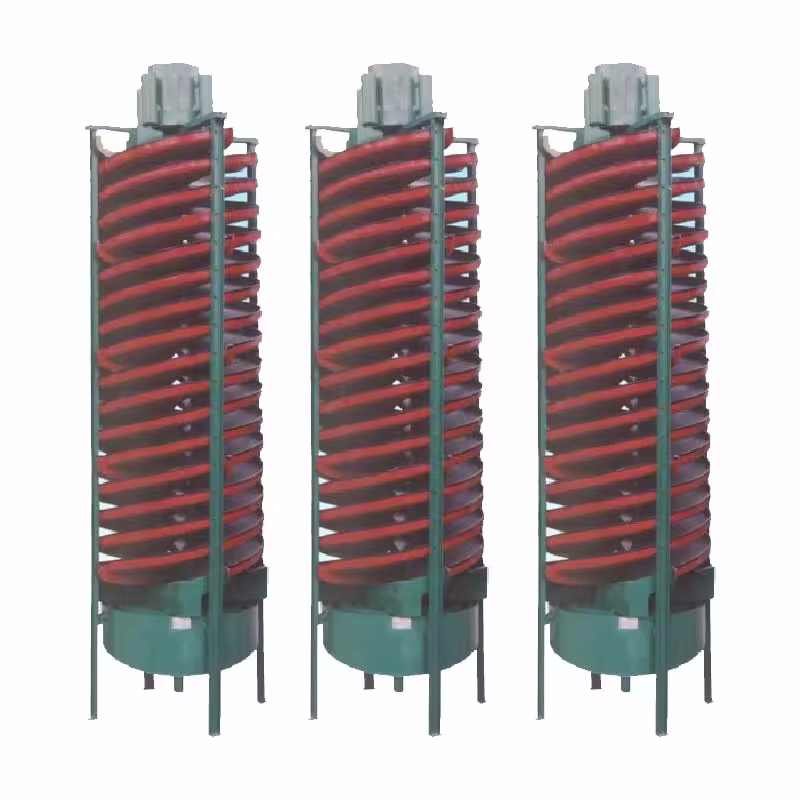
By deploying the Oromineral 2000mm Gravity Spiral Chute, operators lock in a continuous 12 ton-per-hour processing capability with absolutely zero electrical draw for the separation phase. It is the definitive commercial choice.
Frequently Asked Questions (FAQ)
No. The spiral chute itself contains no moving parts and requires zero electricity. However, you will require electrical or diesel power to operate the slurry pump that feeds the mixture to the top of the chute.
Industrial fiberglass gravity spiral chutes are highly efficient at recovering ultra-fine heavy minerals, successfully capturing particles as small as 0.04mm (roughly 400 mesh), provided the slurry density and wash water are properly calibrated.
Absolutely. While popular for placer gold, spiral chutes are the industry standard for concentrating iron ore, ilmenite, chromite, zircon, rutile, tungsten, and tin. They are effective for any mineral deposit containing a sufficient specific gravity differential between the target ore and the waste sand. Similar gravity mechanics are even utilized in preliminary stages of the magnesium extraction process guide.
Spiral chutes are designed for fine-grained separation (typically under 2mm to 4mm maximum). If you introduce larger gravel or rocks into the system, the large material will physically displace the fine gold from the inner concentrate band and wash it out into the tailings, completely ruining your recovery rates.
Authoritative References
To ensure our operational guidance aligns with the strictest global metallurgical standards, we rely on data from the following authoritative institutions:
- U.S. Geological Survey (USGS) National Minerals Information Center: Providing definitive statistics on global gold commodity production, alluvial processing trends, and gravity recovery benchmarks. Visit USGS
- Society for Mining, Metallurgy & Exploration (SME): The premier professional society advancing the worldwide mining and underground construction community through peer-reviewed metallurgical engineering publications. Visit SME
- International Council on Mining and Metals (ICMM): Setting the global standards for safe, fair, and sustainable chemical-free gravity processing methodologies across the international mining sector. Visit ICMM