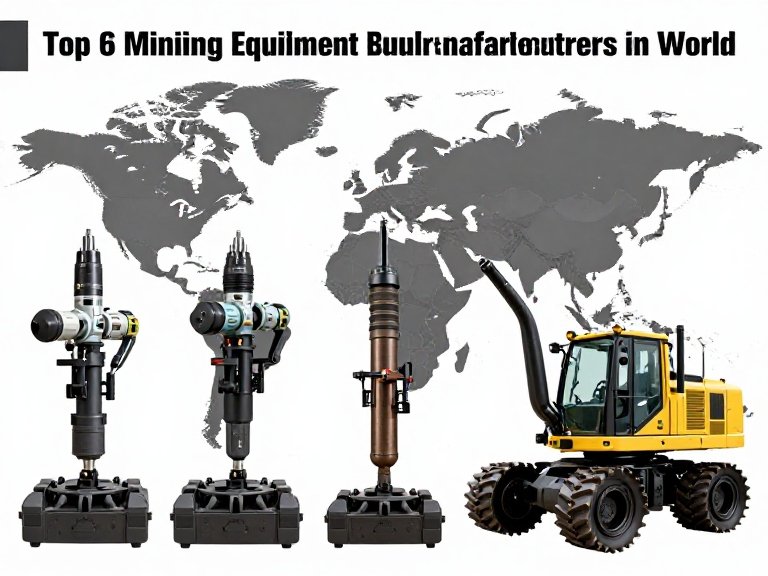
Top 6 Mining Drilling Equipment Manufacturers in the World
Choosing a mining drilling equipment manufacturer is a long-term operational decision, not simply a matter of comparing machine prices. The wrong drill can increase downtime, consume more drilling tools, slow development, and create service problems that outweigh any initial purchase savings. For buyers evaluating global suppliers, six established names deserve close attention: Sandvik, Epiroc, Komatsu, Caterpillar, Boart Longyear, and Furukawa Rock Drill.
Quick Summary: Top Mining Drilling Equipment Manufacturers
| Manufacturer | Headquarters | Key strengths | Best suited for |
|---|---|---|---|
| Sandvik | Sweden | Underground and surface drill rigs, rock tools, automation, digital solutions. | Hard-rock mines, underground development, production drilling. |
| Epiroc | Sweden | Surface and underground drilling, automation, electrification, aftermarket services. | Mining operations seeking integrated drilling and fleet technology. |
| Komatsu | Japan | Large-scale mining equipment, surface drilling, underground mining machinery. | Large mines and operations requiring a broad equipment ecosystem. |
| Caterpillar | United States | Surface mining drills, mining machinery, dealer support, fleet integration. | Open-pit mining and large production operations. |
| Boart Longyear | United States | Exploration drilling equipment, drilling services, tooling and down-hole instrumentation. | Mineral exploration, core drilling, specialized drilling programs. |
| Furukawa Rock Drill | Japan | Rock drills, hydraulic drilling equipment, breakers and drilling attachments. | Rock excavation, quarrying, construction and selected mining applications. |
Selection note: This is an editorial shortlist based on product specialization, established industry presence, and relevance to mining drilling applications. It is not a verified market-share ranking, nor does the order represent a measured performance ranking.
What Is Mining Drilling Equipment?
Mining drilling equipment refers to machinery and tools used to create holes in rock, ore bodies, and geological formations during mineral exploration, mine development, production, and blasting operations. Depending on the application, equipment may drill vertical, horizontal, inclined, or directional holes using different drilling mechanisms.
Mining drilling is not one standardized activity. An exploration geologist may need a core drilling rig to recover intact rock samples. An underground mine may require a jumbo drill rig to create development holes in a tunnel face. An open-pit operation may use a large rotary or down-the-hole (DTH) drill to prepare blast holes across a production bench.
These applications require different machine configurations, drilling tools, power systems, mobility, and technical support. Buyers should therefore identify the drilling task before comparing manufacturers. A company with an excellent reputation in underground development may not be the most suitable supplier for a mineral exploration drilling contractor.
How We Evaluate Mining Drilling Equipment Manufacturers
For this shortlist, we focus on manufacturers and suppliers with established relevance to mining drilling. We consider the breadth of drilling applications, specialist expertise, equipment portfolio, technology direction, and the practical importance of aftermarket support.
We do not rank companies by machine price because public list prices are rarely comparable across different drilling configurations. Nor do we treat company size as proof that a particular rig is best for a specific mine.
In most professional situations, the following criteria provide a more useful buying framework:
- Drilling specialization: Does the company manufacture equipment for exploration, underground development, production drilling, or surface drilling?
- Geological suitability: Can the equipment handle the rock hardness, abrasiveness, fracture conditions, and required hole dimensions?
- Productivity: Does the rig meet the required penetration rate, hole accuracy, availability, and production schedule?
- Automation and technology: Are remote operation, digital monitoring, automated drilling, or electrification relevant to the project?
- Aftermarket support: Are spare parts, service technicians, tooling, and maintenance support available where the mine operates?
- Total cost of ownership: What will the machine cost over its working life, including consumables, maintenance, fuel or electricity, and downtime?
1. Sandvik
Headquarters: Sweden
Main focus: Underground drilling, surface drilling, rock tools, rock excavation, automation, and digital mining solutions.
Sandvik is one of the most established names in mining and rock excavation equipment. Its mining business covers underground and surface drilling, rock tools, mechanical cutting, loading and hauling, ground support, and digital technologies. This broad portfolio makes Sandvik particularly relevant to hard-rock mines that want to coordinate drilling equipment, consumables, maintenance, and digital operations.
For underground operations, buyers should examine the company’s development and production drilling solutions against tunnel dimensions, drilling patterns, required hole accuracy, and machine maneuverability. In surface mining, the appropriate drilling configuration depends on bench height, hole diameter, rock conditions, and the production plan.
Why consider Sandvik?
- Broad coverage of underground and surface mining drilling applications.
- Established rock tools and drilling consumables portfolio.
- Automation and digital mining technologies for selected operations.
- Mining equipment, parts, service, and technical support capabilities.
Limitations and buying considerations
A large product portfolio does not eliminate the need for application-specific evaluation. Buyers should compare the exact rig configuration, tooling compatibility, service response time, and lifecycle costs. For smaller operations, the purchase and support package may be more extensive than necessary.
Our view: Sandvik is a strong candidate for hard-rock mining companies that need an integrated drilling and rock excavation ecosystem. It deserves particular attention when underground drilling, rock tools, and automation are central to the project.
2. Epiroc
Headquarters: Sweden
Main focus: Surface and underground drilling rigs, rock excavation, mining tools, automation, electrification, and aftermarket services.
Epiroc is a global mining and infrastructure equipment supplier with a strong focus on drilling and rock excavation. The company was launched as an independent listed business in 2018, following its separation from Atlas Copco. Its product and service portfolio addresses both surface and underground applications.
Epiroc is particularly relevant to mines that want to modernize drilling operations through automation, digitalization, and electrification. Its range includes equipment for different drilling methods and mining environments, supported by tools, parts, and service offerings.
Why consider Epiroc?
- Dedicated mining and infrastructure equipment focus.
- Surface and underground drilling equipment options.
- Automation and remote-operation technologies for suitable applications.
- Electrification initiatives and aftermarket service capabilities.
Limitations and buying considerations
Advanced automation and connected systems can require additional investment in infrastructure, training, integration, and technical support. A mine should calculate whether these capabilities solve a measurable operational problem before paying for them.
Our view: Epiroc is worth shortlisting when drilling productivity, automation, and fleet modernization are major priorities. For mines planning a technology upgrade, compare the full implementation cost—not only the equipment specification.
3. Komatsu
Headquarters: Japan
Main focus: Surface mining machinery, underground mining equipment, large-scale production equipment, and mining technology.
Komatsu is a major global construction and mining equipment manufacturer. Its mining portfolio includes equipment associated with large-scale surface mining as well as underground operations. The company’s mining presence was expanded significantly through its acquisition of Joy Global, bringing the P&H and Joy mining equipment businesses into the Komatsu group.
For drilling buyers, Komatsu is particularly relevant when evaluating large production operations and integrated mine equipment fleets. The right product depends on the drilling method and the specific operation; buyers should distinguish between the company’s broader mining equipment portfolio and the exact drilling models available for their region.
Why consider Komatsu?
- Broad mining equipment portfolio and established global presence.
- Experience in large-scale surface and underground mining equipment.
- Mining technology and fleet-management capabilities.
- Potential integration advantages for operations already using Komatsu equipment.
Limitations and buying considerations
Do not assume that a broad mining portfolio means every drilling category is covered equally in every market. Confirm the exact model, manufacturer responsibility, parts supply, and local service arrangements. For specialized exploration drilling, a dedicated exploration equipment provider may be a more direct comparison.
Our view: Komatsu is a serious option for large mining groups seeking a broad equipment ecosystem. Buyers should verify the specific drilling range and local support structure rather than rely on corporate scale alone.
4. Caterpillar
Headquarters: United States
Main focus: Surface mining, production drilling, large mining machinery, engines, power systems, and equipment support.
Caterpillar is widely recognized in mining for its large equipment portfolio, including haul trucks, loaders, dozers, and surface mining drills. Its drilling equipment is relevant to open-pit operations where blast-hole drilling is part of a large production cycle.
For buyers, Caterpillar’s appeal often extends beyond the drill itself. The wider equipment ecosystem, dealer network, parts availability, fleet support, and integration with other mine machinery can influence the economics of a purchase.
Why consider Caterpillar?
- Strong relevance to large-scale surface mining operations.
- Mining drill offerings alongside a broad range of production equipment.
- Established dealer and service ecosystem in many mining regions.
- Potential fleet-management and equipment integration benefits.
Limitations and buying considerations
Buyers focused on underground development or specialist core exploration should compare Caterpillar with suppliers whose portfolios are more directly concentrated in those applications. The dealer network also varies by country, so local response time and parts availability must be confirmed.
Our view: Caterpillar is a logical candidate for open-pit mines that value fleet compatibility and established regional support. It should be evaluated on production cost per drilled meter or another project-specific operating metric, not brand recognition alone.
5. Boart Longyear
Headquarters: United States
Main focus: Mineral exploration drilling, drilling services, drilling equipment, performance tooling, and down-hole instrumentation.
Boart Longyear has a long history in the drilling industry and is especially relevant to mineral exploration. Unlike suppliers whose strongest identity is large mine production equipment, Boart Longyear combines drilling equipment, drilling services, tooling, and down-hole technologies.
For exploration companies, the quality of recovered core, drilling reliability, depth capability, hole conditions, and field-service support can matter more than the size of the machine. A specialist provider can be a better fit when the project depends on obtaining reliable geological information across difficult terrain or remote locations.
Why consider Boart Longyear?
- Strong specialization in mineral exploration drilling.
- Drilling services as well as equipment and tooling.
- Performance tooling and down-hole instrumentation capabilities.
- Long-standing experience across a range of mineral commodities.
Limitations and buying considerations
Exploration drilling expertise should not be confused with a complete range of large production blast-hole drills or underground development equipment. Buyers should compare the specific rig type, drilling method, depth requirements, tooling package, and service model.
Our view: Boart Longyear deserves a place on the shortlist for exploration drilling contractors and mining companies that prioritize core recovery, drilling services, and specialized tooling.
6. Furukawa Rock Drill
Headquarters: Japan
Main focus: Hydraulic rock drills, crawler drilling equipment, rock breakers, and drilling-related machinery.
Furukawa Rock Drill is a specialist manufacturer associated with rock drilling and hydraulic equipment. Its products are relevant to rock excavation, quarrying, construction, and selected mining applications. The company is worth considering when the project requires a focused rock drilling solution rather than a complete fleet of large-scale mine production equipment.
Rock drilling requirements vary considerably between quarry benches, construction sites, underground headings, and mineral extraction projects. The appropriate equipment depends on hole diameter, drilling depth, rock conditions, mobility, and the type of drilling tool used.
Why consider Furukawa?
- Specialist experience in rock drilling and hydraulic equipment.
- Product relevance to quarrying and rock excavation.
- Options for crawler-mounted and related drilling applications.
- A useful alternative when comparing specialist rock drilling manufacturers.
Limitations and buying considerations
Confirm whether the exact model is designed for the mine’s production requirements. A crawler drill suitable for a quarry or construction project is not automatically a replacement for a large surface production drill or an underground long-hole rig.
Our view: Furukawa is a practical candidate for buyers seeking specialist rock drilling machinery. It is especially important to verify local parts, technical support, and the suitability of the drilling method for the geology.
Mining Drilling Equipment Manufacturers: Detailed Comparison
| Manufacturer | Exploration drilling | Underground drilling | Surface drilling | Automation and digital solutions | Best buying scenario |
|---|---|---|---|---|---|
| Sandvik | Evaluate specialist product availability | Strong portfolio | Strong portfolio | Strong focus | Hard-rock mines needing integrated equipment and tooling. |
| Epiroc | Evaluate model-specific availability | Strong portfolio | Strong portfolio | Strong focus | Operations prioritizing drilling technology and modernization. |
| Komatsu | Not its primary distinguishing specialization | Mining equipment portfolio | Mining drilling portfolio | Fleet and mine technology | Large mines seeking broad equipment integration. |
| Caterpillar | Not its primary distinguishing specialization | Selected mining applications | Strong relevance | Fleet and equipment technology | Open-pit production drilling and fleet compatibility. |
| Boart Longyear | Strong specialization | Project-dependent | Exploration and production drilling services | Down-hole technology | Mineral exploration and core drilling programs. |
| Furukawa Rock Drill | Model-dependent | Selected rock drilling applications | Rock drilling and crawler applications | Model-dependent | Specialist rock excavation and drilling requirements. |
Comparison guidance: “Strong portfolio” indicates a major area of relevance, not a claim that every manufacturer offers identical models or capabilities. Confirm model availability, specifications, and local service coverage directly with each supplier.
Pros and Cons of Buying from Major Global Manufacturers
| Advantages | Disadvantages and trade-offs |
|---|---|
| Established engineering and product development capabilities. | Initial purchase prices and ownership costs may be substantial. |
| Broader model ranges for different mining applications. | Large catalogs make model selection more complex. |
| Established aftermarket parts and service networks in many regions. | Actual service response depends on the mine’s location and dealer coverage. |
| Access to advanced automation, monitoring, and fleet technologies. | Digital upgrades may require infrastructure, training, and integration investment. |
| Documented product specifications and technical support processes. | Special configurations and imported parts may involve long lead times. |
| Potential compatibility with existing equipment fleets. | Brand compatibility should not override technical suitability or lifecycle economics. |
Main Types of Mining Drilling Equipment
Understanding the drilling method is essential before contacting manufacturers. The following categories cover common mining and exploration requirements, although individual machine designs and terminology vary between suppliers.
1. Underground jumbo drill rigs
Jumbo drill rigs are used in underground mine development and tunneling to drill patterns of holes into rock faces. They may be configured with one or more booms and are selected according to tunnel dimensions, drilling pattern, required accuracy, and available working space.
For underground mine operators, machine maneuverability, boom coverage, drilling precision, service access, and operator conditions are important selection criteria.
2. Long-hole production drilling rigs
Long-hole drills are used in underground production mining to create holes for specific extraction methods. Their suitability depends on hole length, diameter, deviation control, rock conditions, and the mine’s production design.
Do not select a long-hole rig based on maximum drilling depth alone. Hole accuracy and repeatability can be just as important to the overall mining plan.
3. Rotary blasthole drills
Rotary blasthole drills are commonly used in open-pit mining to create production holes for blasting. They are often selected for large-scale operations where drilling productivity, hole diameter, bench conditions, and machine availability influence production economics.
4. Down-the-hole drilling rigs
DTH drilling uses a hammer located near the drill bit to transfer impact energy to the rock. It is used in a range of surface and other drilling applications. Buyers should evaluate the compressor requirements, hammer and bit compatibility, hole diameter, depth, and geology.
5. Exploration core drilling rigs
Core drilling is used to recover cylindrical rock samples for geological analysis. The rig, drill rods, core barrels, bits, and drilling fluids must be selected for the target depth, formation, sample quality requirements, and site conditions.
For exploration projects, core recovery and sample integrity are central performance indicators. A high drilling speed is not valuable if the recovered samples do not meet the geologist’s requirements.
6. Crawler-mounted rock drills
Crawler drills are mobile drilling machines used in quarrying, construction, and selected mining applications. Their mobility can be useful where the working area changes frequently or where the drilling position is not fixed. Buyers should check terrain capability, machine stability, drilling range, and transport requirements.
How to Choose the Right Mining Drilling Equipment Manufacturer
For commercial buyers, the most expensive mistake is selecting a manufacturer before defining the drilling requirement. A supplier may be globally recognized and still offer a machine that is poorly matched to a particular mine.
1. Define the drilling application first
Specify whether the project requires exploration core drilling, underground development, underground production drilling, open-pit blasthole drilling, DTH drilling, or quarry drilling. Include the required hole diameter, depth, angle, and production target.
2. Provide geological information
Rock hardness, abrasiveness, fractures, water conditions, and formation variability influence machine and tooling selection. Provide available geological data to the manufacturer. If the geology is uncertain, ask for a technical assessment rather than accepting a generic machine recommendation.
3. Compare drilling performance using the right metrics
Useful metrics may include penetration rate, meters drilled per shift, hole accuracy, availability, consumable cost per meter, and maintenance hours. These metrics should be evaluated under comparable operating conditions.
We recommend asking suppliers to explain the assumptions behind any productivity figures. A theoretical drilling rate is not the same as actual site performance after repositioning, rod handling, maintenance, and operational delays.
4. Check spare parts and local service coverage
For remote mines, parts availability can determine whether a machine remains productive. Ask for the location of service teams, common parts lead times, emergency support arrangements, and recommended critical spares.
A machine with a competitive purchase price may become an expensive asset if a critical component takes weeks to arrive.
5. Evaluate automation based on measurable value
Automation can improve consistency and reduce some manual tasks, but it is not automatically a good investment for every mine. Consider whether the site has the communications infrastructure, maintenance capability, operator training, and production volume needed to justify the technology.
6. Request a complete technical and commercial proposal
A serious proposal should cover the machine configuration, drilling tools, power requirements, operating conditions, training, warranty, commissioning, maintenance schedule, spare parts, and delivery terms. Ask suppliers to identify exclusions clearly.
7. Ask for comparable operating references
Request references from mines with similar geology, production scale, and operating conditions. A machine performing well in a different rock formation or climate may not deliver the same results at your site.
Cost and Total Ownership: Is a Premium Mining Drill Worth Buying?
Mining drilling equipment is a capital investment, but the purchase price is only one part of the financial decision. The total cost of ownership includes fuel or electricity, drilling consumables, maintenance labor, spare parts, equipment availability, transport, training, and downtime.
For a high-production mine, a machine with a higher initial price may be the more economical option if it consistently delivers more productive drilling hours and lower consumable costs. For a small exploration contractor with intermittent projects, a simpler rig with lower capital requirements may make more financial sense.
| Buying strategy | Potential benefit | Main risk | Our recommendation |
|---|---|---|---|
| Lowest purchase price | Lower initial capital requirement. | May involve higher maintenance, downtime, or tooling costs. | Use only after checking specifications and lifecycle costs. |
| Premium global manufacturer | Established engineering, product range, and potential service coverage. | Higher initial investment and potentially complex support packages. | Strong option for critical production equipment where uptime has high value. |
| Specialist exploration supplier | More focused equipment and services for core drilling programs. | May not cover the mine’s wider production equipment requirements. | Preferred when sample recovery and exploration performance are the priorities. |
| Regional or alternative manufacturer | Potentially competitive pricing and closer regional support. | Quality, parts availability, and long-term service capability need verification. | Evaluate through technical documentation, references, and a trial where practical. |
Common Mistakes When Comparing Mining Drilling Equipment Manufacturers
Comparing different drilling methods as if they were equivalent
A core drilling rig and a production blasthole drill do not perform the same task. Comparing their prices or drilling rates without considering the method and application produces misleading conclusions.
Focusing only on maximum drilling depth
Maximum depth is a specification, not a complete measure of productivity. Hole accuracy, penetration rate, tooling life, operating availability, and geological suitability must also be considered.
Ignoring consumable costs
Drill bits, rods, hammers, and other consumables can have a significant effect on operating expenditure. Ask manufacturers to provide realistic tooling recommendations and, where possible, reference consumption data for comparable conditions.
Assuming global brands always have better local support
Service coverage varies by country and region. Confirm the actual dealer, service team, parts warehouse, and response commitments for the mine’s location.
Overbuying automation
Automation is valuable when it solves a defined productivity, consistency, or operational challenge. It is not a substitute for suitable equipment selection, trained personnel, or maintenance planning.
Failing to plan for mineral processing
Drilling is only one stage of a mining operation. The material extracted must still be screened, washed, separated, and concentrated where required. Mine owners should consider how drilling and extraction decisions connect with downstream processing capacity.
Where ORO Mineral Fits in the Mining Equipment Supply Chain
ORO Mineral is a mineral processing equipment manufacturer, not one of the six drilling rig manufacturers listed above. Its role is further downstream in the mining and mineral processing workflow, where extracted material may require screening, washing, separation, and beneficiation.
ORO Mineral Co., Ltd. integrates research and development, production, and sales of mineral processing, screening, and sand washing equipment. Since 2014, the company has developed equipment and services for mineral screening, solid waste resource recovery, beneficiation, washing, and separation.
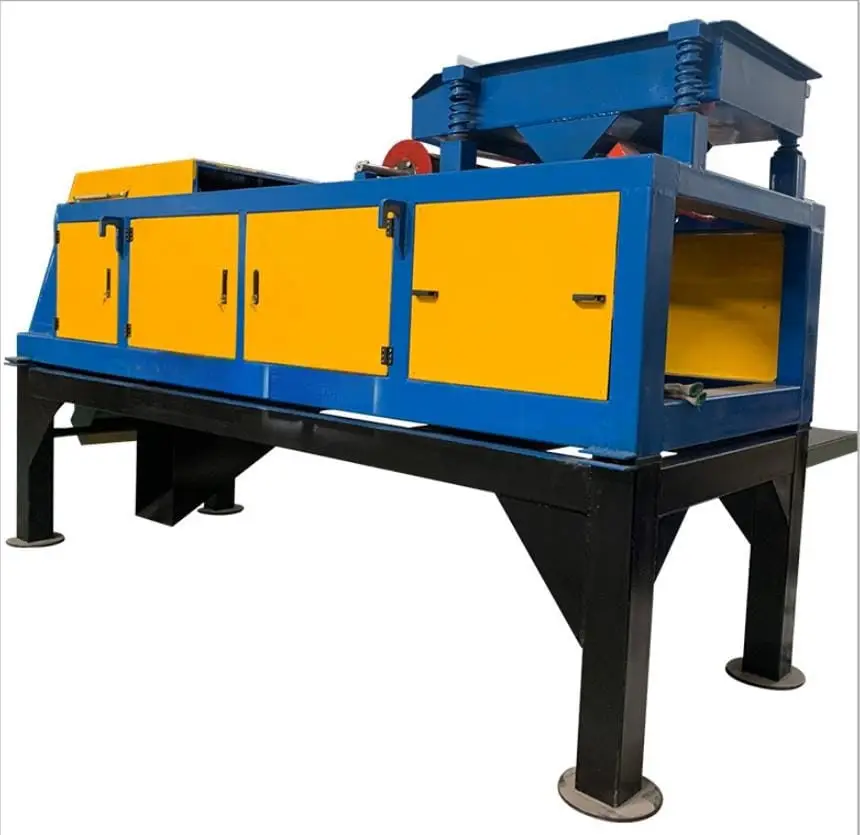
ORO Mineral develops mineral processing, screening, washing, and separation equipment.
For mines and processing plants, selecting drilling equipment and selecting mineral processing equipment are separate decisions, but both affect project economics. Drilling and blasting influence fragmentation and material handling. Downstream equipment must then be matched to the actual feed characteristics, throughput, and recovery objectives.
Depending on the ore and process design, ORO Mineral’s product range includes:
- Magnetic separation equipment for mineral and material separation applications.
- Magnetic separator machines for suitable processing lines.
- Gravity spiral concentrators for gravity-based mineral concentration.
- Sand washing machines for washing and classification-related applications.
Buyers should select these products according to mineral properties, feed size, throughput, separation requirements, and process test results. A magnetic separator, for example, is not a universal solution for every ore. The appropriate magnetic intensity, separator configuration, and operating conditions depend on the material being processed.
Explore the ORO Mineral processing equipment range when planning the screening, washing, and separation stages of a mineral processing project.
When Should a Mining Operation Upgrade Its Drilling Equipment?
Replacing a drill simply because a newer model exists is rarely a sound investment. Upgrade decisions should be based on measurable operational limitations and the expected return from a replacement or retrofit.
Consider an upgrade when one or more of the following conditions persist:
- Frequent breakdowns are reducing productive drilling hours.
- Parts availability is becoming unreliable or excessively expensive.
- The existing rig cannot meet required hole diameter, depth, or accuracy.
- Consumable costs per drilled meter are consistently above the project’s target.
- The mine plan has changed and the existing machine is no longer suitable.
- New automation or electrification options offer a measurable operational benefit.
- Safety, emissions, or operating requirements have changed and the existing machine cannot meet them.
Before purchasing a replacement, compare a full machine upgrade, component retrofit, maintenance overhaul, and new equipment purchase. In some cases, a tooling or maintenance improvement can address the problem at a lower cost. In others, an aging machine may be so poorly matched to the production plan that continued repairs are simply delaying a necessary replacement.
Expert Recommendation: Which Manufacturer Should You Choose?
There is no single best mining drilling equipment manufacturer for every mine. The right supplier depends on the drilling method and the operational environment.
- For underground hard-rock drilling: Start by comparing Sandvik and Epiroc. Evaluate rig dimensions, drilling accuracy, automation options, tooling, and local service support.
- For large surface mining operations: Include Caterpillar and Komatsu in the comparison, especially where production drilling and broader fleet integration matter.
- For mineral exploration and core drilling: Give Boart Longyear serious consideration because of its exploration drilling specialization and service capabilities.
- For specialist rock drilling and quarry applications: Evaluate Furukawa Rock Drill alongside other suppliers with suitable crawler and hydraulic drilling equipment.
For beginners, the most important first step is to define the drilling method and required hole specifications before requesting quotations. For commercial users, we recommend comparing cost per productive drilled meter, machine availability, tooling consumption, and service response time—not just the initial equipment price.
Finally, keep drilling and mineral processing procurement connected but technically separate. A productive drilling operation does not guarantee an efficient beneficiation plant. The material characteristics, throughput, and downstream recovery requirements should guide the selection of screening, washing, gravity separation, and magnetic separation equipment.
Frequently Asked Questions About Mining Drilling Equipment Manufacturers
1. Who are the top mining drilling equipment manufacturers?
Six established companies to consider are Sandvik, Epiroc, Komatsu, Caterpillar, Boart Longyear, and Furukawa Rock Drill. Their strengths differ across underground drilling, surface production drilling, mineral exploration, and specialist rock drilling. The best choice depends on the application rather than a universal ranking.
2. Which company is best for underground mining drilling equipment?
Sandvik and Epiroc are two major manufacturers to compare for underground hard-rock drilling. Evaluate the exact rig configuration, tunnel dimensions, drilling pattern, hole accuracy, automation requirements, and local aftermarket support before making a decision.
3. Which manufacturers make surface mining drilling equipment?
Sandvik, Epiroc, Komatsu, and Caterpillar are relevant suppliers to evaluate for surface mining drilling applications. The suitable manufacturer and model depend on hole diameter, bench height, drilling method, geology, and production requirements.
4. Which mining drilling manufacturer is suitable for exploration drilling?
Boart Longyear is a particularly relevant company for mineral exploration drilling, core drilling equipment, drilling services, and performance tooling. Buyers should compare the required depth, core size, formation conditions, sample recovery objectives, and local service availability.
5. What is the difference between rotary drilling and DTH drilling?
Rotary drilling uses rotational force and an appropriate bit to cut or grind the formation. Down-the-hole drilling uses a hammer near the bit to deliver impact energy directly to the rock. The preferred method depends on rock conditions, hole diameter, depth, drilling productivity, and equipment configuration.
6. How much does mining drilling equipment cost?
There is no reliable universal price because costs vary by rig type, capacity, drilling method, automation, tooling, power system, configuration, and delivery region. Request a project-specific quotation that includes accessories, commissioning, training, spare parts, and warranty terms.
7. What should I compare when choosing a drilling rig?
Compare drilling method, hole diameter and depth, geological suitability, penetration rate, accuracy, availability, tooling consumption, maintenance requirements, power consumption, and local service coverage. Use comparable operating conditions when reviewing supplier performance claims.
8. Are automated mining drilling rigs worth the investment?
They can be worthwhile when automation improves drilling consistency, productivity, operating control, or other measurable outcomes. The business case should include infrastructure, software, training, maintenance, and integration costs. Smaller operations may not need the full technology package.
9. What is the difference between mining drilling equipment and mineral processing equipment?
Mining drilling equipment creates holes for exploration, development, and production. Mineral processing equipment handles extracted material through stages such as screening, washing, crushing, concentration, and separation. They serve different stages of the mining value chain.
10. How do I select a reliable mining equipment manufacturer?
Review product specialization, technical documentation, relevant project references, quality controls, spare parts availability, service response, warranty, and total cost of ownership. Ask for a configuration based on your geology and operating requirements rather than accepting a generic equipment proposal.
References
- Sandvik. Mining and Rock Solutions. Company information covering underground and surface drilling, rock tools, mining services, and digital solutions. Read Sandvik’s mining business overview.
- Epiroc. About the Group. Company overview describing its mining and construction equipment, surface and underground applications, automation, digitalization, electrification, and aftermarket support. Read Epiroc’s corporate profile.
- Boart Longyear. Corporate Profile. Company information about drilling services, exploration drilling equipment, performance tooling, down-hole instrumentation, and global operations. Read Boart Longyear’s corporate profile.