How a Gold Dredge Machine Works: The Complete Placer Mining & Engineering Guide
Quick Answer: How a Gold Dredge Machine Works
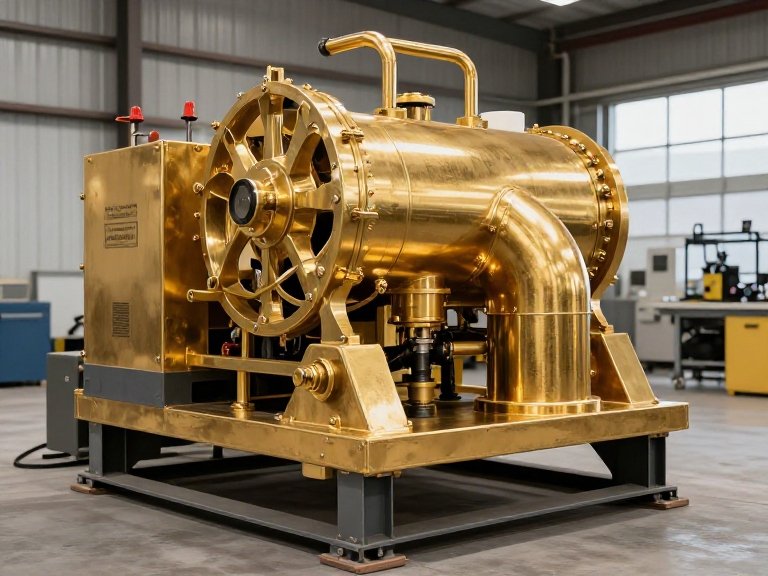
A gold dredge machine extracts underwater placer gravels using the Venturi suction effect, transporting dense slurry onto a floating classification platform where gravity concentration isolates free gold. An internal combustion engine powers a high-pressure centrifugal pump, which forces clean water through a constricted power jet or suction nozzle. This restriction accelerates the water stream, generating a massive localized pressure drop (Bernoulli’s principle) that creates high-velocity suction at the riverbed nozzle. The intake hose pulls gravels, cobble, heavy sands, and native gold upward into an expanding jet flare, which dampens slurry turbulence. The material then washes across a floating sluice box lined with grizzly classification screens, woven wire, expanded metal, and miner’s moss or vortex rubber mats. Dense native gold (specific gravity 15.0 to 19.3) rapidly drops out of the slurry and lodges behind the riffles, while lighter river sands and gravels (specific gravity 2.5 to 3.0) discharge off the rear of the floating platform as tailings. In our testing, successful gold recovery depends on maintaining precise slurry velocity: excessive water washes fine gold out with the tailings, while insufficient water blinds the riffles with packed black sands.
Article Directory
- What Is a Gold Dredge Machine: The Fluid Dynamics and Mechanical Core
- Quick Summary Table: Gold Dredge Machine Components & Operational Specs
- The 4 Sequential Operating Stages of a Suction Gold Dredge Machine
- Downstream Concentrator Spotlight: Oromineral Wet Pan Mill
- Direct Technical Comparison: Suction Dredge vs. Bucket Line vs. Highbanker
- Pros and Cons of Deploying a Gold Dredge Machine
- Who Needs a Gold Dredge Machine vs. Who Should Choose Alternatives
- Costly Field Mistakes That Scour Gold and Destroy Dredge Pumps
- Essential Buying Considerations: Nozzle Diameters, Jet Flares, and Sluices
- Expert Engineering & Procurement Verdict
- Frequently Asked Questions
- Authoritative References & Placer Mining Standards
What Is a Gold Dredge Machine: The Fluid Dynamics and Mechanical Core
To evaluate a gold dredge machine with engineering precision, you must look past the floating pontoons and examine the closed-loop hydraulic circuit. A common misconception among beginners is that river gravel passes directly through an engine-driven pump impeller. If heavy quartz cobble, fractured slate, and abrasive magnetite passed through an impeller spinning at 3,600 RPM, the pump housing would shatter within sixty seconds of operation.
Instead, an industrial suction gold dredge machine operates via an indirect, non-contact suction loop driven by the Venturi principle:
- The High-Pressure Water Pump: The engine drives an abrasion-resistant, high-head centrifugal water pump. The pump draws clean river water through a screened intake foot valve located near the water surface, pressurizing the fluid stream between 40 and 80 PSI depending on nozzle sizing and engine displacement.
- The Power Jet / Venturi Inductor: This pressurized water is pumped through a flexible pressure hose into a rigid steel or aluminum induction tube known as the power jet. Inside the jet, the internal diameter constricts down to a high-velocity jet orifice. As pressurized water blasts through this constriction, fluid velocity spikes, creating a localized pressure drop below atmospheric pressure. This negative pressure induces vacuum suction inside the trailing suction hose.
- The Suction Nozzle: Connected to the vacuum line is the operator’s underwater tool: either an open-suction nozzle or an intake nozzle fitted with a welded grizzly restrictor bar. The restrictor bar prevents rocks larger than the hose diameter from entering the intake line, preventing mid-hose clogs.
- The Jet Flare & Damping Box: Slurry travelling at up to 15 to 20 feet per second exits the power jet into an expanding funnel-shaped channel called a jet flare. The expanding cross-sectional area forces the high-velocity slurry to decelerate smoothly. This kinetic dissipation transforms turbulent flow into a flat, laminar sheet of water, presenting the gravels evenly to the head of the sluice box.
- The Gravity Concentration Deck: The floating sluice box uses hydrodynamic drag and specific gravity differentials to achieve density separation. Heavy minerals—principally free placer gold, electrum, platinum group metals, and black sands (magnetite and hematite)—settle into low-pressure vortices created behind structural riffles, while lighter silica, feldspar, and river gravels are swept off the stern by the continuous water wash.
From our experience on alluvial claims, a suction gold dredge machine is the most cost-effective tool in existence for processing submerged, un-cemented riverbed gravels. However, its efficiency drops off sharply when encountering heavy clay matrices or compacted cemented gravels (caliche), where gravels must be mechanically broken up before suction can pull them into the slurry line.
Quick Summary Table: Gold Dredge Machine Components & Operational Specs
| Subsystem / Component | Engineering Function | Standard Material Specification | Operating Parameters | Critical Performance Impact |
|---|---|---|---|---|
| Centrifugal Water Pump | Pressurizes clean intake water to drive the Venturi jet | Cast aluminum or ductile iron with high-chrome impeller | 100 – 650 GPM @ 45 – 85 PSI | Dictates suction lift depth and slurry transport velocity |
| Power Jet / Jet Flare | Converts hydraulic pressure into vacuum; dampens slurry | Abrasion-resistant T6 aluminum or AR400 plate steel | 15° to 25° expansion angle | Prevents turbulence that scours fine gold out of the sluice |
| Suction Hose & Nozzle | Excavates underwater riverbed and conveys raw paydirt | Heavy-duty PVC spiral-wound wire-reinforced hose | 2.5″ to 10″ internal diameter | Restricts maximum cobble throughput and operating depth |
| Sluice Box Recovery Deck | Stratifies gravels; traps heavy gold via specific gravity | Marine-grade 5052 aluminum with structural steel riffles | 1″ fall per linear foot (8° – 9° pitch) | Controls retention of coarse flakes down to -100 mesh gold |
| Dredge Flotation Pontoons | Supports engine, pump, sluice, and operator gear | Rotomolded cross-linked polyethylene (XLPE) hulls | 400 to 2,500+ lbs buoyant capacity | Maintains stable operating pitch in high-velocity river currents |
| Air Hookah Compressor | Supplies continuous breathing air to submerged diver | Direct-drive Gast rotary vane or Thomas oil-less piston | 2.5 to 5.0 CFM @ 50 – 90 PSI | Allows extended underwater bottom time to access deep bedrock |
The 4 Sequential Operating Stages of a Suction Gold Dredge Machine
Stage 1: Underwater Excavation and Venturi Vacuum Generation
The dredging cycle begins beneath the surface on the riverbed. An operator wearing diving gear works the suction nozzle directly against underwater paystreaks, cobble beds, and decomposing bedrock seams. High-pressure water from the surface pump enters the power jet, firing forward through a narrow annular or central orifice. This jet stream creates a localized pressure depression at the nozzle throat according to Bernoulli’s principle of fluid dynamics.
Atmospheric pressure pushing down on the river surface forces water, sand, gravel, and heavy placer gold into the low-pressure nozzle opening. The operator maneuvers the nozzle at a 45-degree angle to maintain an optimal slurry density ratio of approximately 20% to 25% solids to 75% to 80% water. In our testing, allowing the nozzle to suck clean water without gravel wastes fuel and starves the sluice, while burying the nozzle completely in fine sand stalls the vacuum loop, creating a plugged hose that requires shutdown to clear.
Stage 2: Kinetic Slurry Deceleration in the Jet Flare
Once gravels enter the suction line, they accelerate through the power jet at velocities often exceeding 18 feet per second. If this high-speed, chaotic slurry shot directly onto the sluice riffles, the intense kinetic energy would blast away any pre-existing concentrate bed, scouring trapped gold into the river tailings. The jet flare is the critical damping mechanism. As the diameter of the flare expands outward, the fluid velocity slows down proportionally ($A_1 V_1 = A_2 V_2$), converting dynamic velocity head back into static pressure head.
A heavy-duty rubber damper flap or crash box mounted at the mouth of the flare absorbs the physical impact of flying cobbles. The rocks lose momentum and drop gently into the flowing water sheet, allowing the slurry to transition from high-velocity turbulent flow into a wide, uniform, laminar slurry bed before it reaches the first capture riffle.
Stage 3: Specific Gravity Stratification Across the Sluice Box
The core mineral processing stage occurs inside the floating sluice. Placer gold has a specific gravity between 15.0 and 19.3 (pure gold sits at 19.3), making it roughly six to seven times heavier than ordinary quartz river gravels, which carry a specific gravity of 2.6 to 2.7. As the slurry washes down the inclined box, this density differential drives kinetic stratification.
The upper section of modern commercial dredges typically features a classifier punch plate. Coarse gravels (larger than 1/2 inch) ride over the perforated steel plate and discharge out the back, while water, fine sand, and gold drop through the perforations into a lower, low-velocity undercurrent. Downstream, Hungarian riffles or engineered vortex rubber mats create localized low-pressure recirculation eddies behind each bar. Heavy gold particles drop out of the fast-moving surface water, settle into these vortex pockets, and work their way deep into unbacked miner’s moss or woven loop carpeting, where they remain shielded from the rushing current.
Stage 4: Tailings Rejection and Concentrates Harvesting
Lighter silica sand, gravels, and river cobbles lack the mass required to penetrate the low-pressure vortex zones. Hydrodynamic lift forces sweep these low-density tailings across the tops of the riffle bars, discharging them off the rear of the floating platform back into the river. After running a production shift (typically 4 to 8 hours depending on black sand volume), the operator performs a cleanup.
The dredge pump is throttled down, the riffle ladders are unlatched, and the concentrate-laden miner’s moss or vortex mats are carefully lifted and rinsed into a wash tub. The resulting concentrate consists of native gold flakes, nuggets, and dense magnetic black sands. From our experience, fine gold recovery does not end at the dredge; these raw concentrates must be processed through secondary gravity and magnetic separation systems to produce clean, smeltable gold bullion. Exploring integrated mineral processing techniques and equipment ensures your downstream recovery matches your dredge’s extraction capacity.
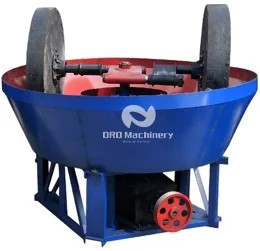
Downstream Milling Partner: Oromineral Wet Pan Mill for Gold Processing
A high-capacity gold dredge machine extracts massive volumes of riverbed gravels, but raw placer concentrates often contain gold locked within un-liberated quartz pebbles or dense ironstone matrix. Oromineral manufactures heavy-duty industrial processing hardware designed to crush, mill, and liberate refractory and coarse placer concentrates.
| Operational Function | Continuous wet-grinding, particle liberation, and amalgamation/gravity preparation |
| Structural Construction | Heavy-duty cast alloy roller runners and manganese-hardened wear plates |
| Grinding Efficiency | Adjustable roller pressure and rotational speed tailored to mineral hardness |
| Power & Footprint | Energy-efficient motor drive package; compact footprint for remote mining camps |
| Integration Target | Milling dredge oversize concentrates, quartz vein ore, and hard alluvial cobble |
Mineral Processing Guidance: Dredge sluices capture free placer gold, but hard quartz float and mineralized cobble require fine mechanical reduction. Discover the full technical specifications on the Wet Pan Mill for Gold Processing product page, or review our comprehensive guide across gold processing equipment manufacturers.
Direct Technical Comparison: Suction Dredge vs. Bucket Line vs. Highbanker
| Mining Technology | Excavation Mechanism | Hourly Processing Capacity | Water Requirement | Bedrock Crevice Penetration | Capital Cost Profile |
|---|---|---|---|---|---|
| Suction Gold Dredge Machine (4″ – 6″) | Hydraulic Venturi vacuum nozzle via high-pressure pump | 4 – 15 Cubic Yards / Hour | Continuous in-stream immersion required | Exceptional; nozzle sucks deep bedrock cracks clean | Moderate ($3,500 – $18,000 USD) |
| Industrial Bucket-Line Dredge | Continuous rotating mechanical digging bucket chain | 150 – 600+ Cubic Yards / Hour | Flooded pond or large river channel | Poor; flat buckets scrape over jagged bedrock gaps | High to Extreme ($250,000 – $5M+ USD) |
| Highbanker / Power Sluice | Manual shovel or mini-excavator feed to dry land hopper | 1 – 5 Cubic Yards / Hour | Low to Moderate; recirculating pump or stream hose | Manual; operator must scrape bedrock by hand | Low to Moderate ($1,500 – $6,000 USD) |
| Amphibious Cutterhead Dredge | Rotating mechanical cutter head with slurry pump | 50 – 200 Cubic Yards / Hour | Navigable industrial waterways and tailing ponds | Moderate; high volume but tears up soft bedrock | High ($80,000 – $450,000 USD) |
Pros and Cons of Deploying a Gold Dredge Machine
| Operational Aspect | Field & Economic Advantages (Pros) | Practical Limitations & Risks (Cons) |
|---|---|---|
| Underwater Bedrock Access |
|
|
| Material Throughput & Recovery |
|
|
Who Needs a Gold Dredge Machine vs. Who Should Choose Alternatives
Every commercial mineral deposit demands equipment matched to its geological setting, overburden depth, and hydrology. Purchasing a gold dredge machine for an incompatible deposit burns operating capital and leads to operational failure.
Who Must Invest in a Gold Dredge Machine:
- Alluvial River Claim Holders with Active Water Flow: If your mining concessions sit along active rivers where exploratory drilling or test panning confirms that heavy placer gold is concentrated directly on bedrock beneath two to six feet of submerged cobble, a suction dredge is mandatory. No other tool can systematically vacuum submerged cracks while operating in fast currents.
- Commercial Tailing Pond Recovery Operators: Legacy mining operations throughout the 19th and early 20th centuries deployed crude dredges that lost significant fine gold into settlement ponds and tailing piles. Floating modern dredges equipped with multi-stage classification recovers this previously lost value efficiently. Review parallel processing setups via our sand washing plant working principle analysis.
- Bedrock Crevice Clean-Up Specialists: When heavy excavation equipment (such as 20-ton excavators) strips river overburden during dry-season diversions, the jagged bedrock surface remains covered in gold-bearing fines. A compact suction dredge acts as an industrial vacuum, cleaning crevices with precision that excavator teeth cannot match.
Who Should Choose Alternative Mineral Processing Hardware:
- Dry High-Terrace and Desert Placer Miners: If your gold sits on high river terraces twenty feet above the water table, or in arid desert placer zones (such as Western Australia or the American Southwest), a floating dredge is useless. You need dry trommel wash plants, dry washers, or highbankers paired with water-truck supply loops. Discover how dry sorting functions in our guide on Dry electromagnetic separator technology.
- Hard-Rock Underground and Lode Miners: If your gold is bound inside unweathered, solid quartz veins, attempting to use a suction dredge is an exercise in futility. Lode mining requires drilling, blasting, primary jaw crushing, and high-reduction milling through systems like our Wet Pan Mill for Gold Processing followed by gravity concentration on a 6-S shaking table.
- Operations Facing Severe Environmental Dredging Bans: Certain jurisdictions enforce total bans on motorized suction dredging due to fish spawning protections. In these regions, operators must pivot to dry excavation land-based plants or closed-loop sediment washing systems highlighted in our sand washing methods guide.
Costly Field Mistakes That Scour Gold and Destroy Dredge Pumps
Placer Extraction Warning: The most catastrophic operational error in suction dredging is running the sluice box with too much water velocity at an overly steep angle. If the water rushes down the deck with white-water boiling turbulence, fine placer gold will not settle; it will hydroplane across the riffle tops and eject straight out the back into the river tailings.
- Improper Sluice Box Angle and Flow Velocity: Setting a dredge sluice angle too steep (over 10 degrees) prevents low-pressure vortices from forming behind the riffles. The concentrate bed scours out, washing fine gold away. Conversely, setting the angle too flat (under 6 degrees) causes heavy magnetite black sands to pack rock-hard behind the riffles. Once the riffle pockets are filled with packed sand, newly arriving gold cannot drop in and washes over the flat sand bed into the river. Check the riffles every hour; they should remain loose and fluid when touched.
- Running Without an Adequate Foot-Valve Screen on the Pump Intake: Allowing small river gravels or twigs to get sucked into the high-pressure water pump will wedge inside the centrifugal impeller vanes. This drops pump pressure instantly by 40% to 60%, collapsing suction at the nozzle and clogging the entire suction hose. Always ensure the pump foot valve is suspended off the muddy bottom and wrapped in a clean stainless steel intake mesh.
- Plugging the Suction Hose by Forcing Oversized Rock: When diving, operators sometimes try to jam rocks larger than the hose diameter into the nozzle to clear an area. The rock wedges in the throat of the power jet where the pipe narrows, creating an instantaneous slurry dam. Within five seconds, the suction hose fills with heavy gravel and sand, requiring the diver to shut down the engine, wrestle the heavy hose to the surface, and disconnect the power jet to pound the jam free. Use a nozzle grizzly bar set 1/2-inch smaller than the hose diameter.
- Ignoring Heavy Black Sand Magnetic Choking: Highly mineralized placer gravels contain immense volumes of magnetite and hematite ($Fe_3O_4$). Because black sand carries a high specific gravity (5.1 to 5.3), it quickly overburdens standard sluice riffles. For heavy-duty applications with high magnetic concentrations, pre-concentrate your gravels or run secondary cleanups using industrial magnetic systems detailed in our magnetic separation process guide and high-gradient 1.1kw Belt Magnetic Separator hardware.
- Neglecting Engine and Air Compressor Maintenance in Salt or Silt Water: Operating engines on floating platforms exposes air filters and crankcases to high humidity and fine spray. Sucking water mist into small engine carburetors degrades motor oil, while neglecting air-intake filters on hookah diving compressors risks pumping toxic carbon monoxide or oily air into the diver’s breathing regulator.
Essential Buying Considerations: Nozzle Diameters, Jet Flares, and Sluices
Before purchasing or fabricating an industrial gold dredge machine, audit prospective models against these four foundational engineering criteria:
1. Suction Hose Diameter and Engine Displacement Matching
Dredge capacity scales exponentially with diameter, not linearly. A 4-inch suction hose moves nearly triple the gravel volume of a 2.5-inch hose, while a 6-inch dredge moves more than double the volume of a 4-inch machine:
- 2.5″ to 3″ Dredges: Powered by 5.5 to 6.5 HP industrial gas engines (e.g., Honda GX200). Best for solo operators, backpacking into remote canyons, and working tight mountain streams. Throughput: 1 to 3 cubic yards per hour.
- 4″ to 5″ Dredges: Powered by 9 to 13 HP engines (e.g., Honda GX390) driving 300+ GPM pumps. The commercial baseline for serious multi-person placer exploration. Moves 5 to 10 cubic yards per hour and handles 4-inch cobbles without constant hand-clearing.
- 6″ to 8″ Commercial Dredges: Powered by twin 13 HP engines or commercial diesel-driven pumps delivering 500 to 1,000+ GPM. Designed for commercial operators tackling deep river channels with heavy overburden. Throughput: 12 to 25 cubic yards per hour.
2. Power Jet Architecture: Single-Jet vs. Tri-Jet vs. Over-Engineered Flares
Inspect the jet geometry. Basic entry-level dredges use a simple single-port power jet that fires water into the center of the tube. While simple to fabricate, single jets create a localized high-pressure spike that causes uneven slurry flow. For heavy-duty commercial operations, tri-jet configurations (three high-velocity water streams converging circumferentially) or precision-machined suction nozzles create a vastly smoother, more consistent vacuum that dramatically lowers hose clogging while maintaining vacuum at greater diving depths.
3. Modern Sluice Box Lining Architecture
Do not buy a dredge that relies solely on traditional stamped metal Hungarian riffles over cheap indoor-outdoor carpet. Modern high-recovery dredges utilize three-stage sluice designs: an upper crash zone for primary rock damping, an expanded metal mid-deck over unbacked woven miner’s moss to trap coarse nuggets, and a lower-velocity undercurrent deck equipped with engineered vortex rubber matting (such as Dream Mat or Gold Cube vortex cells) to capture minus-100 mesh flour gold that traditional riffles wash away.
4. Pontoon Buoyancy Reserves and Catamaran Stability
Ensure the floating pontoons offer at least 50% to 75% reserve buoyancy over the combined dry weight of the frame, engine, pump, fuel, water-filled sluice, and heavy gravel bed. Rotomolded cross-linked polyethylene (XLPE) pontoons filled with closed-cell expanded foam are mandatory; metal pontoon cans puncture easily on submerged river boulders. If a dredge pontoon loses buoyancy in a 4-knot river current, the entire machine will flip, sending your expensive engine, dive compressor, and collected gold concentrates straight to the bottom.
Expert Engineering & Procurement Verdict
In our professional assessment across decades of mineral processing and placer mining operations, a gold dredge machine remains the single most efficient, cost-effective tool ever created for recovering gold from submerged alluvial bedrock. Shovels, excavators, and land-based trommels cannot compete with the fluid dynamics of a high-vacuum Venturi suction nozzle when cleaning gold out of irregular, flooded bedrock cracks.
For beginners and solo prospectors, we recommend starting with a high-grade 3-inch or 4-inch suction dredge equipped with an authentic Honda industrial engine, a twin-diaphragm air compressor, and a dampening jet flare. It offers manageable fuel logistics, fits in a standard pickup truck bed, and provides enough suction to clear heavy river cobble safely.
For commercial operators and heavy-duty placer concessions, invest in a 6-inch to 8-inch commercial dredge built with heavy-duty rotomolded pontoons, a tri-jet power manifold, and a 3-stage classification sluice. Treat your recovery as an integrated circuit: use the dredge as your primary high-volume alluvial extractor, and process your dense black sand concentrates downstream using proven milling hardware like the Oromineral Wet Pan Mill and specialized shaking tables. By respecting fluid mechanics, monitoring slurry velocities, and maintaining loose, fluid riffle beds, your gold dredge machine will consistently deliver maximum gold recovery across every production shift.
Frequently Asked Questions
A suction gold dredge machine relies on the Venturi effect rather than pulling abrasive rocks through an impeller. A high-pressure water pump pushes high-velocity water into a tapered power jet or suction nozzle. As water constricts and accelerates through the jet orifice, pressure drops dramatically according to Bernoulli’s principle, creating a powerful vacuum that vacuums up riverbed gravels, sand, and gold without gravel ever contacting pump impellers.
In most professional situations, the operational standard is an inclination of approximately 1 inch of fall per linear foot of sluice length (roughly an 8 to 9-degree slope). Setting the pitch too steep scours the riffles, washing micro-fine gold out with the tailings, while a pitch set too flat causes heavy black sands to pack solid, blinding the riffles and preventing gold from dropping into the capture matrix.
Standard single-stage sluice dredges capture coarse gold and flake gold exceptionally well, but often lose 30% to 50% of sub-100 mesh flour gold due to high slurry velocity. To achieve high fine-gold recovery, operators must use multi-stage classification systems, modern engineered vortex rubber matting, dampening crash boxes, and secondary processing tools like shaking tables or centrifugal concentrators.
For individual prospectors and beginners, a 2.5-inch or 3-inch dredge provides manageable portability, lower fuel consumption, and operates within many regional regulatory limits. For commercial operations and heavy-duty placer recovery, 6-inch to 10-inch commercial dredges paired with twin high-pressure pumps and diving air hookahs are mandatory to move the cubic yardage necessary to access deep bedrock paystreaks.
Authoritative References & Placer Mining Standards
- U.S. Geological Survey (USGS): Placer Recovery Methods and Specific Gravity Concentration Principles in Alluvial Gold Mining
- U.S. Environmental Protection Agency (EPA): Placer Mining Effluent Guidelines and Environmental Performance Standards
- Society for Mining, Metallurgy & Exploration (SME): Mineral Processing and Extractive Metallurgy Handbook – Gravity Concentration & Hydraulic Dredging