How Do We Use Magnetic Separation in Physics?
In high school classrooms, understanding how we use magnetic separation in physics usually involves a bar magnet and a pile of iron filings mixed with sand. It is a neat parlor trick. However, in the multi-billion-dollar mineral processing sector, that elementary physics principle is the bedrock of industrial purification. At Oromineral, we do not just study magnetic fields; we engineer massive electromagnetic circuits designed to bend the physical properties of raw minerals to our will.
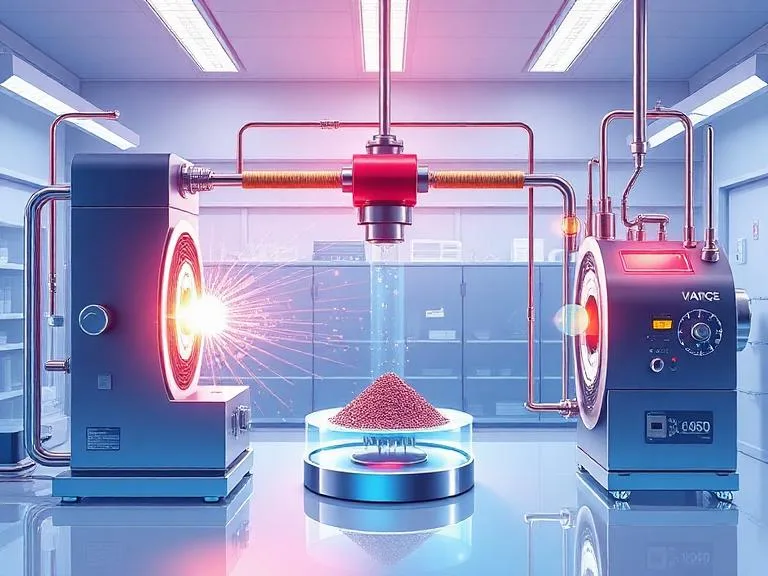
From our experience engineering high-intensity separators, the commercial viability of a mining operation often hinges on understanding the physical forces at play. A misunderstanding of how magnetic susceptibility interacts with field gradients leads to millions of dollars wasted on the wrong equipment. In this comprehensive guide, we will strip away the academic jargon and explain exactly how we use magnetic separation in physics to drive heavy-duty industrial applications, helping you make decisive equipment purchasing decisions.
Quick Answer: How Do We Use Magnetic Separation in Physics?
In applied physics, we use magnetic separation by generating a high-intensity magnetic field gradient to exert a Lorentz force on particles based on their specific magnetic susceptibility. Materials are categorized into three physical states: ferromagnetic (strongly attracted), paramagnetic (weakly attracted), and diamagnetic (repelled).
Industrially, we harness these physics to purify valuable non-metallic minerals (like quartz and kaolin) by pulling weakly magnetic iron and titanium impurities out of a raw material slurry. We recommend utilizing water-cooled electromagnetic coils to sustain magnetic fields exceeding 18,000 Gauss, ensuring maximum purification without catastrophic thermal failure.
Table of Contents
- The Physics Behind the Process: Susceptibility and Gradients
- How It Works in Commercial Equipment
- Benefits of Applied Electromagnetic Separation
- Limitations and Drawbacks
- Pros and Cons Table
- Who Should Use It & Who Does Not Need It
- Common Mistakes in Equipment Selection
- Product Spotlight: The Ultimate Physics Application
- Buying Considerations & Guide
- Comparison Table: Equipment Types
- Expert Recommendation
- Frequently Asked Questions (FAQ)
The Physics Behind the Process: Susceptibility and Gradients
To comprehend how we use magnetic separation in physics, you must look at the mathematical reality governing the machines. The force exerted on a particle inside a magnetic separator is not just about the raw strength of the magnet (Gauss or Tesla). It is governed by the equation: F = V × χ × H × (∇H).
In this equation, V is the volume of the particle, χ (chi) is the magnetic susceptibility of the material, H is the magnetic field intensity, and (∇H) is the magnetic field gradient. In most professional situations, engineers obsess over the background magnetic field (H), but they completely ignore the gradient (∇H). Without a sharp, converging gradient to physically pull the particle away from the fluid drag forces, the magnetic particle will simply align with the field and stay exactly where it is. This is why understanding the WHIMS magnetic separator working principle—which utilizes specialized steel matrices to create massive convergence points—is critical for commercial buyers.
How It Works in Commercial Equipment
We translate these physical formulas into massive steel and copper machines. When raw mineral slurry (a mixture of water and ground rock) is pumped through a magnetic cavity, we apply an electrical current to massive copper coils surrounding the chamber. According to Ampère’s law, this electrical current generates a potent magnetic field.
Inside the cavity, we place a magnetic matrix (often expanded steel mesh or corrugated plates). This matrix warps the magnetic field lines, creating localized zones of extreme magnetic gradient. When a paramagnetic impurity—like hematite or biotite—flows past these matrix points, the magnetic force overcomes the hydrodynamic drag of the water. The impurity locks onto the steel matrix, while the non-magnetic diamagnetic material (like pure silica or kaolin clay) washes through cleanly. This exact methodology is detailed in our comprehensive guide on the magnetic separation process guide.
Benefits of Applied Electromagnetic Separation
Applying advanced physics to mineral processing yields massive commercial dividends. Firstly, it allows for the purification of non-metallic minerals to incredibly high standards—often reducing iron oxide (Fe2O3) levels to below 0.01%. This is mandatory for manufacturing ultra-clear solar panel glass and fine ceramics.
Secondly, electromagnetic separation is environmentally superior to chemical leaching. Acid bleaching processes require hazardous material handling, severe environmental permitting, and expensive wastewater treatment. Using magnetic fields requires only electricity and cooling water, providing a clean, sustainable purification route.
Limitations and Drawbacks
However, you cannot defeat the laws of thermodynamics. The primary limitation of how we use magnetic separation in physics is heat generation. Pushing 160 kW of electrical power through copper coils creates massive resistive heating. If the coils are not aggressively cooled, the electrical resistance spikes, the magnetic field collapses, and the machine can literally melt down. Furthermore, magnetic separation cannot remove diamagnetic impurities, nor can it physically separate particles that are chemically bonded together without prior micro-milling. You can read more about these constraints in our overview of the high intensity magnetic separation process.
Pros and Cons Table: High-Intensity Magnetic Physics
| Advantages (Pros) | Limitations (Cons) |
|---|---|
| Can capture weakly magnetic (paramagnetic) particles down to micron sizes. | Extreme capital expenditure for high-Gauss electromagnetic coils. |
| Replaces toxic acid-leaching processes with clean physical separation. | Generates immense heat, requiring complex water or oil cooling infrastructure. |
| Adjustable magnetic field intensity allows for precise grade targeting. | Useless against non-magnetic or strictly diamagnetic contaminants. |
| Fully automated, continuous processing for high-volume mining operations. | Requires high electrical power consumption (high OPEX in areas with expensive grid power). |
Who Should Use It & Who Does Not Need It
For commercial users and heavy-duty applications: If you are operating a silica sand quarry, a kaolin clay mine, or a feldspar processing plant, you absolutely must use high-intensity electromagnetic separation. The global market demands ultra-low iron content for glass and ceramics. Without exploring magnetic separation applications in industry, your raw materials will be sold at a severe discount.
For beginners or low-spec operators: If you are simply trying to pull stray bolts and excavator teeth out of a coal conveyor belt, you do not need a complex electromagnetic cavity. A simple, permanent overband magnet utilizing NdFeB (Neodymium) magnets is cheap, requires zero electricity, and will easily catch strongly ferromagnetic tramp iron.
Common Mistakes in Equipment Selection
In our testing and consulting across global mine sites, the most catastrophic mistake we see is ignoring the cooling system when purchasing an electromagnetic separator. Buyers look at a spec sheet, see “20,000 Gauss,” and write the check. But without advanced cooling physics, the machine will run at 20,000 Gauss for 45 minutes, heat up, and drop to 12,000 Gauss for the rest of the shift. This ruins your product recovery rate.
Another error is misunderstanding the slurry density. You cannot pump mud through a high-gradient matrix. If your slurry exceeds 30% solids, the physical viscosity and drag forces will simply rip the magnetic particles right off the matrix nodes, defeating the magnetic force entirely. Understanding the magnetic separator machine working principle requires balancing flow rates with field strength.
Product Spotlight: The Ultimate Physics Application
To properly apply these physics at a commercial scale, you need equipment engineered to handle extreme electrical loads while maintaining absolute thermal stability. This is why we developed our flagship wet magnetic separator.

Water-cooling Electro-Magnetic Separator
Engineered specifically for the purification of kaolin, feldspar, and fine quartz, this machine represents the pinnacle of applied magnetic physics. By utilizing an advanced internal water-cooling architecture, we eliminate the thermal degradation of the magnetic field, allowing the system to sustain massive gradients continuously.
- Input Voltage: 380V (Industrial 3-Phase)
- Coil Power: 160 KW (Delivering immense Ampère-turns)
- Background Magnetic Field: 18,000 – 20,000 Gauss (1.8 – 2.0 Tesla)
- Optimal Slurry Density: 10% – 30%
- Magnetic Cavity Diameter: 1000 mm
- Output Capacity: 40~100 m³/h
- Total Weight: 32 Tons of precision-engineered steel and copper
Verdict: Is it worth buying? If your off-take agreements require iron limits below 50 PPM, this machine is not just worth it—it is a mandatory baseline requirement for your processing circuit. View more details on the Oromineral Product Page.
Buying Considerations & Guide
When evaluating top magnetic separator manufacturers China or vetting magnetic separator manufacturers worldwide, use this commercial evaluation framework to ensure the physics align with your financial goals.
| Engineering Specification | What to Look For | Why It Matters Commercially |
|---|---|---|
| Cooling Infrastructure | Internal hollow-copper water cooling (Deionized water). | Air cooling is insufficient for fields over 15,000 Gauss. Poor cooling means the magnetic field decays during operation, ruining product purity. |
| Matrix Material | 430 or custom magnetic stainless steel mesh. | The matrix dictates the gradient (∇H). Incorrect mesh size will either clog the machine or let fine paramagnetic impurities escape. |
| Pulsation Technology | Integrated stroke/pulsation mechanisms in the cavity. | Pulsation agitates the slurry, preventing mechanical entrapment of non-magnetic silica along with the iron impurities. |
| Power Supply Unit | High-efficiency IGBT rectifiers. | Provides stable DC current to the coils and allows for rapid demagnetization during the flushing/cleaning cycle. |
Comparison Table: Equipment Types
| Separator Type | Magnetic Field Source | Max Intensity (Gauss) | Best Application |
|---|---|---|---|
| Permanent Drum Separator | NdFeB or Ferrite Magnets | 1,500 – 5,000 | Removing large, highly magnetic tramp iron or magnetite. |
| Dry High-Intensity (Rare Earth Roll) | Specialized NdFeB Halbach Arrays | 8,000 – 12,000 | Dry, coarse-grained mineral sands where water usage is restricted. |
| Wet Electro-Magnetic Separator (WHIMS) | Electromagnetic Coils (Copper/Aluminum) | 15,000 – 20,000+ | Fine-milled slurries (quartz, kaolin) requiring removal of weakly paramagnetic stains. |
Expert Recommendation
The Oromineral Verdict: We see countless plant managers attempt to cut capital costs by utilizing low-intensity permanent magnets for fine mineral processing. This is a fatal misunderstanding of how we use magnetic separation in physics. You cannot pull micron-sized hematite out of a dense slurry without an immense magnetic gradient.
We unequivocally recommend that commercial silica and kaolin operations invest in water-cooled, high-gradient electromagnetic separators. The 18,000+ Gauss threshold provided by units like our Water-cooling Electro-Magnetic Separator is non-negotiable for achieving the extreme purities demanded by the modern photovoltaic and advanced ceramics industries. Do not compromise on the physics; your final product quality depends on it.
Frequently Asked Questions (FAQ)
How does magnetic separation work in physics?
In physics, magnetic separation works by applying a non-uniform magnetic field to a mixture of materials. The magnetic field gradient exerts a precise Lorentz force on particles based on their individual magnetic susceptibility. Strongly magnetic (ferromagnetic) and weakly magnetic (paramagnetic) particles are pulled toward the magnetic source, while non-magnetic (diamagnetic) particles are unaffected and pass through.
Why do high-intensity magnetic separators need to be water-cooled?
To generate extreme magnetic fields (above 15,000 Gauss), industrial machines must push massive amounts of electrical current through copper wire coils. The physics of electrical resistance dictates that this generates immense thermal heat. If not aggressively cooled with water, the electrical resistance increases, which causes the magnetic field strength to drop dramatically, ruining the separation efficiency.
What is the difference between magnetic field strength and magnetic gradient?
Magnetic field strength (measured in Gauss or Tesla) is the raw power of the magnetic flux. The magnetic gradient is the rate at which that field changes over a specific distance. In industrial separation, you need a high gradient to physically pull a particle out of flowing water. A perfectly uniform magnetic field, no matter how strong, will only align a particle, not pull it.
References
- United States Geological Survey (USGS) – National Minerals Information Center: Authoritative data on global mineral commodities, processing standards, and purity requirements for industrial applications.
- Society for Mining, Metallurgy & Exploration (SME): The leading professional society providing peer-reviewed literature and engineering standards for mineral processing and physical separation technologies.
- Georgia State University – HyperPhysics: Academic and theoretical breakdown of magnetic properties of matter, including paramagnetism, diamagnetism, and Lorentz forces.