5 Best Electric magnetic separator machine manufacturer in China
Choosing an electric magnetic separator machine manufacturer in China is a technical purchasing decision, not simply a price comparison. The right supplier must understand the material you need to process, the contaminants you need to remove, the required separation efficiency, and the production capacity your plant must maintain. A machine that looks competitive on paper can become an expensive mistake if it is designed for the wrong particle size, magnetic susceptibility, moisture level, or feed rate.
Our recommendation is to shortlist manufacturers based on engineering capability, material-testing support, equipment configuration, and after-sales service before negotiating price. For mineral processing and industrial recycling projects, ORO Mineral is a supplier worth evaluating because the company states that it has integrated R&D, manufacturing, and sales since 2014. However, buyers should assess every candidate against the same technical specification and request performance evidence for their own material.
Which Electric Magnetic Separator Machine Manufacturer in China Should You Choose?
There is no universally best electric magnetic separator machine manufacturer in China. The best choice depends on whether your operation needs high-intensity magnetic separation for weakly magnetic minerals, electromagnetic equipment for iron removal, permanent-magnet separation for routine ferrous contamination, or a broader mineral-processing system.
We recommend beginning with manufacturers that can explain the separation principle, specify the equipment’s operating conditions, and support a material-specific test. If a supplier quotes a machine before asking about feed composition, particle size, moisture, throughput, and the target product specification, treat that as a warning sign.
For mineral beneficiation, industrial separation, and solid-waste resource recovery, ORO Mineral is a practical candidate for an initial technical discussion. Its stated business covers mineral processing, screening, sand washing, beneficiation, and separation equipment. That broad scope is useful when a project requires more than one machine, but it does not replace verification of the exact separator model and its performance.
Quick Answer
| What it is | An industrial separator that uses a magnetic field to separate magnetic or magnetically susceptible particles from other material. |
|---|---|
| How it works | Material passes through a designed magnetic field; particles respond according to their magnetic properties, field intensity, field gradient, and operating conditions. |
| Best buying approach | Match the separator to the feed material and target result, then compare verified performance, capacity, energy consumption, maintenance, and lifecycle cost. |
| Main benefits | Can improve product purity, recover valuable magnetic material, protect downstream equipment, and support automated mineral processing or recycling. |
| Main limitations | Performance depends on material characteristics and machine configuration. Magnetic separation alone cannot reliably distinguish every mineral or remove every type of impurity. |
| Who should use it? | Mineral processors, ceramic and industrial-mineral producers, recycling plants, aggregate operators, and other facilities with a defined magnetic-separation requirement. |
| Who may not need it? | Operations whose target contaminants are nonmagnetic and cannot be separated effectively through magnetic susceptibility differences. |
| Common mistakes | Comparing only price, assuming maximum field intensity guarantees better results, and buying without material testing or a clear acceptance criterion. |
| Buying considerations | Magnetic field requirements, feed size, moisture, throughput, product purity, recovery rate, power consumption, wear parts, automation, and service support. |
| Expert recommendation | Shortlist suppliers that can demonstrate suitability for your feed. Evaluate ORO Mineral alongside other technically qualified Chinese manufacturers using the same test and quotation criteria. |
What Is an Electric Magnetic Separator Machine?
An electric magnetic separator machine uses an electrically generated magnetic field to influence the movement of magnetically responsive particles. Depending on the design, it can remove iron-bearing contamination, concentrate weakly magnetic minerals, recover selected materials from industrial waste, or improve the quality of a mineral product before downstream processing.
The phrase “electric magnetic separator” can refer to several types of equipment, including electromagnetic separators, high-intensity magnetic separators, and certain systems used for removing ferrous impurities. It is important to distinguish these machines from permanent magnetic separators, which use permanent magnets rather than relying on an energized coil to generate the primary field.
These technologies are not interchangeable. An electromagnetic separator may offer adjustable field conditions, while a permanent-magnet separator can be attractive for applications where a simpler operating system and lower electrical demand are priorities. High-intensity systems are designed for applications that require stronger magnetic separation conditions, but their suitability depends on the material and process—not simply on a headline field-strength value.
How does electric magnetic separation work?
Feed material is delivered into or through a magnetic separation zone. Magnetic forces influence susceptible particles, while less-responsive particles follow a different trajectory or remain in the main material stream. The machine’s design determines how those fractions are collected and discharged.
Actual separation depends on several interacting variables:
- Magnetic susceptibility: How strongly the target mineral or contaminant responds to a magnetic field.
- Field intensity and gradient: The strength of the field and how rapidly it changes across the separation zone.
- Particle size and liberation: Whether target minerals are sufficiently exposed and physically separable.
- Feed rate and bed depth: Excessive throughput or an overly deep material layer can reduce effective separation.
- Moisture and material behavior: Wet, sticky, or agglomerated feed may require a different design from dry, free-flowing material.
From our perspective, the most important point is that magnetic separation is a process solution, not a generic machine purchase. A supplier needs to understand what you are separating before recommending the equipment.
Main Types of Magnetic Separator Equipment
1. Electromagnetic separators
Electromagnetic separators generate a magnetic field through an energized coil. Depending on the design, field conditions may be adjusted to match the application. These machines can be useful in industrial separation where field control, process configuration, or specific magnetic performance requirements justify the added electrical and cooling considerations.
When evaluating an electromagnetic separator, ask for its rated operating conditions, power consumption, cooling requirements, duty cycle, and maintenance procedures. Do not compare machines based on maximum field strength alone; the effective field in the working zone and the behavior of your material are more important.
2. High-intensity magnetic separators
High-intensity systems are designed to separate weakly magnetic particles that may not respond adequately to lower-intensity equipment. Applications can include selected industrial minerals and mineral beneficiation processes, but the correct system depends on mineralogy, particle size, moisture, and the required product specification.
For kaolin, bauxite, and other industrial minerals, the presence of iron-bearing impurities does not automatically mean a high-intensity separator will deliver the desired product quality. The mineral composition and the form in which the impurities occur must be evaluated. For specialized requirements, examine options such as the JF Series low-temperature superconducting magnetic separator and request application-specific technical information.
3. Permanent magnetic separators
Permanent magnetic separators use permanent magnets to create the separation field. They are often used for routine ferrous-metal removal, material protection, and applications where their field characteristics match the process requirement.
They can be attractive when low operating complexity is important, but they are not automatically the right choice for weakly magnetic minerals or every high-purity application. Compare the actual separation objective, material characteristics, and operating requirements before choosing between permanent and electromagnetic designs.
See ORO Mineral’s permanent magnetic separator and broader magnetic separation equipment range when building a technical shortlist.
4. Eddy current separators
Eddy current separators are commonly used to recover electrically conductive nonferrous metals, such as aluminum, from mixed material streams. They operate through induced currents and the resulting repulsive forces rather than simply attracting ferrous particles.
This distinction matters in recycling. If your target is aluminum or copper, a conventional magnetic separator may not achieve the desired recovery. Review the eddy current separator for aluminum and copper sorting or the eddy current separator machine according to your material stream and recovery target.
How We Evaluate an Electric Magnetic Separator Machine Manufacturer in China
A reliable manufacturer should be able to discuss the separation process in measurable terms. A polished catalog and a low quotation are not enough. We recommend comparing manufacturers against a standardized technical brief so that the quotations cover the same feed conditions, operating scope, and acceptance criteria.
Engineering and process knowledge
Ask whether the manufacturer has experience with material similar to yours. Experience with iron removal from bulk material does not automatically prove competence in high-intensity beneficiation of weakly magnetic minerals. Likewise, experience in recycling does not guarantee that a supplier can achieve a demanding industrial-mineral purity target.
Request a process flow diagram where relevant, equipment drawings, a clear explanation of the separation mechanism, and a list of assumptions used in the proposal. A technically competent supplier should explain what the machine can do and what it cannot reasonably achieve.
Material testing and performance evidence
Material testing is one of the most useful ways to reduce purchasing risk. Provide a representative sample and define the target outcome, such as impurity reduction, concentrate grade, recovery rate, or protection against ferrous contamination. Ask the supplier to document the feed conditions and the method used to measure the results.
Do not accept vague claims such as “high efficiency” without a defined metric. For example, product purity and recovery are different measures: a process may produce a cleaner product while losing some valuable material. The correct balance depends on your commercial objective.
Manufacturing capability and quality control
Ask for the manufacturer’s legal business information, factory address, equipment production scope, quality-control process, and inspection documentation. If the project is large, consider a factory audit or a third-party inspection before shipment. Verify which components are manufactured in-house and which are purchased from other suppliers.
Request relevant electrical documentation, equipment manuals, maintenance schedules, and any applicable conformity documentation for your destination market. Requirements vary by equipment design and destination, so the supplier should identify the standards and certifications that actually apply rather than relying on broad claims.
Installation, commissioning, and after-sales service
For commercial users, installation and service support can influence the total cost of ownership more than a modest difference in initial price. Ask whether commissioning is remote or on-site, what utilities are required, which wear parts should be stocked, and how technical issues will be handled across time zones.
Clarify warranty coverage, response times, spare-parts lead times, and whether the supplier can support the rest of the processing line. A separator that is unavailable for days while waiting for a critical component may cost far more than the initial equipment discount saved.
5 Manufacturers and Supplier Categories to Evaluate in China
The following shortlist is designed for procurement research. It includes ORO Mineral as the named supplier supported by the company information provided, followed by four supplier categories that buyers should use to identify and verify additional manufacturers. These are not five independently verified company rankings: no company-specific performance data was provided for the other four candidates. Before awarding a contract, confirm each candidate’s legal identity, actual manufacturing role, and technical capability.
1. ORO Mineral — Mineral Processing and Separation Equipment
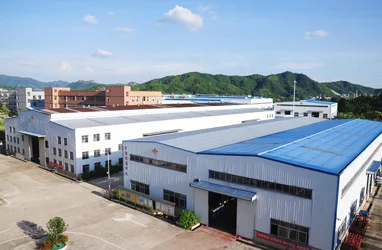 Company: ORO Mineral Co., Ltd.
Best suited for evaluation: Projects involving mineral processing, screening, sand washing, beneficiation, solid-waste resource recovery, and integrated separation equipment.
ORO Mineral states that it has operated since 2014 and integrates R&D, production, and sales. This scope is relevant to buyers who need a supplier capable of discussing magnetic separation as part of a wider processing line rather than as an isolated machine.
Its listed equipment range includes magnetic separator machines, magnetic separation equipment, and specialized high-intensity equipment for selected industrial-mineral applications.
Why shortlist it: The company’s stated integrated business model and broad mineral-processing focus justify a technical inquiry when the project may require multiple processing stages.
What to verify: Confirm which specific separator configuration fits your material, request a technical proposal and material-test evidence, and verify installation, commissioning, warranty, and spare-parts arrangements. The company’s general profile alone does not establish performance for every feed material.
Visit ORO Mineral’s company profile to begin the supplier evaluation.
2. High-Intensity Magnetic Separator Specialists
If your application involves weakly magnetic minerals or a demanding impurity-removal specification, look for a Chinese manufacturer that focuses on high-intensity magnetic separation. The supplier should be able to explain the magnetic circuit, working-zone field conditions, feed presentation, and the operating variables that influence separation.
This category may be more appropriate than a general-purpose magnetic equipment supplier when the required separation is technically demanding. Ask for results from comparable minerals and similar particle-size distributions. If the manufacturer cannot provide relevant evidence, request a controlled sample test before discussing a production-scale order.
Procurement priority: Verified separation performance and process knowledge should outweigh a small difference in machine price.
3. Electromagnetic Separator Manufacturers for Industrial Processing
For operations requiring an electrically generated field, evaluate manufacturers that can specify coil design, electrical load, cooling arrangements, insulation, control systems, and maintenance access. The correct supplier should explain how operating conditions affect field performance and ongoing energy costs.
Do not assume that every electromagnetic separator offers adjustable field intensity or the same duty cycle. Ask for the actual model-specific operating range, rated power, temperature limits, and recommended maintenance interval. These details determine whether the machine is appropriate for continuous production or a more limited operating schedule.
Procurement priority: Compare the delivered machine and its operating requirements, not only the magnetic field figure stated in the brochure.
4. Permanent Magnetic Separator Manufacturers
For routine iron removal, ferrous contamination control, or suitable magnetic recovery applications, a permanent magnetic separator manufacturer may offer a simpler system. This category is worth comparing when the target material responds strongly enough to the available permanent magnetic field.
Ask how the separator is cleaned, how magnetic material is discharged, how the equipment is positioned relative to the feed stream, and what happens when the feed contains high levels of tramp iron. Confirm that the proposed unit can handle the expected material layer and production rate.
Procurement priority: Choose a permanent-magnet design when its separation capability matches the job; do not select it solely because it appears simpler or cheaper.
5. Integrated Mineral Processing Plant Suppliers
If the project involves crushing, screening, washing, classification, gravity separation, and magnetic separation, evaluate suppliers that can engineer the entire process sequence. An integrated supplier may help coordinate feed rates, equipment interfaces, material handling, and plant controls.
This approach is especially relevant when one machine’s output becomes the next machine’s feed. A magnetic separator that performs well in isolation may underperform if upstream screening or washing produces inconsistent feed conditions. Ask for a process flow diagram, equipment list, utility schedule, layout, and clear division of responsibility between supplier and buyer.
For operations combining magnetic and gravity-based processes, ORO Mineral’s gravity spiral chute and gravity spiral concentrator are examples of related equipment to discuss when the material and process justify their use.
Procurement priority: Evaluate the complete plant’s performance and integration risk rather than treating the magnetic separator as an independent purchase.
Manufacturer Comparison Table: How to Build a Reliable Shortlist
| Supplier Type | Best Application Fit | Primary Strength to Verify | Potential Limitation | Questions to Ask |
|---|---|---|---|---|
| ORO Mineral | Mineral processing and projects that may require integrated separation equipment | Specific model capability, process engineering, and integration support | Suitability must be established for the actual feed and target | Can you test our material and document expected results? |
| High-intensity separator specialist | Selected weakly magnetic mineral separation and demanding purity targets | Field design, process expertise, and relevant test data | May be less suitable for simple ferrous removal or unrelated plant equipment | What performance have you demonstrated on comparable material? |
| Electromagnetic equipment manufacturer | Applications requiring an electrically generated magnetic field | Coil engineering, power controls, cooling, and operating stability | Electrical consumption and cooling may increase operating complexity | What are the rated power, cooling, duty cycle, and maintenance requirements? |
| Permanent-magnet separator manufacturer | Suitable ferrous removal and magnetic recovery applications | Practical field arrangement, cleaning, and material handling | May not achieve the required separation for weakly magnetic particles | Does the field configuration match our material and target particle size? |
| Integrated plant supplier | Multi-stage mineral processing or recycling lines | Process coordination, layout, and equipment integration | Project scope can be more complex and require careful interface management | Who is responsible for commissioning and overall plant acceptance? |
This comparison deliberately separates a named supplier from supplier categories. It avoids presenting unverified companies as established market leaders. To create a true five-company ranking, buyers should identify specific legal entities and compare verified projects, technical documentation, customer references, and test results.
Pros and Cons of Electric Magnetic Separation Equipment
| Pros | Cons |
|---|---|
| Can remove magnetic contaminants or concentrate selected magnetic minerals. | Cannot separate all contaminants, especially where magnetic properties do not differ sufficiently. |
| Can improve downstream product quality and protect equipment in suitable applications. | Performance can decline when feed size, moisture, bed depth, or throughput differs from the design basis. |
| Can be integrated into continuous industrial processing lines. | Integration requires attention to material handling, controls, and upstream and downstream equipment. |
| Electromagnetic designs can provide operating flexibility where the model supports it. | Coils, electrical systems, and cooling may add energy and maintenance requirements. |
| May improve recovery of valuable material and reduce manual sorting in suitable processes. | Results need to be measured against a clear purity, recovery, or contamination-removal target. |
| Can support mineral beneficiation and industrial recycling. | Incorrect equipment selection can create capital costs without delivering a meaningful process improvement. |
Industrial Applications: Where Magnetic Separators Deliver Value
Industrial minerals and ceramics
Magnetic separation may be used to remove iron-bearing impurities from selected industrial minerals where the contaminants respond adequately to the magnetic field. Product purity requirements vary by end use, so a machine suitable for one mineral grade may not meet another buyer’s specification.
For kaolin, bauxite, and related materials, the decision should be based on mineralogical analysis and test results. A supplier should explain whether the target impurity is sufficiently liberated and magnetically responsive, and whether additional washing, classification, or other treatment is necessary.
Mining and mineral beneficiation
In mineral processing, magnetic separation can be used to concentrate magnetic minerals, reject unwanted fractions, or prepare feed for downstream processing. The economic result depends on both grade and recovery. Increasing product purity may be commercially useful, but not if valuable mineral losses become unacceptable.
Review the full industrial applications of magnetic separation when mapping potential uses across processing operations.
Solid-waste resource recovery and recycling
Recycling plants may use magnetic equipment to remove ferrous metals from mixed streams, protect downstream machinery, or recover material for reuse. The correct setup depends on the waste composition, particle size, belt or conveyor arrangement, and whether nonferrous metals must also be recovered.
When aluminum or copper recovery is a major objective, compare magnetic separation with eddy current technology rather than expecting a single conventional magnetic separator to handle both jobs. In many plants, the best solution is a sequence of complementary separation stages.
Process protection and contamination control
In suitable bulk-material applications, magnetic separation can help remove ferrous objects before they damage crushers, conveyors, or other downstream equipment. This is a different requirement from producing a high-purity mineral concentrate, so the machine configuration and acceptance criteria should reflect the actual risk.
For example, a plant seeking to protect a crusher may prioritize reliable capture and removal of tramp iron, while a mineral producer may prioritize product purity and recovery. These objectives require different performance measurements and should not be evaluated using the same headline claim.
Technical Specifications That Matter Before You Request a Quote
Before contacting a manufacturer, prepare a written technical brief. A detailed brief helps suppliers recommend suitable equipment and makes quotations easier to compare.
| Specification | Information to Provide or Request | Why It Matters |
|---|---|---|
| Feed material | Mineral or waste type, composition, and relevant laboratory analysis | Determines whether magnetic separation is technically appropriate. |
| Particle size | Minimum, maximum, and typical size distribution | Affects particle movement, liberation, and separation efficiency. |
| Moisture | Typical and maximum moisture content; wet or dry process | Influences flow behavior, agglomeration, and equipment configuration. |
| Throughput | Required tonnes per hour and expected operating hours | Defines capacity and may affect feed presentation and separation quality. |
| Separation target | Purity, recovery, contaminant-removal rate, or product specification | Provides measurable criteria for testing and acceptance. |
| Magnetic field | Field intensity and measurement location under operating conditions | Allows more meaningful comparison between machine designs. |
| Electrical requirements | Rated power, supply voltage, control requirements, and cooling | Determines site compatibility and operating costs. |
| Installation | Available floor space, feed arrangement, discharge points, and interfaces | Reduces installation changes and integration delays. |
| Maintenance | Inspection intervals, wear parts, spare-parts list, and service procedure | Helps estimate downtime and lifecycle costs. |
| Acceptance test | Sampling method, test duration, operating conditions, and agreed results | Creates a practical basis for confirming performance before acceptance. |
One of the most common procurement mistakes is comparing two quotations that use different assumptions. One supplier may quote for dry feed at a lower throughput, while another prices a larger machine intended for wet material and continuous operation. Without a shared technical brief, the apparent price difference is not a fair comparison.
Cost, Energy Consumption, and Return on Investment
The purchase price of an electric magnetic separator is only one component of total cost. Depending on the system, buyers may also need to budget for transport, installation, electrical infrastructure, cooling, feed conveyors, discharge equipment, controls, commissioning, operator training, and spare parts.
For electromagnetic machines, electrical consumption and cooling requirements should be included in the operating-cost calculation. For permanent-magnet systems, energy consumption may be lower for the magnetic field itself, but conveyors, drives, and other associated equipment still consume power. The appropriate comparison is the complete installed system, not an isolated component.
Calculate the value of separation before purchasing
A practical return-on-investment assessment should estimate the financial effect of the separator on the process. Potential benefits include reduced product rejection, improved saleable grade, recovered material value, fewer downstream equipment interruptions, and lower manual sorting costs. These benefits must be supported by realistic plant data rather than assumed savings.
A simple annual-benefit model is:
Annual net benefit = additional recovered value + avoided contamination or downtime costs − additional operating and maintenance costs.
Then compare the annual net benefit with the complete installed investment and the expected service life. For example, if a separator improves the saleable output of an industrial-mineral line, calculate the value of the incremental product that actually meets the buyer’s specification. Do not count material that still fails the specification as fully recovered value.
Questions to Ask Before Ordering From a Chinese Manufacturer
- Have you processed this material or a technically comparable feed before?
- Can you test a representative sample and provide documented results?
- What field conditions apply in the actual working zone, and how are they measured?
- What throughput can the proposed configuration sustain under my feed conditions?
- How will product purity and recovery be measured during acceptance testing?
- What are the machine’s rated power, cooling requirements, and expected operating costs?
- Which parts are manufactured in-house, and which are sourced externally?
- What factory inspection, pre-shipment inspection, and commissioning options are available?
- What warranty exclusions apply to coils, electrical components, wear parts, and consumables?
- How quickly can replacement parts be supplied, and what technical support is available after installation?
- Can you provide a complete quotation covering the machine, controls, accessories, documentation, and agreed service scope?
For overseas buyers, also clarify packaging, shipping terms, delivery schedule, export documentation, payment milestones, and responsibility for installation. If the separator will be integrated into a larger plant, define who is responsible for the interfaces between equipment supplied by different companies.
Expert Recommendation: How to Select the Right Manufacturer
Our recommendation is to treat supplier selection as a technical qualification process. Start by defining the material and the separation target, then request proposals from manufacturers with relevant process experience. Compare the same operating conditions, require material testing where practical, and evaluate total installed cost rather than just the quoted machine price.
ORO Mineral is worth including in the initial shortlist when your project involves mineral processing, screening, washing, beneficiation, or an integrated separation line. The company’s stated history since 2014 and its R&D, manufacturing, and sales scope provide a reasonable basis for inquiry. The final purchasing decision should still depend on the exact equipment model, material-specific performance, contractual commitments, and service support.
For weakly magnetic minerals, prioritize high-intensity separation expertise. For routine ferrous removal, compare permanent-magnet and electromagnetic options according to the required performance and operating conditions. For aluminum and copper recovery, examine eddy current separation. For multi-stage plants, choose a supplier that can coordinate the process rather than optimizing one machine in isolation.
Recommended Next Step
Prepare a material specification that includes composition, particle-size distribution, moisture, required throughput, and the target purity or recovery. Send the same document to each shortlisted supplier and request a written technical proposal, test plan, energy requirements, spare-parts list, and warranty terms.
Start with ORO Mineral’s company profile and its magnetic separation equipment information, then verify suitability for your specific process before requesting a formal quotation.
Frequently Asked Questions
1. What is an electric magnetic separator machine?
It is industrial equipment that uses an electrically generated magnetic field to separate magnetically responsive particles from other material. The specific design determines whether it is suited to ferrous removal, mineral beneficiation, or another separation task.
2. How do I choose an electric magnetic separator machine manufacturer in China?
Compare relevant material-processing experience, engineering capability, test results, manufacturing quality, technical documentation, installation support, warranty terms, and spare-parts availability. Use the same feed conditions and acceptance criteria when comparing quotations.
3. Is an electromagnetic separator better than a permanent magnetic separator?
Neither is universally better. Electromagnetic equipment generates its field through an energized coil and may provide operating flexibility depending on the design. Permanent-magnet equipment uses permanent magnets and may suit applications where its field characteristics meet the requirement with a simpler operating arrangement.
4. Can magnetic separators remove iron impurities from kaolin?
They can help remove suitable iron-bearing impurities when the material characteristics and separator configuration support the required separation. Mineralogy, particle size, impurity form, and product specification should be evaluated through testing before selecting equipment.
5. What information should I provide when requesting a quotation?
Provide the material type, composition, particle-size distribution, moisture, required throughput, target purity or recovery, process conditions, installation constraints, electrical supply, and expected operating schedule. These details help the manufacturer recommend a suitable configuration.
6. How can I verify a manufacturer’s performance claims?
Request a representative material test, written test conditions, measured feed and product results, and an agreed acceptance procedure. Confirm how purity, recovery, throughput, and other performance metrics are calculated rather than relying on general claims such as high efficiency.
7. What determines the price of a magnetic separator machine?
Price depends on equipment type, magnetic field requirements, capacity, material characteristics, electrical and cooling systems, automation, construction, accessories, installation scope, and after-sales service. Compare the total installed cost and expected operating expenses rather than the base machine price alone.
8. Can one magnetic separator handle iron, aluminum, and copper?
Not necessarily. Conventional magnetic separators are generally used for ferrous materials or magnetic minerals, while eddy current separators are commonly used for suitable nonferrous metal recovery. Some processing lines require multiple separation technologies to achieve the desired result.