8 Types of Ores Can Be Separated by Magnetic Separation
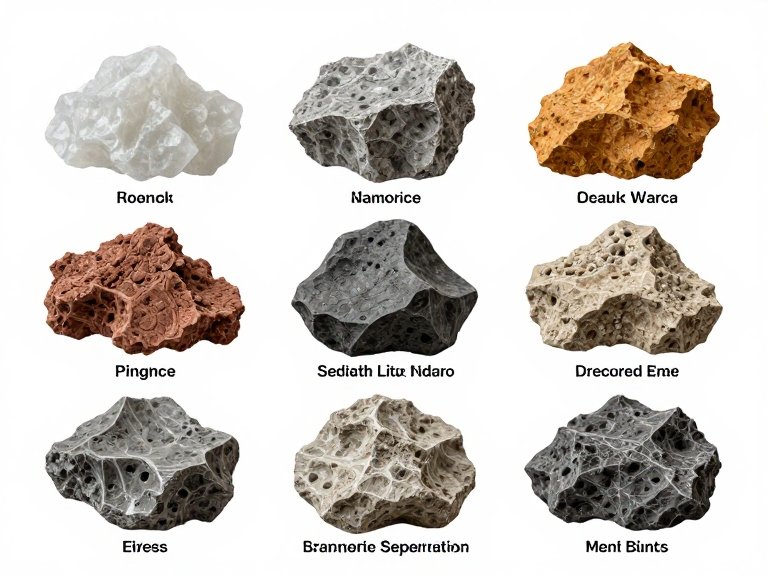
Understanding which ores can be separated by magnetic separation requires matching mineral crystal physics with industrial magnetic circuit engineering. Whether your deposit contains strongly ferromagnetic iron oxides, weakly paramagnetic transition metal ores, or non-magnetic industrial sands carrying iron impurities, selecting the proper magnetic field intensity separates profitable concentrate yields from high tailings losses. Low-intensity magnetic separators (LIMS) handle ferromagnetic minerals under 0.3 Tesla, medium-intensity systems (MIMS) extract moderate paramagnetics at 0.5 to 0.8 Tesla, and high-gradient wet magnetic separators (WHIMS) recover fine paramagnetic particles at field strengths up to 2.0 Tesla. We analyze the eight primary ores can be separated by magnetic separation, evaluating their mineral magnetic susceptibilities, flowsheet configurations, and processing machinery to help your mill optimize grade recovery while minimizing operating expenditure.
Quick Answer: What Ores Can Be Separated by Magnetic Separation?
The eight primary ores can be separated by magnetic separation across commercial mining operations include: 1) Magnetite Ore (strongly ferromagnetic, processed via Low-Intensity Magnetic Separation [LIMS] at 0.1 to 0.3 Tesla); 2) Hematite and Specularite (weakly paramagnetic iron ore requiring Wet High-Intensity Magnetic Separation [WHIMS] at 1.0 to 1.8 Tesla); 3) Ilmenite Titanium Ore (moderately paramagnetic, concentrated via dry or wet medium-to-high intensity separation at 0.6 to 1.4 Tesla); 4) Manganese Ores (Pyrolusite & Rhodochrosite) (paramagnetic manganese minerals recovered via high-intensity magnetic circuits at 1.2 to 1.8 Tesla); 5) Chromite Ore (paramagnetic iron-chromium oxide upgraded via high-gradient magnetic separation at 0.8 to 1.5 Tesla); 6) Wolframite Tungsten Ore (paramagnetic iron-manganese tungstate separated from non-magnetic cassiterite and quartz at 0.8 to 1.4 Tesla); 7) Columbite-Tantalite (Coltan) (paramagnetic rare-metal oxides concentrated via dry high-intensity electromagnetic discs at 1.0 to 1.6 Tesla); and 8) Silica, Feldspar, and Kaolin Industrial Sands (non-magnetic industrial minerals purified by removing paramagnetic biotite, tourmaline, and iron-stain impurities via high-gradient matrix filters exceeding 1.5 to 2.0 Tesla). In most professional situations, pairing magnetic circuits with upstream gravity spiral concentrators or downstream shaking tables delivers the highest concentrate recovery rates at the lowest operating cost per metric ton.
Table of Contents
- The Physics of Magnetic Separation: Field Intensity, Gradient, and Susceptibility
- Quick Summary: The 8 Ores Beneficiated by Magnetic Circuits
- In-Depth Engineering Breakdown: 8 Ores Separated by Magnetic Beneficiation
- Beneficiation Technology Comparison: Magnetic vs. Gravity vs. Flotation
- Pros and Cons of Magnetic Separation Flowsheets
- Who Should Implement Magnetic Circuits vs. Who Needs Flotation Plants
- Featured Mineral Machinery Partner: ORO Mineral Co., Ltd.
- Costly Mistakes Mill Operators Make During Magnetic Separation
- Essential Equipment Sourcing and Flowsheet Selection Considerations
- Expert Recommendation and Plant Engineering Verdict
- Frequently Asked Questions (FAQ)
- Authoritative References
The Physics of Magnetic Separation: Field Intensity, Gradient, and Susceptibility
To determine how ores can be separated by magnetic separation, process engineers must analyze the magnetic susceptibility of the target mineral species relative to its surrounding gangue. Every mineral crystal responds to an external magnetic field based on its internal atomic electron configuration. Minerals are categorized into three physical behaviors: ferromagnetic minerals (permanent magnetic dipole alignment with high positive susceptibility, such as magnetite), paramagnetic minerals (weak positive susceptibility where magnetic moments align only under external fields, such as hematite, ilmenite, and wolframite), and diamagnetic minerals (weak negative susceptibility that are repelled by magnetic fields, such as quartz, calcite, and pure feldspar).
In our testing on processing pilot plants, magnetic field strength (measured in Gauss or Tesla, where 1 Tesla = 10,000 Gauss) is only half the mechanical equation. A uniform magnetic field exerts zero translational force on a mineral particle; it merely rotates the particle to align with field lines. To pull a mineral particle out of a moving slurry stream or off a high-speed conveyor belt, the separator must generate a steep magnetic force gradient (grad B). The translational magnetic attraction force is governed by the product of the mineral volume, its specific magnetic susceptibility, the magnetic field intensity, and the magnetic field gradient:
F_m = V * χ * B * (dB/dx)
When processing coarse ferromagnetic magnetite, a low-intensity drum separator generating 0.15 Tesla with moderate gradient produces sufficient magnetic force to overcome gravity and fluid drag. However, when extracting weakly paramagnetic hematite or tantalite slimes at grain sizes below 45 microns, the specific magnetic susceptibility is three orders of magnitude lower than magnetite. Capturing these fine particles requires high-gradient magnetic separators (HGMS) that utilize stainless-steel wool or grooved matrix plates. These matrices distort the magnetic flux lines, generating localized field gradients exceeding 100 to 500 Tesla per meter, pulling weakly paramagnetic grains out of fluid suspension.
Understanding this balance of forces prevents plant operators from misapplying machinery. If fluid drag or slurry wash velocity exceeds the magnetic pull force, valuable mineral particles wash into the tailings discharge. Conversely, if magnetic entrapment is too strong, non-magnetic silica gangue particles become mechanically trapped within the flocculated magnetic cake, diluting final concentrate grades. Balancing magnetic force against fluid drag and mechanical shearing dictates mineral recovery performance.
Quick Summary: The 8 Ores Beneficiated by Magnetic Circuits
The table below provides a concise operational reference to the eight primary ores can be separated by magnetic separation, detailing mineral susceptibility, required field intensities, and standard industrial separator models:
| Target Ore / Mineral Class | Magnetic Behavior Class | Specific Susceptibility (x 10^-6 m^3/kg) | Required Magnetic Field Strength | Primary Industrial Separator Type |
|---|---|---|---|---|
| 1. Magnetite Ore | Ferromagnetic (Strong) | 20,000 to 80,000 | 0.1 to 0.3 Tesla (1,000–3,000 Gauss) | Wet Drum LIMS / Dry Magnetic Pulley |
| 2. Hematite / Specularite | Paramagnetic (Weak) | 100 to 300 | 1.0 to 1.8 Tesla (10,000–18,000 Gauss) | Wet High-Intensity Magnetic Separator (WHIMS) |
| 3. Ilmenite (Titanium Ore) | Paramagnetic (Moderate) | 150 to 500 | 0.6 to 1.4 Tesla (6,000–14,000 Gauss) | Induced Roll / High-Intensity Dry Disc |
| 4. Manganese Ores | Paramagnetic (Weak to Mod) | 80 to 250 | 1.2 to 1.8 Tesla (12,000–18,000 Gauss) | High-Gradient Magnetic Separator (HGMS) |
| 5. Chromite Ore | Paramagnetic (Moderate) | 120 to 450 | 0.8 to 1.5 Tesla (8,000–15,000 Gauss) | Wet High-Gradient Drum / Disc Separator |
| 6. Wolframite (Tungsten) | Paramagnetic (Moderate) | 150 to 400 | 0.8 to 1.4 Tesla (8,000–14,000 Gauss) | Dry Cross-Belt Electromagnetic Separator |
| 7. Tantalite-Columbite (Coltan) | Paramagnetic (Weak to Mod) | 90 to 300 | 1.0 to 1.6 Tesla (10,000–16,000 Gauss) | Multi-Disc Dry Electromagnetic Separator |
| 8. Silica / Feldspar / Kaolin | Diamagnetic Matrix (Impurity Removal) | Host: Negative | Impurity: 50–300 | 1.5 to 2.0+ Tesla (15,000–20,000 Gauss) | Vertical Ring Pulsating HGMS / Slurry Matrix |
In-Depth Engineering Breakdown: 8 Ores Separated by Magnetic Beneficiation
1. Magnetite Iron Ore (Ferromagnetic High-Volume Extraction)
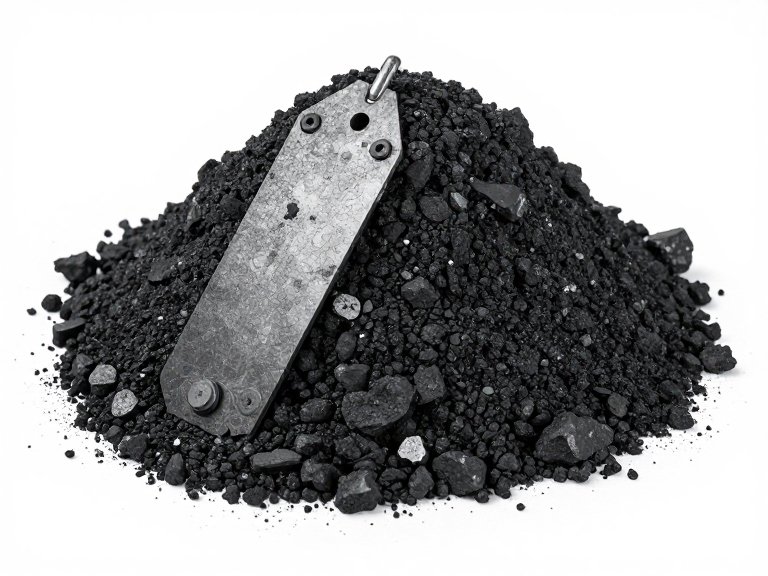
Magnetite ($Fe_3O_4$) is the standard benchmark for magnetic mineral processing. Due to its inverted spinel crystal structure, magnetite exhibits strong ferromagnetism, making it the most energy-efficient mineral to recover. When processing massive run-of-mine magnetite deposits, mills bypass costly chemicals entirely, relying on wet drum low-intensity magnetic separators (LIMS) operating at field strengths between 0.1 and 0.3 Tesla (1,000 to 3,000 Gauss).
From our experience on iron ore beneficiation circuits, processing magnetite follows a multi-stage roughing-cleaning sequence synchronized with stage grinding. In coarse cobbing stages, dry magnetic head pulleys discard barren non-magnetic host rock (granite, basalt) at particle sizes of 10mm to 50mm before the ore enters autogenous ball mills, cutting primary grinding power consumption by up to 30%. In wet finishing circuits, counter-current wet drum separators recover finely ground magnetite particles (-74 microns), elevating raw feed grades from 25% or 35% total iron up to premium blast-furnace pellet feed grades exceeding 65% to 68% Fe. For dry pre-concentration runs, plant managers frequently deploy a heavy-duty 1.1kw Belt Magnetic Separator to scalp tramp iron and recover coarse magnetic fractions ahead of primary ball mills.
2. Hematite and Specularite (Weakly Paramagnetic Iron Upgrading)
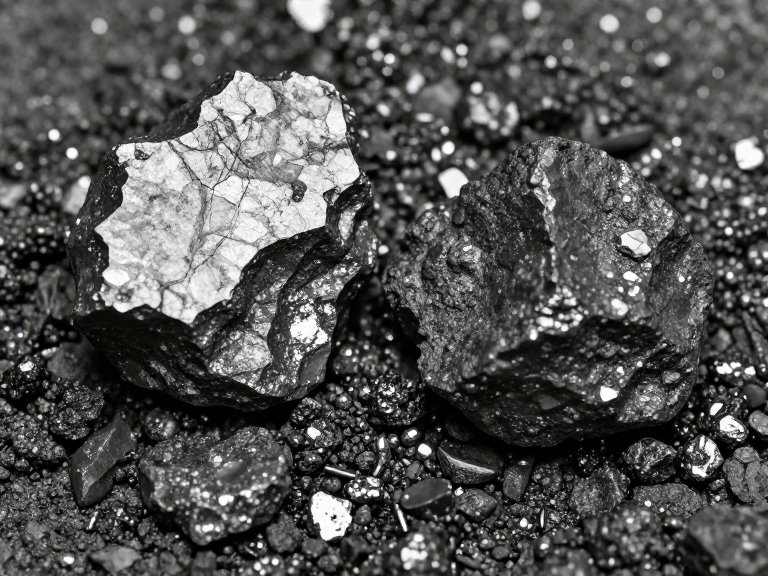
Unlike magnetite, hematite ($Fe_2O_3$) and its coarse crystalline form, specularite, are weakly paramagnetic. For decades, metallurgical operations struggled to beneficiate fine hematite ores economically, frequently relying on fatty acid reverse anionic flotation, which suffered from high reagent costs and environmental tailing permits. The development of pulsating wet high-intensity magnetic separators (WHIMS) transformed hematite processing.
Beneficiating hematite requires field intensities between 1.0 and 1.8 Tesla (10,000 to 18,000 Gauss) paired with internal matrix pulsation. As the ore slurry passes through a magnetized matrix box filled with stainless steel grooved plates or expanded metal sheets, the pulsating fluid mechanism keeps the slurry in a fluidized, non-compacted state. This pulsation strips non-magnetic quartz and aluminosilicate particles away via hydrodynamic drag, allowing paramagnetic hematite grains to pin against the high-gradient matrix teeth. When the matrix wheel rotates out of the electromagnetic coil zone, wash water rinses the hematite into concentrate launders, upgrading 30% low-grade ores into 62%+ Fe concentrates.
3. Ilmenite (Titanium Feedstock Beneficiation from Heavy Mineral Sands)
Ilmenite ($FeTiO_3$) is the primary global feedstock for titanium dioxide ($TiO_2$) pigment production and titanium metal refining. Ilmenite deposits occur predominantly in coastal heavy mineral sand placers alongside rutile, zircon, monazite, and quartz. Ilmenite displays moderate paramagnetism, sitting cleanly between strongly magnetic magnetite and non-magnetic zircon/rutile fractions.
In heavy mineral sand concentration plants, magnetic separation is the core sorting mechanism. The beach sand slurry is first deslimed and fed across gravity equipment, such as a specialized Gravity Spiral Chute or multi-stage spiral chute, to wash away low-density silica quartz. The heavy mineral concentrate is then dried and passed through multi-stage dry induced-roll magnetic separators (IRMS) and rare-earth roll separators (RERMS) operating between 0.6 and 1.4 Tesla. Low-intensity magnets scalp residual magnetite, while intermediate fields extract pure ilmenite, leaving non-magnetic rutile and zircon to be separated downstream via electrostatic tension roll separators. To evaluate permanent magnet configurations, plants deploy Plate Type Permanent Magnetic Separation Equipment for uninterrupted dry chute scalping.
4. Manganese Ores (Pyrolusite, Psilomelane, and Rhodochrosite)
Manganese minerals—including pyrolusite ($MnO_2$), psilomelane (barium manganese oxide), and rhodochrosite ($MnCO_3$)—are paramagnetic. Traditional manganese processing relied on manual hand-sorting or jig gravity concentration, which suffered from high processing losses when treating fine-grained disseminated ores.
Modern manganese mills deploy vertical ring high-gradient magnetic separators (VRHGMS) operating at magnetic fields between 1.2 and 1.8 Tesla. Because manganese minerals have low specific magnetic susceptibilities (roughly 80 to 250 x 10^-6 m^3/kg), generating steep field gradients is mandatory. The pulsating high-gradient field captures fine manganese oxide and carbonate particles while washing out siliceous gangue, boosting raw feeds from 18%–22% Mn up to commercial metallurgical grade concentrates exceeding 38% to 44% Mn. In dry arid regions where process water is restricted, mills deploy a high-efficiency Dry electromagnetic separator to upgrade crushed manganese ore without requiring wet tailings disposal.
5. Chromite Ore (Chromium Extraction from Ultramafic Formations)
Chromite ($FeCr_2O_4$) is the sole commercial source of chromium, essential for stainless steel alloy production. Found within layered ultramafic igneous intrusions, chromite is typically associated with serpentine, olivine, pyroxene, and silica minerals. Chromite exhibits moderate paramagnetism due to its iron-chromium spinel structure.
In most professional situations, chromite beneficiation uses a hybrid flowsheet. Coarse chromite is concentrated using gravity separation across a heavy-duty Gravity Spiral Chute Separator, followed by high-precision shaking tables like the 6-S shaking table to separate dense chromite grains from light serpentine. However, when chromite is finely intergrown with iron-bearing olivine or pyroxene, gravity alone cannot achieve the strict 3:1 Cr-to-Fe ratio required for metallurgical ferrochrome smelting. Introducing high-intensity wet magnetic separators operating at 0.8 to 1.5 Tesla cleanly rejects non-magnetic silicate minerals, producing marketable chromite concentrate yields exceeding 46% to 50% $Cr_2O_3$.
6. Wolframite (Tungsten Concentration and Cassiterite Separation)
Wolframite is an iron-manganese tungstate mineral series: $(Fe,Mn)WO_4$, spanning ferberite (iron-rich) to huebnerite (manganese-rich). Wolframite displays moderate paramagnetism directly linked to its transition metal lattice content. In hydrothermal quartz vein deposits, wolframite frequently coexists with cassiterite ($SnO_2$ – tin ore), pyrite, arsenopyrite, and quartz.
Because wolframite and cassiterite have virtually identical high specific gravities (both around 7.0 to 7.5 g/cm^3), gravity shaking tables cannot separate the two minerals; they wash down the deck into the exact same concentrate zone. Magnetic separation solves this processing challenge cleanly. Wolframite is paramagnetic, whereas cassiterite is diamagnetic (non-magnetic). After gravity pre-concentration and sulfide flotation, the dried tin-tungsten mixed concentrate passes across dry multi-disc or cross-belt magnetic separators operating at 0.8 to 1.4 Tesla. The magnetic discs pull wolframite out of the feed, leaving clean, premium cassiterite tin concentrate on the belt, achieving over 95% separation efficiency.
7. Columbite-Tantalite (Coltan / Tantalum-Niobium Ores)
Columbite-tantalite—commonly known as Coltan, $(Fe,Mn)(Nb,Ta)_2O_6$—is the primary source of tantalum for high-capacitance micro-electronics and niobium for aerospace superalloys. Found within complex rare-element granitic pegmatites and alluvial gravels, coltan is associated with quartz, feldspar, tourmaline, and cassiterite.
Columbite-tantalite minerals exhibit distinct paramagnetism due to their iron and manganese ions. Following initial alluvial screening and sand washing on high-throughput units like a Sand Washing Machine 100 TPH Long Life, the heavy mineral concentrate is dried and processed across high-intensity multi-disc electromagnetic separators operating at 1.0 to 1.6 Tesla. The first low-intensity disc extracts magnetite and titanomagnetite; the second disc extracts columbite-tantalite; and the third disc separates tourmaline and garnet, leaving non-magnetic cassiterite, zircon, and quartz in the discharge bin.
8. Industrial Sand Refining (Silica, Feldspar, and Kaolin Clay De-Ironing)
The eighth major application represents an inversion of the extraction model: rather than concentrating a magnetic value mineral, the objective is removing trace paramagnetic contaminants to purify a diamagnetic host mineral. Industrial quartz silica sand, feldspar, and kaolin clay are vital raw materials for solar photovoltaic cover glass, optical glass, and high-voltage ceramic insulators. In photovoltaic glass manufacturing, total iron contamination ($Fe_2O_3$) must not exceed 80 to 120 parts per million (ppm); higher iron contents absorb solar light, degrading solar panel electrical conversion efficiency.
Run-of-mine quartz sand typically contains 0.1% to 0.5% iron, present as paramagnetic trace minerals: biotite mica, tourmaline, hornblende, garnet, and hematite surface stains. Passing the high-purity sand slurry through vertical ring high-gradient magnetic separators operating at 1.8 to 2.2 Tesla pulls these weakly magnetic mineral grains onto sub-millimeter matrix wires, reducing iron contamination from 1,500 ppm down to less than 70 ppm. In recycling and municipal sorting loops, sorting non-ferrous conductive metals from plastic and glass feeds uses eddy current systems like an Eddy Current Separator for Aluminum and Copper sorting or a high-speed Eddy Current Separator Machine, demonstrating the role magnetic field manipulation plays across modern mineral and material sorting circuits.
Beneficiation Technology Comparison: Magnetic vs. Gravity vs. Flotation
To help guide flowsheet development, the matrix below compares the operational, financial, and environmental profiles of the three dominant physical and physico-chemical separation methods:
| Evaluation Metric | Magnetic Separation Circuits | Gravity Concentration Circuits | Froth Flotation Plants |
|---|---|---|---|
| Primary Separation Mechanism | Differential magnetic susceptibility (χ) | Differential specific gravity (ΔSG) | Differential surface hydrophobicity |
| Chemical Reagent Consumption | Zero (Purely physical mechanical force) | Zero (Water medium only) | High (Collectors, frothers, activators, acids) |
| Operating Cost per Ton (OpEx) | Very Low ($0.30 to $1.20 / ton) | Lowest ($0.15 to $0.60 / ton) | High ($3.50 to $9.00 / ton) |
| Environmental Permitting Complexity | Minimal; clean tailings discharge | Minimal; clean tailings discharge | Strict; toxic reagent tailings management |
| Particle Size Processing Limits | Broad (20 μm to 50 mm dependent on tech) | Poor on slimes (< 38 μm struggles) | High on fine sizes (10 μm to 150 μm) |
| Sensitivity to Water Temperature | Zero (Operates consistently year-round) | Low (Minor water viscosity shifts) | High (Chemical kinetics drop in cold water) |
Pros and Cons of Magnetic Separation Flowsheets
Weigh the operational advantages against the mechanical boundaries of magnetic beneficiation before finalizing plant capital allocation:
| Beneficiation Advantages (Pros) | Operational Boundaries & Constraints (Cons) |
|---|---|
| Zero Chemical Reagent Dependency: Completely eliminates toxic collectors, frothers, and sulfuric acid leaching circuits. | Matrix Clogging in WHIMS: Un-scalped ferromagnetic magnetite or oversized woodchips plug high-gradient matrix boxes. |
| Low Operational Expenditure (OpEx): Permanent magnet systems consume zero electrical power for field generation. | Power Demand on High-Tesla Electromagnets: Large 2.0-Tesla electromagnetic coils draw significant continuous electrical wattage. |
| Clean Environmental Footprint: Tailing streams contain zero organic chemical residues, simplifying dry-stack permits. | Slime Coating Vulnerability: Ultra-fine clay slimes coating mineral grains mask magnetic properties, requiring desliming cyclones. |
| Instant Start/Stop Operation: Magnetic separator circuits achieve full operating equilibrium within seconds of startup. | Capital Cost on High-Gradient Equipment: Advanced vertical ring WHIMS units require higher initial capital investment than spiral chutes. |
Who Should Implement Magnetic Circuits vs. Who Needs Flotation Plants
In our experience evaluating mining feasibility studies, choosing separation technologies requires matching ore mineralogy to physical separation thresholds.
Who Should Rely Primarily on Magnetic Separation:
- Iron Ore Producers Mining Magnetite, Specularite, or Hematite: If your deposit contains iron in oxide or hydroxide crystal forms, magnetic separation provides the lowest cost-per-ton flowsheet available, producing high-grade pellet feeds without chemical tailing risks.
- Heavy Mineral Sand & Titanium-Zircon Processors: Placer deposits containing ilmenite, rutile, zircon, and monazite rely on magnetic rolls and high-intensity discs to separate conductive and non-conductive paramagnetic minerals.
- Tungsten and Tin Co-Production Mines: Deposits containing intergrown wolframite and cassiterite where identical specific gravities prevent gravity separation on tables.
- High-Purity Quartz, Feldspar, and Glass Sand Producers: Silica operations purifying sand feeds down to low-ppm iron standards for solar photovoltaic panel glass.
Who Must Select Froth Flotation or Hydrometallurgy:
- Complex Copper-Lead-Zinc Base Metal Sulfides: Fine chalcopyrite, galena, and sphalerite ores share overlapping, weak magnetic susceptibilities that cannot be separated magnetically; they require selective chemical froth flotation.
- Refractory Gold Ores Locked in Pyrite: Sub-microscopic refractory gold locked inside non-magnetic or diamagnetic sulfide crystal matrices requires froth flotation followed by pressure oxidation or cyanidation leaching.
Featured Processing Equipment Partner: ORO Mineral Co., Ltd.
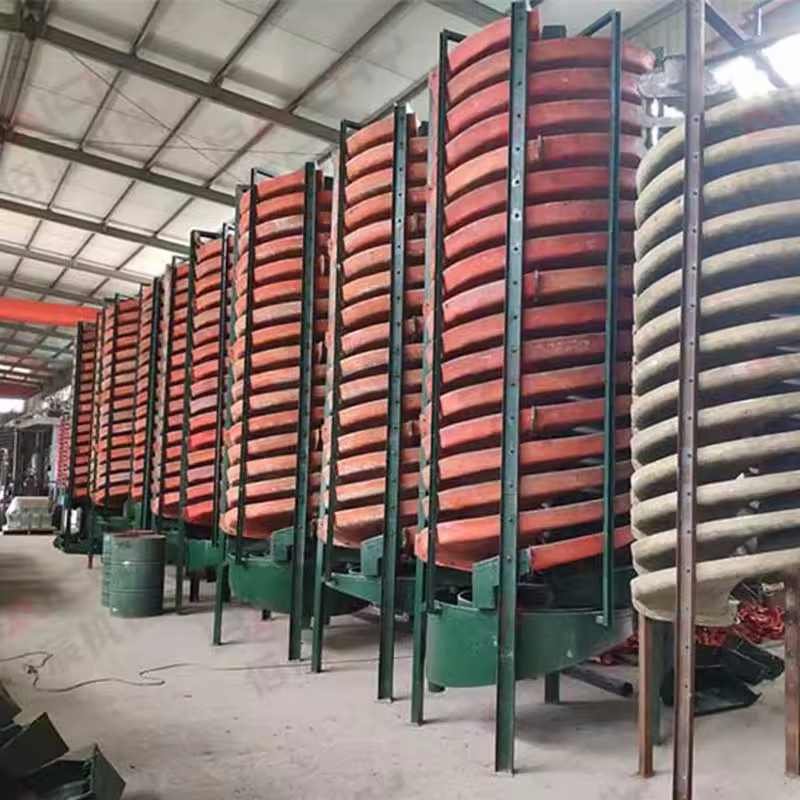
ORO Mineral Co., Ltd. is a large-scale intelligent mineral processing, screening, and sand washing equipment manufacturer integrating R&D, production, and sales. Since 2014, ORO Mineral has made great contributions to every kind of mineral screening, solid waste resource recovery, beneficiation, washing, and separation, and has accumulated rich experience.
In order to offer you better products and services, we have been sparing no effort to improve technology, develop new equipment, and upgrade services across global mining installations.
Costly Mistakes Mill Operators Make During Magnetic Separation
In our field audits of struggling mineral processing plants across Asia, Africa, and South America, metallurgical losses almost always trace back to four common flowsheet errors:
- Omitting Low-Intensity Cobbing Ahead of High-Gradient WHIMS: High-gradient wet magnetic separators (WHIMS) are engineered to capture weakly paramagnetic minerals using tight, high-gradient matrix boxes. If you feed raw slurry containing coarse ferromagnetic magnetite directly into a 1.5-Tesla WHIMS, the magnetite clings to the matrix teeth with extreme magnetic force. Wash water cannot dislodge it, causing the matrix to plug solid within two shifts, requiring downtime to pull and acid-clean the boxes. Always place a 0.15-Tesla LIMS drum upstream to scalp all ferromagnetic magnetite before slurry enters a WHIMS.
- Feeding Slurries Without Pre-Classification and Desliming Cyclones: Mineral slimes below 10 microns coat larger particles like paint. When clay slimes coat paramagnetic ilmenite or wolframite, the hydrodynamic drag of the clay mass overcomes the magnetic pull force, carrying valuable minerals straight into tailings launders. Installing desliming hydrocyclones ahead of wet magnetic separators cleans particle surfaces and boosts recovery rates by 8% to 15%.
- Misjudging Mineral Liberation Sizes in Grinding Circuits: Magnetic separators sort particles based on average composite magnetic susceptibility. If an ore is under-ground, a single 100-micron particle may consist of 80% non-magnetic silica quartz with only 20% attached magnetite. A strong magnetic separator will pull that locked particle into the concentrate, diluting the final grade with unwanted silica. Conduct detailed mineral liberation analysis (MLA) to grind ore to its true liberation threshold before magnetic separation.
- Running Dry Belt Separators with Over-Thick Material Layers: A dry magnetic belt or roll separator depends on distance to maintain magnetic gradient ($grad B$ drops exponentially with the square of the distance from the magnet surface). If an operator overfeeds a dry belt separator, piling ore three layers deep, particles on top sit outside the high-gradient capture zone and fall into tailings. Always use calibrated vibrating feeders to deliver a smooth, single-particle monolayer across the separator belt surface.
Essential Equipment Sourcing and Flowsheet Selection Considerations
Before issuing purchase orders for magnetic separation machinery, process directors should verify these four critical engineering specifications with their equipment manufacturer:
- Permanent Rare-Earth (NdFeB) vs. Electromagnetic Coils: Understand the operating parameters. High-grade Neodymium-Iron-Boron (NdFeB) permanent magnets deliver stable surface fields up to 1.2 to 1.5 Tesla with zero power consumption. However, if your flowsheet requires magnetic field tuning across variable ore grades, or needs fields exceeding 1.8 to 2.2 Tesla, an electromagnetic or vertical-ring pulsating design with a regulated DC power supply is mandatory.
- Matrix Gap Sizing and Corrosion Resistance: For wet high-gradient separators, inspect the matrix box materials. Processing acidic or corrosive mineral slurries demands 430-grade or specialized magnetic stainless steels with electropolished surfaces to prevent slurry corrosion pitting and mineral hang-up.
- Water Consumption and Wash Water Pressure Requirements: Wet magnetic separators require clean, steady wash water pressure (typically 0.2 to 0.4 MPa) to dislodge magnetic cakes into concentrate launders. Ensure your plant layout accounts for wash water recycling loops, clarification thickeners, and pressure booster pumps.
- Pre-Purchase Mineral Testing on Pilot Units: Never buy a magnetic separator based on ore assays alone. Always ship representative 50-to-100-kilogram core drill samples to the manufacturer’s testing lab to run benchtop magnetic susceptibility tests (Davis Tube analysis and pilot wet-ring runs) to prove recovery grades before building the plant.
Expert Recommendation and Plant Engineering Verdict
In most professional situations, we recommend prioritizing physical magnetic separation wherever ore mineralogy allows. Relying on complex chemical froth flotation for ores that can be separated by magnetic separation burdens your operation with recurring reagent bills, tailing permit hurdles, and sensitive operational chemistry.
If your deposit contains magnetite iron ore, install a multi-stage wet drum LIMS flowsheet to secure high-grade concentrates at the lowest cost-per-ton. If you are processing weakly paramagnetic hematite, manganese, chromite, or heavy mineral sand ilmenite, deploy pulsating wet high-gradient magnetic separators (WHIMS) paired with upstream desliming and low-intensity tramp iron scalpers. For complex multi-mineral pegmatites and alluvial deposits containing wolframite or coltan, use a hybrid flowsheet: deploy upstream gravity spiral chutes and shaking tables to reject bulk waste, then use dry high-intensity electromagnetic disc separators to isolate individual mineral fractions. Partnering with an experienced, vertically integrated manufacturer like ORO Mineral Co., Ltd. ensures you receive rugged magnetic circuits, proven gravity systems, and pilot testing verification, keeping your processing plant operating at peak metallurgical recovery year after year.
Frequently Asked Questions (FAQ)
Which 8 types of ores can be separated by magnetic separation?
The eight primary ores are: 1) Magnetite (strongly ferromagnetic iron ore); 2) Hematite and Specularite (weakly paramagnetic iron ores); 3) Ilmenite (paramagnetic titanium ore); 4) Manganese ores (pyrolusite and rhodochrosite); 5) Chromite (paramagnetic chromium ore); 6) Wolframite (paramagnetic tungsten ore); 7) Columbite-Tantalite / Coltan (paramagnetic tantalum-niobium ore); and 8) Industrial silica sands and kaolin (purified by removing trace paramagnetic iron impurities).
What is the difference between LIMS, MIMS, and WHIMS magnetic separators?
LIMS (Low-Intensity Magnetic Separators) generate fields under 0.3 Tesla (1,000 to 3,000 Gauss) to extract strongly ferromagnetic minerals like magnetite. MIMS (Medium-Intensity Magnetic Separators) operate between 0.5 and 0.8 Tesla for moderately magnetic minerals. WHIMS (Wet High-Intensity Magnetic Separators) generate steep magnetic fields from 1.0 to over 2.0 Tesla (10,000 to 20,000+ Gauss) using magnetized wire matrices to capture weakly paramagnetic minerals like hematite, manganese, and tantalite.
Can gold or copper ores be separated using magnetic separation?
Pure native gold and primary copper sulfides (such as chalcopyrite) are non-magnetic or diamagnetic, meaning they cannot be extracted directly by magnetic fields. However, magnetic separation is routinely used as an auxiliary stage to extract magnetic host minerals (such as pyrrhotite or magnetite) out of copper-gold ores before chemical flotation or cyanidation leaching, improving downstream recovery rates.
Why do high-intensity magnetic separators require matrix pulsation?
Pulsation keeps the mineral slurry in a fluidized state as it passes through the magnetized matrix box. This fluid motion prevents non-magnetic quartz and gangue particles from settling and becoming mechanically trapped within the magnetic concentrate, ensuring high concentrate purity without losing fine paramagnetic mineral grains.
Why is magnetic separation more environmentally friendly than froth flotation?
Magnetic separation is a purely physical mechanical process that relies entirely on natural magnetic susceptibility differences. It consumes zero chemical reagents, collectors, frothers, or toxic acids, meaning discharged process water is clean and tailing facilities present zero chemical leakage hazards, significantly simplifying regulatory permitting.
Authoritative References
- Society for Mining, Metallurgy & Exploration (SME): Mineral Processing and Extractive Metallurgy Handbook – Magnetic Beneficiation Principles
- Chemical Engineering & Technology: Principles and Industrial Applications of High-Gradient Magnetic Separation (HGMS) in Mineral Processing
- U.S. Geological Survey (USGS): Mineral Commodity Summaries – Processing Technologies for Titanium, Rare Metals, and Iron Ore