6 Ways to Separate Gold from Sand: Engineering, Recovery Physics & Commercial Processing

Quick Answer: How to Separate Gold from Sand Efficiently
To successfully separate gold from sand across both small-scale testing and commercial tonnage, operators deploy six mechanical and physical methods: (1) Manual Gravity Panning for rapid field assaying and small concentrate cleanups; (2) Sluice Box and Highbanker Fluidization for continuous, mid-volume alluvial gravel processing; (3) Centrifugal Enhanced-G Concentration (Knelson/Falcon style) for capturing elusive sub-100 mesh flour gold; (4) Wet Shaking Tables for high-precision, chemical-free final separation of black sand from gold; (5) Magnetic Separation using permanent rare-earth drums to strip out heavy magnetite; and (6) Gravity Spiral Chutes for high-capacity, low-energy bulk desanding and rougher concentration. For industrial operations, combining pre-classification using equipment like a heavy-duty sand washing machine with secondary spiral and shaking circuits guarantees maximum recovery margins.
Article Directory
- Mineral Physics: Specific Gravity & Particle Mechanics
- Quick Summary Table: The 6 Methods Compared
- In-Depth Review: 6 Ways to Separate Gold from Sand
- Commercial Equipment Spotlight: ORO Mineral Sand Washing Solutions
- Direct Technical Comparison of Industrial Separation Circuits
- Pros and Cons: Mechanical Gravity vs. High-Throughput Washing
- Who Needs High-Tonnage Systems vs. Field Panning
- Costly Operator Mistakes That Flush Gold into Tailings
- Essential Sourcing & Plant Design Considerations
- Frequently Asked Questions
- Authoritative Mineral Dressing Standards & References
Mineral Physics: Specific Gravity & Particle Mechanics
To separate gold from sand, processing plants exploit the vast difference in specific gravity (SG) between target precious metals and gangue minerals. Common quartz and silica sands carry an SG between 2.60 and 2.65. Heavy black sands—dominated by magnetite, hematite, and ilmenite—carry an SG between 4.80 and 5.30. In sharp contrast, pure native placer gold carries an SG between 15.0 and 19.3, depending on natural silver alloy content.
This physical density contrast is immense. When mineral grains settle through a fluid medium under gravitational or centrifugal forces, gold settles significantly faster than quartz, following Stokes’ Law of settling velocities. However, real-world sand processing complicates this basic formula through two critical factors: particle shape and particle mass.
In our testing across placer deposits, flat, flaky placer gold particles exhibit high hydraulic drag. A paper-thin gold flake measuring 75 microns (-200 mesh) will float across turbulent wash water, carried away by fluid boundary layers alongside coarse silica grains. If an operation fails to classify raw sands into uniform size fractions before running separation equipment, hydraulic drag overpowers specific gravity. Effective recovery requires selecting the right mechanical method to separate gold from sand based on feed volume, moisture, and particle size distribution.
Quick Summary Table: The 6 Methods Compared
| Separation Method | Target Size Window | Throughput Capacity | Recovery Efficiency | Best Operational Application |
|---|---|---|---|---|
| 1. Manual Gold Panning | +10 mesh down to -100 mesh | 10 to 50 lbs / hour | Moderate (Operator dependent) | Field prospecting, geological assay sampling, final pan cleanup |
| 2. Sluicing & Highbanking | +8 mesh down to -50 mesh | 0.5 to 10 tons / hour | High on coarse; poor on -100 mesh | Small-scale placer mining, exploratory bulk sampling trenches |
| 3. Centrifugal Concentrators | -30 mesh down to 10 microns | 1 to 150+ tons / hour | Extreme (>95% on ultra-fine gold) | Capturing fine/flour gold in hard-rock and placer recovery circuits |
| 4. Wet Shaking Tables | -20 mesh down to -400 mesh | 0.2 to 2 tons / hour | Extreme precision separation | Final dressing rooms, direct smelting preparation, chemical-free finishing |
| 5. Magnetic Separation | Dry / Wet slurry fractions | 1 to 50 tons / hour | Targeted (Iron sand removal) | Stripping magnetite and ilmenite from heavy concentrate sands |
| 6. Gravity Spiral Chutes | -10 mesh down to -200 mesh | 2 to 100+ tons / hour per start | High on classified feeds | Continuous sand desanding, placer roughing, low-energy bulk sorting |
In-Depth Review: 6 Ways to Separate Gold from Sand
1. Traditional Hand Panning (Classification & Surface Tension Management)
Gold panning is the oldest metallurgical technique used to separate gold from sand, yet it remains indispensable for geological mapping, stream sampling, and clean room recovery. The process relies on submerged stratification. The prospector submerges classified sand into a wide pan, applies a vigorous horizontal orbital motion to liquefy the sand slurry, and allows dense gold particles to sink toward the bottom riffles while lighter quartz sand suspends into the upper water layer.
For beginners, the most common trap is ignoring surface tension. When dry black sand meets water, atmospheric air trapped on tiny gold flakes causes fine gold to float on the water surface and spill over the pan rim. In most professional situations, we recommend adding two drops of a biodegradable wetting agent or surfactant into the pan water to break surface tension immediately. Hand panning is strictly an assaying tool; attempting to process bulk paydirt with a hand pan burns labor and leaves massive value unrecovered in the tailings.
2. Sluice Boxes and Highbankers (Continuous Riffle Fluidization)
A sluice box steps beyond manual batch processing into continuous hydraulic gravity concentration. Water flows down an angled, rectangular metal flume over various riffle designs, capturing mats (such as deep-V rubber, unbacked miners moss, or vortex mats), and expanded metal mesh. As the sand slurry flows down the channel, vortex eddies form behind each riffle bar, keeping light silica in suspension while high-density gold drops into the quiet dead zone beneath the carpet matrix.
From our experience on active wash plants, sluicing works exceptionally well for coarse, nuggety pay gravels. However, standard sluices suffer high losses on fine gold (-100 mesh). If water velocity drops too low, black iron sand packs tightly between the riffles, creating a hard, flat cement-like floor where subsequent gold simply skims across the top and escapes into the tailings. Highbankers resolve this partially by introducing high-pressure spray bars and hopper screens to wash and classify gravels before they hit the sluice deck.
3. Centrifugal Concentrators (Enhanced-G Acceleration)
When alluvial or hard-rock milling operations must separate gold from sand containing sub-micron, flour, or flat flaky gold, standard Earth-gravity (1G) methods fail. Centrifugal concentrators—including Knelson and Falcon style centrifuges—subject the sand slurry to artificial gravitational fields running between 60G and 300G inside a spinning vertical ribbed cone.
Fluidized water is injected through pressurized fluid holes drilled into the spinning cone rings. This counter-current water injection expands the concentrated bed, preventing the sand pack from locking up. As heavy centrifugal force pushes the slurry against the cone wall, high-density gold particles displace lighter silica and magnetite, driving deep into the fluidized rings while sand washes out over the top rim. In our testing on fine tailings, centrifugal concentration routinely captures up to 98% of free gold down to 10 microns, making it a mandatory component of modern industrial recovery plants.
4. Wet Shaking Tables (Gemini & Wilfley Finishing Decks)
Once a wash plant has reduced tons of raw paydirt down to a dense concentrate of black sand and precious metals, using a wet shaking table provides the ultimate visible, chemical-free final separation. A shaking table consists of an inclined deck lined with low-profile longitudinal riffles, driven by an eccentric reciprocating drive box that imparts an asymmetrical back-and-forth snap motion.
Water flows wash smoothly across the deck perpendicular to the shaking motion. As the table reciprocates, the dense gold particles sink between the riffles and are walked mechanically along the length of the deck toward the concentrate discharge edge. The lighter silica sands are washed over the tops of the riffles by the cross-flowing wash water, while intermediate heavy minerals like garnets and magnetite separate into distinct visible mineral bands along the deck face. Shaking tables deliver clean, high-grade gold lines ready for direct induction crucible smelting.
5. Magnetic Separation (Stripping Iron Sand Without Gold Entrapment)
Black sand concentrates contain high volumes of magnetite ($Fe_3O_4$) and hematite ($Fe_2O_3$). Trying to pan or table gold out of sands that are 90% heavy iron minerals slows separation and causes mechanical interference. Utilizing specialized Magnetic Separation Equipment allows operators to physically remove ferromagnetic minerals from the concentrate stream without touching the non-magnetic gold.
However, running high-power neodymium magnets directly into raw, dry black sand is a severe mistake; fine gold flakes physically trap inside the clustering iron grains and get pulled out with the magnetic discard. In most professional situations, we recommend applying wet low-intensity magnetic drums or specialized rare-earth systems such as a Permanent Magnetic Separator or automated Magnetic Separator Machine. Wet magnetic separation suspends the sand slurry in water while a rotating magnetic drum lifts the magnetite, rinsing the magnetic brush clean with spray water so trapped gold falls back into the pay stream. For challenging complex ores, exploring the high intensity magnetic separation process reveals how paramagnetic minerals like garnet and tourmaline can also be removed.
6. Gravity Spiral Chutes (Continuous Low-Energy Desanding)
For high-tonnage placer mining, beach mineral sands, and industrial silica aggregate washing, spiral concentrators deliver continuous separation without requiring electrical drive motors. A spiral chute consists of a vertical helical trough with a modified semi-circular cross section mounted around a central structural column. Slurry containing 25% to 35% solids feeds into the top of the spiral.
As the slurry accelerates downward under gravity, centrifugal force pushes the fast-moving water and lighter silica sand toward the outer rim of the spiral trough. The dense gold and heavy mineral grains stay nestled in the slow-moving, shallow fluid boundary layer along the inner profile of the spiral. Adjustable splitters installed along the inner channel continuously tap off the heavy concentrate stream. Utilizing a high-efficiency Gravity Spiral Chute or multi-stage Gravity Spiral Concentrator enables operations to wash and desand hundreds of tons per hour at minimal operating cost.
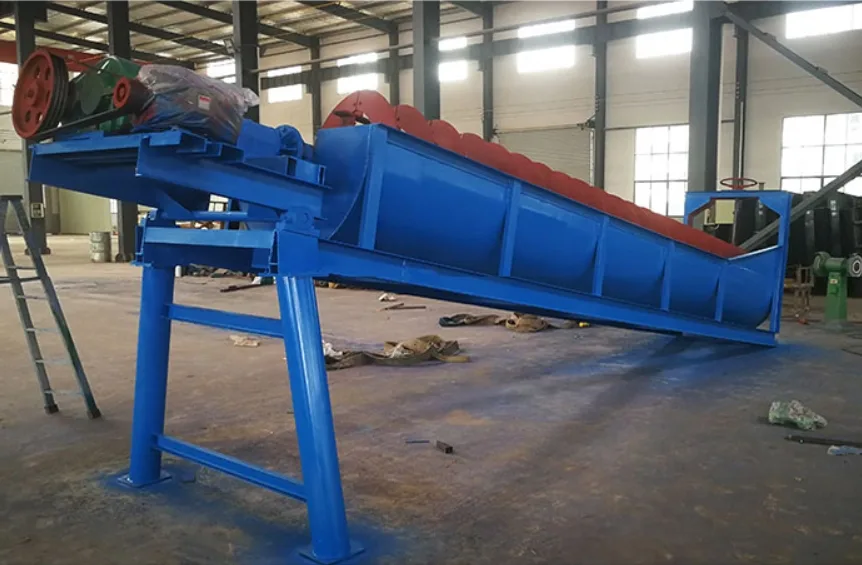
Industrial Processing Spotlight: ORO Mineral Sand Washing Systems
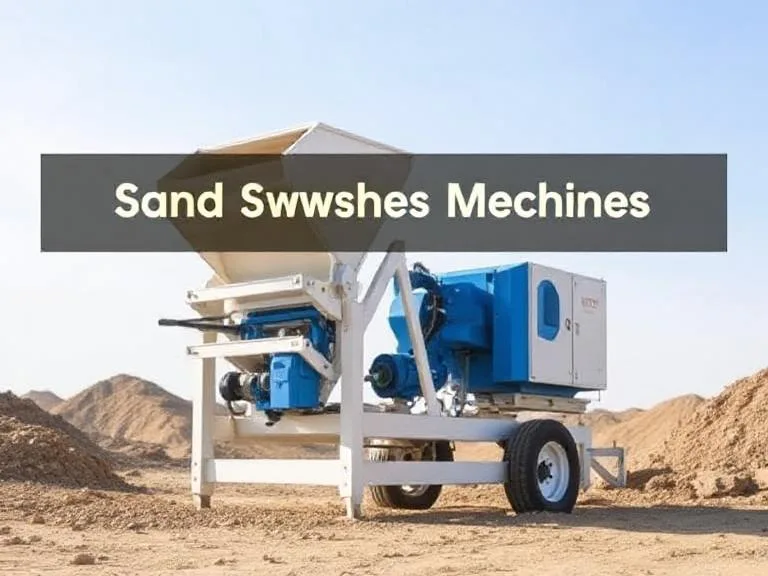
To successfully separate gold from sand at commercial scale, the biggest bottleneck is material preparation. Feeding unsorted, clay-bound, or poorly deslimed alluvial sands straight into fine gravity circuits blinds recovery riffles and flushes fine gold into tailings. ORO Mineral delivers heavy-duty mineral washing equipment engineered to handle demanding industrial classification.
| Processing Throughput | High-capacity 100 TPH (Tons Per Hour) continuous feed rating |
| Mechanical Architecture | Heavy-duty structural build with continuous spiral raking and self-contained spiral lifting device |
| Tank & Substructure | Rigid, high-wear steel tank construction with customizable weir heights for precise desliming |
| Classification Efficiency | High desanding and desliming efficiency with minimal maintenance downtime |
| Industrial Scope | Placer gold pre-washing, aggregate desanding, silica purification, and mineral processing |
Engineering Recommendation: Integrate the Sand Washing Machine 100 TPH Long Life into your primary feed loop to wash, scrub, and classify raw sands before routing slurry into downstream spiral concentrators and finishing tables.
Direct Technical Comparison of Industrial Separation Circuits
| Processing Equipment | Capital Equipment Cost | Power / Water Demand | Fine Gold Capture (<75 μm) | Operating Complexity | Optimal Production Scale |
|---|---|---|---|---|---|
| Gravity Spiral Chutes | Economical to Moderate | Zero motor power; moderate water flow | Moderate (70% – 85%) | Low (Set-and-forget splitter tuning) | Continuous high-tonnage roughing (20 – 200+ TPH) |
| Centrifugal Concentrators | High | Moderate power; high-pressure fluidization | Exceptional (95% – 99%) | Moderate (Requires cycle timing control) | Primary recovery for fine gold (5 – 100 TPH) |
| Wet Shaking Tables | Moderate | Low power; low-pressure wash water | Exceptional on classified feeds | High (Demands skilled operator tuning) | Final batch dressing (0.5 – 3 TPH) |
| Magnetic Drum Separators | Moderate | Low power (motorized drum only) | Indirect (Removes magnetic interference) | Low (Continuous self-cleaning) | Continuous iron-sand removal (10 – 50 TPH) |
| Highbanker / Power Sluice | Very Low to Economical | High water volume; small gas pump | Poor on fine flour gold (<50%) | Low (Manual riffle clearing) | Small exploration & artisanal testing |
Pros and Cons: Mechanical Gravity vs. High-Throughput Washing
| Separation Strategy | Operational & Economic Pros | Engineering Limitations & Drawbacks |
|---|---|---|
| Integrated Industrial Mechanical Circuits (Sand Washer + Spirals + Centrifuges) |
|
|
| Artisanal Sluicing & Manual Panning (Traditional Low-Tech Methods) |
|
|
Who Needs High-Tonnage Systems vs. Field Panning
Mineral processing equipment must match your deposit geology, gravel throughput, and target particle size. Choosing the wrong equipment tier burns capital on equipment you cannot feed or loses gold through under-sized recovery.
Who Should Rely on Field Panning & Small Sluicing:
- Weekend Prospectors & Explorers: If your activity centers on recreational panning, hiking remote streams, or working small recreational claims on public lands, a lightweight pan and folding sluice box are all you need.
- Initial Claim Sampling Crews: Geologists conducting trenching evaluations need to pan raw exploratory samples to count colors and establish geological boundaries before ordering heavy machinery.
Who Must Invest in Industrial Mechanical Separation Systems:
- Commercial Alluvial Placer Mines: If your plant processes 50 to 500 cubic yards per hour, relying on simple sluice boxes loses thousands of dollars in fine gold daily. Industrial operations require integrated washing screws, spiral roughers, and clean-up tables to protect profit margins. For advanced equipment suppliers, explore our global directory of underground mining equipment suppliers.
- Industrial Sand & Aggregate Quarries: Sand and gravel quarries often wash millions of tons of aggregate containing small trace amounts of gold. Installing spiral chutes and centrifugal bypass loops onto existing aggregate lines turns waste washing sand into profitable byproduct gold recovery.
- Fine Gold Hard-Rock Milling Plants: Hard-rock ore that has passed through crushers and ball mills yields finely ground gold liberated down to 200 mesh. Hard-rock facilities require centrifugal concentrators and shaking tables sourced from verified multi gravity separator manufacturers.
Costly Operator Mistakes That Flush Gold into Tailings
Processing Plant Warning: The costliest mistake in alluvial gold processing is failing to scrub and disperse clay balls before feeding sand separation equipment. Sticky clay balls roll down sluices and spirals like sticky dough, picking up fine gold flakes from recovery mats and carrying them straight into the tailing pile.
- Overfeeding Separation Equipment Beyond Rated Slurry Density: Running slurry with solids content above 45% creates heavy, viscous mud. When pulp density is too thick, specific gravity settling fails; fine gold cannot penetrate the dense mud layer and washes off the tail end of spirals and shaking tables. Maintain solid densities between 25% and 35% for optimal recovery.
- Skipping Pre-Screening and Classification: Dumping unscreened raw gravels (+1/2 inch stones) across fine-sand sluices or spiral concentrators disrupts laminar fluid flow. Coarse rocks crash down the channel, creating turbulence that scours out dense gold already captured in the riffles. Always screen material down to -8 or -10 mesh before fine gravity separation.
- Dry Magnetic Panning Without Slurry Washing: Using a bare hand magnet to pull magnetite out of dry black sand traps flaky gold within the moving magnetic clump. Always conduct magnetic separation in water with gentle agitation so non-magnetic gold drops freely from the magnetic bundle.
- Operating Shaking Tables with Unstable Water Pressure: Pressure variations in water wash lines shift the mineral line unpredictably across shaking table decks. Surges in water flow wash the gold line into the middlings or tailings troughs, while pressure drops let black sand contaminate the concentrate line. Always supply wash tables from dedicated head tanks rather than direct pump lines.
Essential Sourcing & Plant Design Considerations
When engineering an operational plant to separate gold from sand, evaluate prospective machinery suppliers across these four technical criteria:
1. Wear Protection and Elastomer Linings
Silica sand and heavy iron minerals are highly abrasive. Pumping and sluicing thousands of tons of sand slurry quickly wears down raw carbon steel plates. Ensure that spiral chutes, pump casings, and sand screws are lined with high-wear polyurethane, natural vulcanized rubber, or heavy-duty composite resins that resist continuous slurry abrasion.
2. Water Circulation and Reclaim Engineering
Industrial gravity separation circuits consume substantial water volumes (often 500 to 2,000 gallons per minute on large plants). Ensure your site layout incorporates structured settling ponds, dewatering screens, and hydrocyclone clarifiers to recycle process water. For plant engineering theory, refer to foundational texts in our mineral processing books list.
3. Classification Equipment Provenance
The separation circuit is only as reliable as the feed classification that precedes it. Ensure your sand washing screws, trommels, and dewatering screens come from established manufacturers that supply heavy-duty gearboxes, replaceable Ni-Hard wear shoes, and structural tanks engineered for continuous multi-shift production.
4. Flowsheet Flexibility and Circuit Modularization
Alluvial pay zones change over time; an operation may move from coarse gravels into dense fine-sand clay layers within a single season. Build your plant flow sheet with modular bypass lines, allowing operators to route slurry through secondary spiral chutes or switch to fine-particle centrifugal concentrators without shutting down the primary feed plant.
Frequently Asked Questions
For commercial tonnage, a multi-stage gravity concentration circuit is the most effective approach. Raw material is classified through trommels or sand washing screws, processed through high-throughput gravity spiral chutes or centrifugal concentrators for roughing, and finished on wet shaking tables to achieve clean concentrates without toxic chemicals.
Black sand consists primarily of magnetite (specific gravity ~5.2) and hematite (specific gravity ~5.3). While pure gold is much denser (SG 15.0 to 19.3), microscopic flour gold flakes possess high surface area relative to their mass, causing them to wash away with heavy iron sands during turbulent flow unless magnetic separation or enhanced-gravity centrifugal force is applied.
Yes, dry washers and pneumatic concentration systems separate gold from dry alluvial gravels using pulsating air pressure and electrostatic charges on riffle trays. However, dry recovery rates for ultra-fine gold (-100 mesh) drop below 60%, making wet gravity methods substantially more profitable wherever water recycling can be established.
No. In most professional situations, mercury amalgamation is illegal under the Minamata Convention on Mercury and dangerous to operator health. Modern centrifugal concentrators and mechanical shaking tables recover fine sub-micron gold with equal or higher efficiency without toxic liabilities or environmental contamination.
Authoritative Mineral Dressing Standards & References
- Society for Mining, Metallurgy & Exploration (SME): Mineral Processing and Extractive Metallurgy Handbook
- U.S. Geological Survey (USGS): Placer Recovery Methods and Gravity Concentration Principles
- Canadian Institute of Mining, Metallurgy and Petroleum (CIM): Best Practices in Gravity Gold Circuit Design and Particle Classification