8 Best Gold Mining Trommel Manufacturers: The Engineering and Commercial Sourcing Guide
Navigating the global landscape of gold mining trommel manufacturers requires practical, field-tested scrutiny rather than relying on glossy brochures. In our testing across diverse alluvial wash plants, selecting the wrong drum diameter, an underpowered friction drive, or thin perforated sheet steel leads directly to cracked trunnion rollers, constant screen blinding, and catastrophic mid-season downtime. We evaluate the eight best manufacturing companies building commercial and industrial trommel systems, detailing structural drum engineering, scrubber section ratios, drive mechanics, and direct commercial sourcing criteria to ensure your capital investment pays off on the wash plant floor.
Quick Answer: Which Gold Mining Trommel Manufacturer Should You Choose?
Selecting among the top Gold mining trommel manufacturers depends on your hourly throughput, clay concentration, and mobility requirements. For heavy-duty industrial wash plants operating between 100 and 500+ tons per hour (TPH) with tough sticky clay, ORO Mineral delivers the most dependable balance of heavy rotary scrubber integration, thick abrasion-resistant manganese steel screening, and direct factory pricing. For high-mobility trailer-mounted exploration rigs in North America, Macon Industries and MSI Mining lead in rapid site relocation. For mega-scale mining conglomerates needing turnkey alluvial plants exceeding 600 TPH, Extrac-TEC and Appropriate Process Technologies (APT) provide deep metallurgical process engineering. Steer clear of cheap light-gauge agricultural trommels repurposed for mining; their light sheet metal and undersized bearings will shear under river gravel impact within two weeks of operation.
Table of Contents
- The Mechanical Engineering of Gold Washing Trommels
- Quick Summary: The 8 Best Manufacturers at a Glance
- In-Depth Evaluation: 8 Top Gold Mining Trommel Manufacturers
- Comprehensive Manufacturer Engineering Comparison Matrix
- Pros and Cons of Rotary Trommels vs. High-Frequency Vibrating Screens
- Who Needs Heavy Industrial Trommels vs. Who Can Use Simpler Sizing
- Featured Manufacturing Partner: ORO Mineral Industrial Solutions
- Costly Mistakes Mine Operators Make When Sourcing Trommels
- Commercial Procurement Considerations for Mining Equipment
- Expert Recommendation and Capital Sourcing Verdict
- Frequently Asked Questions (FAQ)
- Authoritative References
The Mechanical Engineering of Gold Washing Trommels
A gold mining trommel is an industrial rotary sizing and disaggregation cylinder set at a slight downward inclination (typically 4 to 8 degrees). Its primary mechanical job is twofold: scrub raw placer gravel to liberate gold grains locked in compacted clay balls, and accurately classify material by screening away barren oversize boulders (+12mm to +25mm) while washing auriferous undersize slurries directly into downstream gravity concentration systems. Unlike simple quarry screens, a mining trommel must handle aggressive gouging abrasion, heavy hydraulic wash pressures, and high slurry densities simultaneously.
The operational magic happens within two distinct internal zones: the scrubber section and the screening section. The solid unperforated front barrel—the rotary scrubber section—is lined with internal lifter bars, spiral flights, and high-pressure water spray manifolds operating between 3 to 6 bar. As the barrel rotates, lifters hoist compacted gravel to the apex of the drum, dropping it back down onto the bed in a violent tumbling action (autogenous grinding). This hydraulic and mechanical impact slakes stubborn laterite and plastic clays into a liquid slurry. Once liberated, the slurry enters the perforated screen barrel, where replaceable high-carbon steel, manganese, or polyurethane screen panels let the heavy gold and fine black sands fall through to the underflow hopper, discharging barren cobbles out the tailings chute.
In most professional situations, the drive mechanism determines long-term plant uptime. Small exploration units employ direct chain drives or friction wheel drives. However, for commercial users processing heavy boulder-strewn wash, heavy-duty chain-and-sprocket or direct internal ring-gear pinion drives are mandatory. Friction drive tires can slip when wet, which halts drum rotation during unexpected hopper surges and floods the sluice run with unclassified gravel.
Quick Summary: The 8 Best Manufacturers at a Glance
The table below provides a quick reference comparing capacity ranges, scrubbing technology, drive mechanics, and optimal operational environments across the eight leading manufacturers:
| Manufacturer | Standard Capacity Range | Drive Mechanism Architecture | Screen Media Construction | Best Fit Operational Application |
|---|---|---|---|---|
| 1. ORO Mineral | 30 – 500+ TPH | Heavy chain / Ring gear pinion | Manganese steel & Polyurethane panels | Commercial alluvial mines, heavy sticky clay, turnkey plants |
| 2. MSI Mining (Macon Support) | 50 – 300 TPH | Heavy trunnion friction & chain | Punched AR steel plate / Wire mesh | North American placer operations, mobile skid plants |
| 3. Macon Industries | 25 – 200 TPH | Direct hydraulic & chain drive | AR450 / AR500 perforated barrel | Remote exploration, high-mobility Yukon/Alaska setups |
| 4. Appropriate Process Tech (APT) | 20 – 250 TPH | Robust trunnion wheel drive | Modular polyurethane bolt-in screens | African laterite deposits, modular containerized plants |
| 5. Extrac-TEC | 15 – 150 TPH | Patented swept-vane hydraulic drive | Integrated classification & recovery | Low water consumption sites, fine gold recovery circuits |
| 6. Gekko Systems | 50 – 400 TPH | High-torque industrial gear motor | Polyurethane modular snap-in | Hard-rock milling discharge, continuous industrial plants |
| 7. DOVE Equipment | 10 – 500 TPH | Heavy internal gear & pinion | Perforated double-layer alloy screens | Tropical jungle placer deposits, deep gravel deposits |
| 8. Savona Equipment | 20 – 300 TPH | Chain, friction, & hydraulic options | Customized steel / rubber / poly | Reconditioned industrial assets, custom modular projects |
In-Depth Evaluation: 8 Top Gold Mining Trommel Manufacturers
1. ORO Mineral: Industrial-Scale Scrubbing and Turnkey Engineering
Based in China with global export delivery to more than 30 countries, ORO Mineral has established a commanding position in heavy-duty classification equipment since 2014. Rather than producing generic aggregate barrels, ORO Mineral engineers dedicated heavy-duty mining trommels built specifically to handle abrasive river gravels and stubborn clay deposits. Their drums feature an extended solid scrubber barrel lined with replaceable thick high-manganese steel flighting, coupled with high-pressure internal slurry wash bars that disintegrate tough clay lumps before they hit the screening section.
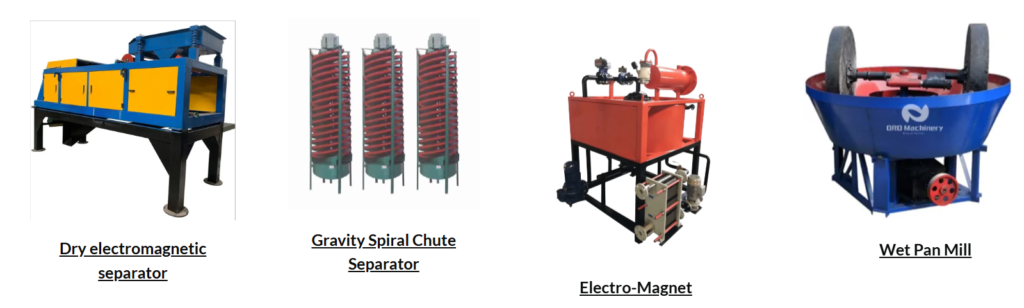
From our experience on production sites, ORO Mineral stands out for structural steel thickness and drive integrity. Where Western manufacturers often charge hefty markups for heavy steel upgrades, ORO Mineral builds standard barrels using robust steel plates fitted with modular, bolt-in polyurethane or punched manganese screen decks. Their systems integrate seamlessly into complete mineral beneficiation circuits, linking directly to downstream flotation lines, spiral chutes, or a high-efficiency wet pan mill for gold processing. For industrial mine managers who need reliable 100 to 500+ TPH processing capacity without excessive equipment brand markups, ORO Mineral offers the most competitive commercial ROI on the market.
2. MSI Mining: Heavy-Duty North American Placer Workhorses
Operating out of the United States, MSI Mining (Mountain States International) is legendary across Canadian and Alaskan placer gold fields. Models like their T5 and T8 portable trommels are engineered specifically for extreme mining conditions. MSI builds heavy skid- and trailer-mounted chassis designed to be dragged across rough permafrost haul roads by bulldozers without warping the main structural I-beams.
In our testing, MSI machines excel at mechanical simplicity. They utilize heavy vulcanized rubber trunnion rollers paired with heavy-duty chain drives, providing dependable service even when wet slurry spills over the side guards. Their integrated hopper feed systems feature vibrating grizzlies that scalping away +150mm boulders before they enter the trommel barrel, protecting the interior lifter bars from dynamic impact damage. The trade-off is capital expenditure: buying an MSI wash plant requires a substantial upfront capital outlay, but their resale value on the secondary North American market remains remarkably strong.
3. Macon Industries: The Arctic Mobility Specialists
Based in British Columbia, Canada, Macon Industries has carved out a dedicated following among modern Yukon placer miners. Macon specializes in compact, self-contained, highly mobile trailer-mounted trommel plants like the SD-series. Powered by onboard Isuzu or Kubota diesel-hydraulic engines, a Macon trommel can be leveled, connected to water pumps, and processed within three hours of arriving on a remote exploration claim.
Macon builds their trommels with premium AR450 and AR500 quenched-and-tempered abrasion-resistant steel plates. This allows them to shave overall road weight for highway transit while maintaining exceptional structural resistance to rock gouging. For commercial users running short four-month arctic seasons where moving between claims rapidly dictates profitability, Macon is an outstanding choice. However, for stationary, multi-year mega-operations exceeding 300 TPH, their mobile frames lack the physical footprint needed for high-volume surging.
4. Appropriate Process Technologies (APT): Modular Engineering and African Mineral Expertise
Headquartered in South Africa, APT (Appropriate Process Technologies) approaches placer and hard-rock mineral washing with rigorous metallurgical engineering. Their RG series (Rotary Gold) trommels are designed around modular ISO container transport dimensions, meaning an entire commercial plant can be packed into 40-foot shipping containers and delivered to remote African, South American, or Asian concessions without out-of-gauge shipping penalties.
APT prioritizes fine gold recovery by integrating modular bolt-in polyurethane screen panels and engineered high-pressure water scrubbers. Polyurethane screen decks flex slightly under load, preventing round pegging rocks from lodging in screen openings and eliminating manual wire-brush clearing. Their plants pair seamlessly with downstream centrifugal concentrators (such as their proprietary GoldKacha units), making them exceptionally efficient for operations where over 60% of gold values exist as -100 mesh microscopic flour gold.
5. Extrac-TEC: Patented Swept-Vane Low-Water Processing
Extrac-TEC, operating out of South Africa and the US, took a radical departure from traditional cylindrical perforated drums with their HPC (Heavy Particle Concentrator) technology. While traditionally categorized with rotary scrubbers, their machines feature an internal swept-vane design that classifies gravel and concentrates heavy minerals in a single enclosed rotary pass without requiring miles of downstream sluice boxes.
For operations located in arid environments, mountain concessions, or zones with strict environmental settling pond limitations, Extrac-TEC is an exceptional piece of engineering. Their machines operate on roughly one-third of the water volume demanded by conventional drum trommels. However, their internal swept-vane geometry cannot process heavy sticky clay balls as aggressively as a dedicated rotary scrubber barrel. If your gravel consists of clean river sand and washed quartz cobbles, Extrac-TEC is brilliant; if your deposit is 40% stiff laterite clay, stick with a traditional heavy scrubber-trommel combination.
6. Gekko Systems: Precision Hard-Rock and Placer Integration
Australia’s Gekko Systems is an international giant in energy-efficient mineral processing. Known primarily for their InLine Pressure Jigs and modular processing plants, Gekko builds rotary scrubbers and trommels that cater to heavy industrial and underground mining applications, particularly for scrubbing mill discharges and coarse ore sorting.
Gekko trommels are over-engineered in the best way possible. They feature direct-coupled variable speed drives, precision alignment laser-verified trunnion rings, and heavy molded rubber liners that deaden operating noise while delivering 20,000+ hours of continuous service. Their gear is high-end industrial grade, designed for multi-national corporate mines that demand full PLC automation, predictive vibration monitoring, and formal ISO compliance. For small-scale private placer miners, Gekko is commercially cost-prohibitive, but for major commercial installations, their reliability is unmatched.
7. DOVE Equipment: Tropical Rainforest and Alluvial Giants
Operating manufacturing facilities in Thailand with technical heritage across global mining regions, DOVE Equipment manufactures some of the largest continuous-run alluvial mining wash plants in existence. Their SuperMiner trommel plants are built to process the deep, high-volume alluvial deposits found in Southeast Asia, West Africa, and South America, with capacities reaching up to 500 tons per hour.
DOVE builds their machines with multi-stage concentric screening barrels: an internal heavy-gauge perforated steel cage scalps heavy boulders, while an outer fine mesh classifies slurry down to -2mm for direct feed into primary concentrators. Their systems are built for punishing tropical jungle duty, featuring corrosion-resistant marine epoxy coatings and heavy mechanical gear assemblies that operate continuously in hot, humid river valleys.
8. Savona Equipment: The Flexible Global Sourcing Powerhouse
Headquartered in Canada, Savona Equipment operates as a major supplier of both custom-manufactured new wash plants and fully reconditioned, certified industrial mining trommels. Their manufacturing arm builds bespoke stationary and skid-mounted trommel plants tailored to unique deposit constraints, while their equipment brokerage can source and overhaul legacy machines from classic North American brands.
For mining operations facing immediate seasonal deadlines where standard factory lead times of 16 to 24 weeks would ruin the fiscal year, Savona provides an invaluable commercial resource. They frequently have refurbished, production-ready 100 to 250 TPH trommels in stock, ready for immediate sea or road freight. Their technical team can re-power and re-screen existing frames to match specific placer size distributions, offering an affordable bridge for growing mining enterprises.
Comprehensive Manufacturer Engineering Comparison Matrix
The matrix below outlines key engineering, operational, and commercial parameters to guide corporate procurement teams:
| Manufacturer | Max Hourly Feed (TPH) | Scrubber Barrel Length-to-Diameter Ratio | Drive Train Type | Screen Media Options | Relative Capital Cost Tier |
|---|---|---|---|---|---|
| ORO Mineral | 500+ TPH | 2.5:1 to 3.0:1 (High retention) | Chain & Pinion / Ring Gear | Manganese / Polyurethane | Direct Manufacturer Value ($$) |
| MSI Mining | 300 TPH | 2.0:1 to 2.5:1 (Standard placer) | Heavy Trunnion / Chain | Punched AR400 Plate | Premium North American ($$$$) |
| Macon Industries | 200 TPH | 2.0:1 (Mobile optimized) | Hydraulic Direct Drive | AR500 Quenched Steel | High Mobile Tier ($$$) |
| APT Mining | 250 TPH | 2.2:1 (Modular balance) | Trunnion Wheel Drive | Modular Polyurethane | Moderate to High ($$$) |
| Extrac-TEC | 150 TPH | Specialized Swept Vane | Hydraulic / Electric Belt | Proprietary Poly Slots | Specialized Premium ($$$) |
| Gekko Systems | 400 TPH | 2.5:1 (Industrial spec) | Direct In-Line Gearbox | Molded Rubber & Poly | Enterprise Heavy ($$$$$) |
| DOVE Equipment | 500 TPH | 3.0:1 (Tropical deep wash) | Internal Girth Gear | Concentric Dual Steel | High Commercial ($$$$) |
| Savona Equipment | 300 TPH | Custom / Variable | Varies by Specification | Steel, Wire, or Rubber | Flexible Value ($$ to $$$) |
Pros and Cons of Rotary Trommels vs. High-Frequency Vibrating Screens
Before purchasing equipment, operations directors must evaluate whether a rotary trommel is truly the best fit for their geological deposit, or if a high-frequency vibrating screen deck is preferable:
| Screening Technology | Operational Advantages (Pros) | Inherent Limitations (Cons) |
|---|---|---|
| Rotary Trommel Scrubbers (Rotational autogenous wash) |
|
|
| Vibrating Deck Screens (Incline & horizontal decks) |
|
|
Who Needs Heavy Industrial Trommels vs. Who Can Use Simpler Sizing
In our experience evaluating mining operations, mismatching feed geology to classification equipment is the leading cause of early operational bankruptcy. Identify where your mineral deposit sits:
Who Needs a Heavy Industrial Trommel Scrubber:
- Alluvial Placer Miners Facing Clay Bands: If your deposit contains plastic blue clay, weathered saprolite, or dense laterite soils, you cannot use a vibrating screen. You need an extended rotary scrubber barrel with aggressive lifter bars to dissolve the clay before screening.
- High-Volume Riverbed and Bar Deposits: Operations processing 150 to 500+ tons per hour with excavators dumping unclassified bank-run gravel directly into the hopper require the rugged boulder tolerance of a rotary trommel.
- Turnkey Multi-Mineral Operations: Mines extracting gold alongside heavy mineral sands, garnets, or ilmenite benefit from integrated primary sizing before routing fine slurries to equipment like a WHIMS magnetic separator or consulting with experienced mineral processing companies worldwide.
Who Can Use Simpler Sizing Equipment:
- Dry Desert Placer Operations: Arid deposits devoid of water must use dry-washers, air tables, and dry vibrating screens; running an industrial trommel without 2,000 GPM of water is impossible.
- Pre-Washed Beach Sand Concessions: Marine and coastal sands that have already been naturally tumbled and classified by ocean surf contain zero boulders and zero clay balls. Here, simple vibrating screens or basic hydrocyclones offer faster, cheaper sizing. Review classic sand sizing steps in our guide on sand washing process steps.
- Quarry and Crushed Rock Facilities: Hard-rock crushing plants producing spec aggregate from blasted granite or limestone do not require water scrubbers. Review standard rock processing in our overview of limestone extraction method guide.
Featured Manufacturer: ORO Mineral Processing Equipment
ORO Mineral Co., Ltd. is a large-scale intelligent mineral processing, screening, and sand washing equipment manufacturer integrating R&D, production, and sales. Since 2014, ORO Mineral has made great contributions to every kind of mineral screening, solid waste resource recovery, beneficiation, washing, and separation, and has accumulated rich experience across diverse international mining environments.
In order to offer you better products and services, we have been sparing no effort to improve technology, develop new equipment, and upgrade services. Our heavy-duty gold washing trommels and rotary scrubbers are built to withstand the harshest abrasive gravels and thickest clay formations across commercial mining concessions globally.
Discover complete plant configurations through our directory of gold mining equipment manufacturers, explore magnetic beneficiation via magnetic separator manufacturers China, understand baseline recovery phases in mineral processing stages explained, compare CAPEX structures in our iron ore processing plant cost analysis, and review base-metal budgeting via copper processing plant cost 2025.
Costly Mistakes Mine Operators Make When Sourcing Trommels
In our field audits of struggling wash plants across Africa, South America, and Canada, operators repeatedly make four catastrophic procurement and operational mistakes:
- Sizing Trommel Capacity to Average Feed Rather than Peak Surge: An excavator operator does not feed a hopper in a smooth, continuous stream. They dump three cubic yards of dense gravel in three seconds, followed by forty seconds of swinging back to the trench. If your trommel is rated for a flat 100 TPH without an oversized feed hopper and variable-speed feeder, that sudden three-yard surge will overload the barrel, flood the water manifolds, and wash unscrubbed gravel straight out the tailings discharge with fine gold inside. Always size your trommel 25% to 30% above your planned average hourly feed rate.
- Using Light-Gauge Agricultural Trommels for Mineral Extraction: Buying a cheap trommel designed for screening compost, topsoil, or wood chips and feeding it river rock is a fast track to mechanical failure. Aggregate and compost trommels use thin 3mm mild steel barrels and light pillow-block bearings. Placer mining requires a minimum 8mm to 14mm thick structural steel shell, heavy trunnion cast-steel rollers, and abrasion-resistant liners to survive continuous rock impact.
- Ignoring Water Volume and Hydraulic Pressure Ratios: A trommel is not a dry screen; it is a wet hydraulic separation machine. A common industry mistake is under-sizing the water pump. A standard rule of thumb for sticky placer gravel is a 3:1 or 4:1 water-to-solids ratio by volume. If you run 100 tons of gravel per hour, you need between 1,200 and 1,800 gallons of clean water per minute delivered at 40 to 60 PSI through targeted internal spray nozzles. Skimping on water pump horsepower cuts clay breakdown in half.
- Selecting Friction Drives for Soggy, Silted Concessions: Friction tire drives are quiet and affordable, but they rely on dry mechanical traction between rubber tires and smooth steel trunnion rings. In tropical rainforests or deep pit excavations where water and fine silt constantly splash over the drum, rubber tires slip on slick steel trunnion tracks. When the drive slips, the drum stops rotating while the feed continues, clogging the entire plant. In wet, messy environments, insist on a positive-engagement ring-gear and pinion or heavy chain drive.
Commercial Procurement Considerations for Mining Equipment
Before issuing a bank wire or approving a proforma invoice for a commercial gold washing trommel, procurement teams must verify these four technical criteria with the manufacturer:
- Trunnion Roller Bearing Metallurgy and Sealing: Trommel support rollers carry tens of tons of dynamic rotating mass under continuous water spray. Demand forged alloy steel trunnion rollers (such as 42CrMo or 40Cr) heat-treated to 50–55 HRC, mounted on heavy-duty spherical roller bearings housed in double-labyrinth grease-purged cast iron blocks. Standard ball bearings will fail within weeks of slurry ingress.
- Replaceable Modular Screen Deck Fastening: Avoid barrels where screen mesh is welded permanently to the outer skeleton rings. When rocks wear through a welded screen section, replacing it requires torching out structural steel on-site. Insist on modular bolt-in or wedge-clamped panels—preferably high-grade polyurethane or manganese steel—that can be swapped out by two mechanics in under two hours.
- Variable Frequency Drive (VFD) Integration: Placer geology changes every fifty meters along an ancient river channel. One cut might contain clean sandy gravel requiring fast drum rotation, while the next cut hits stiff clay demanding slow rotation and longer retention times. A variable frequency drive on the primary electric motor allows operators to dial in exact RPM (typically 8 to 18 RPM) to match shifting clay conditions.
- Containerization and Transport Modularization: Shipping an oversized, non-separable 3-meter diameter by 10-meter long trommel overseas requires expensive breakbulk ocean cargo, which can double your freight bill. Verify that the manufacturer designs the trommel frame with flanged bolting connections that break down cleanly into standard 40-foot High Cube shipping containers for standard global freight.
Expert Recommendation and Capital Sourcing Verdict
In most professional situations, we recommend approaching trommel procurement as an investment in recovery insurance rather than looking for the cheapest bid. The money saved by purchasing an under-engineered, thin-gauge drum will be lost many times over in lost fine gold and downtime during peak operating weather.
If you are running a high-mobility, short-season exploration operation in North America where moving between sites every three weeks is vital, invest in a proven trailer-mounted unit from Macon Industries or MSI Mining. However, if you are establishing a semi-stationary, commercial alluvial mining plant operating between 100 and 500+ TPH where sticky clay, high abrasive rock volumes, and operating uptime dictate commercial survival, we recommend partnering directly with an experienced, vertically integrated industrial manufacturer like ORO Mineral. Getting direct factory engineering with high-manganese steel shells, positive-drive gear assemblies, and modular polyurethane screen decks ensures your wash plant operates continuously shift after shift, capturing fine gold that cheaper machines wash straight into the tailings pond.
Frequently Asked Questions (FAQ)
What is the difference between a rotary scrubber and a standard gold trommel?
A standard gold trommel is primarily a rotating perforated screening cylinder designed to classify material by size. A rotary scrubber is an unperforated, solid steel drum fitted with internal lifters and high-pressure water nozzles designed specifically to break down and dissolve heavy, sticky clay balls through intense tumbling. Modern high-efficiency gold wash plants combine both functions into a single unit: a solid scrubber section at the inlet followed by a perforated trommel screen section at the discharge.
How much water does a gold mining trommel require per hour?
Water requirements depend on clay content and hourly gravel tonnage, but the standard industry ratio is between 3:1 and 4:1 water-to-solids by volume. For a 100-ton-per-hour wash plant, you will typically require between 1,200 and 1,800 gallons per minute (GPM) of water delivered at 40 to 60 PSI through internal spray manifolds to ensure complete clay breakdown and clean screen washing.
Which screen media lasts longest on a gold washing trommel: steel or polyurethane?
High-grade modular polyurethane screen panels typically outlast standard mild steel screens by 3 to 5 times in wet, abrasive slurry environments. Polyurethane also flexes slightly under rock impact, which prevents round rocks from wedging tightly into screen openings (pegging). However, for the initial scalping zone subjected to heavy boulder impacts (+150mm), thick punched manganese steel plate is preferred for structural impact resistance.
Why do gold mining trommels use chain or ring-gear drives instead of rubber tires?
Friction rubber tire drives work well in dry conditions, but mining trommels operate in extremely wet environments with constant water and fine silt overspray. Silt and water make steel trunnion rings slippery, causing friction tires to spin out and stall the drum under heavy gravel surges. Positive-engagement heavy chain-and-sprocket or ring-gear pinion drives eliminate slippage, ensuring continuous rotation regardless of mud and moisture.
What is the optimal rotational speed for a gold mining trommel?
Most commercial trommel drums operate between 10 and 18 revolutions per minute (RPM), representing roughly 40% to 50% of the drum critical speed (the speed at which centrifugal force pins rocks to the drum wall). Rotating too slowly prevents material from climbing the lifters for proper tumbling impact; rotating too quickly pins gravel to the walls, preventing scrubbing and blinding the screen perforations.
Authoritative References
- Society for Mining, Metallurgy & Exploration (SME): Mineral Processing and Extractive Metallurgy Handbook
- OneMine Mining and Minerals Digital Library: Gravity Concentration and Placer Sizing Technology Papers
- U.S. Geological Survey (USGS): Placer Gold Recovery Methods and Mineral Beneficiation Technical Reports