List of 10 Common Types of Coal Mining Equipment: Practical Operational Review
Coal extraction is an unforgiving, capital-intensive industry where margins are determined by operational uptime, maintenance scheduling, and mechanical reliability. Deploying unsuitable coal mining equipment leads directly to unrecoverable downtime, structural asset failures, and severe cost overruns per extracted ton. From our experience evaluating processing plants and bulk extraction pits, operators regularly make the mistake of over-spending on high-horsepower extraction faces while severely under-investing in raw material sizing, screening, and wet beneficiation systems. A high-production underground shearer or surface dragline is completely useless if your downstream crushing, desliming, and separation circuits choke on raw, unwashed run-of-mine feed.
In most professional situations, building a profitable coal extraction circuit requires balancing heavy extraction machinery with precision sizing and washing hardware. You must treat the entire lifecycle—drilling, blasting, cutting, hauling, and coal preparation—as a single, interconnected hydraulic and mechanical continuum. In this guide, we bypass superficial catalog descriptions to examine the 10 most common types of coal mining equipment, their mechanical functions, operating limitations, and critical procurement criteria.
Quick Answer: Primary Types of Coal Mining Equipment
The 10 primary types of coal mining equipment fall into two interdependent categories: extraction machinery and material beneficiation systems. These include: 1. Draglines (large-scale surface overburden stripping), 2. Continuous Miners (underground room-and-pillar extraction), 3. Longwall Shearers with Powered Roof Supports (high-volume underground bulk cutting), 4. Electric Rope Shovels & Hydraulic Excavators (open-pit pit loading), 5. Heavy Off-Highway Haul Trucks (surface bulk transport), 6. Rotary Blast Hole Drill Rigs (overburden fragmentation prep), 7. Feeder Breakers & Mineral Sizers (primary in-pit crushing and flow regulation), 8. Heavy-Duty Overland and Armored Face Conveyors (continuous bulk transfer), 9. Vibrating Screens & Desliming Dewatering Units (particle classification), and 10. Dense Medium Separation Systems & Spiral Concentrators (density-based washing and ash reduction). For commercial users, the true profitability bottleneck almost never occurs at the cutting tooth; it occurs during material transfer, sizing, and washing.
Table of Contents
- What It Is: Classification of Modern Coal Mining Equipment
- How It Works: The Extraction-to-Beneficiation Sequence
- List of 10 Common Types of Coal Mining Equipment
- Commercial and Operational Benefits of Modern Fleets
- Limitations, Wear Profiles, and Mechanical Chokepoints
- Who Should Invest in What Tier of Machinery
- Who Does Not Need Mega-Class Heavy Systems
- Common Procurement and Commissioning Mistakes
- Buying Considerations: Lifecycle Cost vs. Initial CAPEX
- Summary, Comparison, and Pros vs. Cons Tables
- Expert Recommendation and Circuit Integration
- Frequently Asked Questions
- Authoritative Industry References
What It Is: Classification of Modern Coal Mining Equipment
Coal mining equipment encompasses the entire inventory of mobile machines, mechanical cutters, bulk handling conveyors, and stationary preparation units deployed to uncover, fragment, haul, size, and wash raw coal deposits. Broadly divided into surface mining machinery and underground extraction systems, these assets operate under brutal abrasive conditions, intense dynamic mechanical stress, and volatile atmospheric environments containing explosive methane gas and respirable dust.
In modern operational engineering, extraction units cannot be viewed in isolation from wet processing facilities. The chemical value of commercial thermal or metallurgical coking coal is dictated by moisture percentage, ash content, sulfur concentration, and calorific value. Therefore, primary sizing sizers, heavy vibrating classification screens, and wash-plant separation units are just as fundamental to the coal mining equipment ecosystem as multi-million-dollar extraction machines. You can review how early preparation interfaces with downstream sorting by reading about mineral processing stages explained.
How It Works: The Extraction-to-Beneficiation Sequence
The operational continuum of coal production follows a rigid progression: fragmentation, loading, primary sizing, transportation, and wet beneficiation.
In surface pits, rotary drill rigs penetrate tough sandstone or shale overburden, creating precise patterns for blasting. Massive draglines or hydraulic excavators strip this broken overburden away to expose the underlying coal seam. Once uncovered, coal is loaded onto ultra-class haul trucks or mobile feeder breakers that reduce large chunks down to a manageable continuous profile. Overland conveyor belts then transport the raw run-of-mine (ROM) coal directly into the Coal Preparation Plant (CPP).
In underground operations, continuous miners or longwall shearers cut directly into the exposed face. The coal drops onto armored face conveyors, transfers to shuttle haulers or stage loaders, and feeds continuous belt networks exiting the mine portal. Once at the surface, understanding the core mechanical and fluid handling dynamics detailed in mineral processing techniques and equipment allows operators to properly separate clean, high-BTU coal from barren shale and pyritic rock.
List of 10 Common Types of Coal Mining Equipment
1. Walking Draglines
Walking draglines represent the apex of surface overburden removal. Utilizing a massive wire-rope suspended bucket swinging from a lattice boom reaching over 100 meters, these machines strip hundreds of cubic meters of waste rock per pass without requiring secondary transport. In our testing, draglines deliver the lowest cost-per-bank-cubic-meter for deep, flat-lying seams, but their multi-year assembly timelines and complete lack of cross-pit mobility make them practical solely for mega-scale operations with verified multi-decade reserves.
2. Continuous Miners
For underground room-and-pillar configurations, the continuous miner is the foundational cutting asset. Featuring a high-torque rotating steel drum fitted with tungsten-carbide pick bits, this tracked machine chews out heading entries and crosscuts at rates exceeding 5 to 10 tons per minute. It collects the cut coal using gathering arms, channeling the stream onto an integrated chain conveyor that discharges into waiting haulage equipment. Its primary operational limitation is tool bit consumption when encountering unexpected pyritic sulfur balls or hard sandstone intrusions.
3. Longwall Shearers & Powered Hydraulic Roof Supports
When high-volume underground extraction is required across massive continuous coal blocks, nothing matches longwall mining machinery. The longwall shearer rides along an armored face conveyor (AFC), using bidirectional rotating cutting drums to slice swathes of coal up to several meters thick. Protecting this entire mechanical operation is a synchronized line of heavy hydraulic shield supports (chocks). As the shearer cuts and the face advances, the shields walk forward hydraulically, allowing the roof behind to collapse in a controlled, planned cave-in (the goaf).
4. Electric Rope Shovels and Large Hydraulic Excavators
Open-pit loading relies on electric rope shovels for high-throughput bench loading and hydraulic backhoes for selective extraction. Electric rope shovels provide unmatched dipper capacities (up to 60 cubic meters) and superior motor lifespans, operating with minimal drive train wear over 20-year cycles. Hydraulic excavators, while having higher diesel and fluid overhead, provide the bucket breakout force and maneuverability needed to scalp pure coal from thin, undulating seams without scooping up contaminated rock floor.
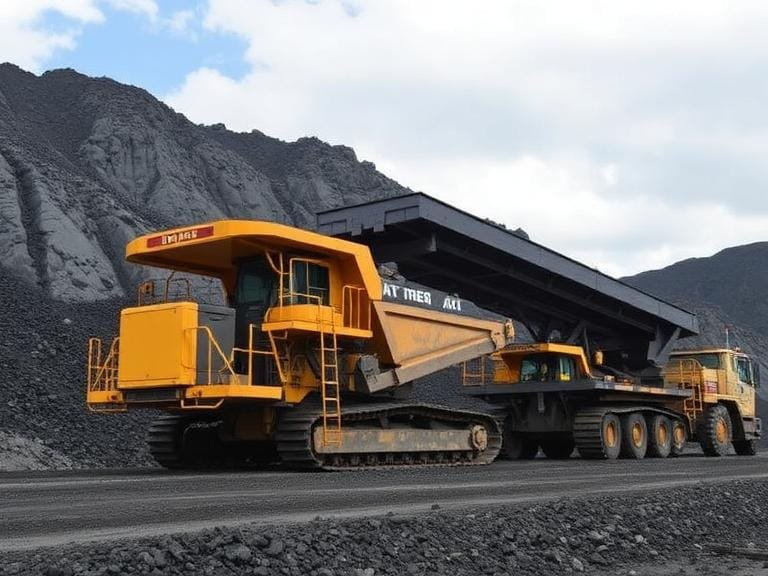
5. Ultra-Class Off-Highway Haul Trucks
Hauling coal from pit to preparation facility requires rigid-frame haulers ranging from 100 to 400 tons of payload capacity. In coal mining, these trucks feature specialized high-volume lightweight dump bodies, since coal has a much lower bulk density compared to copper or iron ore. Running diesel-electric drive configurations provides the dynamic retarding capabilities essential for heavy downhill hauls without burning through mechanical friction brakes.
6. Rotary Blast Hole Drill Rigs
Precision drilling dictates overall pit profitability. Modern crawler-mounted blast hole drills drive high-pressure rotary tricone or down-the-hole (DTH) hammer bits through hard caprock. Automated drilling suites monitor penetration rate, torque, and vibration, constructing real-time hardness maps of the rock strata. Poor drilling practices produce bad blasting fragmentation, which subsequently causes downstream shovel tooth damage and conveyor feed jams.
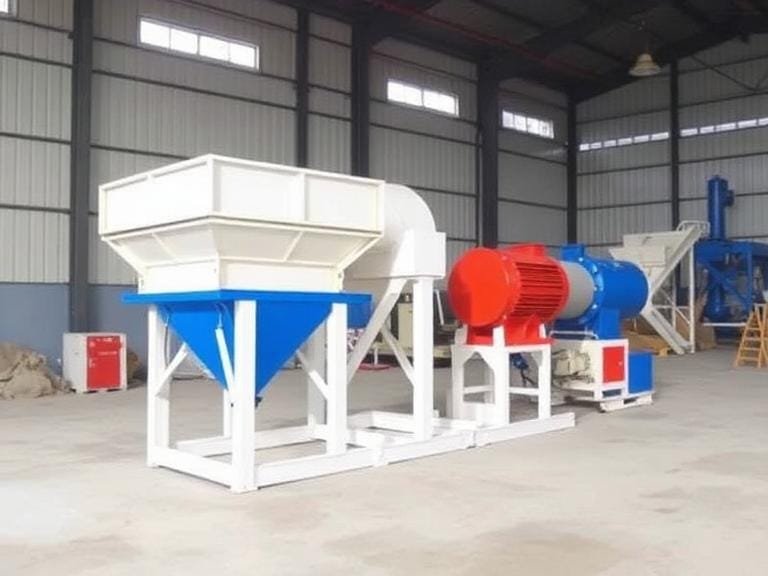
7. Feeder Breakers & Mineral Sizers
Raw coal exiting the pit or mine portal cannot be directly loaded onto standard conveyors or washing circuits. Feeder breakers and primary twin-roll mineral sizers receive raw dump loads, using low-speed, high-torque center-outward rotating toothed shafts to shear and fracture oversized blocks along natural bedding planes. Unlike conventional jaw crushers that generate excessive, unusable coal fines, specialized sizers produce a clean, uniform cubical lump distribution with minimum slimes generation.
8. Armored Face and Overland Conveyor Systems
Continuous mechanical handling is the circulatory system of modern coal production. Armored Face Conveyors (AFCs) deployed underground feature hardened manganese steel pans and high-tensile twin-strand flight chains that drag hundreds of tons of jagged coal under intense impact. At the surface, overland belt conveyors stretching dozens of kilometers use gearless drives and high-tension steel-cord belting to replace entire fleets of diesel haul trucks, radically reducing transport operating costs.
9. Heavy-Duty Vibrating Screens & Desliming Dewatering Units
Classification is non-negotiable. Before coal enters washing circuits, heavy multi-deck banana screens and horizontal vibrating screens scalp coarse rock and execute critical wet desliming (typically cutting at 0.5mm to 1mm). Screening units must feature polyurethane or wedge-wire modular panels resistant to severe blinding and continuous abrasion. Poorly selected screening decks allow coarse shale into fine cleaning circuits, directly destroying final product purity.
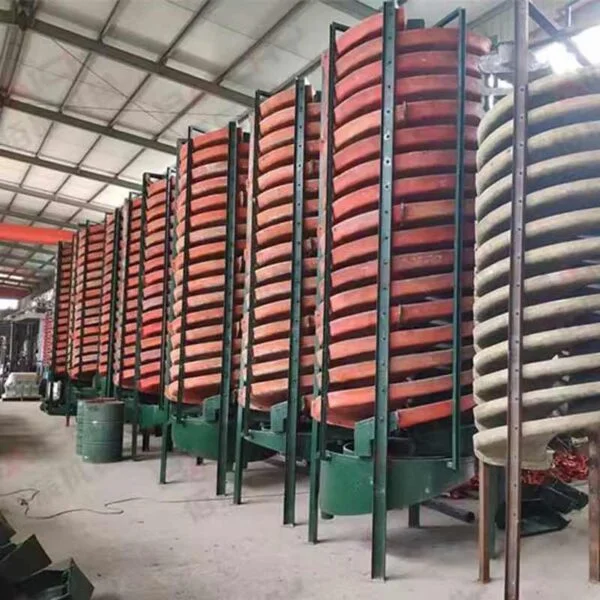
10. Dense Medium Separation Systems & Spiral Concentrators
The core of modern coal beneficiation is density separation. Raw coal is relatively light (specific gravity ~1.2 to 1.5), while shale and rock are much denser (specific gravity >2.2). Dense Medium Cyclones (DMC) utilize a suspension of fine magnetite powder in water to float clean coal off the top while sinking heavy discard rock. For fine coal fractions (-1mm to +0.045mm), gravity-based spiral concentrators use centrifugal and gravitational forces to separate ash without requiring costly chemical reagents. For plant engineers evaluating classification and density washing setups, reviewing global practices from mining equipment manufacturers global establishes clear mechanical benchmarks.
Commercial and Operational Benefits of Modern Fleets
Upgrading and properly synchronizing your coal mining equipment yields measurable improvements to your bottom line. Mechanized longwall systems and automated continuous miners compress labor overhead, removing personnel from active, unsupported roof areas. Modern computerized drilling and sizing setups dramatically decrease the yield of unmarketable ultra-fine coal slimes, directly increasing product recovery percentages per extracted ton.
Furthermore, in the washing plant, advanced gravity separation and precision screening lower total moisture and ash percentages. Meeting strict contract specifications for metallurgical coke or high-efficiency thermal power generation avoids penalty pricing and opens high-margin export markets that reject poorly graded, unwashed raw coal.
Limitations, Wear Profiles, and Mechanical Chokepoints
We do not sugarcoat the operational reality: heavy coal extraction and processing equipment demands relentless preventative maintenance. A continuous miner operating in abrasive coal seams will require cutter pick replacement every single shift. In wet beneficiation circuits, dense medium slurries laced with abrasive magnetite eat through steel pipes, pump impellers, and cyclone ceramic linings in a matter of months.
Additionally, electrical and physical infrastructure requirements are massive. High-voltage longwall shearers and electric draglines demand dedicated substations, trail cables, and sophisticated ground-fault monitoring. If your mine site suffers from poor electrical grid stability or restricted water supplies for dense medium washing, deploying ultra-heavy machinery will trigger continuous nuisance trips and structural overheating.
Who Should Invest in What Tier of Machinery
We recommend longwall setups and high-capacity walking draglines strictly for commercial operators controlling continuous, high-thickness coal deposits with verified reserves exceeding 30 to 50 million tons. These operations have the long amortization schedules required to justify nine-figure capital layouts.
For mid-sized operations, contract miners, and selective extraction pits, continuous miners, track-mounted excavators, and modular surface mineral sizers offer the operational agility to pivot between seams, handle complex faulting, and scale production up or down without massive debt burdens.
Who Does Not Need Mega-Class Heavy Systems
For beginners, artisanal leaseholders, and operators running short-lifecycle alluvial or small-scale outcrop excavations, purchasing ultra-class electric rope shovels or complex longwall shearers is commercial suicide. The relocation and assembly costs alone will exceed total asset reserves. These smaller pits are vastly better served by standard construction-grade hydraulic excavators, articulated dump trucks, and compact, skid-mounted screening units that can be moved with a simple flatbed trailer.
Common Procurement and Commissioning Mistakes
The single most catastrophic mistake mining managers make is failing to conduct deep rheological and washability testing on the raw coal seam before purchasing plant equipment. Operators frequently buy a wash plant calibrated for easy, low-gravity separation, only to discover their deposit contains dense, locked middlings (intergrown rock and coal) that standard flotation or simple wash jigs cannot separate cleanly.
A secondary operational error is purchasing crushing and sizing equipment that over-crushes coal. Standard jaw and cone crushers designed for hard rock aggregates utilize intense compressive forces that pulverize friable coal into dust. This creates a massive handling nightmare in downstream slurry circuits and destroys the value of high-dollar lump coal. Operators must mandate low-speed twin-roll mineral sizers engineered specifically for shear-action cleavage.
Buying Considerations: Lifecycle Cost vs. Initial CAPEX
When procuring coal mining equipment, you must calculate Total Cost of Ownership (TCO) across three components: consumables, power consumption, and mechanical availability.
- Consumable Part Velocity: Ensure pick bits, conveyor scraper blades, screen media panels, and cyclone liner tiles are universally sourced, non-proprietary designs. Being locked into a single supplier for specialized cutting bits can inflate OPEX by 40%.
- Structural Steel Hardening: Verify that chutes, hoppers, and transfer points feature replaceable liner plates constructed from high-hardness chromium-carbide overlay or specialized ceramics rather than basic mild steel.
- Drive Redundancy: Heavy overland conveyors, wash-plant slurry pumps, and secondary sizers should feature modular, shaft-mounted gearboxes with soft-start fluid couplings or variable frequency drives (VFDs) to prevent catastrophic shock-load motor burnouts.
Summary, Comparison, and Pros vs. Cons Tables
| Equipment Type | Operating Domain | Primary Function | Key Maintenance Metric |
|---|---|---|---|
| Walking Draglines | Surface Pits | Bulk overburden stripping | Hoist and drag rope inspection |
| Continuous Miners | Underground Room & Pillar | Face cutting and gathering | Cutter pick and spray nozzle wear |
| Longwall Shearers | Underground Longwall | High-volume continuous face slicing | Haulage sprocket and cowl condition |
| Mineral Sizers | Surface & Underground Plants | Non-pulverizing primary crushing | Tooth segment wear and roll clearance |
| Dense Medium Cyclones | Coal Preparation Plants | Gravity-based ash & coal separation | Ceramic tile erosion & vortex finder stability |
| Operational Metric | Room & Pillar (Continuous Miner) | Longwall System (Shearer & Shields) |
|---|---|---|
| Initial Capital Investment | Moderate ($5M – $15M per section) | Extremely High ($60M – $120M+ full setup) |
| Production Rate (Daily) | Moderate (1,000 – 4,000 tons/shift) | Massive (10,000 – 30,000+ tons/shift) |
| Geological Flexibility | High (Can navigate faults and pillar zones) | Very Low (Requires uniform, flat, massive coal blocks) |
| Reserve Recovery Percentage | 50% – 65% (Pillars left behind) | 75% – 90%+ (Full panel extraction) |
| Equipment Relocation Time | Days (Mobile crawlers) | Weeks to Months (Massive disassembly required) |
| Pros (Advantages of On-Site Washing) | Cons (Operational Liabilities) |
|---|---|
| Dramatically upgrades coal grade, eliminating buyer ash penalties. | High upfront capital cost for screening, cyclones, and spirals. |
| Reduces freight costs by avoiding the transport of barren discard rock. | Demands complex tailings dewatering and water recycling circuits. |
| Enables blending of multiple seams to hit specific target specifications. | Requires handling abrasive magnetite and managing environmental slimes. |
| Commands premium pricing on metallurgical and export coal markets. | Introduces additional mechanical failure points in the production chain. |
Expert Recommendation and Circuit Integration
From our experience auditing production flows across global mining operations, purchasing excessive cutting power at the face while failing to plan your classification and wet separation circuit is a recipe for commercial distress. If your preparation plant cannot handle the incoming feed tonnage, your continuous miners and excavators will sit idle on the clock, burning operating cash while haul trucks queue at the dump pocket.
We recommend establishing your processing and sizing thresholds before finalizing any extraction fleet contracts. Ensure your circuit utilizes low-wear mineral sizers to preserve valuable lump coal, and integrate high-capacity desliming and density separation equipment to handle variable ash profiles. Sourcing properly engineered beneficiation machinery ensures that every ton of rock carved out of the earth translates directly into sellable, spec-compliant product.
Frequently Asked Questions
While extraction equipment (excavators, continuous miners) is largely identical for both coal types, the downstream coal preparation equipment differs significantly. Metallurgical coking coal requires extremely low ash and strict chemical purity to make steel, necessitating multi-stage dense medium cyclones, froth flotation cells, and extensive dewatering filters. Thermal coal, used for electrical power generation, can tolerate higher ash percentages, often requiring only simple crushing, dry screening, or basic density separation to hit target calorific specifications.
Standard jaw crushers crush materials through massive compressive forces, which shatters brittle coal into excessive fine particles and dust (slimes). Coal fines are difficult to wash, expensive to dewater, and sell at steep market discounts. Mineral sizers use low-speed, high-torque toothed rolls that break coal along its natural fracture and bedding planes through tensile and shear forces. This generates clean, consistent lump product with minimal fine dust generation.
Dense medium separation exploits the physical density difference between coal and waste rock. A slurry is created using water and finely milled magnetite powder, calibrated to a specific gravity between 1.3 and 1.8. Raw coal is introduced into this medium inside a pressurized cyclone. Because clean coal has a lower specific gravity than the fluid, it floats out the top (overflow), while denser shale, clay, and pyritic rock sink and discharge out the bottom (underflow). The magnetite is then recovered via magnetic separators and recycled back into the circuit.
The primary bottleneck in underground coal extraction is almost always the material face-haulage and conveyance transition. A continuous miner can easily cut 8 to 12 tons of coal per minute, but if shuttle cars cannot swap positions rapidly or if the feeder-breaker chokes on oversized slabs, the cutting drum sits idle. Optimizing surge bins, feeder breakers, and armored face conveyor speeds is critical to maintaining continuous cutter utilization.
Authoritative Industry References
To verify technical standards, engineering mechanics, and safety regulations governing modern coal extraction and mineral beneficiation, our guidelines reference data from the following authorities:
- Mine Safety and Health Administration (MSHA) – Mandatory safety, ventilation, electrical, and equipment standards for underground and surface coal mining operations in the United States.
- Society for Mining, Metallurgy & Exploration (SME) – Peer-reviewed engineering manuals, technical publications, and mineral processing handbooks detailing equipment performance metrics and plant design.
- International Organization for Standardization (ISO/TC 82/SC 7) – International specifications governing coal preparation plant machinery, sampling accuracy, and washability analysis.