Ultimate Gold Dredging Equipment List: An Expert Commercial Guide
The allure of pulling raw, heavy gold from the bedrock of a rushing river is powerful. However, the modern reality of placer mining is that it is a brutal, mechanically demanding industrial process. Far too many prospective miners waste their capital on amateur, underpowered recreational kits that struggle to move a few buckets of gravel a day. If your goal is high-yield extraction, you cannot treat your operation like a weekend hobby. You must approach your gold dredging equipment procurement with the same ruthless efficiency expected of any top-tier industrial operation.
From our experience engineering advanced extraction machinery at Oromineral, the difference between a failing prospector and a profitable commercial miner comes down entirely to moving cubic yardage and executing flawless fine-gold recovery. You need equipment engineered to withstand abrasive gravels, continuous hydrostatic pressure, and the punishing conditions of remote waterways. In this practitioner’s guide, we will brutally dissect the ultimate gold dredging equipment list. We will tell you exactly what to buy, what amateur gear to avoid, and how to structure your final clean-up phase so you do not wash your profits back into the river.
Quick Answer: The Essential Gold Dredging Equipment List
If you are assembling a gold dredging equipment setup capable of actual production, your mandatory checklist must include: 1) A minimum 4-inch to 6-inch Suction Hose and Nozzle with a crash ring. 2) A commercial-grade Engine and High-Pressure Pump (typically Honda-powered) to drive the venturi system. 3) A highly buoyant Pontoon/Floatation System. 4) A multi-stage Sluice Box equipped with miner’s moss and Hungarian riffles. 5) A continuous Hookah Air Compressor system for extended underwater diving. 6) Industrial Clean-Up Equipment, specifically a Permanent Magnetic Separator to strip heavy magnetite (black sands) from your fine gold concentrates. Anything less than this configuration restricts you to recreational panning yields.
Table of Contents
- What is Gold Dredging?
- How the Equipment Works (The Venturi Effect)
- Commercial Benefits vs. Panning
- Limitations and Environmental Compliance
- Who Should Use It & Who Does Not Need It
- The Complete Gold Dredging Equipment List
- The Clean-Up Phase: Securing the Gold
- Common Mistakes in Equipment Procurement
- Strategic Buying Considerations
- Essential Comparison Tables
- Expert Recommendation from Oromineral
- Frequently Asked Questions (FAQ)
What is Gold Dredging?
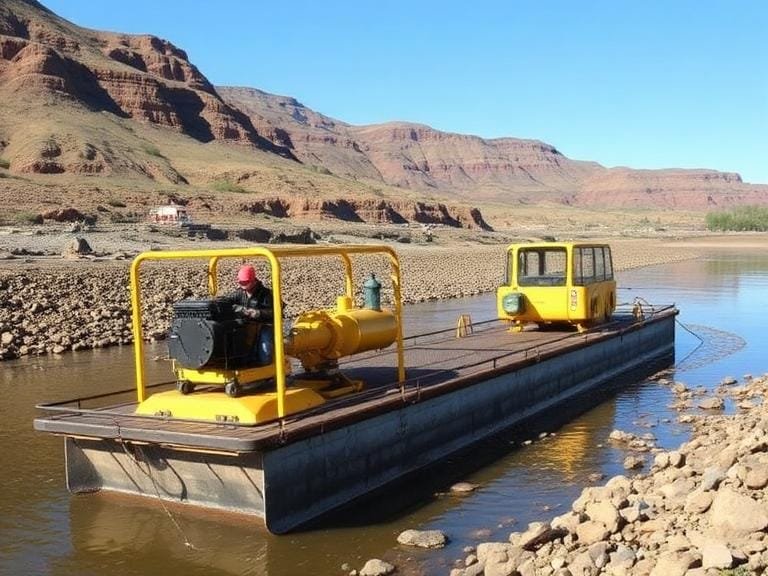
Gold dredging is a method of placer mining used to extract gold from the bottom of rivers, creeks, and submerged bedrock. Instead of manually shoveling dirt into a sluice box, a dredge operates like a massive underwater vacuum cleaner. It sucks up water, gravel, sand, and gold from the riverbed, forces it up to the surface, and runs it through a floating sluice box to separate the heavy gold from the lighter waste material (tailings).
Much like scaling operations detailed in our mineral processing companies worldwide reports, transitioning from manual panning to a motorized suction dredge is the primary leap a miner makes when transitioning from a hobbyist to a commercial operator.
How the Equipment Works (The Venturi Effect)
Understanding your gold dredging equipment requires understanding fluid dynamics. The heart of the dredge is the venturi jet. The water pump (mounted on the floating pontoons) forces high-pressure water into a specialized jet nozzle attached to the suction hose. As this high-velocity water shoots upward, it creates a powerful vacuum behind it—the venturi effect. This vacuum is what rips gravel and gold off the river bottom.
The slurry is then blasted onto the crash box of the sluice, slowing its momentum. As the material washes down the sluice box, specific gravity takes over. Gold is roughly 19 times heavier than water. It drops out of suspension and becomes trapped in the riffles and miner’s moss, while the lighter rocks wash back into the river.
Commercial Benefits vs. Panning
The primary benefit of acquiring a complete gold dredging equipment list is the sheer volume of material you can process. A skilled miner with a gold pan might process a quarter-yard of gravel a day. A professional running a 6-inch dredge can process 10 to 15 cubic yards of material per hour. When dealing with placer deposits, volume dictates profitability. If you are analyzing an iron ore processing plant cost or a gold mining operation, throughput is the ultimate metric of success.
Limitations and Environmental Compliance
We must exercise commercial and practical judgment: dredging is highly regulated. The primary limitation of a suction dredge is its environmental impact. Dredging disturbs fish habitats and alters riverbed topography. In regions like California, suction dredging faces severe bans or extreme seasonal restrictions. You must secure permits from local environmental agencies and the EPA before placing a motorized dredge in any waterway. Furthermore, operating heavy underwater machinery requires strict adherence to diving safety protocols.
Who Should Use It & Who Does Not Need It
For commercial users and serious prospectors: If you hold a valid mineral claim on a gold-bearing river and intend to generate a return on investment, a 4-inch to 8-inch suction dredge is mandatory. You cannot extract bedrock gold efficiently without it.
Who does not need it: For beginners who want to spend a weekend at a public panning site, dropping $5,000 to $15,000 on a commercial dredge setup is absurd. Stick to highbankers or manual sluice boxes until you have proven the ground yields enough gold to justify the capital expenditure.
The Complete Gold Dredging Equipment List
In most professional situations, your setup will consist of the following integrated components:
- Suction Nozzle and Hose: The diameter dictates your production. A 2-inch hose is a toy. We recommend a 4-inch hose as the absolute minimum for commercial viability. Ensure the nozzle has a welded crash ring to prevent massive boulders from lodging in the hose.
- Engine and Water Pump: Do not compromise here. You need a high-pressure commercial pump mated to a reliable engine (Honda GX series is the gold standard). Underpowering the pump leads to frequent hose clogs.
- Sluice Box and Recovery System: The floating sluice must contain a multi-tier recovery system: slick plates, expanded metal, miner’s moss, and Hungarian riffles to capture both coarse nuggets and microscopic flour gold.
- Pontoon Floatation: For heavy-duty applications, inflatable PVC pontoons or high-density polyethylene (HDPE) floats are required. They must support hundreds of pounds of machinery, water weight, and occasionally the miner resting on them.
- Hookah Diving System: A specialized air compressor powered by the dredge engine that pumps breathable air down a hose to the diver’s regulator, allowing you to stay submerged for hours without heavy scuba tanks.
The Clean-Up Phase: Securing the Gold
The most devastating mistake a miner can make is doing the hard work of dredging the river, only to lose the fine gold during the clean-up phase. When you wash out your sluice box at the end of the day, you are left with “concentrates.” This is a mix of gold and heavy black sands (magnetite and hematite). Because black sand is incredibly heavy, attempting to pan it out by hand usually results in washing your fine gold over the edge.
To solve this, you must rely on advanced magnetic extraction. Similar to the magnetic separation applications in industry, you must strip the magnetic sands away mechanically.
Expert Recommendation from Oromineral
In our testing, manual separation of heavy black sands is inefficient and results in unacceptable fine gold loss. For commercial users, integrating a magnetic separator into your final clean-up shed is non-negotiable. If you want to retain 100% of your extracted value, you must pull the magnetite out mechanically.
For a detailed breakdown of how this technology scales, review our WHIMS magnetic separator working principle guide. However, for standard dredge clean-up, a robust permanent magnetic solution is required.

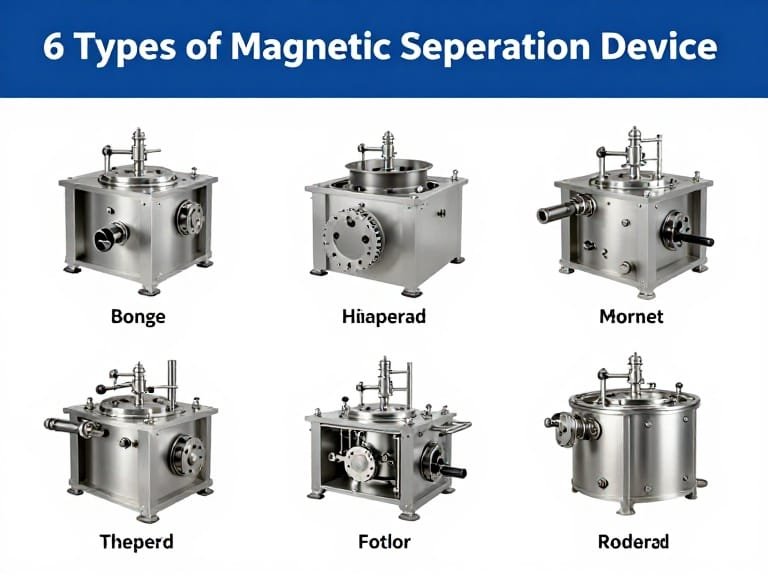
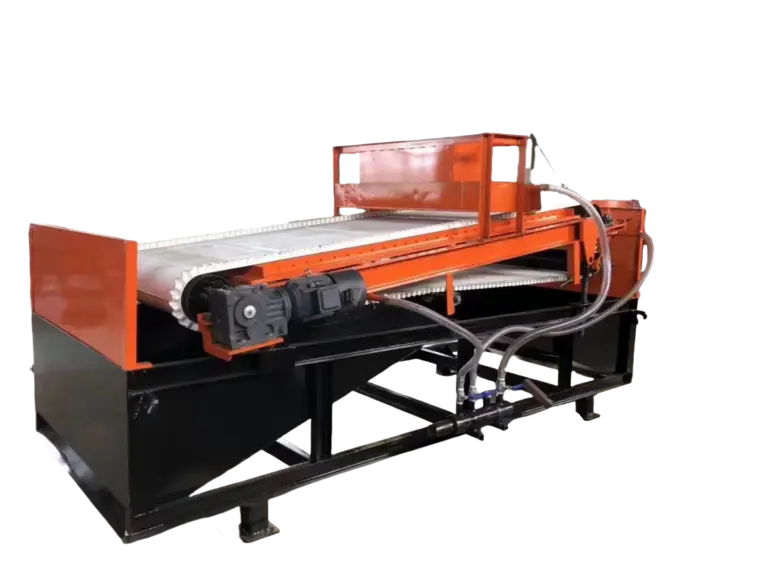
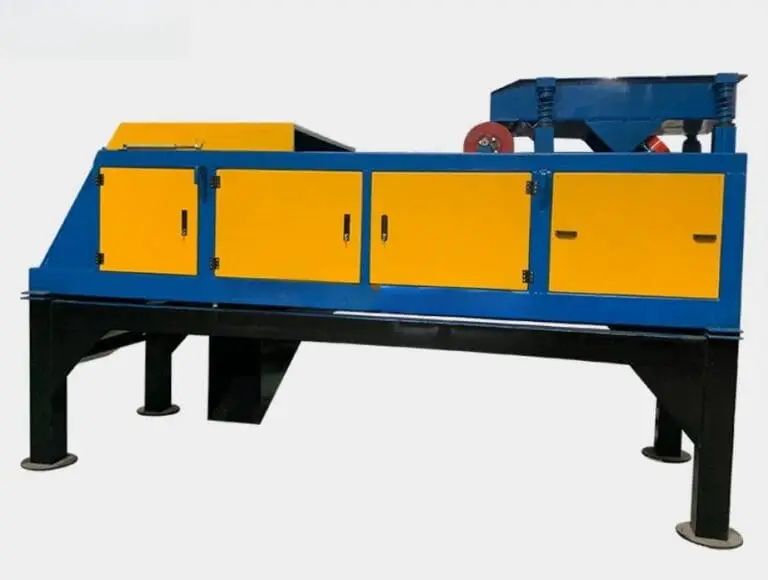
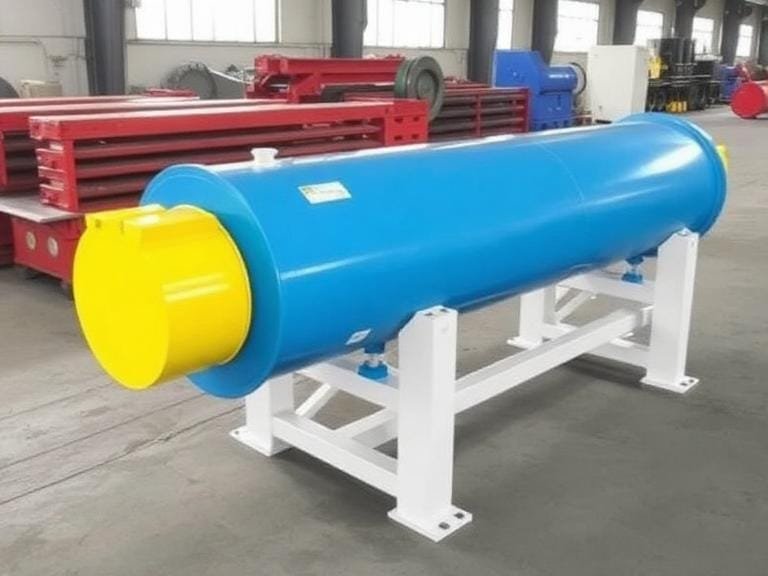
Permanent Magnetic Separator
Engineered for high-efficiency mineral recovery, this unit flawlessly separates magnetic black sands from your fine gold concentrates, drastically reducing your manual panning time and preventing gold loss.
- Magnetic Intensity: 10,000 Gauss to 15,000 Gauss
- Material: Stainless Steel and Neodymium Magnets
- Capacity: Up to 300 TPH (Scalable for any commercial operation)
- Operating Temperature: -10°C to 80°C
- Warranty: 1-Year Manufacturer Warranty
Whether you are evaluating a copper processing plant cost 2025 or outfitting a remote gold camp, Oromineral provides the heavy-duty separation infrastructure necessary to ensure commercial profitability.
Common Mistakes in Equipment Procurement
The most profound error we observe is buyers opting for a 2-inch or 2.5-inch dredge to “save money.” A 2-inch dredge will physically exhaust you because you must manually move every rock larger than a golf ball out of the way before you can vacuum the sand beneath it. A 4-inch or 5-inch dredge will suck up baseball-sized rocks effortlessly, allowing you to reach the gold-bearing bedrock exponentially faster.
Another major mistake is neglecting to purchase a methods to separate iron and steel equivalent for your gold concentrates. Do not spend ten hours underwater only to lose your profits in a plastic gold pan on the shoreline.
Strategic Buying Considerations
When purchasing your gold dredging equipment, assess the logistics of your claim. How will you transport a 250-pound, 4-inch dredge down a steep ravine? If your claim lacks vehicle access, you must purchase a dredge that utilizes modular, breakdown components and inflatable PVC pontoons rather than rigid plastic floats. Additionally, unlike the complex chemical reagents discussed in our magnesium extraction process guide or zinc extraction by electrolysis steps, gold dredging is purely mechanical. Therefore, your capital must be spent on engine reliability and abrasion-resistant steel, not chemical containment.
Essential Comparison Tables
| Equipment Component | Function | Commercial Recommendation |
|---|---|---|
| Suction Hose & Nozzle | Pulls gravel from the riverbed. | Minimum 4-inch diameter with steel crash ring. |
| Engine & Water Pump | Creates the venturi vacuum effect. | Honda GX200 or equivalent; minimum 300 GPM. |
| Sluice Box | Captures the gold via specific gravity. | Multi-stage with miner’s moss and Hungarian riffles. |
| Clean-Up Separator | Removes black sand from concentrates. | Neodymium Permanent Magnetic Separator (10k+ Gauss). |
| Dredge Size (Hose Diameter) | Estimated Yield (Cubic Yds/Hour) | Portability | Best Use Case |
|---|---|---|---|
| 2 to 2.5 Inch | 1.5 to 2.5 | Excellent (Backpackable) | Hobbyists, sampling remote creeks. |
| 4 Inch | 4 to 6 | Moderate (Requires two people) | Serious prospectors, small commercial ops. |
| 6 to 8 Inch | 10 to 15+ | Poor (Requires winch/trailer) | Full-scale commercial river mining. |
| The Pros (Advantages) | The Cons (Disadvantages) |
|---|---|
| Massive processing volume yields significantly higher gold recovery. | High upfront capital cost for reliable commercial equipment. |
| Allows access to virgin bedrock that shore-miners cannot reach. | Subject to strict environmental regulations and permitting. |
| Mechanized extraction is less physically destructive than manual shoveling. | Requires adherence to strict underwater diving safety protocols. |
Frequently Asked Questions (FAQ)
Authoritative Industry References
To ensure your mining operation adheres to legal and safety standards, we advise consulting the following organizations:
- Environmental Protection Agency (EPA) – Outlines the Clean Water Act regulations regarding the discharge of dredged or fill material into national waterways.
- Mine Safety and Health Administration (MSHA) – Provides critical safety guidelines and mandatory health standards for commercial mining and underwater extraction operations.
- United States Geological Survey (USGS) – Offers authoritative data on historical gold deposits, placer geology, and national mineral information for prospecting research.