The 8 Best Ceramic Raw Material Processing Equipment Manufacturers
Let us dismantle a stubborn misconception that cripples many mineral processing operations: the assumption that any generic industrial crusher or mill can seamlessly handle the exacting demands of ceramic raw material preparation. It absolutely cannot. Sourcing from unverified or subpar industrial suppliers is a fast track to iron contamination, inconsistent particle size distributions, and catastrophic kiln structural losses downstream. When processing high-grade feldspar, kaolin, quartz, and pyrophyllite, the equipment you choose must balance severe wear resistance with uncompromising contamination control.
From our experience at ORO Mineral, achieving a flawless ceramic body or translucent glaze depends entirely on the initial comminution, screening, and iron-removal stages. If a mill bleeds chrome or iron alloy into your kaolin slip, your end products will emerge from the kiln with yellow spots, black specks, and warped vitreous structures. The global marketplace is crowded with copycat engineering firms, but true excellence requires deep vertical integration, precise control systems, and specialized magnetic separation matrices.
In this authoritative guide, we brutally audit the 8 best Ceramic raw material processing equipment manufacturers dominating the 2026 industrial landscape. We analyze their core manufacturing competencies, expose where generic designs fail, and provide an operational roadmap to safeguard your product purity and manufacturing margins.
About ORO Mineral: ORO Mineral Co., Ltd. is a large-scale intelligent mineral processing, screening, and sand washing equipment manufacturer integrating R&D, production and sales. Since 2014, ORO Mineral has made great contributions to every kind of mineral screening, solid waste resource recovery, beneficiation, washing, and separation, and has accumulated rich experience.
Table of Contents
- 1. Critical Parameters in Ceramic Raw Material Sourcing
- 2. Deep Dive: The 8 Best Manufacturers Reviewed
- 3. ORO Mineral Co., Ltd.
- 4. SACMI Group
- 5. Hosokawa Alpine AG
- 6. Metso Outotec
- 7. Netzsch Feinmahltechnik GmbH
- 8. Eriez Magnetics
- 9. Thyssenkrupp Industrial Solutions
- 10. Imerys Machinery Systems
- 11. Summary Matrix of Top 8 Processing Manufacturers
- 12. Frequently Asked Questions (FAQs)
- 13. Authoritative Reference Indices
1. Critical Parameters in Ceramic Raw Material Sourcing
Before you commit capital to an equipment supplier, you must map your raw material’s specific mineralogical footprint. For instance, processing abrasive silica or quartz requires completely different mechanical specifications than refining soft, plastic ball clays. If you configure your plant layout poorly, your wear liners will degrade rapidly, throwing structural alloys directly into your material slurry.
In clay processing, moisture control, blunging efficiency, and automated iron extraction are non-negotiable. If you are developing an extraction facility from scratch, reviewing a comprehensive limestone extraction method guide can shed light on open-pit rock mechanics, though ceramics demand an even higher level of downstream refinement. Every piece of equipment must feature alumina, polyurethane, or high-purity rubber linings to entirely insulate the mineral pulp from ferrous exposure.
2. Deep Dive: The 8 Best Manufacturers Reviewed
The following market leaders represent the absolute pinnacle of global mineral processing engineering. We recommend matching your specific production scale and material profile against their core competencies.
3. ORO Mineral Co., Ltd.
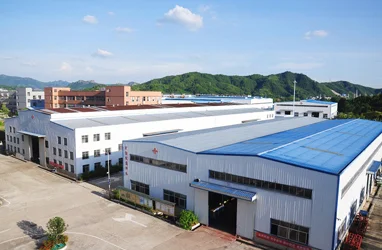
For high-throughput, intelligent raw material beneficiation, screening, and wet magnetic separation, ORO Mineral stands as an industry powerhouse. While European conglomerates focus on final tile pressing systems, ORO Mineral dominates the foundational, harsh stages of mineral purification and classification. If your incoming feldspar or quartz contains high iron percentages, your downstream glaze will be ruined. ORO Mineral solves this at the source by engineering specialized, high-gradient wet magnetic separation arrays.
From our experience, standard dry separators fail to capture micro-fine paramagnetic particles trapped within a dense kaolin slurry. To truly master this challenge, a deep grasp of advanced separation physics is crucial. We recommend studying the WHIMS magnetic separator working principle to see how ORO Mineral utilizes intense matrix gradients to attract and isolate fine iron oxides from liquid slips. By integrating these systems directly into your wet milling circuit, you can reliably reduce iron content below 0.1%, drastically raising the market value of your raw minerals. Furthermore, their screening and sand washing systems offer excellent classification, protecting your ball mills from oversized, uncrushable debris.
4. SACMI Group
Headquartered in Imola, Italy, SACMI is an undisputed titan in the ceramic plant engineering sector. Their primary strength lies in their all-inclusive, turn-key body preparation systems. From high-capacity continuous modular ball mills (MMC series) to highly efficient spray dryers (ATM series), SACMI understands the precise physics of ceramic slip rheology. Their machinery is heavily automated, reducing energy expenditure during the thermal drying phase. We recommend SACMI for massive-scale tile and sanitaryware producers who require a single, vertically integrated processing line from raw powder to fired tile.
5. Hosokawa Alpine AG
When your processing plant requires ultra-fine, micronized powders for advanced technical ceramics or high-purity glazes, Germany’s Hosokawa Alpine is a premier choice. They specialize in fluid bed jet mills and ultra-fine classifier mills. Hosokawa Alpine’s engineering avoids iron contamination through advanced technical ceramic components inside the grinding chambers. Their systems are highly engineered, making them ideal for high-margin electronic ceramic and zirconia powder lines, though their capital expenditure can be prohibitive for basic brick or sanitaryware applications.
6. Metso Outotec
For large-scale quarrying, primary crushing, and bulk comminution of heavy ceramic minerals, Metso Outotec is an essential player. If you are assessing a massive multi-mineral site, checking a breakdown of an iron ore processing plant cost offers a solid baseline for Metso’s heavy machinery pricing structures, which scale similarly across industrial mineral plants. Metso excels in large jaw crushers, cone crushers, and industrial grinding circuits. While they serve the global mining sector broadly, their high-durability mills are frequently used by the world’s largest feldspar and quartz processing suppliers to manage heavy primary reduction before fine milling begins.
7. Netzsch Feinmahltechnik GmbH
Netzsch is an undisputed leader in wet grinding and dispersing technology. In ceramic processing, particularly for high-end digital printing inks and technical glazes, sub-micron particle sizes are mandatory. Netzsch’s agitator bead mills and high-energy nano-mills deliver ultra-fine particle distribution profiles with remarkable consistency. Their equipment utilizes highly wear-resistant silicon nitride and zirconium oxide internal components, ensuring that your delicate glaze formulas remain entirely free of metal shards during processing.
8. Eriez Magnetics
Iron removal is the most critical quality control factor in ceramic preparation. Eriez Magnetics is a global authority in dry and wet magnetic separation technology. From basic suspended rare-earth magnets to hyper-intensive electromagnetic filters, Eriez systems extract microscopic black iron specks, biotite, and tourmaline from raw mineral feeds. To contextualize their industrial footprint, reviewing magnetic separation applications in industry highlights how vital these purification steps are for preserving whiteness across the entire glass and structural ceramics spectrum.
9. Thyssenkrupp Industrial Solutions
Thyssenkrupp offers massive-scale processing systems tailored for industrial minerals. Their high-pressure grinding rolls (HPGR) and industrial ball mills are engineered to process thousands of tons of hard rock daily. For groups modeling capital outlays for massive multi-million-dollar extraction plants, cross-referencing estimated budgets against a copper processing plant cost 2025 benchmark can clarify the heavy-industry engineering costs typical of Thyssenkrupp’s major installations. Their primary value lies in massive, continuous raw material preparation hubs supplying multiple regional factories.
10. Imerys Machinery Systems
Imerys is unique because they are both a premier global supplier of industrial minerals and a designer of specialized raw material processing hardware. This internal synergy gives them unmatched insight into the operational realities of clay and kaolin processing. They build exceptional filter presses, blungers, and automated clay refining plants designed specifically to handle tricky plastic clays. Their equipment focuses on maintaining constant moisture levels and precise particle classification, making them a trusted choice for sanitaryware and tableware body preparation lines.
11. Summary Matrix of Top 8 Processing Manufacturers
To help your procurement team select the right partner from the leading Ceramic raw material processing equipment manufacturers, we have categorized these top providers by their precise mechanical strengths.
| Manufacturer Name | Core Processing Niche | Ideal Raw Material Application | Primary Advantage |
|---|---|---|---|
| ORO Mineral | Screening, Washing & WHIMS High-Gradient Wet Separation | Feldspar, Quartz, Kaolin Slurries | Excellent iron removal and wet classification with zero contaminant bypass. |
| SACMI Group | Continuous Modular Milling & Spray Drying | Porcelain, Stoneware, Tile Bodies | Turn-key, high-volume automated factory body production lines. |
| Hosokawa Alpine | Fluid Bed Jet Milling & Air Classification | Technical Ceramics, Alumina, Zirconia | Contamination-free micronization via internal technical ceramic liners. |
| Metso Outotec | Heavy Comminution & Primary Rock Crushing | Bulk Hard Quartz, Feldspar Ores | Extremely rugged jaw and cone crushers built for severe duty cycles. |
| Netzsch | Agitator Bead Milling & Sub-micron Wet Grinding | Digital Ceramic Inks, Premium Glazes | Flawless sub-micron particle sizing for high-end digital glazes. |
| Eriez Magnetics | Electromagnetic & Rare Earth Separation | Dry & Wet Mineral Slips | Advanced high-intensity matrices targeting micro-fine paramagnetic particles. |
| Thyssenkrupp | HPGR & Heavy Industrial Grinding Blocks | Mega-Scale Industrial Clays & Minerals | Massive daily tonnage handling with high mechanical reliability. |
| Imerys Systems | Blunging, Refining & Filter Pressing | Plastic Ball Clays, Kaolin Refining | Deep mineralogical insight paired with highly precise moisture management. |
For operations dealing with specific alkali earth minerals or highly specialized metallurgy, looking into an industrial magnesium extraction process guide can help clarify the thermal and chemical stages that sometimes overlap with specialized technical ceramic binder processing. Always verify that your chosen brand has a proven background handling the specific chemical traits of your target mineral deposit.
12. Frequently Asked Questions (FAQs)
Why do generic mining crushers often fail when deployed in ceramic raw material processing lines?
From our experience, generic mining machinery prioritizes raw tonnage over material purity. These systems are typically lined with manganese steel or high-chrome alloys that wear down over time. While a small amount of iron contamination is negligible in copper or gold mining, it is completely ruinous to a ceramic body, causing severe dark spotting and thermal stress fractures during firing. Ceramic processing requires specialized equipment with alumina, polyurethane, or high-intensity magnetic separation loops.
What is the difference between dry and wet magnetic separation in ceramic raw material processing?
Dry magnetic separation is effective for coarse, free-flowing minerals like quartz sand or granular feldspar, using high-intensity rare-earth roll separators. However, for ultra-fine minerals like kaolin or plastic ball clays, dry separation is useless because the fine particles clump together due to electrostatic charges. Wet High-Intensity Magnetic Separation (WHIMS) isolates individual particles in a liquid pulp, allowing electromagnetic matrices to catch micro-fine iron oxides that would otherwise slip through a dry system unchecked.
How do I prevent ball mill liner wear from ruining my glaze formulations?
We recommend entirely avoiding metallic grinding media for fine ceramic bodies and glazes. Your mills must be lined with high-density alumina blocks (typically 92% to 95% Al2O3 content) or natural flint stones, and you must use matching alumina grinding beads. This setup ensures that any minimal wear from the grinding process merely introduces trace amounts of aluminum oxide into the mix—an ingredient already native to almost all ceramic formulas—preserving chemical integrity.
13. Authoritative Reference Indices
To further review the scientific principles of mineral refinement, structural ceramic properties, and industrial comminution modeling, we recommend exploring these authoritative resources:
- The American Ceramic Society (ACerS): The premier international professional organization providing peer-reviewed journals, research data, and structural analysis on ceramic mineral purities and raw material preparation.
- Society for Mining, Metallurgy & Exploration (SME): The definitive global professional society publishing extensive textbooks, equipment validation data, and case studies covering industrial mineral beneficiation and raw material processing.