9 Best Magnetic Separators for Quartz 2026
Written by Oromineral
In the highly demanding field of non-metallic mineral processing, achieving absolute purity in quartz sand is a rigorous engineering challenge. High-purity quartz is the foundational raw material for glass manufacturing, ceramics, metallurgy, and the rapidly expanding semiconductor industry. However, naturally occurring quartz deposits are heavily contaminated with iron oxides, mica, and other magnetic impurities that compromise the optical and structural integrity of the final product. To achieve the required purity levels (often below 20 ppm of Fe2O3), selecting the best Magnetic Separators for Quartz is not just an operational preference; it is an industrial necessity.
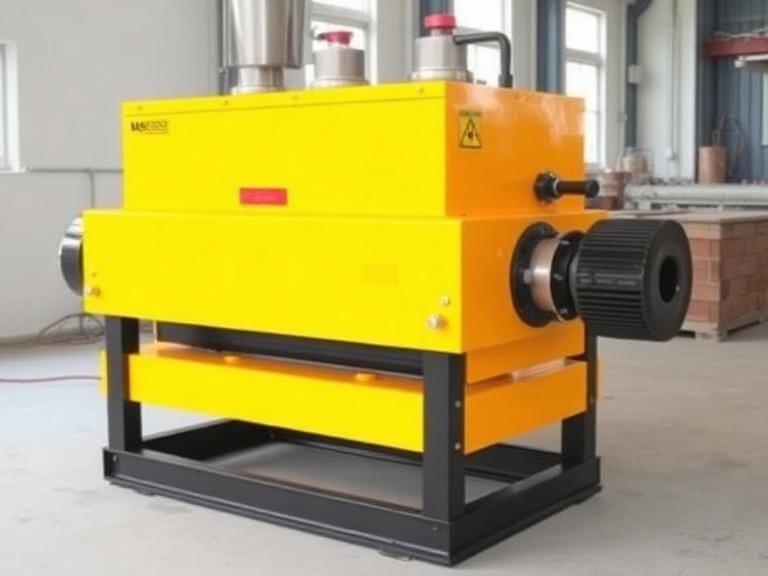
From our experience at Oromineral, the evolution of magnetic separation technology has reached a pivotal milestone in 2026. High-intensity magnetic fields, precision matrix designs, and advanced superconducting technologies have transformed how we process silica and quartz. We recommend that plant managers and metallurgical engineers thoroughly evaluate their feed characteristics before investing in separation equipment. In this comprehensive guide, we will analyze the 9 best Magnetic Separators for Quartz models and technologies currently dominating the global market, providing our professional insights to help you optimize your purification circuits.
Table of Contents
- Why Purifying Quartz Requires Specialized Equipment
- Summary Table: The 9 Best Magnetic Separators for Quartz
- In-Depth Review: The 9 Best Magnetic Separators for Quartz in 2026
- 1. Oromineral Permanent Magnetic Separator
- 2. Oromineral Wet High Intensity Magnetic Separator
- 3. Vertical Ring High Gradient Magnetic Separator
- 4. Dry High-Intensity Magnetic Separator (DHIMS)
- 5. Electromagnetic Slurry Separator
- 6. Rare Earth Roll Magnetic Separator
- 7. Superconducting Magnetic Separator
- 8. Multi-Stage Drum Magnetic Separator
- 9. High-Gradient Magnetic Filter
- How to Choose the Right Magnetic Separator for Quartz
- Frequently Asked Questions (FAQs)
- References
Why Purifying Quartz Requires Specialized Equipment
Quartz purification is a multi-step process that typically involves crushing, screening, washing, scrubbing, and magnetic separation. Before any magnetic separation occurs, the material must be properly prepared. We strongly advise engineers to review our sand washing methods guide and understand the sand washing plant working principle. Effective pre-treatment using sand washer machines industrial ensures that clay and surface impurities are removed, allowing the magnetic separator for quartz to target embedded or liberated iron particles directly.
Iron impurities in quartz exist in various forms: as free iron particles introduced during the crushing phase, as thin iron coatings on the quartz surface, or as weakly magnetic minerals like hematite, limonite, and biotite. Because these minerals possess very low magnetic susceptibility, a standard low-intensity magnet is entirely ineffective. To extract these contaminants, a magnetic separator for quartz must generate high magnetic field gradients, typically exceeding 10,000 Gauss (1.0 Tesla).
Summary Table: The 9 Best Magnetic Separators for Quartz
To assist in your procurement and engineering decisions, we have compiled a summary of the top-performing technologies and specific models available in 2026 for quartz purification.
| Rank | Equipment Type / Model | Magnetic Intensity | Processing Method | Best Application |
|---|---|---|---|---|
| 1 | Oromineral Permanent Magnetic Separator | 10,000 – 15,000 Gauss | Dry or Wet | Removing medium-to-weak magnetic iron impurities from raw quartz. |
| 2 | Oromineral WHIMS-002 | Up to 2.0 Tesla (20,000 Gauss) | Wet Slurry | Extracting ultra-fine weakly magnetic minerals like hematite and limonite. |
| 3 | Vertical Ring High Gradient Separator | 1.0 – 1.8 Tesla | Wet Slurry | Preventing matrix clogging during continuous high-capacity processing. |
| 4 | Dry High-Intensity Separator (DHIMS) | 12,000 – 16,000 Gauss | Dry Powder | Arid regions where water conservation is critical for quartz processing. |
| 5 | Electromagnetic Slurry Separator | Adjustable up to 1.5 Tesla | Wet Slurry | Processing fine quartz sand for the specialized glass industry. |
| 6 | Rare Earth Roll Magnetic Separator | 10,000 – 14,000 Gauss | Dry Powder | Final stage polishing of dry quartz sand. |
| 7 | Superconducting Magnetic Separator | Up to 5.0 Tesla | Wet/Dry | Ultra-high purity quartz for semiconductor and photovoltaic applications. |
| 8 | Multi-Stage Drum Magnetic Separator | Varies by stage | Dry or Wet | Removing tramp iron and strong magnetic impurities prior to high-intensity stages. |
| 9 | High-Gradient Magnetic Filter | Up to 1.5 Tesla | Wet Slurry | Purifying ultra-fine quartz slurries and kaolin mixtures. |
In-Depth Review: The 9 Best Magnetic Separators for Quartz in 2026
To fully grasp the capabilities of these machines, it is essential to understand the magnetic separator machine working principle. The interaction between the magnetic field strength, the magnetic gradient, and the feed characteristics dictates the separation efficiency. Below, we detail the 9 best solutions.
1. Oromineral Permanent Magnetic Separator

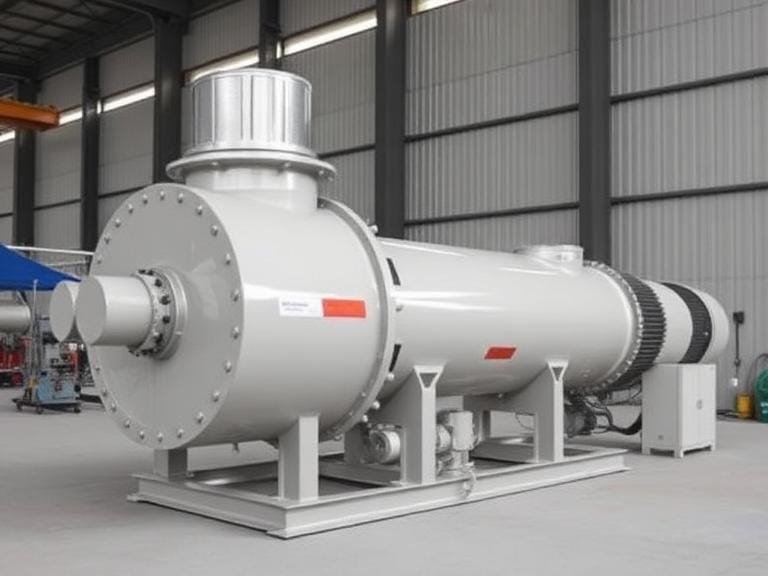
The Permanent Magnetic Separator by Oromineral is an industry-leading magnetic separator for quartz designed for unparalleled reliability. Utilizing a multipole configuration of advanced Neodymium magnets, this equipment delivers a staggering magnetic intensity ranging from 10,000 to 15,000 Gauss. It acts as the perfect primary defense against iron contamination in quartz processing.
| Parameter | Details |
|---|---|
| Brand | Oromineral |
| Magnetic Intensity | 10000 Gauss to 15000 Gauss |
| Material | Stainless Steel and Neodymium Magnets |
| Separator Type | Drum, Overband, or Drawer Separator |
| Capacity | Up to 300 TPH (Tons Per Hour) |
| Operating Temperature | -10°C to 80°C |
With a capacity of up to 300 TPH and an easy-to-install modular design, this permanent magnetic separator for quartz integrates seamlessly into existing plant layouts. It effectively strips mechanical iron and highly susceptible minerals before the quartz proceeds to more intensive purification stages.
2. Oromineral Wet High Intensity Magnetic Separator (WHIMS-002)

When dealing with ultra-fine quartz particles where weakly magnetic impurities like hematite or ilmenite are deeply embedded, a standard permanent magnet is insufficient. The Wet High Intensity Magnetic Separator (WHIMS-002) represents the pinnacle of our engineering. This specific magnetic separator for quartz utilizes an electromagnetic coil system capable of generating up to 2.0 Tesla of magnetic force.
| Specification | Details |
|---|---|
| Model | WHIMS-002 |
| Magnetic Field Strength | Up to 2.0 Tesla (customizable) |
| Feed Particle Size | ≤ 3mm |
| Capacity | 1-50 t/h |
| Power Consumption | 5-50 kW |
| Control System | PLC-Based Automation with Touchscreen Interface |
The WHIMS-002 processes material in a wet slurry state, which prevents the fine quartz dust from agglomerating and allows the magnetic matrix to efficiently capture microscopic iron particles. Constructed with Stainless Steel 304/316 and featuring PLC-based automation, this magnetic separator for quartz is ideal for producing high-grade photovoltaic glass sand.
3. Vertical Ring High Gradient Magnetic Separator
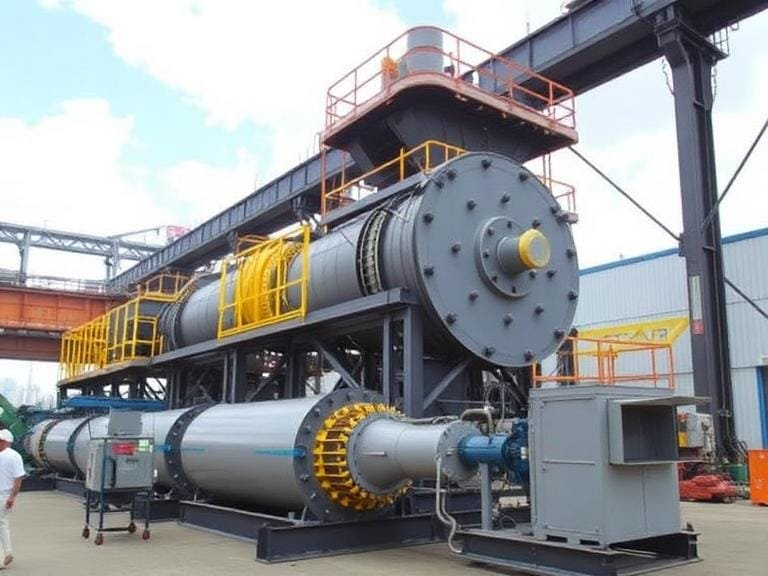
A persistent challenge in wet magnetic separation is the clogging of the magnetic matrix by non-magnetic particles. The Vertical Ring High Gradient Magnetic Separator solves this by rotating the matrix ring vertically while the slurry flows horizontally. We recommend this architecture for high-throughput quartz plants. As one of the most advanced magnetic separation processes available, the vertical ring design ensures continuous, self-cleaning operation and maintains a high recovery rate of purified quartz.
4. Dry High-Intensity Magnetic Separator (DHIMS)
In regions where water scarcity dictates the flow sheet, a wet process is not viable. The DHIMS is a highly effective magnetic separator for quartz that operates entirely in the dry state. Utilizing powerful electromagnetic coils to magnetize a spinning rotor, it separates weakly magnetic impurities from dry quartz sand. For a broader understanding of how this fits into overall plant design, review the 4 primary mineral processing techniques and equipment.
5. Electromagnetic Slurry Separator
This specialized magnetic separator for quartz is designed explicitly for fine slurries. The electromagnetic slurry separator features a unique cooling system (often oil or water-cooled) that maintains the integrity of the electromagnetic coils during continuous operation. It provides an adjustable magnetic field, allowing plant operators to fine-tune the intensity based on the fluctuating iron content in the raw quartz feed.
6. Rare Earth Roll Magnetic Separator
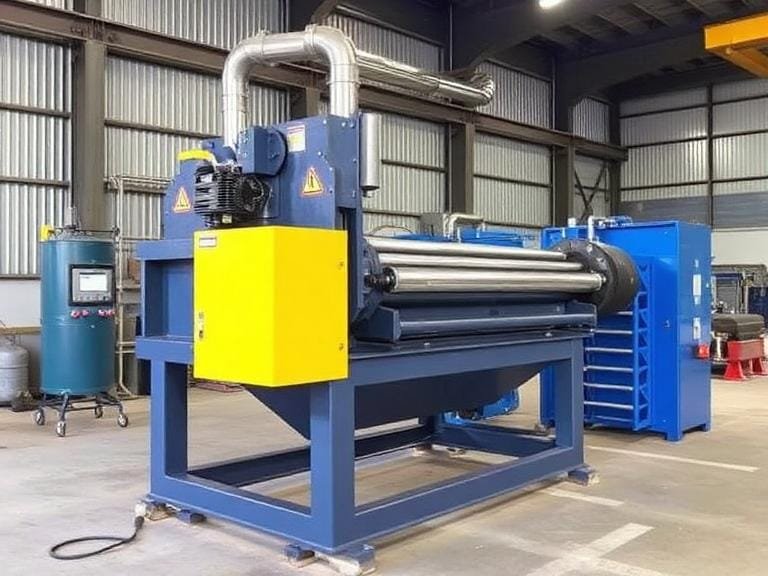
For the final polishing stage of dry quartz sand, the Rare Earth Roll Magnetic Separator is indispensable. It utilizes Kevlar belts running over highly concentrated rare-earth magnetic rolls (typically Neodymium-Iron-Boron). As the quartz sand passes over the roll, the intense gradient pulls the faintly magnetic particles out of the trajectory. This magnetic separator for quartz is favored by magnetic separator manufacturers worldwide for its simplicity and exceptional performance on particles sized between 0.1mm and 2mm.
7. Superconducting Magnetic Separator
When producing semiconductor-grade quartz, impurity levels must be measured in parts per billion (ppb). The Superconducting Magnetic Separator operates at cryogenic temperatures using liquid helium, achieving magnetic field strengths up to 5.0 Tesla. While the capital and operational costs are extreme, from our experience, this is the only magnetic separator for quartz capable of achieving ultra-high purity specifications required by the microchip industry.
8. Multi-Stage Drum Magnetic Separator
A single pass is rarely enough to purify raw quartz. The Multi-Stage Drum Magnetic Separator links two or three magnetic drums in a series. The first drum operates at a low intensity (around 1,500 Gauss) to remove tramp iron that could damage downstream equipment. The subsequent drums operate at much higher intensities (up to 10,000 Gauss). This tiered approach makes it a highly efficient magnetic separator for quartz, protecting equipment while ensuring optimal final purity.
9. High-Gradient Magnetic Filter
Similar to the WHIMS, the High-Gradient Magnetic Filter utilizes a steel wool matrix to generate immense magnetic gradients. However, it operates in a batch process rather than continuously. Slurry is pumped through the magnetized matrix until it is loaded with iron impurities, at which point the magnet is turned off, and the matrix is flushed clean. This magnetic separator for quartz is highly effective for extremely fine silica and kaolin mixtures where particle sizes fall below 50 microns.
How to Choose the Right Magnetic Separator for Quartz
Selecting the optimal magnetic separator for quartz requires a detailed analysis of your mineralogy. We recommend conducting a comprehensive laboratory test on your raw quartz sample before procuring equipment. If you are comparing capital expenditures across your plant, you might also be reviewing items like the eddy current separator cost, but keep in mind that magnetic separators for quartz require specific high-gradient technologies that differ from non-ferrous metal recycling.
Key considerations include:
- Particle Size: Dry separation is difficult for particles under 100 microns due to electrostatic forces and air resistance. We recommend a wet magnetic separator for quartz (like the WHIMS-002) for ultra-fine processing.
- Types of Impurities: If your quartz contains strongly magnetic magnetite, a low-intensity drum is sufficient for the first stage. If it contains weakly magnetic muscovite or hematite, a high-intensity magnetic separator for quartz is mandatory.
- Production Capacity: Ensure the machine can handle your desired Tons Per Hour (TPH) without overloading the magnetic matrix, which severely drops separation efficiency. Comparing solutions from mining equipment manufacturers global and gold processing equipment manufacturers can offer insights into heavy-duty scaling.
Frequently Asked Questions (FAQs)
From our experience, to effectively remove weakly magnetic iron oxide impurities from quartz, the magnetic field strength should be no less than 10,000 Gauss (1.0 Tesla). For ultra-fine impurities, strengths between 1.5 and 2.0 Tesla are highly recommended.
This depends on your particle size and plant infrastructure. Dry separation is excellent for coarser sand (0.1mm to 2mm) and saves water processing costs. Wet separation is superior for fine particles (below 0.1mm) because it prevents dust agglomeration and allows for better physical liberation of impurities.
While a high-intensity magnetic separator for quartz removes the vast majority of liberated and weakly magnetic iron, it cannot remove iron molecules that are chemically bound within the quartz crystal lattice. Chemical leaching (acid washing) is often required as a final step to achieve ultra-high purity levels below 10 ppm.
Neodymium magnets can lose their magnetic strength if exposed to temperatures exceeding their designated limits. The Oromineral Permanent Magnetic Separator is engineered to operate safely between -10°C and 80°C, ensuring zero magnetic degradation during standard processing operations.
References
To ensure our clients have access to authoritative data regarding mineral processing and industrial standards, we reference the following reputable institutions: