The Definitive Guide to the Eddy Current Separator Working Principle
In modern industrial processing, the efficient recovery and separation of valuable materials from complex waste streams dictate the profitability and sustainability of an operation. Since 2014, ORO Mineral Co., Ltd. has operated as a large-scale intelligent mineral processing, screening, and sand washing equipment manufacturer integrating R&D, production, and sales. We have made great contributions to every kind of mineral screening, solid waste resource recovery, beneficiation, washing, and separation, accumulating rich experience in material recovery dynamics. Among the most critical technologies in our arsenal is the eddy current separator. Understanding the Eddy current separator working principle is absolutely essential for plant managers, process engineers, and facility operators seeking to maximize their non-ferrous metal recovery rates.
Non-ferrous metals, such as aluminum, copper, brass, and zinc, represent high-value commodities in the recycling and mining sectors. However, unlike ferrous metals which can be easily extracted using standard overband magnets, non-ferrous metals are not naturally magnetic. This presents a unique mechanical challenge. The Eddy current separator working principle elegantly solves this problem by utilizing the laws of electromagnetic induction to temporarily impart a magnetic field onto these non-magnetic metals, allowing them to be physically repelled from the product stream.
In this comprehensive, expert-led guide, we will dissect the physics, mechanics, and operational strategies that define the Eddy current separator working principle. By mastering these concepts, you can optimize your processing lines for unparalleled purity and yield.
Table of Contents
- Summary Table: Core Mechanics of the Eddy Current Separator
- The Physics Behind the Machine: Faraday and Lenz
- Step-by-Step: The Eddy Current Separator Working Principle in Action
- Key Factors Influencing Separation Efficiency
- Integrating the ORO Mineral Eddy Current Separator Machine
- Industrial Applications of Eddy Current Technology
- Frequently Asked Questions (FAQs)
- Industry References
Summary Table: Core Mechanics of the Eddy Current Separator
To provide a clear foundational understanding before diving into complex electromagnetics, we have summarized the Eddy current separator working principle and its primary mechanical components below.
| Component / Concept | Function in the Eddy Current Separator Working Principle | Expected Operational Outcome |
|---|---|---|
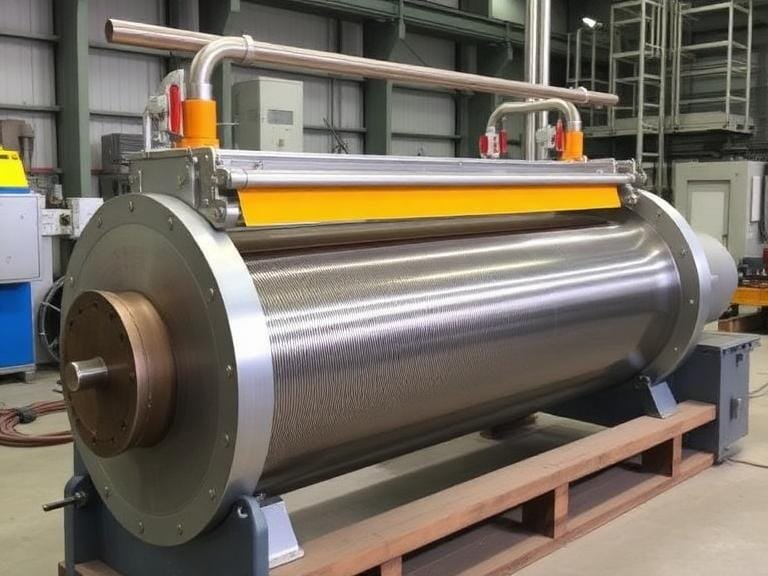
| Magnetic Rotor | Spins at exceptionally high speeds (often up to 3000 RPM) independently of the outer drum, creating a rapidly alternating magnetic field. | Generates the high-frequency magnetic flux required to induce currents inside passing metals. |
| Outer Shell / Drum | A non-metallic (typically Kevlar, fiberglass, or carbon fiber) drum that rotates at the speed of the conveyor belt, housing the high-speed rotor. | Protects the internal magnetic rotor while allowing magnetic fields to pass through unimpeded to the material. |
| Conveyor Belt | Transports the mixed burden of metallic and non-metallic materials over the magnetic drum. | Delivers materials into the alternating magnetic field in a controlled, consistent monolayer. |
| Splitter Plate | An adjustable physical barrier positioned at the discharge end of the conveyor. | Physically separates the repelled non-ferrous metals (which are thrown forward) from the inert materials (which drop vertically). |
The Physics Behind the Machine: Faraday and Lenz
To fully grasp the Eddy current separator working principle, one must first understand two fundamental laws of physics: Faraday’s Law of Induction and Lenz’s Law. From our experience at ORO Mineral, engineers who comprehend these underlying physical laws are far more capable of troubleshooting and optimizing their separation lines.
Faraday’s Law of Electromagnetic Induction
Faraday’s Law states that a changing magnetic field will induce an electromotive force (EMF), or electrical current, in any conductive material exposed to it. Inside an eddy current separator, an internal magnetic rotor consisting of alternating rare-earth permanent magnets (typically Neodymium-Iron-Boron) spins at incredibly high speeds. As non-ferrous, conductive metals like aluminum or copper pass over this rapidly changing magnetic field on the conveyor belt, electrical currents are induced within the solid mass of the metal. Because these currents circulate in small, swirling loops, they are referred to as “eddy currents.”
Lenz’s Law and Repulsive Forces
Once the eddy currents are generated within the piece of aluminum or copper, Lenz’s Law dictates the next crucial phase of the Eddy current separator working principle. Lenz’s Law states that an induced electrical current will always create its own secondary magnetic field, and this secondary field will inherently oppose the primary magnetic field that created it. Consequently, the high-speed magnetic rotor in the machine and the newly magnetic piece of non-ferrous metal repel each other with significant force.
Expert Insight: Because the magnetic rotor is securely fixed within the machine framework, the repulsive force is transferred entirely to the lightweight non-ferrous metal particle. This causes the particle to literally leap forward off the conveyor belt, altering its trajectory significantly compared to non-conductive materials like plastics or glass, which simply fall off the end of the belt due to gravity.
Step-by-Step: The Eddy Current Separator Working Principle in Action
The translation of these physical laws into an industrial machine requires precise engineering. The Eddy current separator working principle operates sequentially through three distinct phases along the processing line.
1. The Conveyor and Feed Phase
Material presentation is arguably the most critical variable in the entire operation. A mixed stream of municipal solid waste, electronic scrap, or incinerator bottom ash is fed onto a fast-moving conveyor belt. We recommend using a vibratory feeder upstream of the separator. For the Eddy current separator working principle to function at peak efficiency, the material must be presented in a strict monolayer. If non-ferrous metals are buried under heavy, wet, or dense non-conductive waste, the repulsive magnetic force may not be sufficient to eject the metal through the burden, leading to valuable material loss.
2. The Interaction at the Head Pulley
As the material reaches the head pulley of the conveyor, it enters the influence of the high-speed magnetic rotor located inside the non-metallic outer drum. The outer drum rotates at the same speed as the conveyor belt to prevent friction and wear, but the internal magnetic rotor is spinning much faster (typically between 1500 and 3000 RPM). It is at this exact apex that the Eddy current separator working principle is activated. The rapidly alternating polarity of the magnets induces the opposing magnetic field in the conductive metals.
3. Trajectory Alteration and The Splitter Plate
As the materials leave the belt, they follow different trajectories. Inert, non-conductive materials (plastics, wood, glass, rubber) are unaffected by the magnetic field and follow a natural parabolic drop dictated by gravity and belt speed. Conversely, the non-ferrous metals experience a violent repulsive push forward and upward. An adjustable splitter plate is positioned precisely between these two material streams. The repelled non-ferrous metals fly over the splitter plate into a recovery bin, while the inert materials drop short of the plate into a separate discharge chute.
Key Factors Influencing Separation Efficiency
From our experience designing and commissioning facilities globally, the Eddy current separator working principle is highly sensitive to operational parameters. Achieving optimal purity requires continuous tuning of the machine based on the feed material.
- Rotor Speed vs. Particle Size: The frequency of the magnetic field changes must match the target material size. Smaller particles require a higher frequency (faster rotor speed) to generate sufficient eddy currents for ejection. Conversely, excessively high speeds on large chunks of aluminum can generate so much heat and force that the trajectory becomes unpredictable.
- Belt Speed: The speed of the conveyor belt dictates how long a conductive particle remains within the primary magnetic field. If the belt is too fast, the material passes the rotor before adequate eddy currents can form. If the belt is too slow, production capacity suffers, and material may pile up, violating the monolayer rule.
- Splitter Plate Positioning: The apex, distance, and angle of the splitter plate must be dialed in with millimeter precision. We recommend operators visually monitor the trajectory of the metal “throw” during the initial feed calibration and adjust the splitter plate to capture the maximum volume of non-ferrous metals while minimizing inert contamination.
Integrating the ORO Mineral Eddy Current Separator Machine

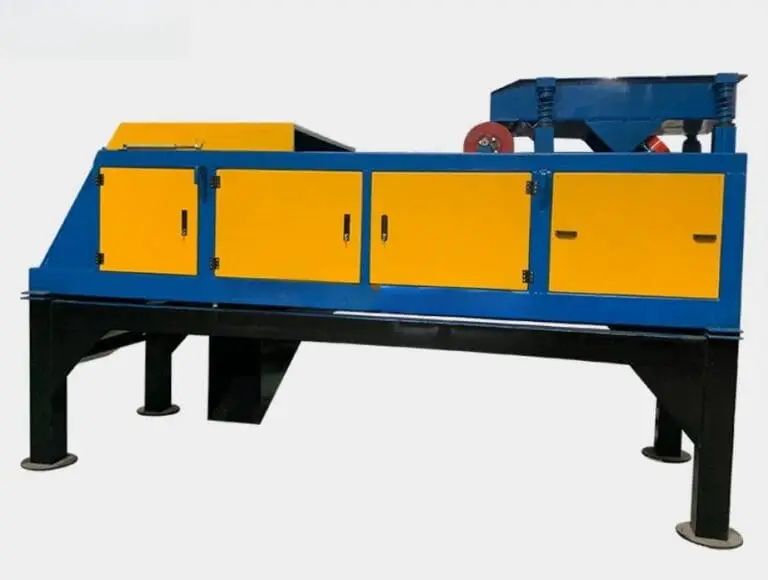
Applying the theoretical Eddy current separator working principle to a profitable industrial operation requires equipment built to withstand harsh environments. The ORO Mineral Eddy Current Separator Machine is engineered to deliver unparalleled reliability and recovery rates.
Our engineering teams have refined the product features to directly address the common pain points experienced by processing facilities:
- High Separation Efficiency: The powerful magnetic field generated by our proprietary rare-earth rotor design, combined with adjustable drum and belt speeds, ensures maximum separation of non-ferrous metals, even in the sub-5mm fine fraction ranges.
- Robust Construction: Industrial separation is a violent process. Our machines are built with high-quality materials, including reinforced carbon steel frames and heavy-duty Kevlar outer drums, ensuring durability and long-term performance under abrasive loads.
- Easy Maintenance: We understand that downtime destroys profitability. The ORO Mineral machine is designed for easy access and maintenance. Rotor bearing lubrication points and belt tensioning systems are easily accessible, reducing operational costs.
- Customizable Options: Because the Eddy current separator working principle must be adapted to different bulk densities and particle sizes, we offer various models and configurations to meet your specific application requirements.
Industrial Applications of Eddy Current Technology
The versatility of the Eddy current separator working principle allows it to be deployed across a multitude of heavy industrial sectors. At ORO Mineral, we frequently supply our technology to the following critical industries:
Recycling Industry
In modern Material Recovery Facilities (MRFs), the efficient separation of non-ferrous metals from waste streams is vital. This includes recovering aluminum cans from municipal solid waste (MSW), extracting copper wire from shredded electronics (WEEE), and processing auto shredder residue (ASR) to recover valuable non-ferrous automotive components. The ORO Mineral Eddy Current Separator Machine ensures that landfill diversion rates are maximized and recovered metal revenues are optimized.
Mining Industry
In the mining sector, the separation of valuable minerals from ore is a complex endeavor. While traditional froth flotation and gravity separation are common, dry processing utilizing the Eddy current separator working principle is becoming increasingly popular in arid regions or for pre-concentrating specific conductive mineral ores prior to expensive hydrometallurgical processing.
Foundries and Smelters
The processing of metallic scrap and residuals in foundries requires extreme purity. Contamination of a furnace melt with non-metallic impurities can compromise the structural integrity of the final cast product. Utilizing an eddy current separator to polish the non-ferrous scrap feed ensures a clean, predictable melt chemistry, reducing slag production and lowering energy consumption.
Frequently Asked Questions (FAQs)
Can the Eddy current separator working principle separate ferrous metals like iron or steel?
No. Ferrous metals are strongly attracted to magnets. If ferrous metals enter an eddy current separator, they will be violently attracted to the high-speed rotor, potentially tearing the outer drum or conveyor belt. From our experience, we strictly recommend installing an overband magnetic separator upstream to remove all ferrous materials before the stream reaches the eddy current machine.
Why does the size of the non-ferrous metal affect the separation efficiency?
The strength of the repulsive force dictated by the Eddy current separator working principle is directly proportional to the volume and surface area of the conductive metal. Very small particles (fines) have less mass to generate sufficient eddy currents, making them harder to repel. ORO Mineral offers specialized high-frequency rotors specifically designed to recover these ultra-fine non-ferrous particles.
Is stainless steel separated by an eddy current separator?
Most industrial stainless steel (such as 300 series austenitic stainless steel) is poorly conductive and non-magnetic. Because of its low electrical conductivity, it does not generate sufficient eddy currents to be repelled effectively. Stainless steel typically requires sensor-based sorting technologies rather than relying on the Eddy current separator working principle.
How does moisture content affect the separation process?
High moisture content can cause lightweight, non-conductive materials (like wet paper or plastics) to stick to the non-ferrous metals. This added mass counteracts the repulsive force of the magnetic field, resulting in the metal failing to clear the splitter plate. For the highest efficiency, we recommend processing materials in a dry state.
Industry References
To further understand the environmental and operational guidelines governing material recovery and electromagnetic separation technologies, we advise consulting the following authoritative bodies: