12 Essential Types of Mineral Processing Equipment Commonly Used in the Non-Metallic Mineral Industry
The global demand for high-purity non-metallic minerals, such as kaolin, quartz, silica sand, bauxite, and fluorite, has reached unprecedented levels. These raw materials form the foundational backbone for advanced ceramics, glass manufacturing, refractory materials, and emerging semiconductor technologies. Achieving the stringent purity levels required by these modern industries relies entirely on the deployment of advanced beneficiation technologies. As process engineers and plant managers, understanding the exact capabilities of the different types of mineral processing equipment is critical for designing efficient, profitable, and environmentally sustainable recovery circuits.
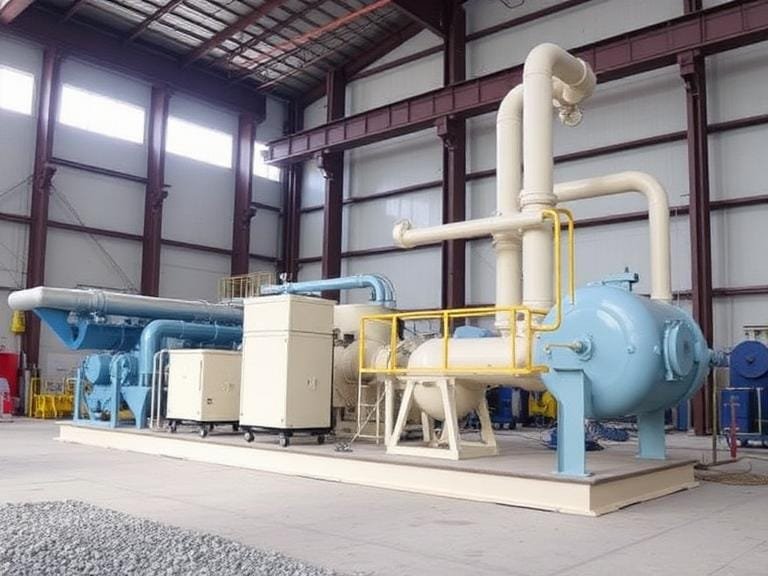
ORO Mineral Co., Ltd. is a large-scale intelligent mineral processing, screening, and sand washing equipment manufacturer integrating R&D, production, and sales. Since 2014, ORO Mineral has made great contributions to every kind of mineral screening, solid waste resource recovery, beneficiation, washing, and separation, and has accumulated rich experience in the field. In order to offer you better products and services, we have been sparing no effort to improve technology, develop new equipment, and upgrade services.
From our experience, the selection of the correct types of mineral processing equipment determines not only the final grade of your non-metallic mineral concentrate but also the overall operational expenditure of your facility. When evaluating the flow sheet for a non-metallic mineral plant, we recommend analyzing the specific gravity, magnetic susceptibility, and particle size distribution of the run-of-mine ore before finalizing machinery procurement. In this authoritative guide, we will examine 12 critical types of mineral processing equipment commonly utilized in the non-metallic sector, detailing their operational mechanics and optimal applications.
Table of Contents
Summary Table: 12 Types of Mineral Processing Equipment
To assist plant designers in rapid assessment, we have categorized the most vital types of mineral processing equipment based on their primary operational forces and typical non-metallic applications.
| No. | Equipment Type | Operational Principle | Primary Non-Metallic Application |
|---|---|---|---|
| 1 | Super-conducting Magnetic Separators | Ultra-high magnetic gradient via liquid helium | Purification of premium kaolin and bauxite |
| 2 | Dry Electromagnetic Separators | Electromagnetic field application on dry powder | Removal of iron from dry silica and feldspar |
| 3 | Plate Type Permanent Magnetic Separators | High-intensity permanent magnetic plates | Fine particle iron tramp removal |
| 4 | Belt Magnetic Separators | Continuous magnetic belt extraction | Pre-treatment tramp iron removal on conveyors |
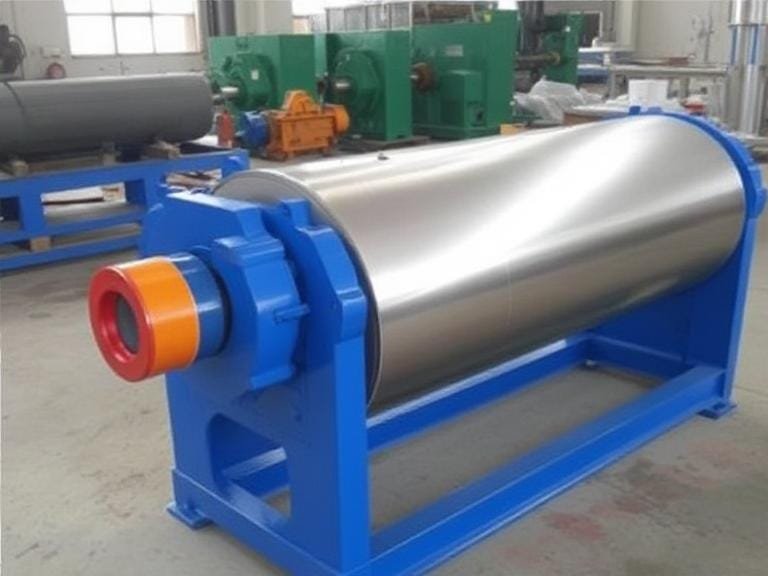
| 5 | Permanent Magnetic Separators | Standard rare-earth magnetic drum/roll | General beneficiation of non-metallic ores |
| 6 | Eddy Current Separators | Alternating magnetic field repelling conductors | Solid waste recovery (Aluminum/Copper sorting) |
| 7 | Gravity Spiral Chutes | Centrifugal and gravitational forces | Concentration of heavy minerals from silica sand |
| 8 | Gravity Spiral Concentrators | Hydrodynamic separation in spiral troughs | Desliming and heavy mineral recovery |
| 9 | Shaking Tables | Asymmetric reciprocating motion and water flow | Precision cleaning of fine non-metallic concentrates |
| 10 | Sand Washing Machines | Mechanical agitation and aqueous washing | Removing clay and impurities from quartz sand |
| 11 | Hydrocyclones | Fluid centrifugal classification | Desliming and precise particle size classification |
| 12 | Flotation Cells | Physicochemical surface property alteration | Separation of fluorite, graphite, and complex silicates |
Advanced Magnetic Separation Technologies
Iron and titanium oxides are the primary contaminants in non-metallic minerals, causing undesirable coloration and lowering the refractory qualities of the final product. Addressing these impurities requires specific types of mineral processing equipment engineered to exploit minute differences in magnetic susceptibility.
1. Super-conducting Magnetic Separators
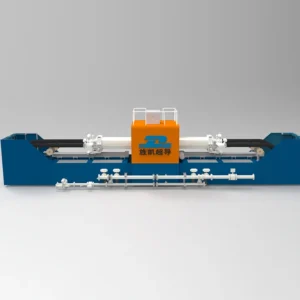
For ultra-fine non-metallic minerals where traditional magnets fail, we rely on superconducting technology. The JF Series Low-temperature Super-conducting Magnetic Separator with Liquid Helium for Kaolin & Bauxite represents the pinnacle of magnetic purification. By cooling the niobium-titanium coils with liquid helium, electrical resistance drops to zero, allowing the creation of massive background magnetic fields (often exceeding 5 Tesla). From our experience, this is the only reliable method to brighten premium kaolin clays destined for the paper-coating and fine ceramics industries.
2. Dry Electromagnetic Separators
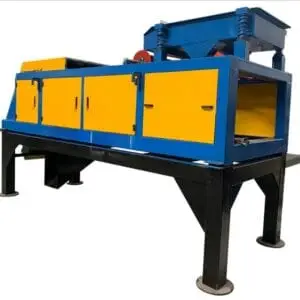
When processing arid ores where water conservation is critical, the Dry electromagnetic separator is deployed. This equipment generates a highly adjustable magnetic field, allowing operators to fine-tune the intensity based on the specific iron-bearing minerals present in dry silica or feldspar powders.
3. Plate Type Permanent Magnetic Separation Equipment

For fine material streams requiring high-gradient magnetic fields without the energy consumption of electromagnets, we recommend the Plate Type Permanent Magnetic Separation Equipment. These units utilize advanced neodymium-iron-boron (NdFeB) rare earth magnets, providing an exceptional capturing surface for weakly magnetic impurities in non-metallic slurries.
4. Belt Magnetic Separators
Often utilized as a protective pre-treatment step, the 1.1kw Belt Magnetic Separator is suspended over conveyor belts to extract large tramp iron (such as broken loader teeth or bolts). This prevents catastrophic damage to downstream crushing and grinding machinery.
5. Standard Permanent Magnetic Separators
Versatility is key in mineral processing. The standard Permanent Magnetic Separator, alongside generalized Magnetic Separator Machine units and broad Magnetic Separation Equipment, forms the workhorse category for wet and dry beneficiation, ensuring continuous, low-maintenance iron removal.
Precision Gravity Separation Systems
When the specific gravity of the target non-metallic mineral differs sufficiently from the gangue material, gravity separation remains the most cost-effective and environmentally friendly method available among all types of mineral processing equipment.
6. Gravity Spiral Chutes and Concentrators
Spiral technology utilizes no moving parts, relying entirely on fluid dynamics, centrifugal force, and gravity. Integrating a Gravity Spiral Chute or a specialized Gravity Spiral Chute Separator into a silica sand washing plant efficiently removes heavy mineral contaminants like rutile or zircon. For broader applications, the Gravity Spiral Concentrator, standard spiral chute, and the high-capacity Spiral Chute for Mineral Concentration provide robust, high-throughput desliming and pre-concentration without chemical reagents.
7. Shaking Tables
For the final cleaning stage of a gravity circuit, precision is required. The 6-S shaking table uses an asymmetrical reciprocating motion combined with a thin film of water flowing across a riffled deck. From our experience, the 6-S shaking table is unsurpassed in its ability to produce a highly distinct separation band, making it ideal for verifying concentrate grades and recovering fine non-metallic particles that escape spiral concentrators.
Washing, Classification, and Solid Waste Recovery
Preparing the raw ore for separation is just as critical as the separation itself. Effective scrubbing and classification ensure that the subsequent types of mineral processing equipment operate at peak efficiency.
8. Sand Washing Machines
In the production of glass-grade quartz and frac sand, clay coatings must be aggressively scoured from the silica particles. We recommend deploying the Sand Washing Machine 100 TPH Long Life. This equipment provides immense mechanical attrition, effectively breaking down agglomerates and washing away detrimental slimes, ensuring a clean feed for magnetic or flotation circuits.
9. Eddy Current Separators
While often associated with municipal recycling, resource recovery from industrial solid waste overlaps significantly with mineral processing techniques. The Eddy Current Separator Machine utilizes high-speed alternating magnetic rotors to induce eddy currents in non-ferrous metals. For operations processing industrial slag or electronic waste alongside mineral ores, the Eddy Current Separator for Aluminum and Copper sorting is indispensable for recovering high-value metals from non-metallic matrices.
10 & 11 & 12. Hydrocyclones, Classifiers, and Flotation Cells
Rounding out the essential 12 types of mineral processing equipment are hydrocyclones for precise particle size cut-points, mechanical classifiers for heavy desliming, and flotation cells. While flotation relies on complex chemical reagents to alter surface hydrophobicity, it remains the ultimate solution for separating complex non-metallic minerals like fluorite, graphite, and apatite from mixed silicate gangue.
Expert Advice on Equipment Integration
Selecting the individual types of mineral processing equipment is only the first step. The true engineering challenge lies in creating a cohesive, automated flow sheet. At ORO Mineral, we evaluate the entire lifecycle of the ore. We recommend conducting comprehensive metallurgical testing to define the liberation size of your impurities. For instance, if iron impurities in your quartz sand are present as discrete particles, standard plate magnetic separators may suffice. However, if the iron is heavily disseminated within the crystal lattice, you must invest in high-intensity superconducting technologies to achieve the required brightness indexes.
Frequently Asked Questions (FAQs)
What are the primary types of mineral processing equipment used for non-metallic minerals?
The primary categories include comminution (crushers and mills), classification (screens and hydrocyclones), gravity separation (spiral chutes and shaking tables), magnetic separation (dry, wet, and superconducting separators), and washing equipment (sand washers). Each category serves a specific function in removing impurities from minerals like quartz, kaolin, and feldspar.
Why is liquid helium used in some magnetic separators?
Liquid helium is used to cool the niobium-titanium coils within superconducting magnetic separators to near absolute zero. This eliminates electrical resistance, allowing the machine to generate extraordinarily high magnetic fields (up to 5T) required to extract weakly magnetic microscopic iron and titanium impurities from premium non-metallic minerals like kaolin.
How does a gravity spiral chute separate minerals?
Gravity spiral chutes utilize a combination of fluid dynamics, centrifugal force, and gravitational pull. As an ore slurry flows down the helical trough, heavier mineral particles migrate toward the slower-moving inner radius of the spiral, while lighter gangue particles are pushed to the faster-moving outer radius, allowing for precise physical separation.
Can eddy current separators be used for mineral processing?
While traditionally used for solid waste recovery (like aluminum and copper sorting), eddy current separators are increasingly deployed in hybrid mineral processing environments. They are highly effective for extracting non-ferrous metallic contaminants from crushed non-metallic industrial slags and recycled aggregate streams.
Industry References
To ensure our clients have access to the most authoritative data regarding mineral commodities, environmental regulations, and processing standards, we recommend reviewing documentation from the following organizations: