What Is a Mining Screen? Types, Working Principles, Applications, and Selection Guide
A mining screen is a piece of mineral processing equipment used to separate rock, ore, aggregates, and other bulk materials into different particle sizes. It controls which particles pass through an opening and which remain on the screening surface. In a well-designed processing plant, the mining screen is not simply an auxiliary machine: it directly affects crusher workload, product consistency, recovery, throughput, and operating costs.
If you are planning a crushing or beneficiation line, the important question is not just what a mining screen does. You need to know which screen type fits your material, whether wet or dry screening is appropriate, what screen media will last under your operating conditions, and how to size the machine for your actual feed rate. Selecting by nominal capacity alone is one of the easiest ways to create a bottleneck.
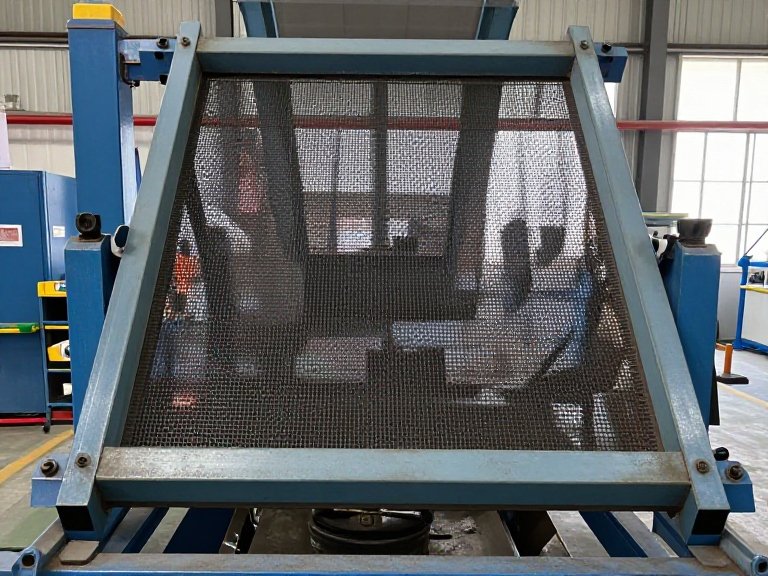
For most modern crushing and mineral processing plants, vibrating screens are the practical starting point. The correct model depends on feed size distribution, moisture, material abrasiveness, required cut size, throughput, and the quality of the final products.
1. What Is a Mining Screen?
A mining screen is a machine with one or more screening surfaces containing openings of a specified size. It separates a feed stream into different particle-size fractions. Depending on the equipment design, the screening surface may vibrate, rotate, remain stationary, or use another mechanical movement to help particles travel across the deck and pass through the openings.
The basic separation is straightforward:
- Feed: The mixed material entering the mining screen, containing particles of different sizes.
- Undersize: Particles that pass through the screen openings.
- Oversize: Particles retained on the screening surface and discharged from the end or side of the machine.
- Screen deck: The supporting structure that carries the screening media.
- Screen media: The actual surface with openings, such as woven wire mesh, polyurethane panels, rubber panels, or perforated plate.
For example, imagine a crushing plant processing a mixture of limestone. A screen with a specified aperture separates the material into a smaller fraction that passes through and a larger fraction that continues toward another crushing stage or a separate stockpile. The exact product sizes depend on the aperture, feed characteristics, screen design, and operating conditions.
It is important to distinguish a mining screen from a laboratory sieve. A laboratory sieve is generally used to analyze a sample in a controlled test. An industrial mining screen is designed to process a continuous flow of material at production scale. Its performance must be evaluated using both capacity and separation quality.
What is the purpose of a mining screen?
The main purpose is to control particle-size distribution before, during, or after another processing operation. A screen can remove unwanted coarse material, separate saleable size fractions, protect downstream equipment, and prepare ore for further beneficiation.
In most professional situations, screening is not an isolated operation. It is integrated with feeders, crushers, conveyors, washing systems, magnetic separators, gravity separators, and other mineral processing equipment. A screen that is poorly matched to the rest of the circuit can reduce the performance of otherwise capable machines.
2. How Does a Mining Screen Work?
A mining screen works by presenting particles to openings in a screening surface. Particles small enough to pass through an opening may fall to the lower side of the deck, while larger particles travel along the surface and discharge separately.
On a vibrating mining screen, a drive mechanism generates controlled movement. This movement helps spread and stratify the material bed. Smaller particles move through gaps between larger particles and reach the screening surface, where they can pass through the apertures. Larger particles remain on top and move toward the oversize discharge.
The screening process step by step
- Feed distribution: A feeder delivers material to the screen. Consistent distribution across the width is essential because uneven feeding can overload one section of the deck.
- Material spreading: The screen’s movement and deck geometry help distribute the material and create opportunities for smaller particles to reach the openings.
- Particle stratification: Larger particles tend to move toward the upper part of the material bed, while smaller particles work their way toward the screening surface.
- Size separation: Particles that can pass through the apertures become undersize. Particles retained on the surface remain in the oversize stream.
- Product discharge: Separate discharge points collect the resulting size fractions for stockpiling, crushing, washing, or further mineral processing.
Screening performance is influenced by more than aperture size. Particle shape, moisture, feed rate, bed depth, vibration characteristics, deck inclination, and the amount of near-size material all affect the probability that a particle will pass through an opening.
What do screen capacity and screening efficiency mean?
Screen capacity describes the amount of material a machine can process over a given period under specified conditions. It is commonly expressed in tonnes per hour, but a capacity figure is meaningful only when the feed material, moisture, cut size, and required separation quality are understood.
Screening efficiency describes how effectively the machine separates the intended size fractions. Different calculation methods define efficiency differently, so buyers should confirm the measurement method before comparing supplier claims.
Capacity and efficiency are related but not interchangeable. Increasing feed rate may raise throughput while reducing the time particles spend on the deck. If undersize material leaves with the oversize stream, or oversize material contaminates the undersize product, the plant may lose product quality even though the machine is processing more tonnes per hour.
3. Main Types of Mining Screens
There is no universal mining screen suitable for every material and duty. Screen types differ in movement, deck arrangement, application, and ability to handle wet, dry, coarse, or fine material. The following are the main designs buyers should understand before requesting a quotation.
1. Vibrating screen
A vibrating screen uses a mechanical drive or exciter to create movement in the screen body or deck. The vibration promotes material stratification and particle passage through the openings. Vibrating screens are widely used in mining, quarrying, aggregate production, and mineral processing because they can handle continuous feed and a broad range of screening duties.
They are commonly configured as inclined, horizontal, or multi-slope machines. The best arrangement depends on the material, required capacity, available plant space, and separation objective.
Best for: Primary and secondary sizing, classification, scalping, washing, and general mineral processing.
2. Inclined vibrating screen
An inclined screen has a deck set at an angle. Gravity helps move material toward the discharge end while vibration supports stratification and screening. This design is commonly used in aggregate and mineral processing circuits where a relatively straightforward screening arrangement is required.
Best for: General-purpose sizing, crushed stone, sand and gravel, and applications where the plant layout accommodates an inclined deck.
3. Horizontal vibrating screen
A horizontal screen uses a deck with little or no operating inclination. Its motion must provide the movement needed to convey material across the screening surface. Horizontal screens can be useful where plant height is restricted or where the process requires a particular material travel pattern.
Best for: Space-constrained layouts and selected sizing or dewatering duties.
4. Banana or multi-slope screen
A banana screen uses a deck with multiple slope sections. The steeper feed end supports high initial material flow, while flatter downstream sections provide additional screening opportunity. This design can be considered for high-capacity applications, but it requires careful matching to feed characteristics and the desired separation.
Best for: High-throughput screening circuits where the feed and process conditions justify a multi-slope design.
5. Grizzly screen
A grizzly screen uses spaced bars or heavy-duty screening elements to remove large rocks and oversize material before it reaches a crusher or another machine. Its openings are generally much larger than those used for fine classification.
Best for: Primary scalping, run-of-mine feed preparation, and removing large pieces that could overload downstream equipment.
6. Trommel screen
A trommel screen uses a rotating cylindrical screening surface. Material moves through the drum as it rotates, and particles are separated according to the openings in the drum. Trommels are used in selected mineral processing, aggregate, waste, and material recovery applications.
Best for: Applications where a rotating screen is suitable for the material flow and screening duty.
7. Dewatering screen
A dewatering screen is designed to remove water from a wet material stream while retaining most of the desired solid particles. It is used after washing, wet classification, or slurry processing. The objective is not simply to separate by size; it is to reduce moisture in the discharged solids to a level suitable for the next handling or processing stage.
Best for: Sand washing plants, mineral washing circuits, and wet processing operations that need improved solids handling.
8. High-frequency and fine screening equipment
Fine screening equipment is designed for applications where small particle sizes and separation precision are important. High-frequency motion and suitable screen media can help improve fine-particle separation, but the feed must be appropriate for the equipment. High moisture, clay, and excessive near-size material can create serious performance problems.
Best for: Selected fine mineral classification duties where the required cut size and material characteristics justify specialized equipment.
4. Mining Screen Applications in Mineral Processing
A mining screen can be installed at several points in a processing plant. Its role changes depending on whether it is protecting equipment, preparing feed, producing a saleable size fraction, or separating material after washing.
Scalping before crushing
Scalping removes material that does not need to enter the next crushing stage. For example, already-small particles can bypass a crusher instead of consuming unnecessary power and contributing to wear. This can improve the use of crusher capacity and reduce avoidable processing costs.
Closed-circuit crushing
In a closed-circuit crushing plant, a screen separates crushed material into product and oversize fractions. Oversize material returns to the crusher for further size reduction, while material that meets the target size moves to the next stage or product stockpile.
The screen is critical in this arrangement. If it sends too much undersize material back to the crusher, the circuit wastes energy. If too much oversize escapes into the finished product, product specifications may not be met.
Mineral classification and beneficiation
Mining screens prepare ore into size ranges that are more suitable for downstream separation. This can improve the operating conditions for gravity concentration, magnetic separation, and other beneficiation processes.
For example, a plant processing iron-bearing material may use screening before a high-intensity magnetic separation process. The screen does not replace magnetic separation; it prepares the feed and helps control the particle-size range entering the separator.
Similarly, mineral processing circuits may combine screening with gravity equipment such as a 6-S shaking table. The suitability of this combination depends on mineral liberation, particle size, density differences, and the overall flowsheet.
Sand washing and dewatering
In sand washing plants, screening equipment can separate size fractions, remove unwanted particles, and help manage the material after washing. Dewatering screens reduce the water carried with the discharged solids, making conveying and stockpiling easier.
Solid waste and resource recovery
Mining screens are also used in recycling and solid waste recovery. Screening can separate material into size fractions before magnetic separation, eddy current separation, or other sorting operations. For instance, a recycling line may use a screen to prepare material before an eddy current separator machine separates suitable non-ferrous metal fractions.
For a broader understanding of equipment combinations, see our guide to magnetic separation applications in industry.
5. Mining Screen Media: Mesh, Rubber, Polyurethane, and Perforated Plate
The screen media is the working surface that actually performs the separation. Selecting the wrong media can reduce open area, increase blinding or pegging, accelerate wear, and make maintenance more expensive. Buyers should treat screen media as a key part of the machine specification rather than a minor accessory.
Woven wire mesh
Woven wire mesh is commonly used where relatively high open area and straightforward replacement are important. It is available in different wire diameters and aperture sizes. Its service life depends on material abrasiveness, impact, tensioning, and operating conditions.
Polyurethane screen panels
Polyurethane panels are often selected for abrasive applications and wet screening. They can offer useful wear characteristics and modular replacement options. However, panel design, aperture geometry, open area, and material compatibility must be checked against the required capacity.
Rubber screen panels
Rubber media may be suitable for applications with significant impact or where noise reduction is a consideration. The correct compound and panel thickness matter. A thicker panel may improve wear resistance in an impact zone, but it can also affect open area and screening performance.
Perforated plate and heavy-duty media
Perforated plate and heavy-duty screening surfaces are considered for coarse material and high-impact applications. Their suitability depends on the required opening, plate thickness, material properties, and structural support.
| Screen media | Typical strengths | Potential limitations | Common applications |
|---|---|---|---|
| Woven wire mesh | High open area and widely available aperture options | Can wear quickly in highly abrasive or high-impact duties | General sizing and classification |
| Polyurethane | Wear resistance and modular panel options | Open area and aperture design need careful evaluation | Wet screening and abrasive materials |
| Rubber | Impact resistance and potential noise reduction | May have lower open area depending on design | Coarse and high-impact screening |
| Perforated plate | Robust construction for selected coarse duties | Weight and open-area limitations | Heavy-duty screening and scalping |
| Grizzly bars | Handles large feed and removes oversize material | Not intended for precise fine classification | Primary feed preparation |
There is no universally best screen media. For abrasive wet feed, polyurethane may be worth evaluating. For high-impact coarse material, rubber or heavy-duty steel may be more appropriate. For general sizing where open area is a priority, woven wire can be a practical choice. Always compare expected wear life, replacement labor, downtime, and separation performance rather than purchase price alone.
6. Mining Screen Comparison Table: Which Type Should You Choose?
The following comparison is a starting point for equipment selection. Actual performance depends on machine dimensions, deck configuration, feed characteristics, media, and operating conditions.
| Mining screen type | Main operating principle | Best-fit duty | Key selection concern |
|---|---|---|---|
| Inclined vibrating screen | Vibration on an angled deck | General sizing and aggregate classification | Deck angle, bed depth, and feed distribution |
| Horizontal vibrating screen | Vibration conveys material across a near-horizontal deck | Selected sizing and dewatering applications | Motion characteristics and material travel rate |
| Banana screen | Multi-slope vibrating deck | High-capacity screening | Feed distribution and correct duty-specific design |
| Grizzly screen | Material passes between spaced bars | Coarse scalping and primary feed preparation | Bar spacing and impact resistance |
| Trommel screen | Rotating cylindrical screening surface | Selected bulk material and recycling duties | Drum dimensions, speed, and material behavior |
| Dewatering screen | Vibrating surface drains water from solids | Wet processing and sand washing | Water load, solids retention, and discharge moisture |
| Fine or high-frequency screen | Specialized vibration and fine screening media | Fine mineral classification | Feed preparation, blinding, and cut-size requirements |
For a conventional crushing plant, start by evaluating an inclined or horizontal vibrating screen. For large feed containing oversize rocks, consider a grizzly ahead of the crusher. For a wet sand plant, a dewatering screen may be more useful than a general-purpose sizing machine. For fine mineral classification, request a process-specific assessment rather than assuming a standard aggregate screen will perform adequately.
7. Benefits and Limitations of Mining Screens
Key benefits
- Improved particle-size control: Separates material into defined size fractions for downstream processing or product specifications.
- Reduced unnecessary crushing: Allows suitable undersize material to bypass further size reduction in correctly designed circuits.
- Better process integration: Prepares material for washing, gravity concentration, magnetic separation, and other processes.
- Product consistency: Helps control the size distribution of final aggregate or mineral products.
- Flexible configurations: Multiple decks can create several size fractions in one machine.
- Potential operating savings: Correct screening can reduce avoidable equipment loading, energy consumption, and wear elsewhere in the circuit.
Important limitations
- Feed sensitivity: Moisture, clay, particle shape, and size distribution can significantly affect performance.
- Wear: Abrasive minerals can damage screen media and structural components.
- Blinding and pegging: Wet, sticky, or near-size material can block openings and reduce effective screening area.
- Maintenance requirements: Media replacement, bearing inspection, drive maintenance, and structural checks require planned downtime.
- Capacity-efficiency trade-off: Increasing throughput without checking separation quality can reduce product accuracy.
- Installation requirements: Screen structures experience dynamic loads, so support design, isolation, access, and foundation conditions matter.
Pros and cons table
| Pros | Cons |
|---|---|
| Separates continuous bulk material into useful size fractions. | Performance can deteriorate with sticky or poorly distributed feed. |
| Can protect crushers and downstream equipment from unsuitable feed sizes. | Incorrect selection can create bottlenecks or product contamination. |
| Available in designs for coarse, fine, wet, and dry screening. | Different applications may require specialized screen types and media. |
| Multiple decks can produce several fractions in one machine. | More decks can increase maintenance complexity and require careful feed distribution. |
| Can improve overall plant efficiency when correctly integrated. | Requires regular inspection and replacement of wear components. |
8. How to Choose the Right Mining Screen
Mining screen selection should begin with the material and separation target, not with a catalogue model or a supplier’s headline capacity. A machine rated for a certain number of tonnes per hour may not achieve that rate with your ore, moisture level, cut size, or required product quality.
1. Define the feed material
Provide the supplier with representative feed information, including particle-size distribution, maximum particle size, bulk density, particle shape, moisture content, clay content, and abrasiveness. If the material changes significantly between seasons or mining areas, explain that variation.
2. Set the target separation sizes
Identify the required product fractions and the acceptable amount of misplaced material. Specify the target aperture and whether the screen is performing scalping, sizing, washing, or dewatering. A statement such as “separate fine and coarse ore” is not enough for reliable equipment sizing.
3. Confirm the required throughput
Give the supplier both average and peak feed rates. Include any circulating load returning from downstream equipment. A screen sized only for average feed may become overloaded during peak production or when the process is running with a high recycle load.
4. Choose wet or dry screening
Dry screening may be suitable for free-flowing material with manageable moisture. Wet screening can help with washing, removing fine particles, or handling certain difficult feeds, but it requires water supply, drainage, slurry management, and downstream water handling. Adding water is not a universal solution to blinding.
5. Select the screening media
Compare woven wire, polyurethane, rubber, and other suitable media using aperture, open area, wear life, impact resistance, cleaning behavior, replacement time, and cost. The cheapest panel is not necessarily the most economical if it requires frequent replacement or reduces throughput.
6. Check the machine and plant layout
Confirm deck dimensions, number of decks, discharge locations, installation height, access for maintenance, lifting requirements, and supporting structure. The screen must fit the process layout and allow operators to replace panels and inspect components safely.
7. Request performance information and define acceptance criteria
Ask the manufacturer to explain its capacity assumptions and expected separation performance for your specific feed. Agree on how performance will be measured during commissioning. Where practical, define sampling procedures for feed, undersize, and oversize streams so the results can be evaluated objectively.
- Material name and representative sample information
- Feed size distribution and maximum particle size
- Moisture content and whether clay or sticky fines are present
- Average and peak throughput in tonnes per hour
- Required aperture size and final product fractions
- Wet or dry screening requirement
- Number of decks and available installation space
- Operating hours per day and expected duty conditions
- Preferred screen media, if already established
- Power supply, site conditions, and downstream equipment details
9. Common Mining Screen Selection and Operating Mistakes
Choosing equipment by capacity alone
A quoted throughput figure is not a guarantee of performance under every feed condition. Ask what material, moisture, aperture, and separation efficiency assumptions support the capacity estimate. Compare quotations using the same operating conditions.
Ignoring particle-size distribution
Two materials with the same average particle size can behave very differently on a screen. The percentage of particles close to the aperture size is particularly important because near-size particles can be difficult to separate. Request a full size distribution rather than relying on a single nominal size.
Using the wrong screen media
Choosing media solely because it is inexpensive can increase downtime and reduce effective open area. Match the material to abrasion, impact, moisture, and cleaning requirements. Keep replacement panels available for critical screening decks.
Overlooking feed distribution
Uneven feed creates overloaded zones and underused areas. A screen may have sufficient nominal area but still perform poorly if the feed box or chute sends most of the material to one side. Review the complete feed arrangement, not just the screen body.
Failing to account for downstream equipment
A screen must work with the crusher, conveyor, washing system, and separation equipment around it. For example, a screen that produces a suitable size fraction for a crusher may not automatically prepare material for a fine gravity separation stage. The process flow sheet should define the role of each machine.
Accepting a vague performance guarantee
Terms such as high efficiency or large capacity are not sufficient acceptance criteria. Define the feed conditions, target cut size, sampling method, operating duration, and acceptable misplaced material. This makes commissioning results more meaningful.
10. Mining Screen Operation, Inspection, and Maintenance
Correct installation and routine maintenance are essential for stable screening performance. A screen operates under repeated dynamic movement, and small mechanical problems can become expensive if they are ignored.
Daily or shift inspections
- Check for unusual noise, vibration, or movement.
- Look for loose fasteners, damaged guards, and visible structural cracks.
- Inspect screen panels for wear, tears, blocked openings, or loose fixing systems.
- Check whether material is distributed evenly across the deck.
- Observe oversize and undersize discharge for obvious changes in product quality.
Planned maintenance
Follow the equipment manufacturer’s maintenance schedule for bearings, lubrication, drive systems, exciters, springs, isolation components, and structural inspections. Replacement intervals should reflect the actual operating duty and inspection findings rather than an assumed universal service life.
Monitor performance, not just machine condition
A screen can continue vibrating while its separation performance deteriorates. Track throughput, product-size distribution, misplaced particles, screen-media condition, downtime, and maintenance frequency. If performance changes, check feed characteristics and distribution before automatically increasing vibration or changing the aperture.
For heavy-duty applications, establish a baseline during commissioning. Record operating conditions and inspection findings so that later changes can be identified. Any adjustment to vibration, drive components, or structural elements should follow the manufacturer’s instructions and appropriate site safety procedures.
11. ORO Mineral: Mineral Processing and Screening Equipment
ORO Mineral Co., Ltd. is a mineral processing equipment manufacturer integrating research and development, production, and sales. Since 2014, the company has worked across mineral screening, sand washing, beneficiation, solid waste resource recovery, and separation equipment.
For a processing plant, the value of an equipment manufacturer is not limited to the machine itself. Buyers should evaluate whether the supplier understands the material, can recommend a suitable process configuration, and can provide the technical information needed for installation, operation, and maintenance.
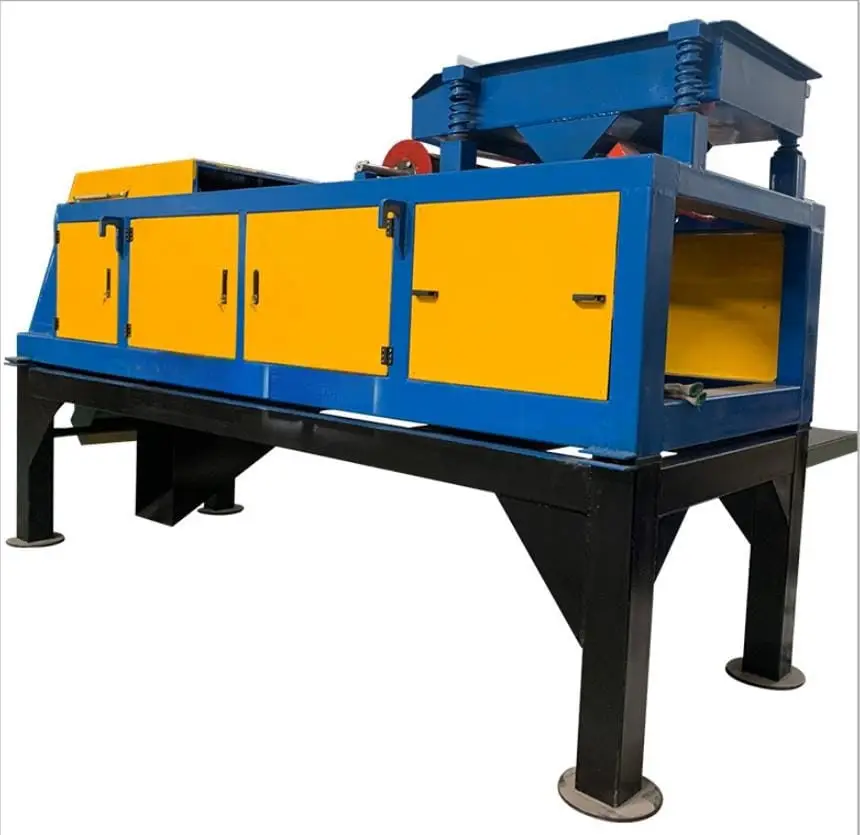
ORO Mineral Processing Equipment
ORO Mineral develops and supplies equipment for mineral screening, washing, beneficiation, and material separation. Its equipment portfolio is relevant to buyers planning integrated processing lines rather than purchasing an isolated machine without considering the wider flowsheet.
When discussing a mining screen or screening system, provide your feed size distribution, material characteristics, target output, and plant capacity. This gives the manufacturer a more useful basis for equipment recommendations.
Depending on the material and process objective, screening may be combined with magnetic separation, gravity concentration, or non-ferrous metal sorting. ORO Mineral’s product range also includes equipment such as a 1.1 kW belt magnetic separator and a dry electromagnetic separator. These machines perform different separation functions from a mining screen, so their use should be determined by the mineral properties and process design.
12. Expert Recommendation: Is a Mining Screen Worth Investing In?
Yes. If your plant handles continuous bulk material and needs controlled particle-size separation, a properly selected mining screen is usually a fundamental part of an efficient process. The more important decision is choosing the right design and integrating it correctly.
For beginners planning a small crushing or screening line, we recommend starting with a clear material test and a simple process flow sheet. Avoid purchasing a machine based only on a supplier’s standard model or a headline tonnes-per-hour figure. First establish the feed size, target products, and required capacity.
For commercial users operating a larger plant, the evaluation should go further. Compare lifecycle cost, media replacement frequency, energy requirements, maintenance access, structural loads, downtime, and the effect of screening performance on crushers and downstream separators.
Our practical recommendations:
- For coarse feed preparation: Evaluate a grizzly screen or heavy-duty vibrating screen to remove oversize material before crushing.
- For conventional crushing circuits: Compare inclined and horizontal vibrating screens based on plant layout, feed characteristics, and target product sizes.
- For high-throughput operations: Consider multi-slope or other specialized screen designs only after a duty-specific capacity assessment.
- For wet sand and mineral washing: Evaluate dewatering screens and the complete water-handling arrangement.
- For abrasive materials: Compare polyurethane, rubber, and steel media using actual wear and open-area requirements.
- For fine mineral classification: Request a process assessment and sample testing before selecting specialized fine-screening equipment.
The best mining screen is not necessarily the largest, fastest, or most expensive model. It is the machine that consistently delivers the required size separation at the actual feed rate, with manageable wear and operating costs. Define the process first, verify the supplier’s assumptions, and make the purchase decision based on measurable performance.
13. Frequently Asked Questions About Mining Screens
1. What is a mining screen used for?
A mining screen is used to separate ore, rock, sand, gravel, and other bulk materials into different particle-size fractions. Common duties include scalping, sizing, grading, washing, dewatering, and preparing material for crushing or mineral beneficiation.
2. How does a vibrating mining screen work?
A vibrating mining screen uses controlled mechanical movement to spread and stratify material across a screening surface. Smaller particles pass through the openings as undersize, while larger particles remain on the deck and discharge as oversize.
3. What are the main types of mining screens?
Common types include inclined vibrating screens, horizontal vibrating screens, banana screens, grizzly screens, trommel screens, dewatering screens, and fine or high-frequency screens. Each is designed for different material and process requirements.
4. What is the difference between a mining screen and a vibrating screen?
A mining screen is a general term for screening equipment used in mining and mineral processing. A vibrating screen is one specific type of mining screen that uses vibration to move and separate material. Other mining screens include grizzlies and trommel screens.
5. What is screen aperture size?
Screen aperture size is the nominal opening through which undersize particles can pass. It is a key factor in determining the size separation, but actual screening results also depend on particle shape, moisture, bed depth, vibration, and screen-media design.
6. Which screen media is best for mining?
There is no single best material. Woven wire offers useful open-area options, polyurethane is often considered for abrasive and wet duties, rubber can suit high-impact applications, and perforated plate is used for selected heavy-duty screening. The correct choice depends on wear, aperture, open area, and operating conditions.
7. What is the difference between wet screening and dry screening?
Dry screening separates free-flowing material without added process water. Wet screening uses water to assist washing or particle separation in suitable applications. Wet screening requires additional water supply, drainage, and slurry management, so it should be selected according to the process requirement.
8. How do I calculate mining screen capacity?
Screen capacity depends on screen area, feed size distribution, bulk density, moisture, aperture, material shape, deck inclination, vibration, and required separation quality. A supplier should calculate capacity using representative feed data and the actual screening duty rather than a generic machine rating.
9. Why does a mining screen become blocked?
Screen openings can become blocked by sticky clay, wet fines, near-size particles, or particles that wedge into the apertures. Possible solutions include reviewing feed moisture, improving feed distribution, selecting suitable self-cleaning media, or evaluating wet screening where appropriate.
10. How often should mining screen media be replaced?
Replacement frequency depends on material abrasiveness, impact, feed rate, media type, aperture, and operating hours. Inspect panels regularly and replace them according to wear limits and the manufacturer’s recommendations. There is no reliable universal replacement interval for every mining operation.
11. Can one mining screen produce multiple particle sizes?
Yes. A multi-deck mining screen can use different aperture sizes on separate decks to produce multiple size fractions from one feed stream. The number of decks and their configuration should be selected according to capacity, separation targets, and maintenance requirements.
12. What information should I provide when buying a mining screen?
Provide the material type, feed size distribution, maximum particle size, moisture content, bulk density, required throughput, target aperture sizes, wet or dry screening requirement, number of products, installation space, and operating conditions. This information helps the manufacturer recommend a suitable machine.
References
- Metso – Crushing and Screening Handbook. Technical explanation of screening, undersize and oversize products, and vibrating screen configurations.
- McLanahan – Screening and Sizing. Overview of screening applications, media options, material characteristics, and equipment selection considerations.
- Sandvik Rock Processing – How to Select the Right Screening Area. Technical guidance on screen area, throughput, material bed depth, and screening performance.
Final takeaway: A mining screen separates bulk material by particle size, but its impact reaches across the entire processing plant. The right equipment improves feed preparation, product consistency, and downstream operating conditions. The wrong equipment creates bottlenecks, misplaced particles, excessive wear, and avoidable costs. Start with representative material data, define the required separation, and select the screen and media as part of the complete mineral processing system.