Wet Magnetic Separator Sizes: How to Choose the Right Drum Diameter, Width, and Capacity
Choosing wet magnetic separator sizes is not simply a matter of selecting the largest machine available. Drum diameter, drum length, magnetic field strength, feed rate, slurry characteristics, and separation duty all influence whether a separator can deliver the required recovery and concentrate quality. A machine that is too small may become a production bottleneck, while an oversized separator can increase capital expenditure, installation requirements, and operating costs without delivering a meaningful improvement.
From our experience in mineral processing equipment, the most reliable selection method is to begin with the material and the required separation result, then determine the equipment dimensions and operating configuration. For magnetite beneficiation, iron ore upgrading, mineral purification, and tailings recovery, wet magnetic separator sizes must be matched to the actual slurry conditions rather than selected from a general capacity chart.
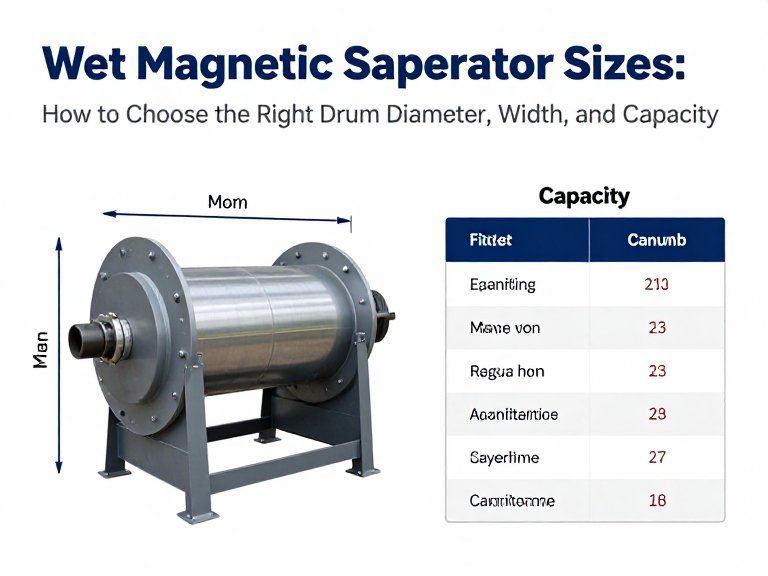
Quick Answer: What Wet Magnetic Separator Size Do You Need?
Wet magnetic separator sizes are generally described by drum diameter, effective drum length, processing width, and overall machine dimensions. The appropriate size depends on feed throughput, magnetic mineral content, particle-size distribution, slurry concentration, magnetic field requirements, and the desired recovery rate.
For a small beneficiation operation, a compact drum separator may be sufficient. Medium-sized plants typically require a larger working width or multiple processing units. Large iron ore operations often need customized industrial equipment or multiple separators arranged in series or parallel.
- What it is: The dimensional and processing specifications of a wet magnetic separation machine.
- How it works: A rotating magnetic drum attracts magnetic particles from a flowing slurry while nonmagnetic particles are discharged separately.
- Main benefits: Continuous processing, wet separation, mineral recovery, and reduced magnetic contamination.
- Limitations: Performance depends on feed properties, slurry management, magnetic field configuration, and operating conditions.
- Best users: Iron ore beneficiation plants, magnetite processors, mineral recovery facilities, and industrial mineral producers.
- Who may not need it: Operations processing completely nonmagnetic materials or applications better served by dry separation or another beneficiation method.
- Common mistake: Selecting equipment based only on drum dimensions or a supplier’s maximum theoretical capacity.
- Buying priority: Confirm actual throughput, recovery, concentrate grade, drum configuration, and available installation space.
- Expert recommendation: Request equipment selection based on representative ore samples and documented process requirements.
- Understanding Wet Magnetic Separator Sizes
- Four Main Dimensions That Determine Separator Size
- Common Wet Magnetic Separator Types and Size Configurations
- How Separator Size Affects Processing Capacity
- How Feed Material Influences Equipment Dimensions
- Wet Magnetic Separator Size Comparison
- Advantages and Limitations of Different Sizes
- How to Choose the Right Wet Magnetic Separator Size
- Common Equipment Sizing Mistakes
- Cost-Benefit Analysis and Equipment Upgrades
- Choosing an Equipment Manufacturer
- Frequently Asked Questions
- Technical References
1. Understanding Wet Magnetic Separator Sizes
A wet magnetic separator is mineral processing equipment designed to separate magnetic minerals from nonmagnetic materials suspended in water or another suitable liquid medium. It is commonly used in iron ore beneficiation, magnetite concentration, mineral purification, and the recovery of magnetic materials from industrial processing streams.
Unlike a dry magnetic separator, which processes loose particles in an air environment, a wet magnetic separator handles slurry. This makes it particularly useful when fine particles need to be separated or when the upstream process already involves wet grinding and classification.
What does separator size actually mean?
When discussing wet magnetic separator sizes, buyers should distinguish between the machine’s physical dimensions and its effective processing dimensions.
A machine may have a large external housing but a relatively limited effective separation area. Conversely, a compact machine with a suitable magnetic system and optimized slurry distribution may perform effectively for a specific feed material.
The most important dimensional parameters are:
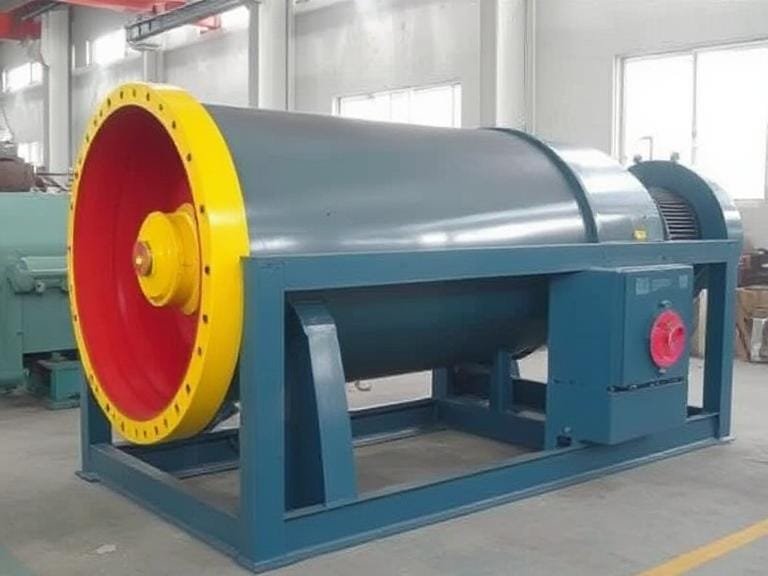
- Drum diameter: The diameter of the rotating magnetic drum, which influences the separation geometry and particle transport.
- Drum length: The effective axial length available for processing slurry.
- Working width: The usable separation width, which is closely related to the effective processing area.
- Overall machine dimensions: The installation footprint, height, length, and width required by the complete equipment assembly.
However, these dimensions should never be evaluated independently. A larger drum diameter does not automatically mean higher processing capacity, and a longer drum does not guarantee better concentrate quality.
How does a wet magnetic separator work?
In a typical wet drum magnetic separator, slurry enters the separation zone and flows near a rotating drum containing a magnetic system. Magnetic particles are attracted toward the drum surface and transported along its rotation path. Nonmagnetic particles remain in the slurry and are discharged through a separate outlet.
Depending on the equipment configuration, magnetic particles are released into a concentrate collection area or discharged through a designated concentrate zone. The exact flow arrangement varies according to drum design and separation duty.
For a more detailed explanation, see our guide to the magnetic separator machine working principle.
Quick summary table: Wet magnetic separator size parameters
| Parameter | What It Describes | Why It Matters | Buying Priority |
|---|---|---|---|
| Drum diameter | Diameter of the rotating drum | Affects separation geometry and particle transport | High |
| Drum length | Effective axial drum dimension | Influences available processing width | High |
| Working width | Usable slurry processing width | Helps determine the effective separation area | High |
| Magnetic field strength | Magnetic field at the relevant working position | Influences attraction and separation of magnetic particles | Very high |
| Feed capacity | Slurry or solids throughput under defined conditions | Determines production suitability | Very high |
| Feed concentration | Solids content in the slurry | Affects flow behavior and separation efficiency | Very high |
| Installation footprint | External machine dimensions | Determines plant layout and installation feasibility | High |
2. Four Main Dimensions That Determine Wet Magnetic Separator Sizes
When comparing equipment quotations, we recommend evaluating four primary dimensions before looking at the total machine footprint. These provide a clearer picture of what the separator can physically process.
2.1 Drum diameter
Drum diameter is one of the most visible wet magnetic separator size specifications. It describes the diameter of the rotating drum and contributes to the geometry of the magnetic separation zone.
Diameter influences the distance over which magnetic particles are carried and the interaction between the magnetic system, slurry flow, and drum surface. However, its effect depends on the magnetic pole arrangement, field distribution, rotational speed, and feed characteristics.
For commercial users, we recommend avoiding the assumption that a larger drum automatically produces higher recovery. If the magnetic field configuration is unsuitable for the target particles, increasing the diameter alone will not solve the separation problem.
2.2 Drum length and effective working width
Drum length determines the axial width of the working separation surface. In many equipment configurations, a longer effective drum provides more available processing width and may allow greater slurry throughput when the feed distribution and magnetic system are properly designed.
For high-throughput iron ore operations, working width can be particularly important because slurry must be distributed consistently across the entire processing area.
Uneven feed distribution can cause part of the drum to be overloaded while other sections remain underutilized. This is why feed distribution design deserves attention alongside the drum dimensions.
2.3 Overall machine dimensions
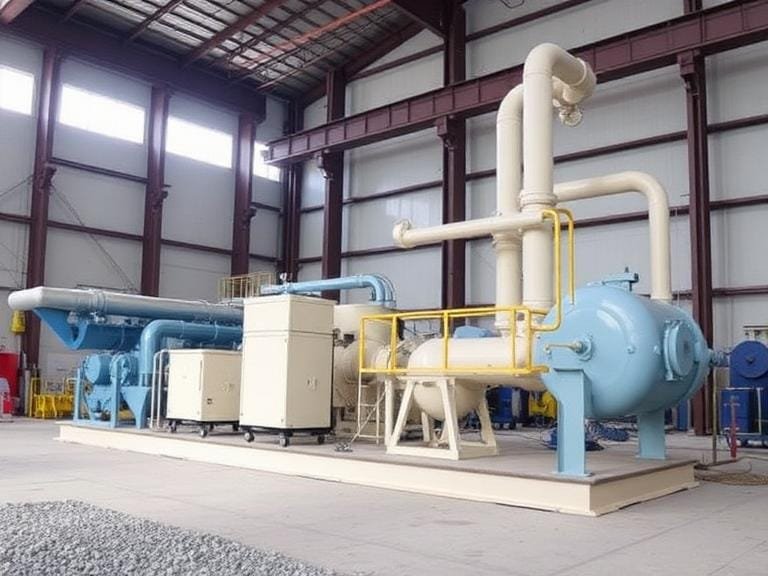
Overall dimensions include the equipment frame, drive assembly, bearings, feed box, discharge arrangement, and supporting structures.
These measurements determine whether the machine can fit into an existing processing line. They also influence maintenance access, lifting arrangements, pipe routing, foundation design, and the available space for concentrate and tailings collection.
Before purchasing, request a dimensioned general arrangement drawing. Do not rely on a product photograph or a basic catalog description when planning a plant installation.
2.4 Magnetic system dimensions and working field
The magnetic system is not simply a dimensional feature, but it is central to the performance of any wet magnetic separator. Its magnetic field distribution, pole arrangement, effective working distance, and magnetic intensity influence which particles can be captured.
Conventional wet drum separators and wet high-intensity magnetic separators are designed for different separation requirements. Fine weakly magnetic minerals may require a different magnetic separation technology from strongly magnetic magnetite.
For applications involving fine or weakly magnetic materials, investigate wet high intensity magnetic separation equipment rather than assuming a standard wet drum separator will deliver the desired result.
3. Common Wet Magnetic Separator Types and Size Configurations
Not all wet magnetic separators use the same drum configuration or magnetic system. The appropriate equipment depends on whether the application requires rough separation, cleaning, recovery, or high-intensity treatment.
3.1 Wet low-intensity magnetic separators
Wet low-intensity magnetic separators are commonly used for strongly magnetic minerals such as magnetite. They are widely applied in iron ore beneficiation, where the objective is to recover magnetic iron-bearing particles from nonmagnetic gangue.
For these applications, equipment size should be matched to solids throughput, feed concentration, magnetic mineral content, and the required concentrate quality.
For a conventional magnetite processing line, this is often the most economical starting point when the feed consists predominantly of strongly magnetic material.
3.2 Wet high-intensity magnetic separators
Wet high-intensity magnetic separators are designed for applications involving weakly magnetic minerals or materials that cannot be efficiently treated by conventional low-intensity equipment.
These machines may use specialized magnetic circuits and separation structures to generate the required field conditions. Their selection requires more attention to particle size, slurry characteristics, magnetic susceptibility, and the separation objective.
For mineral purification involving weakly magnetic impurities, review the high-intensity magnetic separation process before determining the required machine dimensions.
3.3 Single-stage and multi-stage configurations
A single separator may be sufficient for straightforward recovery applications. However, plants seeking higher concentrate grades or improved recovery may require multiple separation stages.
A typical arrangement may include roughing, cleaning, and scavenging stages. Each stage performs a different function, so the equipment dimensions and operating conditions do not necessarily need to be identical.
- Roughing: Focuses on recovering as much valuable magnetic material as practical from the feed.
- Cleaning: Improves concentrate quality by removing entrained nonmagnetic material.
- Scavenging: Recovers remaining magnetic material from the rougher tailings or another process stream.
For commercial plants, a multi-stage system can be more effective than purchasing one oversized separator and expecting it to perform every separation duty.
3.4 Permanent magnetic and electromagnetic equipment
Wet magnetic separator systems may use permanent magnets or electromagnetic arrangements, depending on the machine design and application.
Permanent magnetic systems can be attractive for conventional applications because they do not require continuous electrical power to generate the magnetic field. Electromagnetic systems provide different field-generation and adjustment possibilities but introduce additional power, cooling, and maintenance considerations.
The correct choice depends on the material’s magnetic characteristics and the required separation process, not simply the initial purchase price.
4. How Wet Magnetic Separator Size Affects Processing Capacity
Processing capacity is one of the most important factors in selecting wet magnetic separator sizes. However, capacity must be defined carefully because slurry throughput and dry-solids throughput are not the same measurement.
A supplier may quote cubic meters of slurry per hour, while a plant manager may be more interested in tonnes of dry ore processed per hour. Comparing these figures without accounting for slurry concentration can lead to incorrect purchasing decisions.
Understand slurry flow and solids throughput
The relationship between slurry flow and dry-solids throughput can be estimated using the following simplified formula:
Dry solids throughput (t/h) = Slurry flow (m³/h) × Slurry density (t/m³) × Solids mass fraction
For example, consider a slurry flow of 100 m³/h, a slurry density of 1.25 t/m³, and a solids mass fraction of 20%.
The estimated dry-solids throughput is:
100 × 1.25 × 0.20 = 25 tonnes per hour.
This is a simplified mass-balance calculation, not a separator performance guarantee. Actual processing capability also depends on feed properties, magnetic mineral content, particle size, flow distribution, and separation conditions.
Why a larger separator may not increase actual production
A larger machine can offer more processing area, but it cannot compensate for every process limitation. If upstream grinding produces excessive slimes, if the slurry is too concentrated, or if the feed contains a large proportion of weakly magnetic material, simply increasing drum dimensions may produce disappointing results.
In most professional situations, the complete process line should be evaluated. Check whether the grinding circuit, classification equipment, slurry pumps, pipelines, and concentrate handling systems can support the proposed separator capacity.
Consider operating capacity rather than maximum catalog capacity
Maximum catalog capacity is often based on defined operating assumptions. A machine’s actual performance in a particular plant may differ significantly.
Before accepting a capacity figure, ask the manufacturer to clarify:
- Whether the figure refers to slurry or dry solids.
- The assumed feed particle-size distribution.
- The expected magnetic mineral content.
- The feed solids concentration.
- The magnetic field and operating configuration.
- The expected concentrate grade and recovery.
- Whether the capacity is continuous operating capacity or a maximum reference value.
5. How Feed Material Influences Wet Magnetic Separator Sizes
Two mineral processing plants can have the same target throughput and still require different separator configurations. The reason is simple: their feed materials may behave very differently under magnetic separation.
Magnetite and strongly magnetic iron ore
Magnetite is strongly magnetic and is commonly processed using wet low-intensity magnetic separation. In these applications, the main sizing considerations include solids throughput, feed concentration, particle-size distribution, and concentrate grade.
For magnetite beneficiation, conventional wet drum equipment is often a practical choice. The separator should be sized around the required feed rate and the actual liberation characteristics of the ore.
Hematite and weakly magnetic iron minerals
Hematite generally responds less strongly to conventional low-intensity magnetic separation than magnetite. Depending on mineralogy and liberation, a high-intensity magnetic separation process or another beneficiation method may be more suitable.
Do not purchase a conventional wet drum separator for a hematite application without confirming that the magnetic properties and process test results justify it.
Kaolin, feldspar, and quartz
Industrial minerals such as kaolin, feldspar, and quartz may require magnetic separation to remove iron-bearing impurities and improve product purity.
In these applications, the objective is often not simply maximum magnetic mineral recovery. The buyer may need to achieve a specific product whiteness, impurity level, or chemical specification.
Wet high-intensity or electromagnetic equipment may be more appropriate depending on the impurity minerals and required product quality. ORO Mineral offers specialized equipment such as its water-cooling electromagnetic separator for kaolin, feldspar, and quartz.
Fine particles and slurry characteristics
Fine particles are more difficult to separate consistently because their behavior depends on magnetic susceptibility, particle interactions, slurry flow, and the surrounding nonmagnetic material.
High solids concentration can increase particle interactions and hinder separation. Excessive water flow can also affect the transport and recovery of magnetic particles.
For fine mineral processing, separator sizing should be supported by representative sample testing rather than assumptions based only on nominal particle size.
6. Wet Magnetic Separator Size Comparison: Which Configuration Should You Choose?
The following table provides a practical comparison of general equipment categories. These are application-based classifications, not standardized dimensional ranges. Actual drum diameters, working widths, and capacities vary by manufacturer and model.
| Equipment Configuration | Typical Application | Size Selection Priority | Main Advantage | Important Limitation |
|---|---|---|---|---|
| Compact wet drum separator | Small processing plants and pilot operations | Installation footprint and moderate feed throughput | Lower initial equipment investment | Limited processing capacity |
| Medium wet drum separator | Commercial magnetite beneficiation | Working width and continuous solids throughput | Practical balance of capacity and installation requirements | Must match slurry distribution and feed characteristics |
| Large industrial wet drum separator | Large iron ore processing plants | High throughput, structural design, and maintenance access | Suitable for demanding production requirements | Higher capital and installation requirements |
| Multi-stage wet separation system | Concentrate cleaning and tailings recovery | Stage-specific capacity and separation objectives | Allows different separation duties to be optimized | More complex process control |
| Wet high-intensity magnetic separator | Weakly magnetic minerals and industrial mineral purification | Magnetic field characteristics and material response | Suitable for applications beyond conventional low-intensity separation | Higher process and equipment complexity |
Which size is best for a small processing plant?
For a small operation, a compact or medium-capacity separator may be sufficient if the feed throughput is moderate and the material responds well to magnetic separation.
We recommend avoiding unnecessary oversizing. A smaller machine that operates consistently within its design conditions can be more economical than a large machine that is poorly matched to the feed.
Which size is best for a large iron ore plant?
Large processing plants should evaluate industrial drum dimensions, working width, slurry distribution, equipment availability, and the possibility of using parallel or multi-stage arrangements.
For these projects, sizing should be based on process design calculations and representative test work. A single machine’s catalog capacity is not an adequate basis for specifying an entire beneficiation line.
7. Advantages and Limitations of Different Wet Magnetic Separator Sizes
Choosing a larger or smaller separator involves trade-offs. The correct decision is the one that provides the required process performance at the lowest practical lifecycle cost.
| Configuration | Advantages | Disadvantages | Our Recommendation |
|---|---|---|---|
| Small separator | Compact installation, lower initial investment, easier integration into small lines | Limited throughput and less room for production expansion | Best for pilot plants and small-scale operations |
| Medium separator | Balanced capacity, footprint, and investment | May require additional units if production expands significantly | Practical choice for many commercial operations |
| Large separator | Higher potential throughput and industrial production capability | Greater capital investment, foundation, maintenance, and installation requirements | Use when the process genuinely requires high capacity |
| Multi-stage configuration | Flexible separation strategy and opportunities to improve recovery or grade | More equipment, piping, control, and operating complexity | Suitable for demanding beneficiation circuits |
When is upgrading to a larger separator worthwhile?
An upgrade may be justified when the existing separator consistently operates near its practical capacity, production demand increases, or process changes create a higher feed load.
However, if poor recovery is caused by inadequate liberation, unsuitable magnetic intensity, excessive slurry concentration, or poor feed distribution, replacing the machine with a larger model may not solve the underlying issue.
Our recommendation is to diagnose the process limitation before approving a capacity upgrade. A targeted improvement to feed conditioning or separation stages may deliver better value than replacing the entire machine.
8. How to Choose the Right Wet Magnetic Separator Size
A reliable equipment selection process should begin with the ore characteristics and production requirements. The following steps provide a practical purchasing framework for engineering teams and mineral processing plant managers.
Step 1: Define the required dry-solids throughput
Calculate the actual dry-solids feed rate in tonnes per hour. Include expected production variations and future capacity requirements.
Do not use slurry flow alone as the sizing reference. The solids concentration and slurry density must be considered to determine the actual quantity of mineral material being processed.
Step 2: Analyze representative feed samples
Obtain representative ore samples and evaluate their mineral composition, magnetic susceptibility, particle-size distribution, moisture conditions, and liberation characteristics.
For industrial minerals, also define the required final product specifications, such as impurity content or product whiteness. For magnetite, focus on recovery, concentrate grade, and tailings losses.
Step 3: Define the separation objective
Determine whether the equipment will perform roughing, cleaning, scavenging, or final purification. The separation objective influences the magnetic system, drum configuration, feed conditions, and equipment sizing.
Step 4: Confirm magnetic field requirements
Ask the manufacturer to explain the magnetic system and provide relevant field information at the working surface or specified measurement position.
Be careful when comparing magnetic field values. Different equipment designs and measurement locations can make nominal values difficult to compare directly.
Step 5: Determine drum diameter and working width
Once the process requirements are established, evaluate drum dimensions and effective processing width. Request the manufacturer’s technical explanation of how the proposed dimensions support the target feed rate and separation duty.
Step 6: Check installation and maintenance conditions
Review the equipment footprint, foundation requirements, lifting access, motor position, pipeline connections, water supply, and maintenance clearances.
For existing processing plants, these details can be just as important as nominal capacity. A machine that cannot be installed or maintained conveniently may create unnecessary downtime.
Step 7: Request a technical proposal based on actual process data
Before placing an order, provide the supplier with the following information:
- Mineral type and representative sample information.
- Required dry-solids throughput in tonnes per hour.
- Slurry flow rate and solids concentration.
- Feed particle-size distribution.
- Magnetic mineral content and relevant mineralogical data.
- Required concentrate grade and recovery target.
- Available installation space and site conditions.
- Operating hours and future expansion requirements.
9. Common Mistakes When Selecting Wet Magnetic Separator Sizes
Mistake 1: Choosing by drum diameter alone
Drum diameter is important, but it does not independently determine capacity or recovery. Working width, magnetic field distribution, drum speed, and feed conditions must also be considered.
Mistake 2: Confusing slurry capacity with dry-solids capacity
This is a common quotation problem. A separator rated for a particular slurry flow does not necessarily process the same numerical quantity of dry ore. Always request the measurement basis and operating assumptions.
Mistake 3: Ignoring particle-size distribution
Particle size affects liberation, magnetic response, slurry behavior, and separation efficiency. A machine suitable for relatively coarse magnetite may not deliver the same performance with a much finer feed.
Mistake 4: Selecting an oversized machine as a safety measure
Oversizing can increase equipment costs and operating complexity without solving the real process limitation. It may also create poor operating conditions if the equipment is not designed to handle the actual feed distribution.
Mistake 5: Ignoring upstream and downstream equipment
A magnetic separator cannot operate independently of the rest of the beneficiation plant. Pumps, classifiers, grinding circuits, slurry tanks, and concentrate handling systems must support the selected capacity.
Mistake 6: Comparing suppliers using incomplete specifications
Two machines with similar drum dimensions may have different magnetic systems, construction materials, feed arrangements, and operating characteristics. Compare complete technical specifications rather than a single size figure.
Mistake 7: Failing to consider maintenance
Bearings, drum surfaces, wear components, drives, and slurry-contact parts require appropriate maintenance planning. A separator that is difficult to service can increase lifecycle costs even if its initial price is attractive.
10. Cost-Benefit Analysis: Are Larger Wet Magnetic Separators Worth Buying?
The commercial value of a separator should be evaluated through the entire operating life of the equipment, not just the initial purchase price.
Initial equipment cost
Larger separators may require more substantial structures, drives, magnetic assemblies, and installation arrangements. Advanced high-intensity equipment can introduce additional complexity and cost.
However, buying a machine that is too small can also be expensive if the plant needs to add another unit or replace the original equipment soon after commissioning.
Operating and maintenance cost
Consider electricity consumption, water usage, wear parts, lubrication, routine inspection, and maintenance labor. Electromagnetic systems may also require attention to cooling and electrical infrastructure, depending on their design.
For high-throughput operations, even modest improvements in operating stability can have a significant commercial effect because equipment downtime affects the entire processing line.
Recovery and product quality
In magnetite beneficiation, recovery losses can represent lost saleable product. In industrial mineral purification, poor separation can reduce product quality or cause otherwise usable material to fail customer specifications.
For this reason, the most economical separator is not always the one with the lowest purchase price. It is the one that consistently achieves the required process result at an acceptable total cost.
When should you upgrade?
We recommend considering an upgrade when:
- The existing separator regularly reaches its practical operating limit.
- Feed throughput has increased beyond the original design conditions.
- Recovery or concentrate quality remains inadequate after process optimization.
- Feed characteristics have changed significantly.
- Maintenance downtime is affecting plant availability.
- The existing magnetic system is unsuitable for the current mineral type.
Before upgrading, conduct a process audit. Determine whether the bottleneck is actually separator capacity or another part of the plant. This prevents unnecessary capital expenditure.
11. Why Manufacturer Experience Matters When Buying Wet Magnetic Separators
Wet magnetic separator sizing requires more than mechanical dimension calculations. A suitable equipment manufacturer should understand the relationship between ore properties, magnetic field configuration, slurry handling, process capacity, and final product specifications.
For buyers, this means evaluating the supplier’s engineering capability rather than relying entirely on catalog descriptions.
Evaluate technical and customization capabilities
Ask whether the manufacturer can recommend equipment based on your actual feed conditions. Check whether it can provide dimensional drawings, magnetic system information, installation requirements, operating recommendations, and relevant process references.
For more demanding applications, ask whether the supplier can support test work or equipment configuration adjustments.
Review the manufacturer’s product range
A manufacturer offering different magnetic separation technologies may be better positioned to recommend an appropriate solution for different mineral characteristics.
Depending on the application, this may involve a conventional wet separator, high-intensity equipment, permanent magnetic systems, or electromagnetic separation technology.
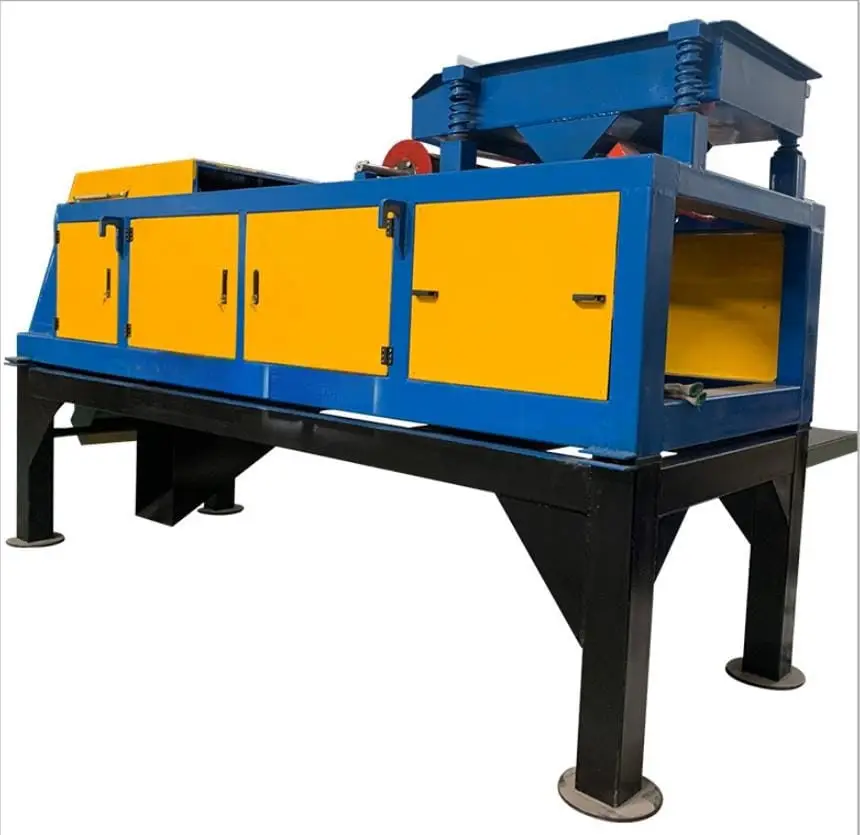
ORO Mineral provides a range of magnetic separation equipment for mineral processing and industrial separation applications. Its product range includes magnetic separator machines, permanent magnetic separators, and specialized wet magnetic separation solutions.
Consider the complete mineral processing line
ORO Mineral Co., Ltd. integrates research and development, production, and sales of mineral processing, screening, and sand washing equipment. Since 2014, the company has developed equipment solutions for mineral screening, beneficiation, washing, and solid waste resource recovery.
For customers planning a complete processing line, it is important to evaluate magnetic separation alongside the upstream and downstream equipment. The objective should be a coordinated process rather than a collection of individually selected machines.
Questions to ask before choosing a supplier
- Can the manufacturer recommend drum diameter and working width based on my ore characteristics?
- Does the quoted capacity refer to dry solids or slurry flow?
- What magnetic field characteristics does the proposed machine provide?
- Can the supplier explain expected recovery and concentrate quality assumptions?
- Are installation drawings and maintenance instructions available?
- Can the equipment be customized for my existing processing line?
- What spare parts and technical support are available?
- Can the supplier provide relevant project experience for similar mineral applications?
For a broader evaluation of suppliers, see our guides to magnetic separator manufacturers in China and magnetic separator manufacturers worldwide.
12. Related Magnetic Separation Equipment: Choosing the Right Technology
Wet magnetic separator sizes should be considered in the context of the separation technology itself. Not every mineral processing application needs a wet drum machine.
| Equipment Type | Typical Application | When to Consider It |
|---|---|---|
| Wet High Intensity Magnetic Separator | Weakly magnetic mineral separation | When conventional low-intensity equipment cannot achieve the required separation |
| Water-Cooling Electromagnetic Separator | Kaolin, feldspar, quartz purification | When controlled electromagnetic separation is required |
| Dry Electromagnetic Separator | Dry mineral separation | When the feed and process are better suited to dry treatment |
| 1.1 kW Belt Magnetic Separator | Magnetic material removal from conveyed materials | When continuous belt-based separation is required |
| Superconducting Magnetic Separator | Specialized high-field mineral purification | When demanding magnetic separation requirements justify advanced equipment |
For a complete understanding of the technology options, read our magnetic separation process guide and review the different magnetic separation applications in industry.
13. Practical Buyer Checklist for Wet Magnetic Separator Sizes
Before approving a purchase, use the following checklist to ensure that the proposed equipment matches the actual process requirements.
| Selection Item | What to Confirm | Priority |
|---|---|---|
| Feed mineral | Magnetic mineral type and composition | Critical |
| Feed throughput | Dry-solids tonnes per hour | Critical |
| Slurry conditions | Flow rate, density, and solids concentration | Critical |
| Particle size | Full size distribution and liberation characteristics | Critical |
| Separation target | Recovery, concentrate grade, or impurity removal | Critical |
| Drum dimensions | Diameter and effective working length | High |
| Magnetic system | Field strength, distribution, and configuration | Critical |
| Installation | Footprint, foundation, access, and pipe connections | High |
| Operating cost | Power, water, wear parts, and maintenance | High |
| Supplier support | Technical documentation, commissioning, and spare parts | High |
14. Frequently Asked Questions About Wet Magnetic Separator Sizes
1. What are the standard sizes of wet magnetic separators?
There is no single universal standard size covering all wet magnetic separators. Equipment dimensions vary according to drum diameter, effective working length, magnetic system design, feed capacity, and application. Buyers should compare actual model specifications rather than assume that different manufacturers use identical size classifications.
2. What is the most important dimension of a wet magnetic separator?
Drum diameter and effective working length are two important mechanical dimensions. However, neither should be selected independently. Magnetic field characteristics, slurry flow, feed particle size, and processing capacity are equally important when determining whether a separator is suitable.
3. Does a larger wet magnetic separator always have higher capacity?
No. A larger separator may offer more processing area, but actual capacity depends on magnetic system configuration, slurry distribution, feed concentration, particle characteristics, and separation requirements. Oversizing without process justification can increase costs without improving performance.
4. How do I calculate wet magnetic separator capacity?
Start by determining dry-solids throughput. A simplified calculation is slurry flow multiplied by slurry density and solids mass fraction. The resulting solids throughput must then be evaluated against the separator’s demonstrated processing capability under comparable feed and operating conditions.
5. What size wet magnetic separator is suitable for magnetite?
The suitable size depends on magnetite feed rate, magnetic mineral content, particle-size distribution, slurry concentration, and required concentrate quality. Wet low-intensity magnetic separators are commonly used for magnetite, but final equipment dimensions should be determined from process data and manufacturer recommendations.
6. Can wet magnetic separators process fine particles?
Yes, wet magnetic separators can process fine mineral particles, but performance depends on particle liberation, magnetic susceptibility, slurry conditions, and the equipment’s magnetic field configuration. Very fine or weakly magnetic materials may require specialized high-intensity equipment.
7. What is the difference between wet low-intensity and wet high-intensity magnetic separators?
Wet low-intensity separators are generally used for strongly magnetic materials such as magnetite. Wet high-intensity separators are designed for weaker magnetic materials or more demanding mineral purification applications. The choice depends on the magnetic response of the target mineral and the required separation result.
8. How do I choose between one large separator and multiple smaller separators?
One large separator may simplify the equipment arrangement when feed conditions are stable and high throughput is required. Multiple smaller units can provide process flexibility, staged separation, and operational redundancy. Compare capital cost, maintenance access, control complexity, and the required separation stages before deciding.
9. What information should I provide when requesting a wet magnetic separator quotation?
Provide mineral type, dry-solids throughput, slurry flow rate, solids concentration, particle-size distribution, magnetic mineral content, concentrate grade target, recovery target, installation conditions, and operating requirements. These details allow the manufacturer to recommend drum dimensions and magnetic system specifications more accurately.
10. How often should a wet magnetic separator be maintained?
Maintenance frequency depends on equipment design, operating hours, slurry abrasiveness, and site conditions. Follow the manufacturer’s maintenance schedule and regularly inspect bearings, drive components, drum surfaces, slurry-contact areas, and other wear components. Routine inspections help identify problems before they cause production interruptions.
11. Is a wet magnetic separator suitable for kaolin and quartz purification?
Yes, magnetic separation is used in industrial mineral purification, including certain kaolin and quartz applications. However, the appropriate equipment may be a wet high-intensity or electromagnetic separator rather than a conventional low-intensity drum machine. The choice should be supported by mineralogical analysis and separation testing.
12. How can I reduce the operating cost of a wet magnetic separator?
Match equipment size to actual feed conditions, maintain consistent slurry distribution, optimize solids concentration, prevent unnecessary overload, and maintain wear components. Proper process design is generally more effective than simply purchasing a larger separator to compensate for operating problems.
15. Technical References and Industry Resources
Wet magnetic separator selection should be based on established mineral processing principles, magnetic separation fundamentals, and reliable engineering data. The following resources provide useful technical background.
- U.S. Geological Survey – Minerals Information: National Minerals Information Center. Provides mineral industry information and technical background useful for understanding mineral commodities and processing contexts.
- U.S. Environmental Protection Agency – Mining and Mineral Processing: Sustainable Materials Management in Mining. Provides information on resource efficiency and environmental considerations relevant to mineral processing operations.
- Society for Mining, Metallurgy & Exploration: SME – Mining, Metallurgy and Exploration. A professional technical resource for mineral processing, mining engineering, and related industry practices.
Conclusion: Select Wet Magnetic Separator Sizes Based on Process Performance
The right wet magnetic separator size is determined by much more than drum diameter or external machine dimensions. Effective working width, magnetic field characteristics, feed throughput, particle-size distribution, slurry concentration, and the required separation result all influence equipment selection.
For magnetite beneficiation, a properly configured wet low-intensity drum separator is often a practical solution. For weakly magnetic minerals and industrial mineral purification, high-intensity or electromagnetic equipment may be more appropriate. For large processing plants, multi-stage or parallel configurations may provide a better balance of capacity, recovery, and operational flexibility.
Our recommendation is to avoid purchasing equipment based solely on catalog capacity or a single dimensional specification. Start with representative feed data, define the required process result, and ask the manufacturer to explain how the proposed separator dimensions and magnetic system will achieve that result.
ORO Mineral integrates equipment research and development, manufacturing, and mineral processing solutions. If you are planning a new beneficiation line or upgrading an existing plant, contact ORO Mineral through its mineral processing equipment product range to discuss your feed characteristics, required throughput, and suitable wet magnetic separator configuration.