Gold Grinding Machine Price 2026: Wet Pan Mill Costs, Models, and Buying Advice
If you are comparing gold grinding machine prices in 2026, the most important question is not simply how much a machine costs. It is how much usable grinding capacity you receive for your investment, whether the machine suits your ore, and what it will cost to keep it operating. A low purchase price can become an expensive decision when the mill cannot achieve the required fineness or its wear parts need frequent replacement.
For small and medium-scale gold processing operations, a wet pan mill is often a practical starting point. It combines grinding and wet mixing in one machine, has a relatively straightforward operating principle, and can fit operations that do not need the throughput or process control of a larger grinding circuit. Oro Mineral supplies mineral processing equipment, including a Wet Pan Mill for Gold Processing for buyers evaluating this type of solution.
Quick Answer: How Much Does a Gold Grinding Machine Cost in 2026?
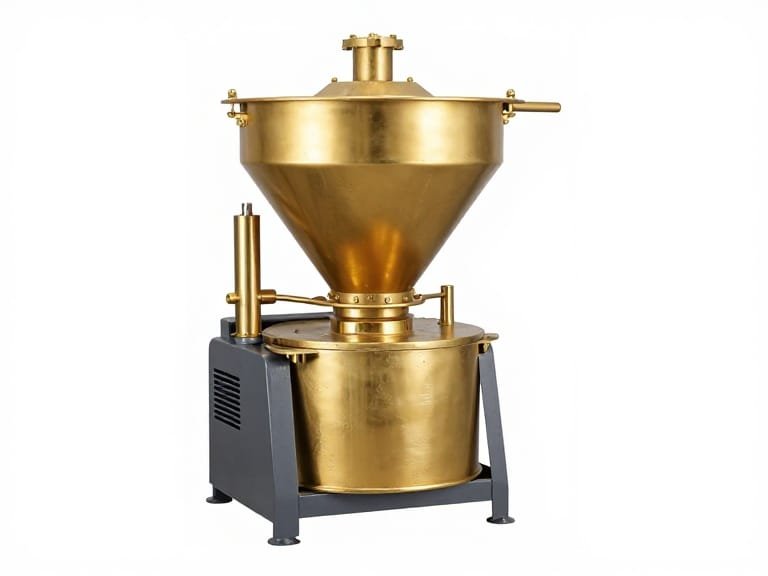
For preliminary budgeting, a small or medium wet pan mill may fall around US$2,000–US$8,000, while larger or heavier-duty models can reach approximately US$12,000–US$15,000 or more. These are indicative market planning ranges, not a confirmed Oro Mineral quotation or a fixed global price list. Actual offers depend on model, grinding capacity, motor configuration, materials, included accessories, and delivery terms.
A wet pan mill is generally worth considering when you process suitable gold ore at a modest throughput and want a relatively simple wet-grinding stage. It is not automatically the best choice for every deposit. Hard, abrasive ore, demanding fine-grinding targets, high continuous throughput, and complex mineral liberation requirements may justify a ball mill or a combined grinding circuit instead.
Our recommendation: shortlist equipment by tested ore performance and required tonnes per hour first. Compare quotations only after suppliers confirm feed size, target grind size, motor power, expected capacity, wear-part life, and the complete delivered cost.
Table of Contents
1. Gold Grinding Machine Price Range in 2026
The phrase gold grinding machine price covers several different machine types. A compact wet pan mill, a large wet grinding mill, and an industrial ball mill do not serve exactly the same production requirements. Comparing them by price alone is misleading.
For early-stage budgeting, the following ranges provide a useful starting point for wet pan mill enquiries. They are indicative planning figures drawn from publicly visible equipment-market listings and should not be treated as binding quotations. Freight, taxes, installation, and site preparation may be additional.
| Equipment / size category | Indicative budget range | Typical buying situation | What to verify |
|---|---|---|---|
| Small wet pan mill | US$2,000–US$4,500 | Small-scale ore processing and pilot production | Actual feed rate, motor power, and wear-part specification |
| Medium wet pan mill | US$3,500–US$8,000 | Small commercial plants requiring more regular throughput | Capacity under your ore conditions and continuous-duty suitability |
| Large wet pan mill | US$8,000–US$15,000+ | Higher-volume operations with heavier equipment requirements | Foundation, power supply, transport, installation, and maintenance cost |
| Ball mill or larger grinding circuit | Project-specific; may exceed the ranges above substantially | Higher throughput or more demanding grinding and classification duties | Complete circuit design, liners, media, classification, and energy use |
Why is the range so broad? A machine’s diameter, roller dimensions, motor power, structural weight, and production capacity all affect its manufacturing cost. A small unit designed for intermittent use should not be priced or evaluated as though it were a production machine intended to operate through long shifts.
For buyers comparing suppliers, ask for a quotation that separates the machine price from optional equipment, spare parts, packaging, freight, and commissioning. A quotation that looks cheaper may exclude items that another supplier has already included.
2. What Affects Gold Grinding Machine Price?
When two suppliers quote very different prices for what they call a gold grinding machine, the difference is often in the specification rather than the product name. These are the factors we would examine before deciding whether a quotation represents good value.
Machine diameter and grinding capacity
Larger grinding pans and rollers generally require more material, stronger structural components, and a more substantial drive system. They may also provide greater processing capacity, but capacity is not determined by diameter alone. Ore hardness, feed size, moisture, water addition, and the required final particle size all affect actual output.
Ask suppliers to state capacity in tonnes per hour and explain the test conditions behind that figure. A capacity number without an ore description and grind-size target is not enough for equipment selection.
Motor power and drive configuration
Motor power influences the machine’s ability to maintain grinding action under load. A higher-rated motor may be appropriate for a more demanding duty, but buying the highest power option is not automatically economical. Oversizing can increase initial cost and electricity demand without improving recovery if the downstream process is the real bottleneck.
Confirm the motor voltage, frequency, protection rating, starting method, and compatibility with the power supply at your mine. For remote operations, generator capacity and voltage stability should be checked before ordering.
Roller, pan, and wear-part materials
Grinding rollers and pan surfaces experience repeated contact with abrasive ore. Their material, hardness, thickness, and replaceability influence both purchase price and maintenance cost. A cheaper mill with difficult-to-source wear parts may become more expensive over its working life.
Request the material specifications for the rollers and grinding pan, the recommended inspection interval, and the price and lead time for replacement components. Ask whether the wear parts are standard or custom-made.
Automation and included accessories
Some configurations include additional controls, feeding arrangements, water-management components, or other accessories. These options may improve operating convenience, but they should be purchased only when they solve a real process problem. For a straightforward small operation, a robust and serviceable basic machine can be a better investment than a more complicated configuration.
Shipping, installation, and after-sales support
Mining equipment is heavy. Freight cost, container loading, inland transport, customs clearance, and unloading can materially change the final investment. Installation requirements also matter: the machine may need a prepared foundation, electrical connection, lifting equipment, and adequate working space.
We recommend evaluating supplier support before paying a deposit. Ask who handles technical questions, how quickly spare parts can be dispatched, and whether the supplier provides installation drawings, operating instructions, and commissioning guidance.
3. What Is a Wet Pan Mill for Gold Processing?
A wet pan mill is a grinding and mixing machine used in mineral processing. In gold applications, ore and water are fed into a grinding pan, where heavy rotating wheels press, rub, and grind the material. The resulting slurry can then move to a suitable concentration or separation stage.
Unlike equipment designed only for dry size reduction, a wet pan mill handles material in a wet grinding environment. This makes it useful for operations that want to produce an ore slurry for subsequent processing. The machine’s grinding action can help liberate gold particles from the surrounding rock, but the degree of liberation depends on the ore and the selected operating conditions.
What it is designed to do
- Reduce the particle size of suitable ore through repeated compression and abrasion.
- Mix ore and water to produce a slurry for downstream processing.
- Support small and medium-scale gold processing operations where its capacity and grind-size range are appropriate.
- Provide a relatively straightforward grinding stage with accessible mechanical components.
What it cannot guarantee
A wet pan mill does not guarantee a particular gold recovery rate. Grinding is only one stage in the mineral-processing chain. Recovery also depends on the gold’s size and occurrence, mineral associations, liberation, classification, and the separation method used afterward.
For example, free-milling gold may respond well to a suitable grinding and gravity-concentration arrangement. Refractory gold locked in sulphide minerals may need additional treatment. Grinding finer without understanding the mineralogy can increase energy consumption and create more fine material without producing the recovery improvement expected.
Before buying, arrange representative ore testing where possible. A sample that is unusually soft or unusually rich in visible gold may not represent the material the plant will process every day.
4. How Does a Gold Wet Pan Mill Work?
A wet pan mill uses a rotating grinding-wheel arrangement inside a stationary or fixed grinding pan. The drive system transfers power through a reducer and transmission components to move the grinding wheels. As the wheels travel across the pan, they apply pressure and friction to the ore.
Water is added to create a workable slurry. Ore particles are repeatedly compressed, rubbed, and ground between the rollers and the pan surface. As the material becomes finer, slurry can move toward the discharge area. Depending on the machine configuration, a screen or overflow arrangement helps control which material leaves the grinding zone and which remains for further grinding.
The operating sequence
- Prepare the feed: Crush oversized ore to a feed size suitable for the mill. Do not assume a wet pan mill can accept run-of-mine rocks without preparation.
- Feed ore and water: Maintain a controlled feed rate and slurry consistency. Unstable feeding can cause inconsistent grinding performance.
- Grind the material: The rotating wheels apply repeated pressure and friction to reduce particle size.
- Control discharge: Use the machine’s discharge and screening arrangement as specified by the manufacturer.
- Send slurry downstream: Direct the ground material to the appropriate concentration or separation equipment based on ore test results.
One practical point matters more than many buyers realize: a mill should be selected around the required downstream process, not in isolation. If the next stage is a gravity concentrator, the target particle-size distribution must support effective separation. If the mill produces too much oversize material, liberation may be incomplete. If it produces excessive slimes, gravity separation can become more difficult.
For projects using gravity concentration, compare the grinding stage with the requirements of equipment such as a gravity spiral concentrator or gravity spiral chute. These machines perform different duties; neither should be treated as a replacement for proper grinding.
5. Wet Pan Mill vs. Ball Mill: Which Is Better for Gold Ore?
There is no universal winner. A wet pan mill is often attractive for smaller operations that value a simpler machine and a comparatively modest initial investment. A ball mill is generally more appropriate when the process needs a different grinding duty, higher throughput, finer grinding, or integration into a more controlled grinding and classification circuit.
In most professional situations, the right choice comes from ore testing and process design. Do not buy a wet pan mill just because its initial price is lower, and do not buy a ball mill simply because it sounds more industrial.
| Decision factor | Wet pan mill | Ball mill | Practical recommendation |
|---|---|---|---|
| Initial investment | Often lower for small-scale configurations | Can be higher, especially as circuit size increases | Compare complete installed cost, not equipment price only |
| Typical application | Small and medium-scale wet grinding duties | Broader range of industrial grinding duties | Match equipment to throughput and ore characteristics |
| Grinding mechanism | Compression and friction from rotating wheels | Impact and abrasion from grinding media | Test the actual ore to confirm the required grind size |
| Process integration | Can feed a suitable wet concentration stage | Can be integrated with classification and larger circuits | Design grinding and separation as one process |
| Maintenance focus | Rollers, pan surfaces, bearings, reducer, and drive | Grinding media, liners, bearings, drive, and classification system | Check local availability and replacement cost of wear parts |
| Best fit | Operations with suitable ore and moderate capacity needs | Operations requiring larger or more controlled grinding circuits | Choose based on production targets and test results |
When a wet pan mill makes more sense
Choose a wet pan mill when the operation has a suitable feed size, moderate production requirements, access to water, and a downstream process that can use the slurry it produces. It can be a sensible option for small mines, pilot-scale production, and operations that need a relatively direct wet-grinding stage.
When a ball mill is the better investment
Consider a ball mill when the plant needs higher throughput, a more demanding grind-size target, or a grinding circuit with classification and process controls. For larger operations, the higher capital cost may be justified by the production requirement and the ability to integrate the mill into a more comprehensive plant design.
For a broader view of equipment selection, read our guide to gold processing equipment manufacturers. The important lesson is to evaluate the supplier’s ability to support the complete process, not just one machine.
6. Oro Mineral Wet Pan Mill for Gold Processing
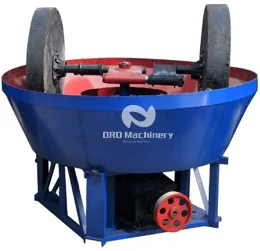
Wet Pan Mill for Gold Processing
Oro Mineral’s wet pan mill is intended for ore grinding and wet mixing applications. Its operating principle uses grinding wheels to press and rub ore in the pan, producing a slurry for the next processing stage.
The product is presented with a focus on durable construction, straightforward operation and maintenance, adjustable grinding speed, energy-conscious operation, and a compact layout. These are useful selection criteria, but buyers should confirm the exact configuration and performance figures in a project-specific quotation.
Best suited to: Buyers evaluating wet grinding for small and medium-scale mineral-processing operations, subject to ore testing and confirmed capacity.
Why consider this type of machine?
The main attraction is the combination of grinding and wet mixing. Instead of treating these as entirely separate tasks, the mill works with ore and water in the same grinding area. This can simplify the process layout for an operation whose feed, capacity, and recovery method suit the machine.
Other practical benefits include a relatively compact equipment footprint and a mechanical arrangement that operators can learn to manage with appropriate training. The product information also highlights adjustable grinding speed and energy-efficient design. Buyers should request the actual speed range, motor rating, and expected power consumption for the proposed model rather than relying on general descriptions.
Oro Mineral’s wider equipment range also includes magnetic separation equipment and spiral chute equipment. These are not automatic add-ons for every gold plant. They should be considered only where mineralogical testing identifies a suitable separation duty.
7. How to Choose a Gold Grinding Machine: Buying Checklist
For a mine owner or plant manager, the correct buying process begins with the ore and production target. We recommend using the following checklist before paying a deposit.
1. Confirm the ore characteristics
Identify whether the material is alluvial, weathered, or hard-rock ore, and understand its hardness, abrasiveness, and gold occurrence. If gold is locked inside sulphide minerals or other host minerals, a simple grinding-machine purchase may not solve the recovery challenge. Arrange representative testing and, where needed, mineralogical analysis.
2. Define feed size and target grind size
Tell the supplier the maximum particle size entering the mill and the desired product size. If crushing is required beforehand, include that stage in the process plan. A mill should not be expected to compensate for an unsuitable crusher or inconsistent feed preparation.
3. Calculate realistic throughput
State the required tonnes per hour and the number of operating hours per day. Ask the supplier whether the quoted capacity is a laboratory estimate, a nominal figure, or a demonstrated operating result. Request the ore type and grind-size conditions behind the capacity claim.
4. Check motor and site compatibility
Confirm voltage, frequency, motor power, starting current, and protection requirements. Check the foundation dimensions, total machine weight, lifting arrangements, access for maintenance, and water supply. For remote sites, include generator sizing and spare-parts logistics in the decision.
5. Compare wear parts and maintenance
Ask for the expected service life of grinding rollers and pan liners under comparable ore conditions. No supplier should promise a universal wear life without knowing the material being processed. Request a list of recommended initial spares and prices for replacement components.
6. Confirm safety and dust control
Check that rotating shafts, belts, pulleys, and other moving components have suitable guards. Establish safe procedures for feeding, cleaning, inspection, and maintenance. Wet grinding can reduce airborne dust at the grinding stage, but crushing, dry transfer, and discharge operations may still create exposure. NIOSH guidance on dust control in mineral processing crushing and grinding is useful when planning these areas.
7. Get the full commercial terms in writing
A complete quotation should identify the model, specification, quantity, price basis, packaging, delivery terms, estimated lead time, payment schedule, warranty scope, and after-sales support. Confirm what is excluded. If installation or commissioning is not included, clarify who will provide the drawings and technical instructions.
8. Wet Pan Mill Pros and Cons: Is It Worth Buying?
A wet pan mill can be a good investment, but only when the process requirement matches its strengths. The following table is a more useful buying tool than a list of promotional claims.
| Pros | Cons and limitations |
|---|---|
| Combines grinding and wet mixing in one machine. | Not suitable for every ore type or every required grind-size target. |
| Can be a relatively economical entry point for suitable small-scale operations. | Higher-capacity production may require a different grinding system. |
| Mechanical operation is comparatively straightforward to understand. | Rollers, pan surfaces, bearings, and drive components still require inspection and maintenance. |
| Produces slurry that can feed an appropriate downstream process. | Water management and slurry consistency must be controlled. |
| Can have a compact layout compared with a larger multi-equipment grinding circuit. | Actual footprint, lifting needs, and foundation requirements depend on the model. |
| Can be a practical choice for pilot or small commercial production. | It does not guarantee gold liberation or recovery without a suitable process design. |
Our verdict: a wet pan mill is worth buying when representative ore testing confirms that it can achieve the required grinding result at a commercially useful throughput. It is not worth buying solely because the advertised price is attractive. If the machine cannot meet the process target, the apparent saving is quickly lost through lower production, regrinding, or poor recovery.
9. Common Mistakes When Comparing Gold Grinding Machine Prices
Choosing the cheapest quotation
Two machines with similar names may have different motors, roller materials, structural weights, and included components. Compare technical specifications line by line. If a supplier cannot provide a clear specification sheet, treat the low price cautiously.
Confusing nominal capacity with actual plant output
Capacity figures are meaningful only when feed size, ore hardness, moisture, and target fineness are understood. A machine advertised at a particular tonnes-per-hour figure may deliver less on a harder ore or when a finer product is required. Ask for the operating conditions behind the number.
Ignoring the downstream recovery process
Grinding is not the final objective. The objective is to prepare the ore for effective recovery. If the next stage cannot handle the slurry or particle-size distribution, buying a larger mill may not fix the problem. Design grinding and concentration together.
Underestimating installation and logistics
Heavy equipment needs suitable transport, unloading, foundations, electrical work, and maintenance access. A low FOB price is not the same as a low delivered cost. Ask for the packing dimensions and gross weight before arranging freight.
Failing to plan for replacement parts
Wear parts are not an afterthought. If the mill is central to production, a long delay waiting for a replacement roller or bearing can stop the entire process. Ask the supplier for a recommended spare-parts package and a realistic dispatch schedule.
Assuming finer grinding always means better recovery
Finer grinding may help liberate some gold particles, but excessive grinding can increase the amount of fine material and make separation more difficult. The correct target should be established through ore testing and recovery trials, not by choosing the smallest possible particle size.
10. Who Should Use a Wet Pan Mill—and Who May Not Need One?
Good fit for these buyers
- Small-scale mine operators: Those processing suitable ore at a moderate throughput and looking for a relatively simple wet-grinding stage.
- Pilot and testing operations: Teams evaluating ore preparation and downstream concentration before committing to a larger plant.
- Small commercial plants: Operators whose process design, water availability, and recovery method are compatible with wet pan milling.
- Buyers replacing an older mill: Operators who have confirmed that the existing grinding duty can be met by the proposed new configuration.
Not necessarily the right choice for these buyers
- High-throughput industrial plants: Operations that need a larger and more tightly controlled grinding circuit should evaluate ball mills and other industrial solutions.
- Projects with untested refractory ore: A wet pan mill alone may not address the mineralogical challenges affecting gold recovery.
- Sites without reliable water management: Wet grinding requires a plan for water supply, slurry handling, and process-water management.
- Buyers who need a guaranteed recovery rate: No grinding machine can guarantee recovery independently of ore characteristics and the rest of the processing flowsheet.
11. Expert Recommendation: How to Get the Best Value in 2026
From a purchasing perspective, the best gold grinding machine is not the one with the lowest advertised price or the largest motor. It is the machine that delivers the required product size at a sustainable operating cost, with wear parts and technical support that your operation can access.
For beginners, we recommend starting with a representative ore sample and a clear production target. Do not order a machine based only on a photograph or a generic capacity statement. Establish the feed size, grind-size requirement, and downstream recovery method before comparing models.
For commercial users, calculate the cost per tonne of material processed. Include electricity, water, wear parts, maintenance labor, downtime, and the cost of any additional equipment needed to make the grinding stage work. A machine with a higher purchase price may be the more economical choice if it provides a more suitable capacity and better maintenance support.
For heavy-duty applications, avoid forcing a small wet pan mill into a role it was not designed to perform. Evaluate a larger grinding system and consider how crushing, grinding, classification, and concentration work together. If the process requires more than one separation stage, equipment such as a gravity spiral chute separator or a suitable magnetic separation unit may be part of the wider flowsheet, depending on the mineralogy.
12. Gold Grinding Machine Price 2026: Quick Summary Table
| Question | Practical answer |
|---|---|
| What is the indicative wet pan mill price? | Approximately US$2,000–US$8,000 for many small and medium planning scenarios; larger units may cost US$12,000–US$15,000 or more. |
| What is the best first step? | Test representative ore and define the required tonnes per hour and grind size. |
| What affects the price most? | Machine size, motor power, construction, wear materials, accessories, and delivery scope. |
| Is a wet pan mill suitable for every gold mine? | No. It is best for suitable wet-grinding duties where its capacity and grinding performance match the process. |
| Wet pan mill or ball mill? | Wet pan mill for suitable smaller-scale duties; ball mill for process requirements that need a different or larger grinding circuit. |
| What should a quotation include? | Model, capacity conditions, motor specification, wear parts, accessories, packaging, delivery terms, warranty, and support. |
| Does a grinding mill guarantee gold recovery? | No. Recovery depends on ore mineralogy, liberation, and the complete downstream processing flowsheet. |
13. Frequently Asked Questions About Gold Grinding Machine Price
1. How much does a gold grinding machine cost in 2026?
For preliminary budgeting, small and medium wet pan mills may fall around US$2,000–US$8,000, while larger models can reach approximately US$12,000–US$15,000 or more. These are indicative market ranges, not fixed prices. The final quotation depends on machine size, motor configuration, capacity, wear materials, accessories, and shipping destination.
2. What is the cheapest type of gold grinding machine?
For some small-scale operations, a basic wet pan mill may have a lower initial investment than a larger industrial grinding circuit. However, the cheapest machine is not necessarily the cheapest to operate. Check its actual throughput, power consumption, wear-part costs, and ability to achieve the required grind size before making a decision.
3. Is a wet pan mill suitable for gold ore?
Yes, a wet pan mill can be suitable for grinding certain gold ores and preparing slurry for downstream processing. Its suitability depends on ore hardness, feed size, gold occurrence, required fineness, and plant capacity. Representative ore testing is the best way to confirm whether it fits a specific project.
4. What is the difference between a wet pan mill and a ball mill?
A wet pan mill uses rotating wheels to grind and mix ore with water in a pan. A ball mill uses grinding media inside a rotating cylindrical shell. Wet pan mills are often considered for suitable small and medium-scale applications, while ball mills are used across a broader range of industrial grinding duties. The correct choice depends on the required capacity, grind size, and process design.
5. What information should I provide to get an accurate wet pan mill quotation?
Provide the ore type, maximum feed size, target tonnes per hour, desired grind size, operating hours, power supply, installation location, and downstream recovery method. Also state whether you need spare parts, installation guidance, or other accessories. The more specific the information, the more useful the quotation will be.
6. Does a higher-power gold grinding machine always perform better?
No. Motor power must match the machine design, ore characteristics, feed rate, and grinding target. A larger motor does not automatically produce better liberation or higher gold recovery. Select power based on the supplier’s technical proposal and the operating conditions expected at your site.
7. Can a wet pan mill be used for continuous production?
That depends on the specific model, drive system, operating conditions, and maintenance plan. Before using a machine for continuous commercial production, confirm its duty rating, recommended operating schedule, lubrication requirements, wear-part inspection intervals, and expected maintenance downtime with the manufacturer.
8. Does a wet pan mill recover gold by itself?
Grinding prepares ore for recovery; it does not by itself guarantee final gold recovery. The ground slurry normally needs an appropriate downstream concentration or extraction process. The right method depends on whether the gold is free-milling, finely disseminated, or associated with other minerals.
9. What additional costs should I include in my budget?
Include freight, insurance, import duties, customs clearance, unloading, foundation work, electrical installation, water supply, piping, commissioning, operator training, and initial spare parts. Also estimate ongoing electricity, water, labor, and wear-part expenses to understand the cost per tonne.
10. How do I request a wet pan mill quotation from Oro Mineral?
Visit the Oro Mineral Wet Pan Mill for Gold Processing product page and provide your project requirements. Include ore characteristics, feed size, required capacity, grind-size target, power supply, and destination. Ask for the proposed model’s technical parameters, included components, delivery terms, and after-sales support in writing.
14. References and Technical Resources
The following government technical resources provide useful background on mineral grinding, dust management, and machinery safety. They are not price quotations or substitutes for a project-specific equipment assessment.
- NIOSH – Crushing and Grinding in Mineral Processing Operations. Guidance on grinding processes and dust-control considerations at mineral processing facilities. Read the NIOSH technical resource.
- U.S. Geological Survey – Gold and Mineral Processing Context. Background on gold mineral systems and how mineral characteristics influence processing routes. Read the USGS publication.
- Mine Safety and Health Administration – Equipment Guarding. Guidance for protecting workers from hazardous moving machine parts in mining environments. Read the MSHA equipment-guarding guide.