7 Best Placer Mining Equipment Choices for Efficient Gold Recovery
The best placer mining equipment is not necessarily the biggest wash plant or the machine with the highest advertised throughput. It is the equipment that matches your deposit’s gold particle size, clay content, feed volume, water availability, and operating budget. A poorly matched plant can move large volumes of gravel while losing fine gold or spending too much time handling oversize material.
For most placer operations, the productive equipment train starts with excavation and feed handling, then moves through screening, washing, gravity concentration, and final cleanup. Each stage has a specific job. Spending heavily on a concentrator before understanding the material can be an expensive mistake.
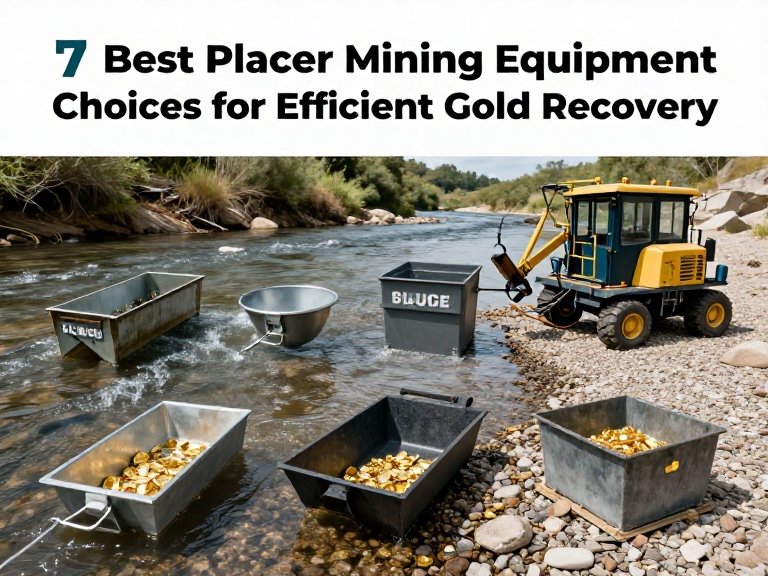
This guide explains seven equipment categories worth considering, how they work, where they perform best, and what to check before buying. The recommendations are intended for prospectors, small operators, contractors, and commercial placer mining businesses evaluating a practical recovery setup.
Direct Answer: What Is the Best Equipment for Placer Mining?
For a typical placer gold operation, the most useful equipment categories are an excavator or loader, a hopper and grizzly, a trommel or vibrating screen, a wash plant, a sluice box, a shaking table, and a centrifugal or other high-efficiency gravity concentrator. These machines work as a system rather than as independent purchases.
If you are starting a small operation, prioritize a properly sized screening and washing setup with a well-designed sluice recovery circuit. If you process a consistent commercial feed, consider a mechanized wash plant with controlled feed rate and staged concentration. If your material contains very fine gold or valuable heavy minerals, add a suitable secondary concentration stage after testing representative samples.
Quick Answer: Best Placer Mining Equipment at a Glance
What it is: Placer mining equipment is a group of machines used to excavate, screen, wash, classify, and recover valuable minerals—commonly gold—from unconsolidated sediments such as river gravel, alluvial deposits, and ancient channel material.
How it works: Feed material is excavated, separated by size, washed to release particles, and processed using density differences. Gold and other heavy minerals are concentrated while lighter waste material is discharged.
Main benefits: Mechanized equipment can improve throughput, reduce manual handling, provide more consistent feed preparation, and make staged recovery practical.
Limitations: Equipment cannot compensate for poor sampling, unsuitable water management, incorrect sizing, or an untested recovery circuit. Clay and fine gold can significantly reduce performance.
Who should use it: Prospectors with repeatable deposits, small-scale operators, commercial placer miners, and contractors processing alluvial material.
Who may not need it: Casual hobbyists processing small quantities may be better served by a pan, compact sluice, or portable testing setup rather than a full wash plant.
Common mistakes: Oversizing the plant, ignoring clay, feeding too quickly, using insufficient water, and failing to test tailings.
Buying considerations: Feed capacity, particle-size range, gold size distribution, water consumption, power, transport, wear parts, maintenance, and local permitting.
Expert recommendation: Start with representative bulk sampling and a small-scale recovery test. Scale the equipment only after you know where the gold reports and what limits recovery.
Quick Summary Table: 7 Best Placer Mining Equipment Categories
| Equipment | Main Function | Best Use Case | Priority for Most Operations |
|---|---|---|---|
| Excavator or wheel loader | Excavates and feeds placer material | Operations moving regular volumes of gravel | High where mechanized feed is required |
| Hopper and grizzly | Receives feed and removes oversize rocks | Protecting downstream equipment from large material | High for mechanized plants |
| Trommel screen | Washes and separates material by size | Variable gravel and moderately clay-bound feed | High for many alluvial deposits |
| Vibrating screen | Classifies material through screen decks | Well-characterized, free-flowing feed | Application dependent |
| Sluice box | Recovers gold using gravity and riffle action | Primary or secondary recovery of suitable gold sizes | High in many conventional setups |
| Shaking table | Separates fine heavy minerals by density and motion | Concentrate cleaning and fine-particle upgrading | Useful as a secondary stage |
| Centrifugal concentrator | Uses enhanced gravity to concentrate fine heavy particles | Fine gold recovery from suitable feed or concentrates | Useful after testwork confirms the benefit |
1. What Is Placer Mining Equipment?
Placer mining equipment is designed to recover valuable minerals from loose or unconsolidated material. Unlike hard-rock mining, which usually requires drilling, blasting, crushing, and grinding ore, placer operations process sediments in which valuable particles have already been liberated through natural weathering and transport.
Gold is denser than most common sand and gravel minerals. Placer recovery equipment takes advantage of this density difference through screening, washing, gravity separation, and concentration. The objective is to separate gold from lighter gangue while limiting the amount of valuable material lost to tailings.
How a Typical Placer Recovery Process Works
- Excavation and feeding: An excavator or loader moves gravel from the deposit to the plant feed point.
- Scalping: A grizzly or screen removes large rocks that should not enter the processing circuit.
- Washing and classification: A trommel or vibrating screen breaks up and separates feed according to particle size.
- Primary gravity recovery: A sluice or other gravity device captures gold and heavy minerals.
- Concentrate upgrading: A shaking table or centrifugal concentrator can further separate valuable heavy particles from lighter material.
- Tailings inspection: Operators sample discharged material to determine whether the circuit is losing recoverable gold.
Not every operation needs every stage. A small deposit with coarse, liberated gold may be handled effectively with simple equipment. Fine gold, clay-rich feed, or a commercial throughput target can justify more controlled classification and secondary concentration.
2. The 7 Best Placer Mining Equipment Choices
1. Excavator or Wheel Loader
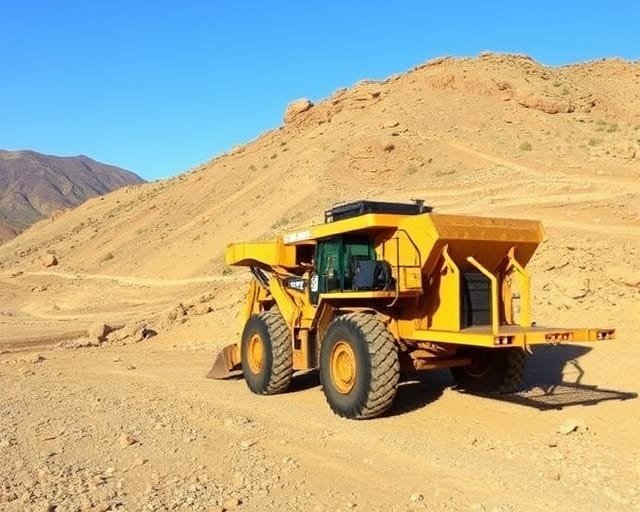
An excavator or wheel loader is often the first major machine in a mechanized placer operation. It removes overburden, extracts pay gravel, moves stockpiles, and feeds the processing plant. The right machine size depends on excavation depth, haul distance, ground conditions, and the feed rate required by the wash plant.
Best use case: Operations processing enough material to justify mechanized excavation and continuous feeding.
Buying advice: Match bucket capacity and cycle time to the plant’s actual feed requirement. A large excavator is not automatically more productive if the hopper is small or the wash plant cannot handle the material. Also consider fuel consumption, ground pressure, transport costs, service access, and local parts availability.
Our recommendation: For a small operation, rent or contract excavation equipment before committing to a large purchase. Confirm deposit continuity and plant capacity first. The excavator should support the recovery circuit, not dictate an unnecessarily high production target.
2. Hopper, Grizzly, and Feed System
A hopper receives excavated material and controls how it enters the processing plant. A grizzly or coarse screen separates large rocks, roots, and debris before they reach the washing and recovery stages. This protects downstream equipment and helps maintain a more stable feed.
Best use case: Mechanized plants handling variable gravel sizes or material containing large cobbles and occasional oversize rocks.
Buying advice: Check hopper volume, grizzly opening size, liner material, feeder control, and access for clearing blockages. The opening must reject material that the downstream circuit cannot process without discarding valuable gold-bearing gravel.
Common limitation: A grizzly does not wash clay or separate fine gold. It is a feed preparation stage, not a recovery device.
Our recommendation: Invest in controlled feed before upgrading the final concentrator. Inconsistent feed surges can overload screens and sluices, making recovery results unstable.
3. Trommel Screen
A trommel is a rotating cylindrical screen used to wash and classify material. As the drum turns, water and mechanical action help break down loose material while smaller particles pass through screen openings. Oversize material travels to the discharge end.
Best use case: Alluvial gravel containing mixed particle sizes, especially where washing and screening need to occur in one continuous unit.
Buying advice: Review drum diameter and length, screen aperture, feed capacity, spray-bar arrangement, liner design, drive system, and maintenance access. Ask how the manufacturer defines rated capacity: dry feed, wet feed, or a specific material condition. Those figures are not directly interchangeable.
Clay content is a major selection factor. A trommel can handle some sticky feed, but highly cohesive clay may need a scrubber or a more intensive washing stage before screening is effective.
Our recommendation: For many mechanized placer operations, a trommel is a strong starting point because it combines washing and classification. However, test the actual gravel. Do not assume a standard drum will disaggregate every clay-bound deposit.
4. Vibrating Screen
A vibrating screen separates material by size using one or more screen decks. It can provide accurate classification when feed is reasonably free-flowing and the screen media are correctly selected. Multiple decks can produce different size fractions for separate processing routes.
Best use case: Deposits with relatively consistent, free-flowing feed where controlled sizing is more important than intensive scrubbing.
Buying advice: Check deck area, screen opening, vibration system, feed distribution, screen media wear, and the risk of blinding. Wet screening may require suitable water sprays and drainage arrangements.
Our recommendation: Choose a vibrating screen when testwork shows that feed can be classified effectively without the washing action of a trommel. If the material contains sticky clay, address the scrubbing requirement first rather than expecting vibration alone to solve it.
5. Sluice Box
A sluice box uses flowing water, a sloped channel, and riffles or matting to retain dense particles while lighter material is carried away. It is a familiar and widely used placer recovery device because its operating principle is straightforward and it can be adapted to different scales.
Best use case: Primary or secondary recovery where gold particle size, feed preparation, water flow, and operating slope are compatible with the sluice design.
Buying advice: Do not select a sluice solely by length or width. Consider feed classification, water flow, slope adjustment, riffle profile, matting, cleanout time, and the gold size distribution. Fine gold may be lost if water velocity and turbulence are poorly controlled.
Our recommendation: A properly operated sluice is often a better first recovery investment than an expensive specialist concentrator. Run controlled tests, inspect the tailings, and adjust water and feed conditions before increasing throughput.
6. Shaking Table
A shaking table separates particles using a combination of deck motion, water flow, gravity, and differences in particle density and size. It is generally used to upgrade a prepared concentrate rather than to accept unrestricted run-of-mine gravel directly.
Best use case: Cleaning a gravity concentrate containing gold and other heavy minerals, especially when a more selective separation stage is needed.
Buying advice: Confirm the feed particle-size range, required feed consistency, water supply, deck dimensions, adjustment options, and expected concentrate throughput. A table performs best when the feed has been classified and prepared appropriately.
For operations evaluating a dedicated table, ORO Mineral’s 6-S shaking table is one product option to review against the concentrate characteristics and required capacity.
Our recommendation: Use a shaking table as a secondary upgrading tool when concentrate testing demonstrates a clear benefit. It is rarely the first machine to buy for an untested placer deposit.
7. Centrifugal Gold Concentrator
A centrifugal concentrator uses rotational acceleration to enhance the separation of dense particles from lighter material. Depending on the design and feed conditions, it can help recover fine heavy particles that may be difficult to capture with conventional gravity devices.
Best use case: Fine-gold recovery or concentrate upgrading where testwork shows that an enhanced-gravity stage improves overall recovery.
Buying advice: Ask for feed-size limits, solids throughput, water demand, concentrate mass pull, operating cycle, cleaning procedure, and performance data using material similar to yours. Compare actual recovery results, not just theoretical capacity.
Our recommendation: Treat centrifugal concentration as a targeted upgrade. It is worth evaluating when fine gold is demonstrably present in the feed or tailings. It is not a universal solution for clay, poor liberation, or badly controlled screening.
3. Placer Mining Equipment Comparison: Which Machine Should You Buy First?
The correct buying sequence depends on the operation’s bottleneck. If material is not reaching the plant consistently, improve excavation and feed control. If gold is being lost because particles are not liberated or classified, improve washing and screening. If gold is already concentrated but the final product contains too much black sand, consider a secondary upgrading stage.
| Equipment | Primary Job | Typical Position in Circuit | Best Reason to Buy | Do Not Buy It For |
|---|---|---|---|---|
| Excavator / loader | Digging and feeding | Front end | Increasing controlled material movement | Improving gold recovery directly |
| Hopper / grizzly | Feed regulation and scalping | Front end | Reducing oversize and feed surges | Removing fine clay or recovering gold |
| Trommel | Washing and screening | Feed preparation | Handling mixed gravel with washing needs | Solving every severe clay problem without testwork |
| Vibrating screen | Size classification | Feed preparation | Producing controlled size fractions | Replacing a scrubber where clay is the main issue |
| Sluice box | Primary gravity recovery | Recovery stage | Simple, scalable gravity concentration | Guaranteeing capture of all fine gold |
| Shaking table | Concentrate cleaning | Secondary recovery | Upgrading prepared heavy-mineral concentrate | Processing unclassified bulk gravel efficiently |
| Centrifugal concentrator | Enhanced gravity recovery | Secondary or specialized recovery | Recovering suitable fine heavy particles | Replacing proper feed preparation and sampling |
Best Equipment Packages by Operation Size
Small prospecting operation: Use a pan or small sluice for testing, with a compact screen if necessary. Avoid buying a full wash plant until sampling shows repeatable gold values.
Small commercial operation: Consider an excavator or loader, hopper and grizzly, correctly sized trommel or screen, and a sluice recovery system. Add secondary concentration after tailings and concentrate tests justify it.
Established commercial operation: Design a balanced circuit with controlled feed, washing or scrubbing, classification, primary gravity recovery, concentrate upgrading, water management, and accessible maintenance points.
4. How to Choose the Best Placer Mining Equipment for Your Project
Equipment selection should begin with deposit characterization. A machine’s nameplate capacity means little if the feed characteristics are unknown. Before requesting quotations, collect enough information to define what the plant must process and what recovery result it needs to achieve.
1. Determine Gold Particle Size and Distribution
Gold may occur as coarse nuggets, flakes, fine particles, or a combination. A circuit that works well for coarse gold may not capture fine gold efficiently. Conduct representative sampling and size analysis, and record how gold reports across the different fractions.
2. Measure Clay Content and Washability
Clay can bind gold to gravel, form sticky lumps, and block screen openings. If the deposit contains significant clay, test how easily it breaks down under realistic water and scrubbing conditions. A trommel alone may not be enough for highly cohesive material.
3. Define Throughput Using Real Feed Conditions
Ask manufacturers to state capacity against a defined material condition, including moisture, particle-size distribution, clay content, and bulk density where available. A capacity figure for clean, dry gravel should not be used to predict performance on wet, sticky feed.
4. Confirm Water Supply and Recycling Options
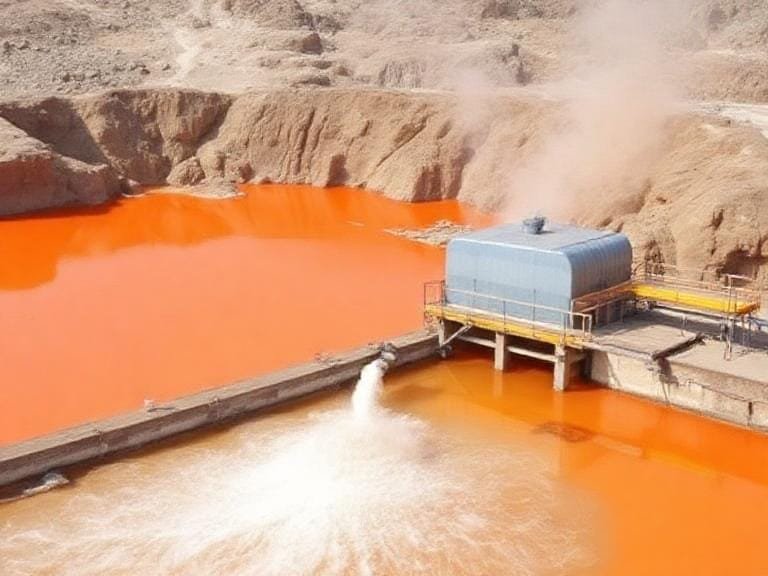
Placer washing can require substantial process water. Evaluate available flow, seasonal restrictions, settling capacity, recirculation, sediment control, and discharge requirements. Water management should be part of the plant design from the beginning, not an afterthought.
5. Check Power, Fuel, and Site Access
Remote sites may require diesel-driven equipment or generator power. Compare fuel consumption, electrical load, transport dimensions, assembly requirements, and access for service vehicles. A machine that is difficult to move or maintain can reduce operating hours and raise total cost.
6. Review Wear Parts and Maintenance
Screen panels, liners, pumps, hoses, bearings, belts, and riffle components are normal consumables in many processing systems. Ask for a wear-parts list, replacement intervals under stated conditions, and the cost and availability of critical spares.
7. Verify Permits and Environmental Obligations
Mining, water withdrawal, stream disturbance, sediment discharge, and land access rules vary by jurisdiction. Confirm local requirements before equipment is mobilized. A technically suitable wash plant is not a substitute for the necessary approvals and environmental controls.
5. Match Placer Mining Equipment to Deposit Conditions
Different deposits create different processing problems. The same wash plant may perform very differently on clean river gravel, clay-rich alluvium, or material containing abundant black sand.
| Deposit Condition | Main Processing Challenge | Equipment Priority | Practical Advice |
|---|---|---|---|
| Clean, free-flowing gravel | Consistent sizing and feed rate | Grizzly, screen, sluice | Keep the feed uniform and tune water flow to the gold size. |
| Clay-rich alluvium | Breaking down cohesive lumps | Scrubbing or trommel washing stage | Test clay disaggregation before choosing screen capacity. |
| Fine gold deposit | Capturing small particles without excessive loss | Carefully controlled classification and gravity recovery | Sample tailings and evaluate a fine-gold recovery stage. |
| Coarse gold deposit | Retaining large valuable particles while screening | Appropriate grizzly and primary recovery design | Check screen openings and oversize discharge for misplaced gold. |
| High black-sand content | Separating gold from other heavy minerals | Primary gravity recovery plus concentrate cleaning | Consider a shaking table after representative concentrate tests. |
| Limited water availability | Maintaining separation while controlling water use | Efficient water distribution and recycling system | Calculate water balance and settling capacity before plant purchase. |
For deposits containing significant magnetic heavy minerals, magnetic separation may be useful as a downstream concentrate-cleaning step. It is not a substitute for gold gravity recovery, because gold itself is not normally recovered by simply applying a conventional magnetic separator. Learn how a WHIMS magnetic separator works before considering high-intensity magnetic separation for a specific mineral separation duty.
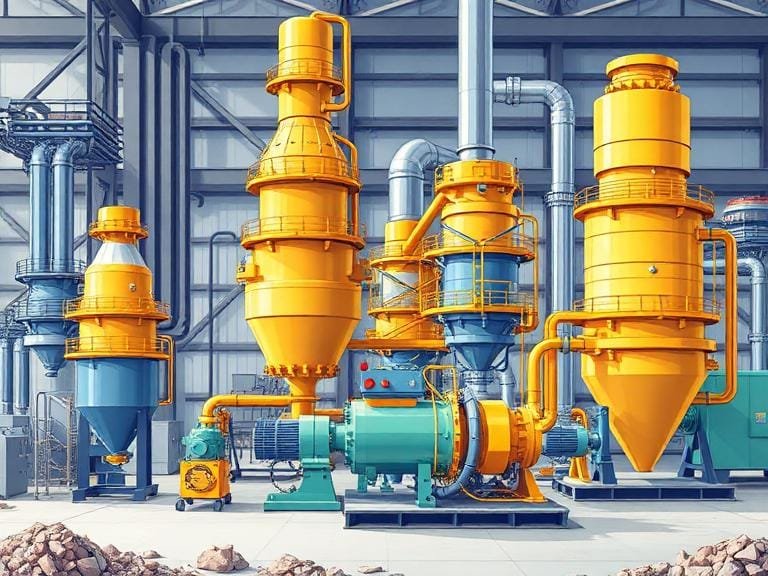
6. Build an Effective Placer Gold Recovery Circuit
Good recovery is a flowsheet problem. Every stage should prepare the material for the next one, and each discharge stream should be checked to identify misplaced valuable particles.
Stage One: Control Feed and Remove Oversize
Feed surges can overload screens and recovery devices. A hopper, feeder, and correctly sized grizzly help stabilize the material entering the plant. Avoid rejecting oversize without checking whether it contains gold-bearing material.
Stage Two: Wash and Classify
Washing helps release gold from gravel and clay, while classification directs different particle sizes to suitable recovery conditions. The screen aperture should be selected based on the feed and downstream equipment, not simply copied from another operation.
Stage Three: Recover Gold by Gravity
A sluice or other gravity device can provide primary recovery when feed size, water flow, and operating conditions are suitable. Maintain a consistent feed rate and inspect the recovery surface regularly. If the feed becomes overloaded, gold can pass through the system instead of being retained.
Stage Four: Upgrade Concentrate
Concentrate from primary recovery may still contain black sand and other heavy minerals. A shaking table or centrifugal concentrator may improve concentrate quality, depending on particle size and mineral characteristics. Choose the secondary device based on test results, not on the assumption that more machines always mean higher recovery.
Stage Five: Test Tailings and Reconcile Results
Collect representative tailings samples during commissioning and normal operation. Screen or assay them using a method appropriate for the gold size and concentration. If recoverable gold remains, identify the size fraction and process stage where the loss occurs. This evidence should determine the next equipment upgrade.
For a broader understanding of how equipment selection fits into a complete plant, review these mineral processing techniques and equipment.
7. Pros and Cons of Mechanized Placer Mining Equipment
Mechanization can improve productivity, but it also introduces capital cost, maintenance requirements, and environmental responsibilities. Whether it is worthwhile depends on deposit size, continuity, grade, and the operator’s ability to keep the plant running.
| Advantages | Limitations and Trade-Offs |
|---|---|
| Moves and processes larger volumes than manual methods. | Requires higher upfront investment and ongoing operating capital. |
| Provides more consistent screening and feed preparation when correctly designed. | Incorrect screen sizing or unstable feeding can still cause recovery losses. |
| Allows multiple recovery stages to be integrated into one plant. | More equipment means more maintenance points and potential downtime. |
| Can reduce repetitive manual handling and improve site productivity. | Requires trained operators, maintenance planning, and safe work procedures. |
| Can support repeatable production and process monitoring. | Performance depends on deposit variability, water management, and feed preparation. |
| Can be expanded as the operation develops. | Expansion may require additional permits, water capacity, power, and tailings management. |
For beginners, a compact testing setup is usually a better investment than a large plant. For commercial users, mechanization is worth considering when representative sampling confirms enough recoverable material and the operation can support maintenance, water management, and compliance.
8. Common Mistakes When Buying Placer Mining Equipment
Buying Capacity Before Understanding the Deposit
High throughput does not guarantee high gold recovery. A plant can process more gravel while losing fine gold or failing to break down clay. Establish the deposit characteristics first, then size the plant.
Ignoring Gold Losses in Tailings
Operators sometimes focus on the visible concentrate and overlook the material leaving the plant. Tailings sampling is one of the most practical ways to identify whether an equipment upgrade is justified.
Assuming a Trommel Solves Every Washing Problem
A trommel combines washing and screening, but sticky clay may require more intensive scrubbing. Ask the manufacturer how its proposed system handles your actual feed and request a test where possible.
Overlooking Water and Sediment Management
Water supply, settling ponds, recycling, and discharge controls affect both plant performance and site compliance. A wash plant should be evaluated as part of a complete water and tailings system.
Choosing a Supplier Based Only on Price
A lower purchase price may hide weaker wear parts, limited documentation, poor service access, or expensive shipping for replacement components. Compare the full delivered cost and the support available after commissioning.
Failing to Check Product Scope
Not every mineral processing machine is a placer gold recovery machine. Magnetic separators, eddy current separators, and other separation systems are designed for particular material properties and duties. Use them only where the mineralogy and process objective justify their inclusion.
9. Cost-Benefit Analysis: When Should You Upgrade Placer Mining Equipment?
The right upgrade is the one that removes a measured bottleneck. Before spending money, identify whether the operation is limited by excavation, feed handling, washing, classification, primary recovery, concentrate cleaning, water, or downtime.
When a Basic Setup Is More Economical
- The deposit is small or has not yet been proven through representative sampling.
- Gold is relatively coarse and can be recovered with a simple gravity circuit.
- Production volume is low or seasonal.
- Transport and site access make large equipment impractical.
- The operator is still learning the deposit’s variability.
When a Mechanized Wash Plant Is Worth the Investment
- There is a consistent supply of suitable pay gravel.
- Manual excavation and classification are limiting production.
- Representative testing confirms that a mechanized circuit can achieve the required recovery.
- Water, power, transport, and maintenance resources are available.
- The expected operating period can justify capital and commissioning costs.
When to Add a Shaking Table or Centrifugal Concentrator
Upgrade to secondary concentration only when concentrate or tailings analysis shows a specific recovery or product-quality problem. A shaking table can be appropriate for cleaning prepared heavy-mineral concentrates. A centrifugal concentrator may be useful where fine heavy particles are being lost or where a higher-grade concentrate is needed. Neither should be purchased without confirming feed suitability.
Calculate Total Cost of Ownership
Compare more than the equipment quotation. Include freight, taxes, installation, foundations, water infrastructure, power supply, fuel, operators, consumables, wear parts, maintenance, downtime, and eventual replacement. For commercial operations, estimate the cost per tonne processed and the cost per unit of recovered gold using realistic recovery assumptions.
We recommend requesting a written equipment configuration and a list of exclusions from every supplier. A quotation that omits pumps, screens, hoses, electrical controls, or commissioning support may look cheaper while creating a larger final project cost.
10. How ORO Mineral Can Support Placer and Mineral Processing Equipment Selection
ORO Mineral Co., Ltd. is a mineral processing, screening, and sand washing equipment manufacturer integrating research and development, production, and sales. The company states that it has operated since 2014 and works across mineral screening, solid waste resource recovery, beneficiation, washing, and separation.
For placer projects, buyers should first define the required process duty and then determine which equipment categories are relevant. ORO Mineral’s broader mineral processing range can be considered for suitable screening, washing, gravity concentration, and downstream separation requirements. The correct configuration still needs to be confirmed against the deposit’s particle-size distribution, mineralogy, moisture, and throughput.
ORO Mineral Processing Equipment
ORO Mineral focuses on equipment development and manufacturing for mineral processing, screening, washing, and separation applications. Its engineering approach emphasizes matching equipment to the material and process requirement rather than treating every project as a standard machine purchase.
Explore the ORO Mineral product range and discuss the feed characteristics, target capacity, and separation objective before selecting equipment.
Relevant Equipment to Evaluate
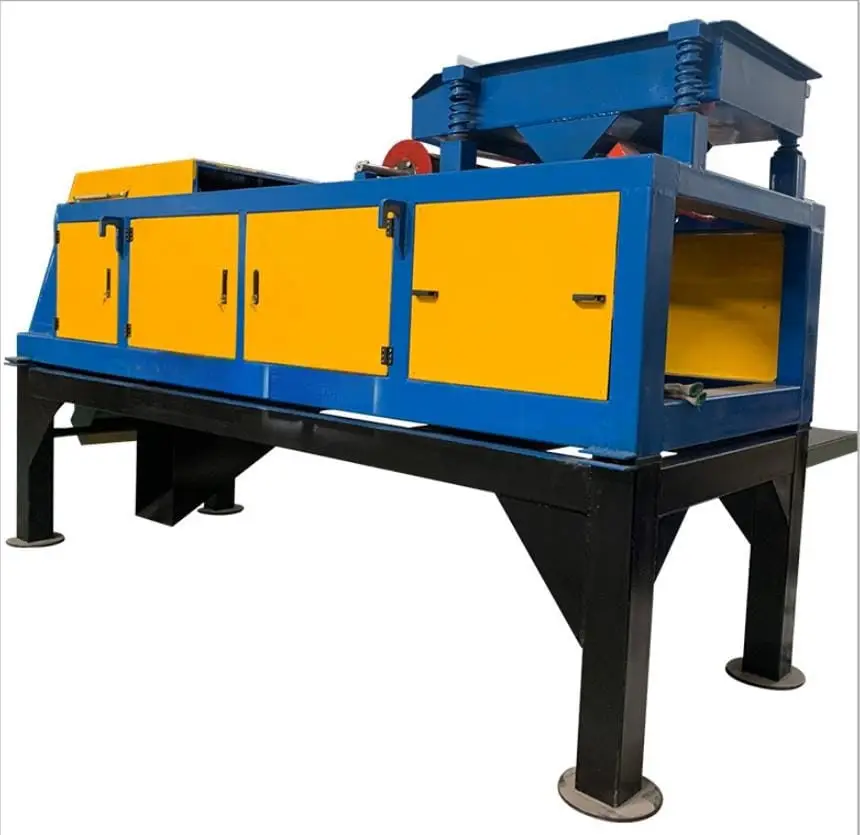
Some placer operations produce heavy-mineral concentrates that need additional cleaning or separation. Depending on the mineralogy, a 6-S shaking table may be suitable for upgrading a prepared concentrate. Where magnetic minerals are present, a suitable magnetic separation equipment option may be relevant to a downstream separation stage.
For projects that involve magnetic mineral removal or recovery, compare the operating principles of the proposed equipment with the actual magnetic properties of the target minerals. ORO Mineral’s guide to wet high-intensity magnetic separation explains a different separation duty from ordinary gold gravity recovery.
Do not specify a magnetic separator simply because a deposit contains black sand. Identify the mineral species, magnetic susceptibility, particle size, and required product stream first. Gold recovery should remain centered on a suitable gravity circuit unless testwork supports another process.
What to Send a Manufacturer Before Requesting a Quotation
- Deposit type and representative feed description.
- Estimated throughput in tonnes per hour or tonnes per day.
- Particle-size distribution and maximum feed size.
- Gold particle-size distribution, if available.
- Clay content, moisture, and washing characteristics.
- Target recovery and concentrate requirements.
- Available water flow, power supply, and site conditions.
- Transport limitations, installation location, and local compliance requirements.
Providing these details allows the manufacturer to recommend a process configuration rather than quote an isolated machine that may not solve the actual problem.
11. Expert Buying Checklist Before Ordering
Use this checklist to compare suppliers consistently. A professional quotation should answer the technical and commercial questions below.
- Is the equipment designed for the actual feed material and particle-size range?
- Is rated capacity based on comparable feed conditions?
- Can the supplier explain how clay and oversize material are handled?
- Are screen openings, water flow, and recovery settings clearly specified?
- Are wear parts and maintenance access documented?
- Does the quotation include pumps, hoses, motors, controls, and required accessories?
- Are installation, commissioning, operator training, and technical support available?
- Can the supplier provide drawings, manuals, and a recommended spare-parts list?
- Are transport dimensions, weights, and lifting requirements stated?
- Can the proposed configuration be validated using representative material?
Frequently Asked Questions About the Best Placer Mining Equipment
1. What is the best equipment for placer gold mining?
For many mechanized placer operations, a practical setup includes an excavator or loader, hopper and grizzly, trommel or vibrating screen, and a sluice recovery system. A shaking table or centrifugal concentrator may be added for concentrate upgrading when testwork demonstrates a benefit.
2. What equipment is needed for small-scale placer mining?
Small-scale operators can begin with a gold pan, classifier, and compact sluice. If sampling confirms enough material to justify mechanization, consider a small feed hopper, screen, and appropriately sized wash plant. Avoid purchasing large equipment before proving the deposit.
3. Is a trommel better than a vibrating screen for placer mining?
A trommel combines washing and screening and is often useful for mixed alluvial gravel. A vibrating screen can provide effective size classification when feed is free-flowing and does not require intensive scrubbing. Clay content and actual feed behavior should determine the choice.
4. Can a sluice box recover fine gold?
A sluice can recover some fine gold when particle size, water flow, slope, feed rate, and riffle design are suitable. Fine-gold performance is sensitive to operating conditions, so tailings should be sampled to confirm actual recovery.
5. What is the role of a shaking table in placer mining?
A shaking table is generally used to upgrade a prepared concentrate. It separates particles through differences in density and size combined with deck motion and water flow. It is not normally a replacement for bulk screening and primary recovery equipment.
6. Is a centrifugal concentrator necessary for placer gold recovery?
No. It is a specialized option that may improve recovery of suitable fine heavy particles. Whether it is worthwhile depends on gold size distribution, feed preparation, existing recovery performance, and test results from the actual material.
7. How do I choose the capacity of a placer mining wash plant?
Estimate the sustainable feed rate based on excavation capacity, material characteristics, operating hours, water supply, and downstream recovery capacity. Ask manufacturers to state their capacity assumptions and verify them against representative feed rather than relying on a headline tonnes-per-hour figure.
8. How does clay affect placer mining equipment?
Clay can bind gold to larger particles, form lumps, blind screens, and reduce classification efficiency. Clay-rich deposits may need scrubbing or more intensive washing before screening and gravity recovery can work effectively.
9. What should I ask a placer mining equipment manufacturer?
Ask about feed capacity, material assumptions, screen size, washing performance, water requirements, power consumption, wear parts, maintenance, installation, commissioning, and spare-parts support. Provide representative feed data so the manufacturer can recommend a suitable configuration.
10. Is mechanized placer mining equipment worth the investment?
It can be worthwhile when the deposit has sufficient continuity and recoverable value to support the capital and operating costs. Compare total cost of ownership and expected recovered gold, not just the purchase price or theoretical throughput. For unproven deposits, start with sampling and smaller-scale testing.
References and Technical Resources
These authoritative resources provide background on placer deposits, mineral processing, and responsible mining practices. Always check the current local regulations and technical requirements for your specific site.
- U.S. Geological Survey – Gold Placer Deposits of the Circle District, Alaska. A geological and technical resource describing placer deposits and the characteristics of alluvial gold occurrences.
- U.S. Geological Survey – National Minerals Information Center. Government information on mineral commodities, production, and mineral resource topics.
- U.S. Environmental Protection Agency – National Pollutant Discharge Elimination System (NPDES). Regulatory information relevant to permitted wastewater and stormwater discharges in the United States; local and project-specific requirements must be checked.
Planning a Placer Mining or Mineral Processing Project?
Choosing the right equipment starts with understanding the material. Define your feed size, clay content, throughput, water availability, and recovery target before selecting a trommel, screen, gravity concentrator, or downstream separation system.
ORO Mineral Co., Ltd. develops and manufactures mineral processing, screening, washing, and separation equipment. Share your material characteristics and process objectives to discuss a suitable equipment configuration.
Explore ORO Mineral equipment or review its 6-S shaking table for concentrate upgrading applications.