8 Uncompromising Steps to Build Quartz Beneficiation Plant Operations in 2026
Let us confront a brutal reality in the modern industrial minerals sector: raw, run-of-mine quartz is practically worthless in today’s high-tech manufacturing landscape. The explosive global demand for photovoltaic solar panels, advanced semiconductor wafers, and high-end optical glass has completely redefined purity standards. Buyers no longer accept simple silica sand; they demand ultra-high-purity quartz with iron oxide (Fe2O3) levels routinely driven below 100 parts per million. To extract this massive financial value from your mineral deposit, you must engineer a flawless processing circuit. If your goal is to build quartz beneficiation plant infrastructure, relying on cheap, outdated equipment or unverified flowsheets is a guaranteed path to operational failure and catastrophic financial loss.
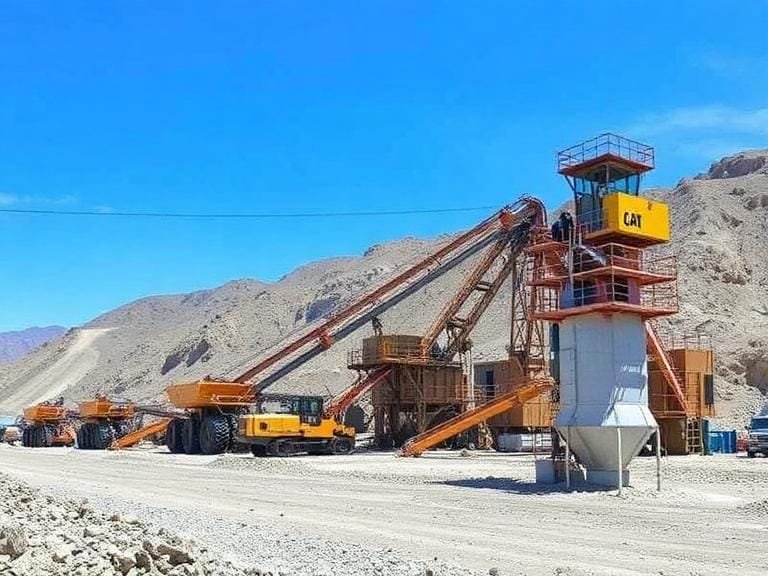
From our experience engineering advanced separation systems globally, we know that success in silica processing requires an uncompromising approach to metallurgical science and mechanical durability. ORO Mineral Co., Ltd. is a large-scale intelligent mineral processing, screening, and sand washing equipment manufacturer integrating R&D, production and sales. Since 2014, ORO Mineral has made great contributions to every kind of mineral screening, solid waste resource recovery, beneficiation, washing, and separation, and has accumulated rich experience. We do not guess; we engineer solutions based on empirical data.
In this relentlessly practical, expert-led guide, we will brutally dissect the 8 essential phases required to successfully build quartz beneficiation plant operations. We will expose the engineering flaws that cause amateur facilities to fail, outline the specific machinery you must procure, and provide a definitive roadmap to achieving premium-grade silica production.
Table of Contents
- Step 1: Rigorous Geological Assay and Mineralogical Analysis
- Step 2: Primary Comminution (Crushing Circuit)
- Step 3: Precision Grinding and Mineral Liberation
- Step 4: Classification and Sizing
- Step 5: Aggressive Desliming and Sand Washing
- Step 6: High-Intensity Magnetic Separation
- Step 7: Flotation and Acid Leaching for UHP Quartz
- Step 8: Dewatering and Tailings Management
- Summary Matrix: Quartz Processing Circuit
- Frequently Asked Questions (FAQs)
- Official Industry References
Step 1: Rigorous Geological Assay and Mineralogical Analysis
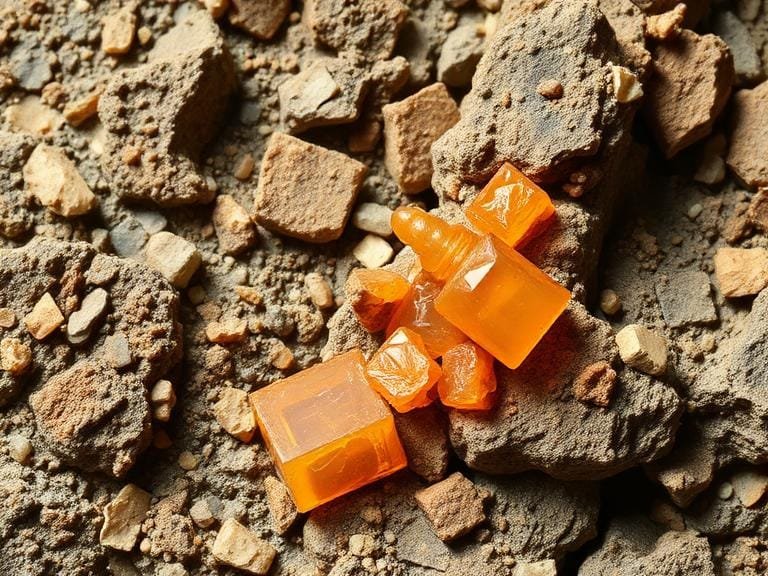
The most devastating mistake an investor can make is to begin to build quartz beneficiation plant infrastructure before fully understanding the host rock. Quartz deposits are never identical. The silica (SiO2) is invariably locked together with deleterious impurities such as feldspar, mica, rutile, and hematite. If you do not know the exact liberation size of your quartz crystals or the specific chemical nature of your iron contaminants, you cannot design an effective processing flowsheet.
We recommend commissioning a comprehensive mineralogical assay utilizing X-ray Diffraction (XRD) and Scanning Electron Microscopy (SEM). This data dictates your entire capital expenditure. For example, if your iron impurities exist as a thin superficial film on the quartz grains, a robust scrubbing circuit will suffice. However, if the iron is locked internally within the quartz lattice as fluid inclusions, standard physical separation will fail, and you will require aggressive acid leaching. Do not spend a single dollar on equipment until your metallurgists have explicitly defined the mineral processing stages explained by your specific ore body.
Step 2: Primary Comminution (Crushing Circuit)
Once the ore is characterized, the physical processing begins. Run-of-mine quartz is incredibly abrasive and possesses high compressive strength. Your primary crushing circuit must be built to withstand immense kinetic shock and continuous wear. When you build quartz beneficiation plant crushing stages, you must deploy heavy-duty jaw crushers equipped with high-manganese steel toggle plates for the primary break.
Following the jaw crusher, the material is fed into secondary and tertiary cone crushers to reduce the ore down to a manageable size (typically minus 15mm) for the milling circuit. We strongly advise against using impact crushers for high-grade quartz. Impactors generate excessive amounts of ultra-fine dust (slimes) and introduce unacceptable levels of iron contamination from the rapid wear of their blow bars. Stick to compressive crushing technologies to maintain purity and maximize your yield of usable granular silica.
Step 3: Precision Grinding and Mineral Liberation
To physically detach the quartz from its surrounding gangue minerals, the crushed ore must be ground. However, over-grinding is the absolute enemy of silica processing. If you reduce the quartz to an ultra-fine powder, it becomes entirely unresponsive to subsequent gravity and flotation separation methods. When you build quartz beneficiation plant milling circuits, precise control over the particle size distribution is mandatory.
We recommend utilizing autogenous mills or silica-lined ball mills utilizing high-alumina ceramic grinding media. Using standard forged steel balls will instantly contaminate your pure quartz with iron shavings, destroying its market value. For smaller scale operations or specific liberation profiles, some operators explore alternative comminution techniques, often researching tools like a wet pan mill for gold processing and adapting its gentle grinding mechanics for delicate silica liberation, though ceramic-lined rod mills remain the industrial standard for preventing over-grinding.
Step 4: Classification and Sizing
Grinding circuits never produce a uniform product; they output a slurry containing a wide spectrum of particle sizes. To optimize the downstream purification equipment, you must strictly classify the material into narrow size fractions. When attempting to build quartz beneficiation plant classification systems, hydrocyclones and high-frequency vibrating screens are your primary tools.
The slurry is pumped into a cluster of hydrocyclones where centrifugal force separates the coarse, usable quartz particles from the ultra-fine slimes. The coarse underflow is then directed over high-frequency screens equipped with polyurethane meshes. Particles that meet the target size (often between 20 and 120 mesh for glass manufacturing) advance to the washing stage, while oversized particles are recirculated back into the grinding mill in a closed-loop system.
Step 5: Aggressive Desliming and Sand Washing
Raw quartz grains are frequently coated in stubborn clay and thin films of iron oxide. If left untreated, these coatings will completely neutralize the effectiveness of downstream magnetic and chemical separation. You must physically scrub the quartz clean. This is why understanding the sand washing process steps is critical for high-end silica production.
When you build quartz beneficiation plant scrubbing circuits, we deploy heavy-duty attrition scrubbers. These machines utilize opposing impellers to force the quartz grains to violently grind against one another in a dense slurry, literally shearing the iron film and clay off the surface of the silica. Following attrition, the slurry is processed through specialized spiral sand washers or wheel-type washers to rinse away the liberated impurities. For operators looking to optimize their water usage and recovery rates, reviewing an authoritative sand washing methods guide is a necessary step in facility engineering.
Step 6: High-Intensity Magnetic Separation
This is arguably the most critical physical separation stage for achieving high-purity glass-grade silica. Even after rigorous scrubbing, discrete particles of iron-bearing minerals (like hematite, biotite, and tourmaline) remain mixed with the quartz. Because these minerals are only weakly magnetic (paramagnetic), standard drum magnets are entirely useless. To effectively build quartz beneficiation plant purification lines, you must integrate High-Gradient Magnetic Separators (HGMS).
These sophisticated machines utilize an electromagnetic matrix that concentrates the magnetic flux to generate field strengths exceeding 10,000 to 15,000 Gauss. This immense magnetic force physically rips the weakly magnetic impurities out of the wet slurry. Given the technical complexity of these machines, it is vital to source your equipment from established, verified magnetic separator manufacturers China has to offer, or consult a broader index of elite magnetic separator manufacturers worldwide to ensure your facility meets stringent international purity standards. Interestingly, the precision required here mirrors the extraction technologies utilized by top-tier gold mining equipment manufacturers when recovering fine, refractory ores.
Step 7: Flotation and Acid Leaching for UHP Quartz
If your target market requires ultra-high-purity (UHP) quartz for semiconductor crucibles or fiber optics, physical separation is not enough. You must separate the quartz from feldspar and mica, minerals which possess nearly identical specific gravities and magnetic susceptibilities as silica. This requires froth flotation.
In a hydrofluoric acid-free (HF-free) flotation circuit, specific chemical collectors are introduced to the slurry, causing the feldspar and mica particles to attach to air bubbles and float to the surface, leaving the purified quartz behind. To build quartz beneficiation plant chemical circuits capable of absolute purity, a final stage of heated acid leaching (utilizing hydrochloric or oxalic acid) is deployed to dissolve any residual metal oxides trapped deep within the microscopic fractures of the quartz grain.
Step 8: Dewatering and Tailings Management
The final operational phase is moisture reduction and environmental compliance. You cannot ship a saturated slurry to your end buyers. The purified quartz sand must be dewatered utilizing hydrocyclones, dewatering screens, and occasionally rotary thermal dryers to achieve a final moisture content below 5%.
Furthermore, an uncompromising facility must manage its wastewater. The slimes, clay, and rejected impurities from the washing and flotation stages must be directed to deep cone thickeners. Flocculants are added to rapidly settle the solids, allowing clean water to be recycled back into the plant. The concentrated sludge is then compressed utilizing heavy-duty filter presses to create dry, manageable filter cakes for safe, compliant disposal. To build quartz beneficiation plant infrastructure without a robust closed-loop water management system is to invite immediate regulatory shutdown.
Summary Matrix: Quartz Processing Circuit
To assist your engineering and procurement teams in mapping out your facility, we have synthesized the core operational phases into this uncompromising reference matrix.
| Processing Stage | Required Machinery | Primary Objective | Engineering Warning |
|---|---|---|---|
| 1. Comminution | Jaw & Cone Crushers | Primary size reduction. | Avoid impact crushers to prevent excessive fines and iron wear. |
| 2. Grinding | Alumina-Lined Ball Mills | Mineral liberation (20-120 mesh). | Never use steel grinding media; iron contamination will ruin the product. |
| 3. Scrubbing | Attrition Scrubbers | Removal of clay and iron surface films. | Requires high-density slurry (70% solids) for effective grain-on-grain shearing. |
| 4. Magnetic Separation | HGMS (>10,000 Gauss) | Extraction of weakly magnetic impurities. | Low-gauss drum magnets are completely ineffective for paramagnetics. |
| 5. Chemical Purification | Flotation Cells & Leaching Tanks | Feldspar/Mica separation; UHP production. | Requires strict pH monitoring and advanced effluent neutralization. |
| 6. Dewatering | Screens, Thickeners, Filter Presses | Moisture reduction and water recycling. | Failure to deploy thickeners results in unsustainable fresh water consumption. |
Frequently Asked Questions (FAQs)
What is the minimum viable grade of raw quartz required to build quartz beneficiation plant operations profitably?
From our experience, if your run-of-mine quartz deposit has a baseline SiO2 content below 95% or heavily disseminated iron inclusions that cannot be liberated at a reasonable grind size, the chemical processing costs will outstrip the final market value of the sand. You must assay the ore first; a highly complex leaching circuit required for low-grade ore can destroy your ROI.
How much water does a typical quartz beneficiation plant consume?
Wet processing is highly water-intensive, frequently requiring 3 to 5 tons of water per ton of raw ore processed. However, if you build quartz beneficiation plant infrastructure with a modern, closed-loop thickener and filter press system, you can effectively recycle up to 85% to 90% of your process water, drastically lowering your environmental footprint and utility costs.
Can gravity separation be used instead of magnetic separation to remove iron?
Gravity separation (using spiral chutes or shaking tables) is effective for removing heavy minerals like rutile or coarse hematite, but it is fundamentally inadequate for achieving the parts-per-million iron limits required for solar glass or semiconductor quartz. High-intensity magnetic separation and froth flotation are absolute requirements for premium-grade silica.
Official Industry References
To ensure your facility’s process flowsheets and economic modeling align with verified global standards, we strongly advise consulting the following authoritative geological and metallurgical bodies:
- U.S. Geological Survey (USGS) – Silica Statistics: Comprehensive global data detailing high-purity quartz consumption, end-use industrial applications, and stringent purity requirements for the advanced glass and foundry sectors.
- Society for Mining, Metallurgy & Exploration (SME): The premier international resource for peer-reviewed technical papers on advanced comminution strategies, froth flotation reagent chemistry, and high-gradient magnetic separation for industrial minerals.