6 Essential Beginner Gear & Panning Kits: What You Really Need to Start Gold Panning
Starting gold panning does not require a professional mining setup. It requires a few reliable tools, a sensible understanding of how gold behaves in moving water, and a location where recreational prospecting is permitted. The mistake we see beginners make is buying too much equipment before learning how to read a stream and handle a pan.
At ORO Mineral, we work in mineral processing equipment and understand the difference between hobby-scale recovery and equipment designed for production. That distinction matters. A beginner panning kit should help you learn the fundamentals, recover small quantities of material, and decide whether the hobby deserves a larger investment. It should not imitate a commercial processing plant.
Quick Answer: What Essential Beginner Gear Should You Buy?
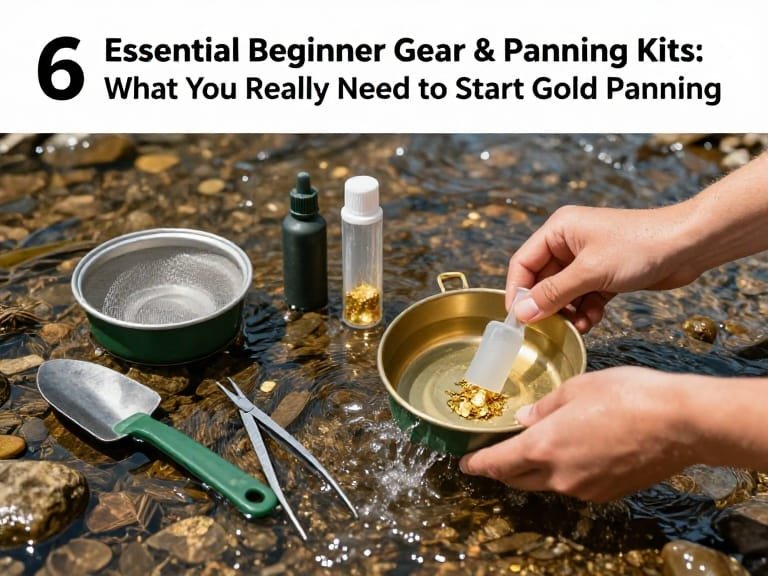
The best beginner gold panning setup is a simple kit built around six essentials: a riffled gold pan, a classifier screen, a small shovel or scoop, a bucket, a snuffer bottle with storage vials, and basic field safety gear. Add a small magnet and magnifier when you are ready to identify and clean up concentrates more efficiently.
Our recommendation: Buy a durable 10–14 inch plastic gold pan, a compatible classifier, and a few inexpensive accessories first. Spend more time learning sampling and panning technique than comparing oversized kits. A sluice box or powered equipment is an upgrade, not a beginner requirement.
What Is Essential Beginner Gold Panning Gear?
Essential beginner gold panning gear is a collection of hand tools used to collect gravel, separate oversized stones, wash away lighter sediment, and retain heavier material that may contain gold. The basic process relies on gravity. Gold has a much higher density than most common stream sediment, so careful water movement and controlled tilting allow lighter particles to wash over the edge while heavier particles remain in the pan.
A complete beginner setup does not need a motor, pump, conveyor, or complex separation system. In most recreational situations, a pan, shovel, classifier, and a container for recovered material are enough to learn the process. The remaining accessories improve convenience, accuracy, and safety.
How does gold panning equipment work?
Gold panning is a manual form of gravity concentration. You place sediment in a pan, break up clumps, wash away lighter material, and progressively reduce the amount of concentrate. The goal is to retain dense particles without losing fine gold during the washing process.
A classifier helps remove large stones before panning. The pan’s riffles provide areas where heavier particles can settle. A snuffer bottle helps collect small gold flakes from the final concentrate. A magnet can remove some magnetic black sand, but it should be used carefully because fine gold can be physically trapped among magnetic grains.
For beginners, the most important skill is controlled movement. Aggressive shaking and fast water movements can carry fine gold out of the pan. Equipment helps, but it cannot compensate for poor technique or an unproductive location.
The 6 Essential Beginner Gear & Panning Kits
Rather than buying a large box of tools with accessories you may never use, build your setup around six functional kits. Each one solves a different part of the field process.
1. Gold Pan Kit: The One Tool You Should Not Compromise On
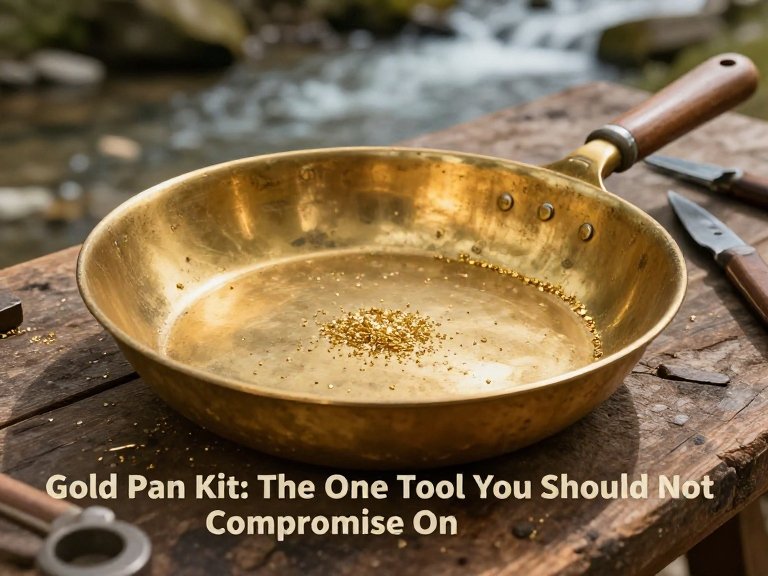
The gold pan is the central tool in any beginner panning kit. For most new prospectors, a durable plastic pan measuring approximately 10–14 inches is a practical starting point. A 14-inch pan offers useful capacity for processing samples, while a smaller pan is easier to carry and handle in limited spaces.
Look for molded riffles, a comfortable grip, and a shape that lets you control water and sediment without fighting the pan. Green, blue, or black pans can make yellow gold easier to distinguish from the background, although visibility also depends on lighting and the type of concentrate.
- Best for: Every beginner, from occasional hobbyists to people learning basic placer prospecting.
- Buy: One standard plastic pan with clearly formed riffles.
- Avoid: Complicated multi-chamber designs that make it harder to learn basic panning movements.
Our advice is to master one pan before buying several sizes. Familiarity with one tool is more valuable than owning a collection of pans without consistent technique.
2. Classifier and Sifting Kit: Prepare Material Before Panning
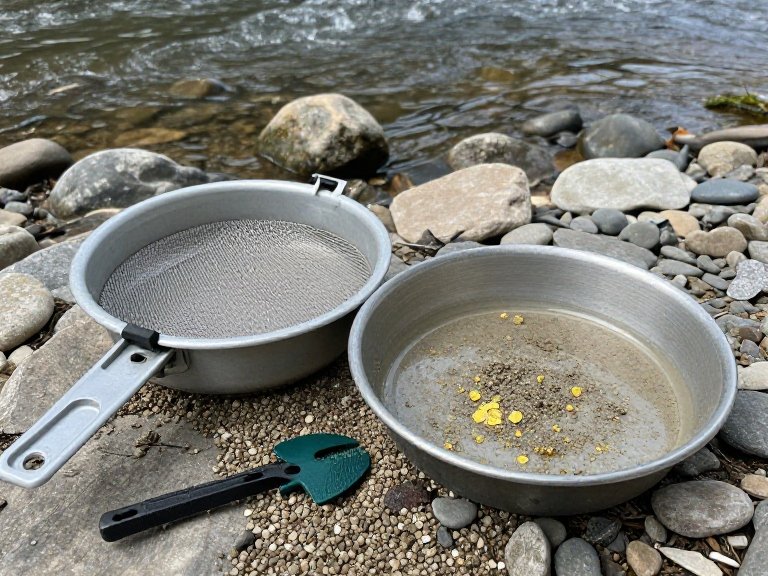
A classifier is a screen that separates larger stones and debris from the sediment you want to process. It is usually placed over a bucket or used directly above a pan. Common beginner screen openings are around 1/4 inch, although the right size depends on the material and the target gold size.
Classifying makes panning more consistent because you are not repeatedly handling large rocks while trying to wash fine sediment. It can also help you compare samples more fairly: material of a similar size is easier to process using the same technique.
- Best for: Gravel containing mixed stone sizes, roots, and coarse debris.
- Buy: A classifier that fits your bucket or pan securely.
- Avoid: Extremely fine screens as your only classifier if they clog quickly with clay or wet sediment.
For beginners, a single practical screen is enough. You can add finer classification stages later if your sampling shows that they improve recovery.
3. Digging and Sampling Kit: A Shovel, Scoop, and Bucket
You need a way to collect a controlled sample and move it to your panning area. A compact hand shovel or garden trowel works for small samples. A scoop is useful for gravel in shallow areas, while a sturdy bucket carries sediment, water, and tools.
A standard five-gallon bucket is convenient for many field trips, but it is not essential. A smaller bucket or collapsible container may be easier to carry on longer walks. The important point is to collect manageable samples rather than filling a container with material you cannot process.
Sampling discipline matters more than shovel size. Test several locations separately and keep the samples distinct. If you combine gravel from different spots, you lose the ability to identify which location produced the better result.
- Best for: Beginners testing different stream locations or collecting material for controlled panning.
- Buy: A compact shovel, a hand scoop, and one durable bucket.
- Avoid: Heavy digging tools for a hobby setup or tools that encourage unnecessary disturbance of the stream bed.
4. Gold Recovery and Storage Kit: Snuffer Bottle, Tweezers, and Vials
Finding a gold flake is only part of the job. You also need to recover it without losing it in the water or leaving it mixed with sediment. A snuffer bottle uses suction to collect small particles from the bottom of the pan. Small storage vials keep recovered material together for inspection.
Fine-point tweezers can help with larger visible pieces, while a small brush can move particles from a dry surface into a container. These are low-cost accessories, but they make the final cleanup stage much easier.
Choose a snuffer bottle with a controllable nozzle and a secure cap. Keep your vials closed and labelled if you are comparing samples from different locations. A small amount of gold can be difficult to distinguish from other yellow or reflective minerals, so avoid assuming that every bright particle is gold.
5. Concentrate Cleanup Kit: Magnet and Magnifier
Black sand often appears in gold-bearing concentrates. Some of it contains magnetic minerals, so a small magnet can help separate part of the magnetic fraction. A magnifier helps you inspect remaining particles and distinguish likely gold from other minerals.
Use a magnet carefully. Gold itself is not magnetic, but fine gold can become trapped among magnetic grains. Moving a magnet too quickly or removing an entire magnetic fraction without checking it can cost you fine material.
For beginners, a small hand magnet and a 10x magnifier are sufficient. You do not need an expensive mineral identification kit before you have learned to pan consistently.
6. Field Safety and Convenience Kit: The Gear Beginners Often Forget
A productive panning trip is not worth an avoidable injury. Water, slippery rocks, changing weather, and remote access can create more practical problems than the panning itself. Pack footwear with reliable traction, gloves suitable for cold water, drinking water, sun protection, and a basic first-aid kit.
Depending on the site and season, add a waterproof phone pouch, spare clothing, a headlamp, and a small dry bag. Do not assume a shallow stream is automatically safe. Check water conditions before entering, avoid unstable banks, and never pan in fast or rising water.
Respect the location as well. Keep disturbance to a minimum, avoid damaging stream banks, and return coarse material responsibly where local rules permit. Recreational access rules differ by land manager and location; permission to visit public land does not automatically mean every form of mineral collection is allowed.
How to Use a Beginner Panning Kit: A Practical Workflow
Buying the right gear is only the first step. A repeatable process will help you learn whether a location is worth more time and reduce the chance of losing fine gold.
- Confirm access first. Check land ownership, active mining claims, local collecting rules, stream restrictions, and any permit requirements before taking tools to the site.
- Choose a sensible sample location. Beginners often test gravel near natural flow changes, bedrock features, or the inside of bends. These are sampling ideas, not guarantees of gold.
- Collect a manageable sample. Keep samples from different locations separate so you can compare results.
- Classify the material. Remove oversized stones and organic debris using your screen. Break up clay carefully where permitted.
- Pan slowly. Submerge the pan, agitate the material to settle dense particles, then wash lighter material away in controlled stages.
- Inspect the concentrate. Reduce the remaining material gradually. Use a magnifier and snuffer bottle to inspect and recover visible particles.
- Record the result. Note the location, sample size, conditions, and whether you found any likely gold. This makes your next trip more informed.
Beginner Gold Panning Kit Comparison: Which Setup Is Worth Buying?
The best kit depends on how often you plan to pan, how far you need to carry your equipment, and whether you are learning the basics or processing larger volumes of gravel. The following comparison is based on practical equipment needs rather than brand claims or accessory count.
| Kit Type | Typical Contents | Best Use Case | Cost Approach | Our Recommendation |
|---|---|---|---|---|
| Basic pan kit | Gold pan, small vial, basic instructions | First-time users learning panning movements | Lowest initial cost | Good for testing interest, but add a classifier and snuffer bottle soon. |
| Beginner field kit | Pan, classifier, scoop, bucket, snuffer bottle, vials | Regular recreational panning and sample comparison | Best balance of cost and usefulness | Best overall starting point for most beginners. |
| Cleanup kit | Snuffer bottle, tweezers, magnet, magnifier, vials | Inspecting and recovering small concentrates | Low to moderate additional spend | Worth adding once you are consistently producing concentrates. |
| Pan and small sluice setup | Pan, classifier, shovel, bucket, portable sluice | Users processing more material where permitted | Higher initial cost and more setup | Upgrade only after you understand the site and local rules. |
| Powered prospecting setup | Pumps, powered recovery equipment, larger processing tools | Advanced or commercial-scale operations | Significantly higher cost and compliance burden | Not appropriate as a first purchase for casual beginners. |
For most people, the beginner field kit is the strongest value. A basic pan-only set can be cheaper, but the time saved by a classifier and the convenience of a snuffer bottle usually justify the modest extra spend. A powered setup, on the other hand, adds cost and operational complexity before a beginner has established whether the location or activity warrants it.
Pros and Cons of Beginner Gold Panning Kits
| Pros | Cons |
|---|---|
| Low initial investment compared with powered recovery equipment. | Manual panning processes relatively small amounts of material. |
| Portable tools are easy to transport and store. | Results depend heavily on technique and sample selection. |
| Beginners can learn gravity separation directly. | Fine gold can be lost through rushed or careless washing. |
| Simple equipment is easier to clean and maintain. | Weather, water conditions, and access restrictions can limit use. |
| Modular kits let users upgrade gradually. | Cheap kits may include weak screens, poor-fitting parts, or unnecessary accessories. |
Our view: Beginner kits are worth buying if your objective is to learn recreational gold panning. They are not a shortcut to commercial recovery. If you expect consistent production or want to process large volumes, you need a different equipment assessment based on material characteristics, throughput, recovery targets, and site conditions.
Buying Considerations: How to Choose the Right Beginner Panning Kit
1. Buy for the material you will actually process
Coarse gravel, fine sand, and clay-rich material behave differently. A pan that is comfortable for general use is a sensible starting point, but the classifier opening and cleanup accessories should match the material. Do not assume a kit marketed as a universal gold recovery solution will perform equally well in every location.
2. Prioritize compatibility over accessory count
A classifier that sits securely on your bucket is more useful than several screens that do not fit your containers. Check the pan diameter, screen dimensions, bucket opening, and storage arrangement before buying a bundled kit.
3. Check build quality where it matters
Inspect the pan for a stable shape, usable riffles, and comfortable handling. Check that the classifier mesh is firmly attached and that the snuffer bottle cap seals properly. These details affect everyday use more than decorative packaging or a long accessory list.
4. Avoid paying for advanced tools too early
A metal detector, sluice, powered highbanker, or specialized cleanup system may be useful in particular circumstances, but none is necessary for learning basic panning. Start with manual equipment and upgrade only when you can explain the problem the new tool will solve.
5. Consider the total cost, not just the kit price
The real cost includes replacement screens, transport, storage, protective equipment, access fees where applicable, and travel to suitable locations. A low-priced kit that needs immediate replacement is not necessarily good value. A modest, durable setup is usually a better purchase than a large collection of low-quality accessories.
6. Confirm legal access before buying specialized equipment
Rules vary by jurisdiction, land manager, waterway, and type of activity. Some areas allow limited hand panning while restricting digging, sluicing, motorized equipment, or collection entirely. National parks in the United States generally prohibit recreational collecting, including gold panning, subject to limited exceptions. Check the specific land manager’s rules rather than relying on a seller’s general statement that panning is legal.
Common Beginner Gold Panning Mistakes to Avoid
- Buying a large kit before learning the basics. More tools do not automatically produce more gold. Start with the essentials and learn to use them properly.
- Choosing a location without checking access. Public land can contain active mining claims, protected areas, or local restrictions. Confirm permission and rules first.
- Collecting too much material. A large bucket of untested gravel creates unnecessary work. Small, controlled samples are easier to compare.
- Mixing samples from different locations. Keep them separate so you can identify which sample produced the best concentrate.
- Washing too aggressively. Fast movements can carry fine gold out of the pan. Slow down as the amount of material decreases.
- Assuming black sand means there is gold. Black sand can occur with gold, but its presence does not prove that a sample contains recoverable gold.
- Using a magnet without checking the concentrate. Fine gold may be trapped among magnetic particles. Inspect the material before discarding it.
- Ignoring water and weather conditions. Cold water, slippery rocks, sudden flow changes, and remote access deserve more attention than adding another accessory.
- Confusing shiny minerals with gold. Use a magnifier and learn basic identification characteristics before treating every bright particle as a find.
- Expecting hobby equipment to deliver commercial output. A hand pan is a learning and small-sample tool, not a substitute for engineered mineral processing equipment.
When Should You Upgrade from a Beginner Panning Kit?
Upgrade when your current equipment creates a measurable bottleneck. Do not upgrade simply because another prospector owns a larger setup. A sluice box may make sense when you have permission to use one, understand how to classify feed material, and have enough suitable material to justify processing more volume. It is not automatically a better choice for every stream or every location.
For hobby users, the next sensible purchases are often a better classifier, a second pan for a different task, or improved concentrate-cleanup tools. These additions preserve the simplicity of the process while making fieldwork more efficient.
For users moving toward serious mineral recovery, the decision becomes more technical. Equipment selection should consider feed size, mineral density, liberation, moisture, throughput, target recovery, water availability, and operating conditions. This is where hobby panning and professional mineral processing begin to separate.
Who Should Use Beginner Panning Kits — and Who Does Not Need Them?
Beginner kits are a good fit for:
- First-time prospectors who want to learn manual gravity separation.
- Outdoor enthusiasts planning occasional recreational panning trips.
- Families or groups participating in permitted educational activities.
- Rock and mineral hobbyists who want to test small sediment samples.
- Experienced prospectors who need a compact manual kit for checking a new location.
Beginner kits are not the right solution for:
- Commercial operators who need predictable processing capacity and documented recovery performance.
- Users planning to process large volumes of ore or alluvial material.
- Operations requiring engineered screening, washing, magnetic separation, or other dedicated processing stages.
- People who do not have legal access to the location where they intend to pan.
In professional situations, a hand pan is still useful for preliminary sampling and visual checks. It should not be used as the basis for a full plant design or a commercial recovery forecast. Representative sampling and proper mineral testing are necessary before selecting production equipment.
From Beginner Panning to Professional Mineral Processing: Where ORO Mineral Fits
ORO Mineral Co., Ltd. is a mineral processing, screening, and sand washing equipment manufacturer integrating research and development, production, and sales. Since 2014, the company has worked across mineral screening, beneficiation, solid waste resource recovery, washing, and separation applications.
Our position is straightforward: use simple tools when the job is simple, and use engineered processing equipment when material volume, recovery requirements, and operating conditions demand it. A beginner gold pan and a commercial separation system solve different problems. Treating them as interchangeable leads to poor purchasing decisions.
For users progressing from hobby sampling to a more structured processing operation, the next step is to understand the material and the required separation stages. Depending on the feed characteristics and target minerals, professional plants may use screening, washing, gravity concentration, magnetic separation, or other technologies. The right process is determined by testing and engineering requirements, not by selecting equipment based on appearance alone.
Explore the ORO Mineral processing equipment range to understand the types of equipment used in larger mineral processing applications. If you are researching separation technology, our guides to mineral processing stages and magnetic separator manufacturers in China provide additional context.
ORO Mineral: Equipment for More Demanding Separation Applications
When a project moves beyond manual panning, equipment selection should start with a clear understanding of feed material, particle size, target minerals, and required processing capacity. ORO Mineral develops and supplies equipment for mineral screening, washing, beneficiation, and separation applications.
When professional separation equipment becomes relevant
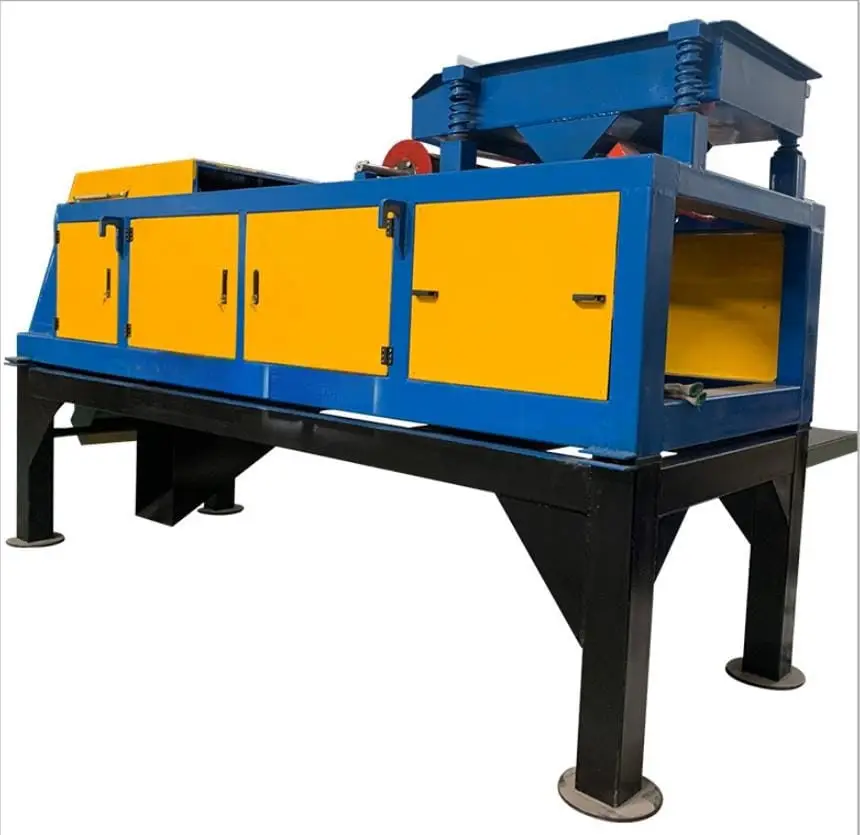
A 6-S shaking table is a gravity separation option used in suitable mineral processing flowsheets. A gravity spiral chute may be considered for appropriate fine-particle separation duties. Magnetic separation equipment serves a different purpose: it separates minerals according to their magnetic response rather than simply replacing a gold pan.
For example, a magnetic separation system or dry electromagnetic separator may be relevant where the feed contains minerals with suitable magnetic properties and the process conditions support dry separation. These are not beginner panning accessories, and they should not be purchased without a technical assessment.
For projects involving sand and aggregate, the process may also include washing and classification. Read our guide to sand washing process steps to understand why feed preparation and material handling matter in larger operations.
Expert Recommendation: The Best Beginner Gold Panning Kit to Start With
For most beginners, we recommend buying a practical field kit rather than the largest available bundle. Choose one good plastic gold pan, one compatible classifier, a compact shovel or scoop, a bucket, a snuffer bottle, and a few storage vials. Add a small magnet, magnifier, gloves, suitable footwear, and a first-aid kit as your needs require.
This setup gives you everything needed to learn sampling, classification, gravity separation, and concentrate cleanup without spending money on advanced tools too early. It is also easy to carry, maintain, and expand.
If you are only curious about gold panning, a basic pan kit is enough for your first experience. If you plan to visit multiple locations and compare samples, the complete beginner field kit is worth the extra investment. If you intend to process large quantities of material, stop treating a hobby kit as a production solution and seek a proper equipment assessment.
The best beginner setup is not the one with the most accessories. It is the one that helps you learn the process, collect responsibly, and make a better decision about what to buy next.
Quick Summary: Essential Beginner Gear & Panning Kits
| Essential Gear | Main Function | Priority | Buying Advice |
|---|---|---|---|
| Gold pan | Separates heavy concentrate from lighter sediment | Essential | Start with a durable 10–14 inch riffled plastic pan. |
| Classifier screen | Removes oversized stones and debris | Essential for regular use | Choose a size that fits your bucket or pan. |
| Shovel and scoop | Collects and transfers samples | Essential | Choose compact tools suited to permitted hand sampling. |
| Bucket | Stores and transports samples | Essential | Use a sturdy, manageable container. |
| Snuffer bottle and vials | Recovers and stores small gold particles | Strongly recommended | Check nozzle control and cap security. |
| Magnet and magnifier | Assists concentrate cleanup and inspection | Useful upgrade | Inspect magnetic material for trapped fine gold. |
| Safety gear | Supports safer fieldwork | Essential | Pack suitable footwear, gloves, water, and first aid. |
Frequently Asked Questions About Essential Beginner Gear & Panning Kits
1. What equipment does a beginner need for gold panning?
A beginner needs a riffled gold pan, classifier screen, small shovel or scoop, bucket, snuffer bottle, and storage vials. Suitable footwear, gloves, drinking water, and a first-aid kit are also important for field safety. A magnet and magnifier are useful additions for concentrate cleanup.
2. What size gold pan is best for beginners?
A 10–14 inch plastic pan is a practical starting range. A larger pan provides more capacity, while a smaller pan can be easier to carry and handle. For most beginners, a standard 14-inch riffled pan offers a useful balance between capacity and control.
3. Is a gold panning kit worth buying?
Yes, if you want to learn recreational gold panning and the kit contains tools you will actually use. A simple pan-only kit is inexpensive, but a field kit with a classifier, scoop, snuffer bottle, and vials is more convenient for repeated trips. Avoid paying extra for advanced accessories before you need them.
4. Do beginners need a sluice box?
No. A sluice box is an optional upgrade for processing more material where its use is permitted. Beginners should first learn to classify samples and pan consistently. Check local rules before using a sluice because restrictions can differ from those for hand panning.
5. What does a classifier do in a gold panning kit?
A classifier screens out larger rocks, roots, and debris before material enters the pan. This makes the feed more consistent and reduces the amount of oversized material you need to handle. The correct screen opening depends on the sediment and target particle size.
6. Can a magnet separate gold from black sand?
A magnet can remove some magnetic minerals from black sand, but gold itself is not magnetic. Fine gold can become trapped among magnetic grains, so inspect the concentrate before discarding any material. A magnet is a cleanup aid, not a complete gold separation method.
7. How much should I spend on beginner gold panning equipment?
There is no single price that suits every user. A basic pan kit costs less, while a complete field kit adds a classifier, digging tools, recovery accessories, and storage. Prioritize durable essentials and avoid spending heavily on powered equipment until you have experience and a clear need.
8. Is gold panning allowed on public land?
It depends on the land manager, location, land status, and type of activity. Some public lands allow limited recreational hand panning, while other areas restrict or prohibit collecting. Existing mining claims, protected areas, waterway rules, and local regulations may also apply. Always check with the responsible agency before starting.
9. Can I use beginner panning equipment for commercial gold recovery?
Beginner equipment is suitable for manual sampling and small-scale recreational use, not commercial production. Commercial projects require representative sampling, mineral testing, process design, and equipment selected for feed characteristics and throughput. Gravity tables, spiral systems, screening, and other separation technologies may be considered depending on the material.
10. What is the best beginner gold panning kit overall?
For most beginners, the best overall option is a field kit containing a 10–14 inch riffled pan, compatible classifier, compact shovel or scoop, bucket, snuffer bottle, and storage vials. Add safety equipment and a magnifier. This combination covers the essential workflow without unnecessary spending.
References and Further Reading
Before purchasing equipment or planning a trip, consult official land-management guidance. Rules are location-specific, and the references below should be treated as starting points rather than blanket permission to collect.
- U.S. Forest Service – Gold Panning: A Guide to Recreational Goldpanning. Practical guidance on basic equipment, field preparation, and recreational panning.
- Bureau of Land Management – Can I Keep This? Recreational Collecting on BLM-Managed Lands. Guidance on collecting minerals, using hand tools, and checking restrictions on public lands.
- National Park Service – Permits and Recreational Collecting. Explains the general restrictions on recreational collecting and gold panning in National Park System units, including limited exceptions.