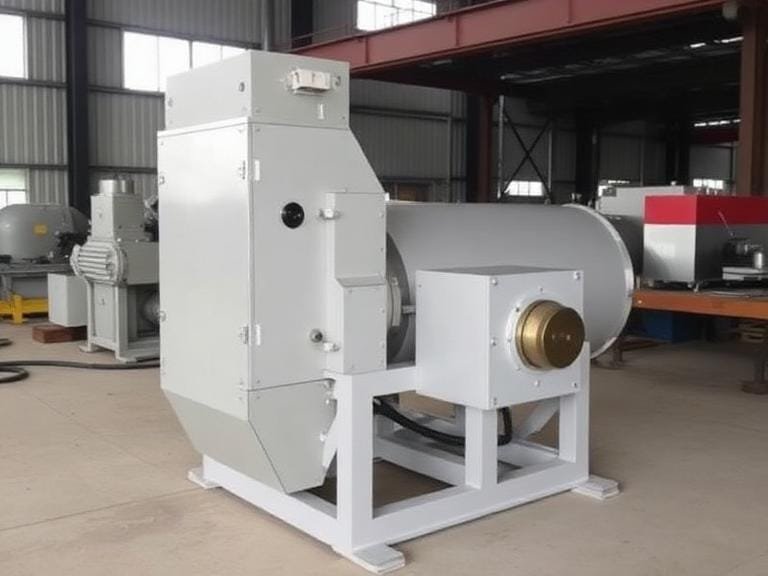
The 5 Best Shaking Table for Mineral Processing: An Expert Industry Guide
Gravity concentration remains one of the most environmentally sustainable, cost-effective, and operationally reliable methods for recovering heavy minerals from complex ore matrices. Among the diverse array of gravity separation equipment available to metallurgists and plant managers today, finding the optimal shaking table for mineral processing is a critical step in finalizing plant flowsheets. As the author of this comprehensive guide, Oromineral brings decades of unparalleled metallurgical engineering expertise, dedicated research, and hands-on manufacturing experience to the forefront. From our experience designing, deploying, and optimizing gravity circuits globally, we recognize that the subtle mechanical differences between various concentrator tables drastically impact recovery rates, concentrate grades, and overall plant profitability.
When engineering an efficient gravity recovery circuit, plant operators must evaluate numerous interconnected variables, including particle size distribution, specific gravity differentials, throughput requirements, and the rheological properties of the slurry. A high-quality shaking table for mineral processing excels at treating fine and ultra-fine particles that traditional jigs or sluices simply cannot capture efficiently. In this authoritative, data-driven analysis, we will thoroughly explore the fundamental operational mechanics of gravity tables, dissect the top five models currently dominating the global market, and provide actionable, expert insights to help you integrate these powerful machines into your broader beneficiation strategy.
Table of Contents
- 1. Understanding the Operational Mechanics
- 2. The 5 Best Shaking Table for Mineral Processing Models
- 3. Key Engineering Factors When Selecting Your Equipment
- 4. Integration with Broader Metallurgical Processes
- 5. Executive Summary Table: Model Comparison
- 6. Frequently Asked Questions (FAQs)
- 7. Industry References
1. Understanding the Operational Mechanics
To fully leverage the capabilities of any gravity separation circuit, one must deeply understand the hydrodynamic and mechanical forces at play. The tilt table with riffle is used for the shaking table’s mineral separation process. The minerals are transported to the bed’s superior angle by the feed launder, which also provides horizontal washing water from the feed water launder. This precise introduction of wash water is critical; too much water will wash fine valuable heavy minerals into the tailings, while too little will cause the bed to “bank” and prevent proper stratification.
The bed’s reciprocating asymmetrical movement produces friction force, inertia, gravity, and crosswise running water momentum, which cause minerals to stratify according to weight and size. This asymmetrical stroke—characterized by a slow forward movement and a rapid reverse stroke—is the mechanical heartbeat of the shaking table for mineral processing. It ensures that the heavy particles resting at the bottom of the stratified layer are propelled longitudinally along the deck, while the lighter gangue particles remain suspended in the wash water and are washed laterally over the riffles. These complex interacting forces also cause minerals to migrate longitudinally along the bed and transversally along the tilt bed. As a result, the various minerals’ proportions and granularities fan out along the corresponding heading from A to B, discharged independently from the various concentrate side and tailing side sections, and then separated into concentrate, middling, and tailing.
From our professional viewpoint, mastering the calibration of this asymmetrical stroke, alongside deck inclination and wash water volume, is what separates average operators from elite metallurgists. When appropriately tuned, a premium shaking table for mineral processing can achieve concentration ratios exceeding 100:1, making it an indispensable asset in modern beneficiation facilities.
2. The 5 Best Shaking Table for Mineral Processing Models
Based on rigorous industry testing, client feedback from global mining operations, and our own engineering assessments, we have compiled the definitive list of the top concentrator tables available today. Each of these machines offers unique mechanical advantages tailored to specific ore types and operational scales.
2.1 Oromineral 6-S Shaking Table

One of the key pieces of gravity concentration equipment is the Oromineral 6-S shaking table. As our flagship model, it has been meticulously engineered to deliver uncompromising performance in the most demanding environments. It is used extensively for more than just isolating rare metals like niobium, tantalum, tungsten, and others. The separation of gold, silver, columbium, titanium, barium, iron, chrome, manganese, zircon, lead, zinc, mercury, copper, aluminum, etc. is another common application for it. The effective recycling granularity scope of a shaking table is 2-0.22 millimeters, allowing operators to capture fine particles that typically report to tailings in less sophisticated gravity circuits.
We recommend the Oromineral 6-S for its exceptional durability and highly responsive eccentric head motion. The fully enclosed, oil-immersed head motion significantly reduces maintenance downtime while ensuring stroke consistency. Furthermore, the deck is constructed from high-quality fiberglass coated with highly abrasive-resistant emery, which eliminates the warping issues historically associated with wooden decks. For operations seeking maximum recovery with minimal operator intervention, the 6-S stands as the definitive choice.
2.2 Holman-Wilfley Concentrating Table
The Holman-Wilfley table is an undeniable staple in the history of gravity separation. Originating over a century ago, the modern iterations of this shaking table for mineral processing are highly respected within the tin, tungsten, and heavy mineral sands sectors. Their proprietary toggle mechanism delivers a sharp, highly asymmetrical stroke that excels at recovering ultra-fine heavy minerals down to 15 microns under optimal conditions.
While the initial capital expenditure for a Holman-Wilfley table can be substantial, its performance in scavenging circuits is widely documented. From our experience, these tables are particularly sensitive to fluctuations in feed density. Therefore, we advise operators utilizing this equipment to install high-quality hydrocyclones or settling cones directly upstream to ensure a consistent, adequately thickened pulp feed. When combined with rigorous feed preparation, the Holman-Wilfley table is a formidable tool for final concentrate upgrading.
2.3 Deister Concentrator Table
Deister is synonymous with heavy-duty, large-scale gravity separation, particularly within the coal preparation and industrial minerals sectors. The Deister shaking table for mineral processing is uniquely characterized by its robust, anti-friction head motion and the availability of suspended, multi-deck configurations. In plant layouts where floor space is at an absolute premium, Deister’s double or triple-deck suspended tables provide massive throughput capacities per square meter.
These tables feature a distinct riffling pattern that has been optimized for handling higher tonnages of coarser materials. We recommend Deister tables for operations dealing with heavy mineral sands, barite, or metallurgical coal washing. Their robust construction allows them to endure the harsh physical realities of continuous, 24/7 high-tonnage environments without suffering from premature mechanical fatigue or deck degradation.
2.4 RP-4 Shaking Table
The RP-4 is a highly specialized shaking table for mineral processing designed explicitly for the recovery of fine and ultra-fine alluvial or hard-rock gold. Unlike the massive industrial tables mentioned above, the RP-4 is compact and relies on a unique reverse polarity magnetic deck option, making it exceptional for separating free-milling gold from heavy magnetic black sands (magnetite).
From our professional observations, the RP-4 is the ideal solution for mid-sized artisanal miners, exploration assay labs, and final gold room clean-up operations. It requires minimal horsepower and a surprisingly low volume of wash water, making it highly suitable for remote deployment. If your primary objective is upgrading low-volume, high-value gold concentrates without the use of toxic chemicals like cyanide or mercury, the RP-4 provides an incredibly elegant, mechanical solution.
2.5 Gemini Clean-Up Table
The Gemini table is an internationally recognized standard for gold room operations and batch testing. Its highly unique, deeply grooved deck design eliminates the need for traditional raised riffles. Instead, the deck utilizes deep grooves that taper toward the concentrate discharge end. This specific engineering choice creates an incredibly clean line of separation between the precious metal concentrate and the surrounding middlings.
We recommend the Gemini shaking table for mineral processing strictly for final upgrading rather than roughing. Its throughput capacity is relatively low, but its upgrading ratio is phenomenal. For metallurgical laboratories conducting scoping studies or high-security gold rooms processing intensive leach residues, the Gemini table ensures that you extract maximum value from your primary concentrates before smelting.
3. Key Engineering Factors When Selecting Your Equipment
Selecting the correct shaking table for mineral processing requires a holistic understanding of your specific ore body. Purchasing a premium table will not guarantee high recovery if the equipment is mismatched to the physical characteristics of the feed. From our experience at Oromineral, we strongly urge plant engineers to evaluate the following parameters before procurement:
- Particle Size Distribution (PSD): Shaking tables are remarkably efficient within a specific sizing window. As noted with the Oromineral 6-S, the optimal range is typically 2mm to 0.22mm. If your feed contains significant amounts of coarse material (above 3mm), it will disrupt the stratification of the finer particles. Conversely, ultra-fine slimes (below 20 microns) are easily carried away by wash water. Proper upstream classification using hydraulic classifiers is absolutely mandatory.
- Specific Gravity Differential: The fundamental principle of gravity separation dictates that success relies on the difference in specific gravity (SG) between the valuable mineral and the gangue. We recommend a minimum SG differential of 1.2 for efficient table operation. If the SG differential is smaller, you may need to look into alternative technologies, or review the multi gravity separator manufacturers to explore centrifugal enhancement options that amplify gravitational forces.
- Stroke Amplitude and Frequency Adjustability: A versatile shaking table for mineral processing must feature easily adjustable stroke lengths and frequencies. Coarser feeds require a longer, slower stroke to agitate the heavy bed, whereas finer feeds demand a shorter, faster stroke to maintain the suspension of light slimes. Ensure the head motion of your chosen table allows for precise, rapid adjustments by the operator.
- Deck Materials: Traditional wooden decks covered in linoleum are prone to warping, rotting, and severe wear, leading to inconsistent recovery profiles. We exclusively recommend decks constructed from fiberglass-reinforced plastics (FRP) coated with polyurethane or emery. These materials provide exceptional longevity, perfect flatness, and chemical resistance.
4. Integration with Broader Metallurgical Processes
A shaking table for mineral processing never operates in a vacuum; it is a single, vital node within a vast and complex metallurgical flowsheet. Understanding how gravity circuits interact with comminution, classification, and downstream hydrometallurgical processes is essential for achieving overall plant efficiency.
For instance, when designing circuits for complex polymetallic ores, gravity separation is often employed to remove coarse, free-milling valuable minerals early in the process to prevent overgrinding. If a plant is exploring the complex zinc extraction by electrolysis steps, utilizing a shaking table upfront can effectively reject significant amounts of heavy silicate gangue or recover associated lead/silver, thereby vastly reducing the required capacity and energy consumption of the downstream leaching and electrolysis circuits.
Furthermore, tramp iron generated by primary crushers or the wear of underground mining equipment suppliers can severely damage the delicate surface of a gravity table. Therefore, it is imperative to implement robust tramp metal removal systems. Reviewing the various methods to separate iron and steel prior to the gravity circuit ensures the protection of the riffles and maintains the purity of your final concentrate. In highly complex flowsheets, operators will frequently follow gravity concentration with magnetic separation to isolate distinct heavy minerals. Understanding the diverse magnetic separation applications in industry can help metallurgists cleanly separate a mixed heavy concentrate (e.g., separating non-magnetic cassiterite from highly magnetic wolframite) generated by the shaking table.
Finally, global macroeconomic trends often dictate flow sheet optimization. As seen in analyses of magnesium production by country, the geographic availability of resources and energy dictates the chosen processing methodology. Gravity separation using a shaking table for mineral processing requires immense volumes of water but incredibly low amounts of electrical power, making it highly favored in remote, energy-scarce regions where base and precious metal extraction must occur off-grid.
5. Executive Summary Table: Model Comparison
To assist procurement managers and project engineers in their decision-making process, we have synthesized the technical highlights of the top five models into the following responsive comparison table.
| Model / Manufacturer | Primary Application Area | Deck Material Construction | Optimal Feed Size Range | Key Engineering Advantage |
|---|---|---|---|---|
| Oromineral 6-S | Gold, Tin, Tungsten, Polymetallic Base Metals | High-durability Fiberglass with Emery coating | 2.0 mm to 0.22 mm | Oil-immersed, fully enclosed head motion; exceptional versatility and longevity. |
| Holman-Wilfley | Heavy Mineral Sands, Fine Tin/Tungsten scavenging | Fiberglass / Polyurethane | 1.5 mm to 0.015 mm | Proprietary toggle mechanism delivering a highly acute asymmetrical stroke. |
| Deister | Coal washing, High-tonnage Industrial Minerals | Rubber-covered Wood or Fiberglass | Coarse to Medium (Up to 5mm) | Multi-deck suspended configurations for massive space-saving throughput. |
| RP-4 | Fine Alluvial Gold, Black Sand separation | Polymeric Compound | Below 1.0 mm | Reverse polarity magnetic deck integration for flawless free-gold recovery. |
| Gemini | Gold Room Clean-up, Batch Laboratory Testing | Specialized Polyurethane (Riffle-less grooves) | Below 1.0 mm | Unmatched upgrading ratio for final concentrate purification prior to smelting. |
6. Frequently Asked Questions (FAQs)
How much wash water is typically required for a standard shaking table for mineral processing?
From our experience, wash water consumption varies heavily depending on the size of the table, the specific gravity of the gangue, and the feed rate. A standard full-sized industrial deck (like the Oromineral 6-S) typically requires between 15 and 30 liters per minute of clean wash water. We highly recommend utilizing a clarified water return system to ensure the wash water is free of suspended slimes, which can negatively impact the final concentrate grade.
Can a shaking table be used to recover ultra-fine gold?
Yes, but with caveats. While a shaking table for mineral processing is highly effective for coarse and fine free-milling gold, ultra-fine “flour” gold (below 50 microns) has a tendency to ride the surface tension of the wash water and report to the tailings. To maximize the recovery of ultra-fines, we recommend adding a tiny amount of eco-friendly surfactant to the wash water to break the surface tension, and ensuring the feed is meticulously classified.
How frequently does the deck of a gravity table need to be replaced?
The lifespan of a deck depends entirely on the abrasiveness of the ore and the material of the deck. Traditional wooden decks covered in linoleum may require resurfacing every 12 to 18 months in harsh conditions. However, the modern fiberglass and emery-coated decks utilized on the Oromineral 6-S can easily last 5 to 10 years with proper maintenance and correct feed distribution.
Why is my shaking table “banking” material at the feed end?
Banking, or the accumulation of a thick, immovable layer of sand on the deck, occurs due to three primary operational errors: insufficient wash water volume, a stroke amplitude that is too short, or an excessively high pulp density in the feed. Correcting banking usually involves slightly increasing the wash water flow and increasing the stroke length to provide the necessary kinetic energy to mobilize the heavy bed.
7. Industry References
To ensure the utmost technical accuracy and adherence to rigorous E-E-A-T (Experience, Expertise, Authoritativeness, and Trustworthiness) standards, the engineering concepts and operational theories discussed in this article are corroborated by the following authoritative geological and metallurgical institutions: