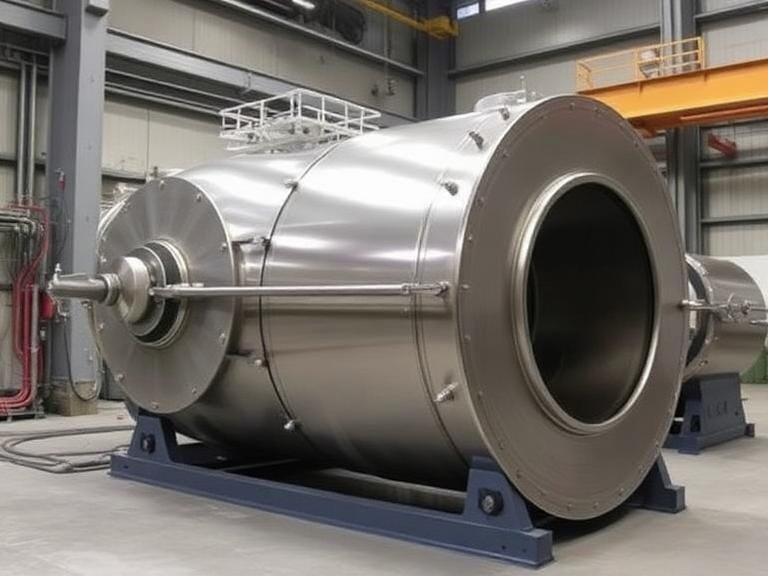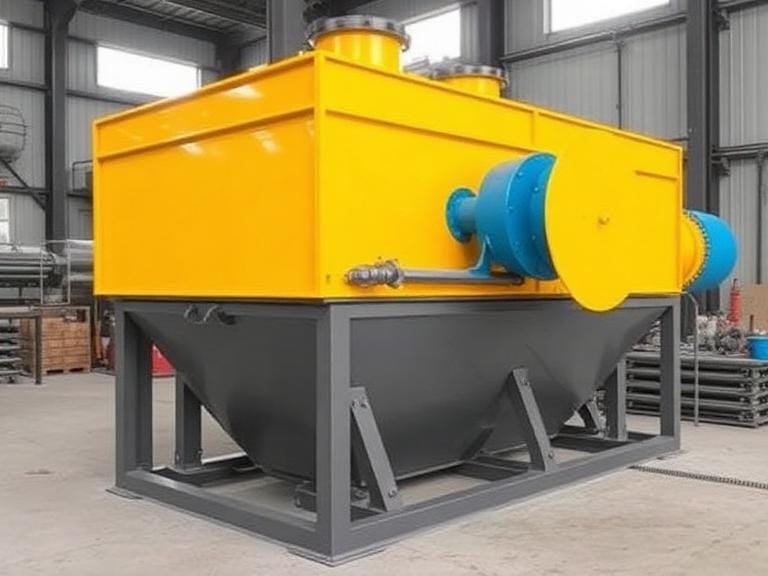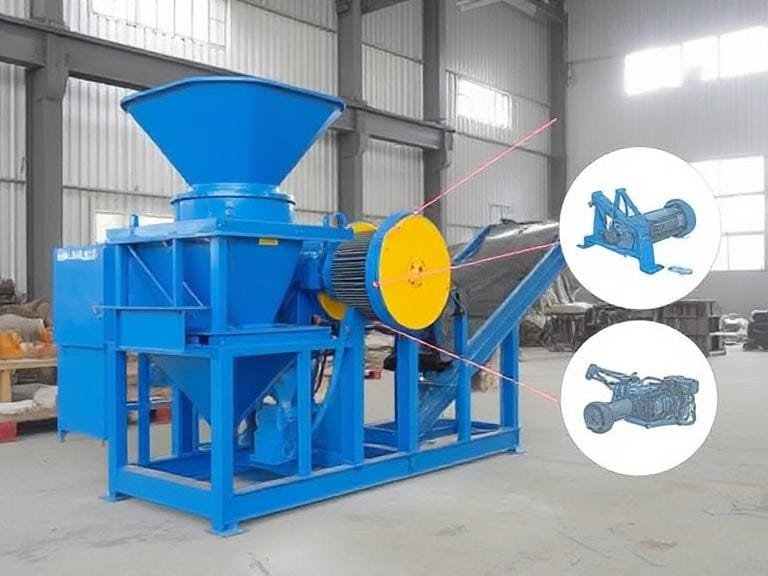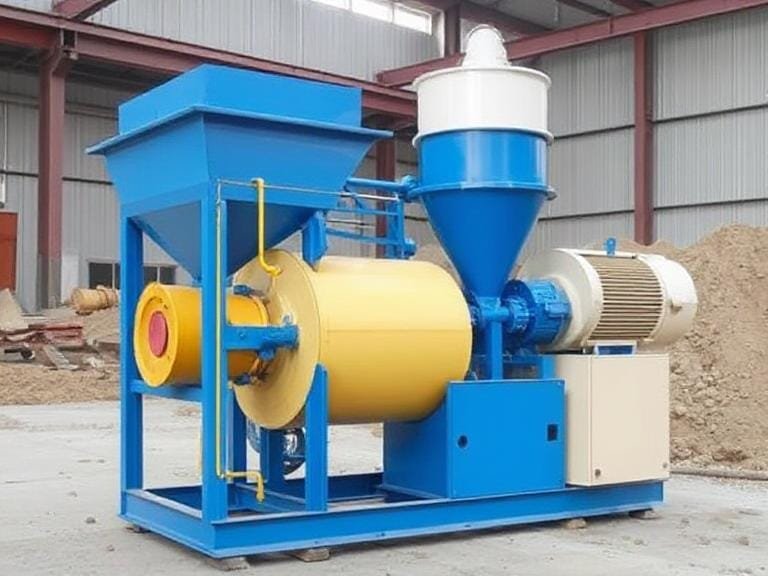
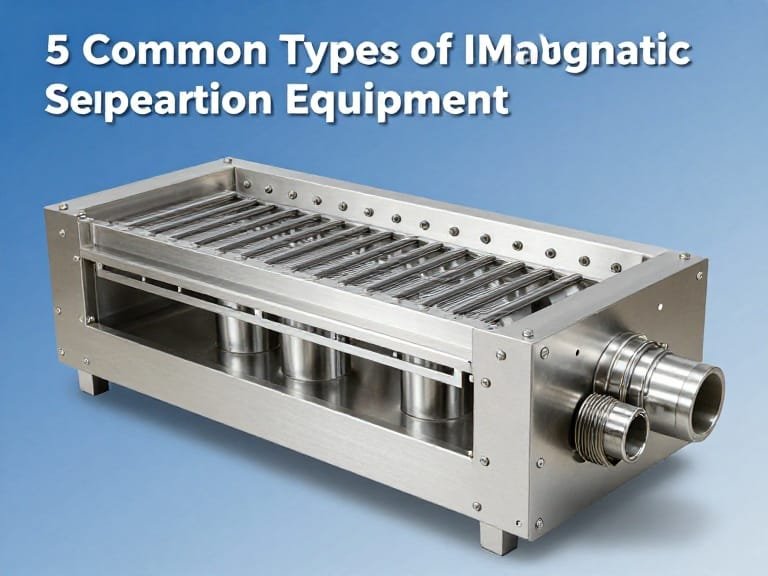
5 Common Types of Magnetic Separation Equipment and Their Applications
Choosing magnetic separation equipment is not simply a matter of selecting the strongest magnet. The right machine depends on the mineral being processed, particle size, moisture, magnetic susceptibility, feed rate, and the level of iron removal or mineral upgrading required. A separator that works well on dry, coarse material may perform poorly on a fine kaolin slurry. In mineral processing, matching the separator to the actual feed is more important than buying the highest-intensity model.
Our recommendation: Start with the material’s magnetic properties and process conditions, not the machine catalogue. For most plants, a well-matched conventional separator offers better operating value than an unnecessarily complex high-intensity system.
- Quick Summary Table
- What Is Magnetic Separation Equipment?
- How Magnetic Separation Works
- Five Common Types and Applications
- Equipment Comparison Table
- Benefits and Limitations
- How to Choose the Right Separator
- Common Selection and Operating Mistakes
- Who Should Use Each Type?
- ORO Mineral: Equipment and Process Support
- Expert Recommendation
- Frequently Asked Questions
- References
Quick Summary: Five Types of Magnetic Separation Equipment
| Equipment type | Magnetic source | Typical feed condition | Common applications | Best reason to choose it |
|---|---|---|---|---|
| Permanent magnetic separator | Permanent magnet assembly | Dry bulk solids or selected wet duties | Tramp iron removal, ferrous recovery, pre-concentration | Simple, continuous operation with no magnet power supply |
| Electromagnetic separator | Electrically energized coil | Dry material or slurry, depending on design | Iron removal from non-metallic minerals; adjustable-intensity separation | Magnetic field can be designed or adjusted for the application |
| Wet high-intensity magnetic separator (WHIMS) | Electromagnetic matrix system | Fine particles suspended in water | Kaolin, feldspar, quartz, fine weakly magnetic minerals | Captures weakly magnetic contaminants from fine slurry |
| Dry magnetic separator | Permanent or electromagnetic system | Dry, free-flowing particles | Dry mineral upgrading, sand, ores, industrial minerals | Avoids process water and slurry handling |
| Superconducting magnetic separator | Superconducting magnet | Usually prepared slurry or specialized feed | High-purity kaolin, bauxite and other difficult mineral separations | Very high field strength for demanding separation duties |
This table is a starting point, not a final specification. Separator designs vary, and some machines can be configured for more than one operating condition. Always confirm the manufacturer’s recommended feed range and test performance with representative material.
What Is Magnetic Separation Equipment?
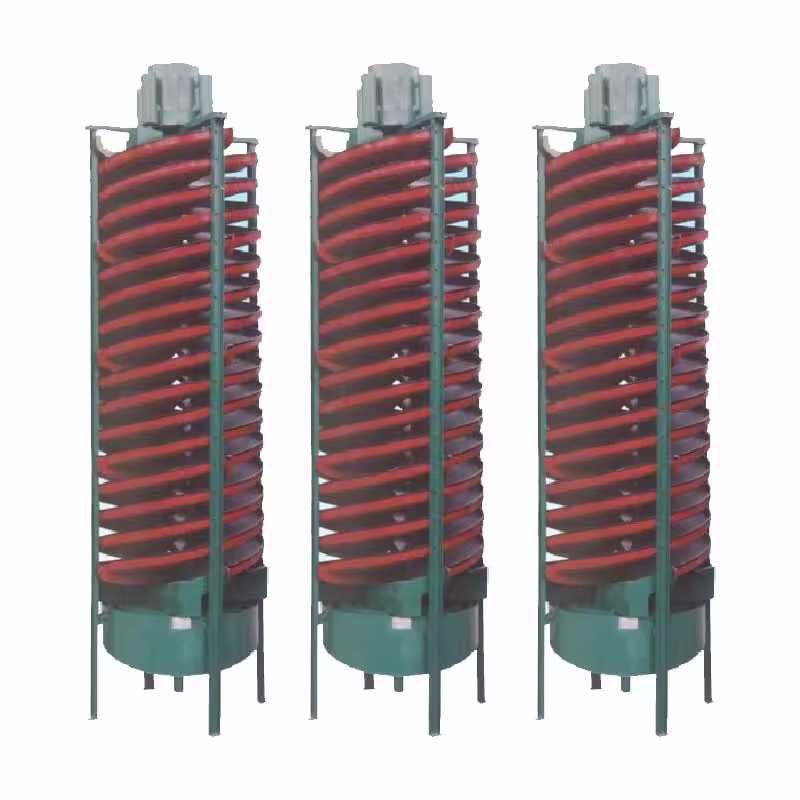
Magnetic separation equipment is machinery that uses a magnetic field to separate, capture, or concentrate particles according to their magnetic response. In mineral processing, it is used to remove iron-bearing impurities, recover valuable magnetic minerals, or improve the quality of non-magnetic products.
The process is based on differences in magnetic susceptibility. Strongly magnetic minerals, such as magnetite, respond readily to a magnetic field. Weakly magnetic minerals, including some iron-bearing impurities in industrial minerals, require a stronger field and carefully controlled separation conditions. Non-magnetic particles generally remain in the main product stream, although particle locking, entrainment, and mechanical carryover can affect the result.
Magnetic separation equipment is used in iron ore beneficiation, mineral sands processing, ceramic raw-material purification, glass sand treatment, coal preparation, recycling, and other industrial applications. For a wider range of examples, see our guide to magnetic separation applications in industry.
How Does Magnetic Separation Equipment Work?
At a basic level, the feed passes through or near a magnetic field. Magnetic particles experience a force that draws them toward a magnet or magnetic collection surface. Non-magnetic particles follow a different trajectory or remain in the main product flow. The machine then separates the captured material from the product stream, often through a belt, drum, matrix, scraper, or flushing system.
Actual separation is more complicated than simply attracting iron. Performance depends on the balance between magnetic force and competing forces, including gravity, fluid drag, centrifugal force, friction, and particle-to-particle interactions. Particle size and liberation also matter: a valuable mineral locked inside a composite particle cannot always be separated effectively by magnetic force alone.
The main operating stages
- Feed preparation: Crushing, grinding, screening, desliming, or drying may be needed to create a suitable feed size and condition.
- Field exposure: Material passes through the separator’s working zone, where magnetic particles are attracted or deflected.
- Product separation: Magnetic and non-magnetic fractions are directed into separate discharge streams.
- Cleaning or regeneration: Captured particles are removed from the collection surface or matrix. Wet systems may use water flushing; dry systems may use mechanical discharge.
- Process verification: Product grade, recovery, throughput, and contaminant levels are checked to confirm that the machine is meeting the plant’s target.
For a deeper explanation of field behavior and machine components, read our magnetic separator machine working principle guide and the broader magnetic separation process guide.
Five Common Types of Magnetic Separation Equipment and Their Applications
1. Permanent Magnetic Separators
Permanent magnetic separators use magnet materials, commonly engineered into a drum, pulley, plate, grate, or suspended assembly, to create a magnetic field without continuous electrical energization of the magnet itself. They are often selected for removing tramp iron, recovering strongly magnetic particles, or protecting downstream crushers, mills, and conveyors.
Typical applications: Magnetite recovery, iron removal from bulk materials, feed protection in aggregate and mineral plants, and ferrous metal recovery from selected waste streams.
Where they make commercial sense: Permanent systems are usually attractive when the target is strongly magnetic and the separation duty is stable. They have relatively straightforward operating requirements and avoid the coil power and cooling systems used by many electromagnetic designs.
Limitations: A permanent magnet is not automatically suitable for weakly magnetic contaminants. Field strength and working distance are fixed by the design, and performance can fall if the feed burden is too deep or the magnet is installed too far from the material.
For conveyor-based tramp iron removal, a 1.1 kW belt magnetic separator may be worth evaluating where its capacity and installation arrangement match the line. A plate type permanent magnetic separator is another option for suitable material streams.
2. Electromagnetic Separators
Electromagnetic separators generate a magnetic field through an energized coil. Depending on the design, the field intensity can be engineered or controlled to meet the requirements of a particular material. These systems are used when permanent magnets cannot provide the required field characteristics or when the process needs a more demanding iron-removal or mineral-purification duty.
Typical applications: Removing iron-bearing impurities from quartz, feldspar, kaolin, and other non-metallic minerals; improving raw-material purity; and processing materials containing weakly magnetic contaminants.
Where they make commercial sense: Consider an electromagnetic separator when product specifications are strict and testing shows that a permanent magnetic unit cannot achieve the required impurity level. For mineral processors, the ability to tailor the magnetic system can be more valuable than simply increasing the number of separation stages.
Limitations: Electromagnetic equipment requires electrical power and may need cooling, controls, and routine coil or system maintenance. Operating costs and plant utilities should be included in the purchase calculation, not treated as minor details.
For non-metallic mineral processing, compare the water-cooling electromagnetic separator configuration with the actual slurry or dry-feed requirements. The correct design depends on the material and process route.
3. Wet High-Intensity Magnetic Separators (WHIMS)
WHIMS equipment is designed to separate fine, weakly magnetic particles from a slurry. It typically uses an electromagnetic field and a high-gradient matrix or collection medium to increase the effective magnetic capture area. The slurry flows through the working zone; susceptible particles are retained while less magnetic particles pass through, after which the matrix is cleaned or flushed.
Typical applications: Removing weakly magnetic iron-bearing impurities from kaolin, feldspar, quartz, and other industrial minerals; upgrading fine mineral feeds; and improving the quality of selected non-metallic products.
Where they make commercial sense: WHIMS is often a strong candidate when the feed is fine, wet, and contains weakly magnetic contaminants that conventional low-intensity equipment cannot remove. It is particularly relevant when product whiteness, brightness, or chemical purity is commercially important.
Limitations: WHIMS is not a universal solution for every fine slurry. Excessive solids concentration, unsuitable particle-size distribution, high slime content, poor dispersion, or incorrect matrix selection can reduce separation efficiency and increase cleaning requirements. Water management and matrix maintenance must be included in the plant design.
Read our detailed guide to the WHIMS magnetic separator working principle and review the wet high intensity magnetic separator for relevant applications.
4. Dry Magnetic Separators
Dry magnetic separators process material without first converting it into a slurry. Depending on the design, the feed may pass over a belt, drum, roller, or other separation surface. Dry systems are used in plants where water is limited, where the material is already dry, or where adding water would create unnecessary downstream drying and handling costs.
Typical applications: Dry mineral pre-concentration, selected iron ore and industrial mineral duties, sand processing, and separation stages where a dry product is required.
Where they make commercial sense: A dry separator can reduce water demand and avoid the cost of slurry preparation and dewatering. It is worth considering when the feed is sufficiently dry and free-flowing and when the target minerals have enough magnetic contrast for the selected field strength.
Limitations: Moisture can cause particles to stick together, form agglomerates, or adhere to equipment surfaces. Dust, feed segregation, and inconsistent particle size can also undermine separation. Dry systems should not be selected simply because a plant wants to save water; the material must be suitable for dry processing.
For appropriate dry mineral applications, review ORO Mineral’s dry electromagnetic separator. The high intensity magnetic separation process guide can also help explain when stronger fields may be needed.
5. Superconducting Magnetic Separators
Superconducting magnetic separators use superconducting magnet technology to generate very high magnetic fields. The magnet operates under specialized cryogenic conditions, allowing it to sustain strong fields with low electrical resistance in the superconducting state. These systems are intended for difficult separation duties where conventional equipment may not provide sufficient magnetic force.
Typical applications: High-purity processing of selected industrial minerals, including kaolin and bauxite-related applications, and specialized separation of weakly magnetic impurities.
Where they make commercial sense: Consider superconducting equipment only when the value of improved product quality, recovery, or process capability justifies the additional capital investment and operating complexity. For a high-volume plant producing a premium mineral product, the economics may work. For a small operation with moderate purity requirements, it may be excessive.
Limitations: These systems require specialized magnet technology, cryogenic infrastructure, trained maintenance personnel, and careful process integration. Purchase price alone does not capture the full cost. Plant utilities, service support, spare parts, uptime, and lifecycle maintenance all need to be evaluated.
For demanding mineral purification projects, see the JF Series low-temperature superconducting magnetic separator with liquid helium for kaolin and bauxite.
Magnetic Separation Equipment Comparison Table
| Selection factor | Permanent magnetic | Electromagnetic | WHIMS | Dry magnetic | Superconducting |
|---|---|---|---|---|---|
| Best suited feed | Usually strongly magnetic targets | Application-dependent dry or wet feed | Fine slurry with weakly magnetic particles | Dry, free-flowing material | Specialized difficult feeds |
| Field capability | Design-dependent, generally fixed | Design-dependent and controllable in some systems | High-gradient wet separation | Depends on magnet and separator design | Very high magnetic field capability |
| Water requirement | Usually low or none, depending on model | Depends on model | Required | None for separation | Depends on process configuration |
| Operating complexity | Generally low | Moderate | Moderate to high | Low to moderate | High |
| Relative investment | Usually lower | Moderate to high | Moderate to high | Varies by design | Usually highest |
| Typical purchase driver | Reliable iron removal | Higher or adjustable field requirement | Fine weakly magnetic impurity removal | Water reduction and dry processing | Premium separation performance |
These relative comparisons are general purchasing guidance, not a substitute for a technical quotation. Equipment price and operating cost depend on capacity, magnetic field requirements, materials of construction, cooling, automation, installation, and the required product specification.
Benefits and Limitations of Magnetic Separation Equipment
Key benefits
- Improved product quality: Magnetic contaminants can be removed to help meet mineral purity, color, or downstream processing requirements.
- Valuable mineral recovery: Magnetic minerals can be recovered from suitable ores and process streams rather than discarded with tailings.
- Protection of downstream equipment: Removing tramp iron can reduce the risk of damage to crushers, mills, conveyors, and other machinery.
- Process flexibility: Different magnetic separator designs can handle a broad range of feed sizes, moisture levels, and magnetic properties.
- Potential reduction in chemical treatment: In suitable applications, physical separation can reduce the need for more complex downstream purification steps.
Important limitations
- Not every impurity is magnetic: Magnetic separation cannot remove contaminants that do not respond sufficiently to the applied field.
- Liberation matters: Locked particles may need further grinding or classification before effective separation is possible.
- Feed conditions affect results: Moisture, particle size, solids concentration, feed rate, and material distribution can all influence performance.
- High intensity does not guarantee better economics: A stronger field may increase equipment and operating costs without producing a meaningful improvement in saleable product.
- Maintenance is still necessary: Belts, bearings, matrix elements, cooling systems, electrical components, and discharge mechanisms need inspection and servicing.
| Pros | Cons |
|---|---|
| Can improve mineral purity and product consistency | Only effective for particles with sufficient magnetic response |
| Can recover valuable magnetic minerals | May require upstream grinding, sizing, or desliming |
| Can protect downstream equipment from tramp iron | Incorrect installation or feed presentation reduces performance |
| Offers dry and wet process options | Wet systems require water handling and dewatering |
| Can operate continuously in industrial process lines | High-intensity and superconducting systems may involve substantial lifecycle costs |
How to Choose the Right Magnetic Separation Equipment
For commercial users, the most expensive mistake is selecting a separator from a product brochure without testing the actual feed. We recommend treating equipment selection as a process-engineering decision. The following factors should be confirmed before requesting a final quotation.
1. Identify the target mineral and contaminant
Establish whether the objective is to recover a magnetic mineral, remove iron-bearing impurities, or protect equipment from tramp metal. These are different duties and may require different separator designs. Ask for mineralogical or laboratory data where the feed composition is uncertain.
2. Confirm magnetic susceptibility
Determine whether the target is strongly magnetic, weakly magnetic, or effectively non-magnetic under the proposed process conditions. This is one of the most important decisions in choosing between a permanent magnet, an electromagnetic system, WHIMS, and superconducting equipment.
3. Match particle size and liberation
Record the feed’s full particle-size distribution, not just its average size. Oversized particles may reduce separation efficiency, while excessive fines or slimes can complicate wet separation. If valuable minerals are locked with other minerals, consider whether additional grinding or classification is needed before magnetic separation.
4. Decide between wet and dry processing
Choose a dry separator when the material is dry, free-flowing, and compatible with dry separation. Choose wet separation when the process already uses slurry or when fine particles need to be dispersed and treated in water. Include water availability, wastewater treatment, dewatering, and product drying in the cost calculation.
5. Define capacity and product targets
Give suppliers the expected feed rate, operating hours, feed variability, target impurity level, and required recovery. A machine sized only for average throughput may become a bottleneck during peak production. Ask suppliers to explain the expected performance range and the conditions under which it was achieved.
6. Evaluate total cost of ownership
Compare more than the equipment purchase price. Include installation, electrical consumption, cooling, water, consumables, wear parts, maintenance labor, downtime, and expected service life. For heavy-duty applications, reliable service support and spare-parts availability can be worth more than a small reduction in initial capital cost.
7. Request a representative material test
Where product quality is critical, ask for a test using a representative sample of the actual feed. The test should document feed preparation, operating parameters, throughput, concentrate and tailings grades, recovery, and product quality. A demonstration using a different ore or a hand-selected sample is not sufficient evidence for a major purchase.
Use our guide to magnetic separator manufacturers in China as a starting point for supplier research, but evaluate each supplier against your process data and service requirements.
Common Mistakes When Buying or Operating Magnetic Separation Equipment
- Choosing by magnetic field strength alone. A higher field does not automatically mean a better separation result. Field gradient, matrix design, feed presentation, particle size, and residence time also matter.
- Ignoring feed variability. Mineral composition and moisture can change between deposits, benches, or production shifts. Design for realistic variation rather than an ideal laboratory sample.
- Using a dry separator on damp, cohesive feed. Moisture can cause agglomeration and poor material flow. Drying or conditioning may be necessary before separation.
- Overlooking desliming and classification. Fine slimes can interfere with wet separation and increase cleaning requirements. Test whether pre-treatment improves the final result.
- Underestimating cleaning and maintenance. A matrix or collection surface that is not cleaned correctly can lose effective capacity. Confirm cleaning cycles and maintenance access before purchase.
- Comparing quotations with different test conditions. Throughput, feed grade, particle size, and product targets must be aligned before comparing supplier performance or price.
- Failing to plan the complete process line. Feed conveyors, pumps, screens, tanks, dewatering equipment, electrical systems, and product handling all influence the performance of the separator.
Who Should Use Each Type of Magnetic Separator?
| Operation or user | Type worth evaluating first | Practical advice |
|---|---|---|
| Iron ore beneficiation plant | Permanent or electromagnetic, depending on mineral response | Test recovery and concentrate grade across the intended particle-size range. |
| Kaolin and feldspar processor | WHIMS or electromagnetic separator | Focus on iron impurity reduction, brightness, slurry properties, and matrix cleaning. |
| Quartz and glass sand producer | Electromagnetic or suitable dry separator | Match the separator to the required iron level and whether the process is wet or dry. |
| Plant handling coarse bulk material | Permanent magnetic separator | Prioritize tramp iron capture, belt width, burden depth, and installation distance. |
| Water-constrained mineral operation | Dry magnetic separator | Confirm that moisture and particle flow are suitable before committing to dry processing. |
| Premium industrial mineral producer | WHIMS or superconducting system | Justify higher investment through measurable improvement in saleable product quality. |
Who may not need a high-intensity system? A small plant processing strongly magnetic material, or a facility whose main objective is basic tramp iron removal, may not benefit from WHIMS or superconducting technology. In these cases, a simpler permanent magnetic separator can be the more sensible investment.
ORO Mineral: Magnetic Separation Equipment and Process Support
ORO Mineral Co., Ltd. is a mineral processing equipment manufacturer integrating research and development, production, and sales. Since 2014, the company has worked across mineral screening, solid waste resource recovery, beneficiation, washing, and separation equipment. Its product range supports projects that need equipment selection to fit the process rather than treating each machine as an isolated purchase.
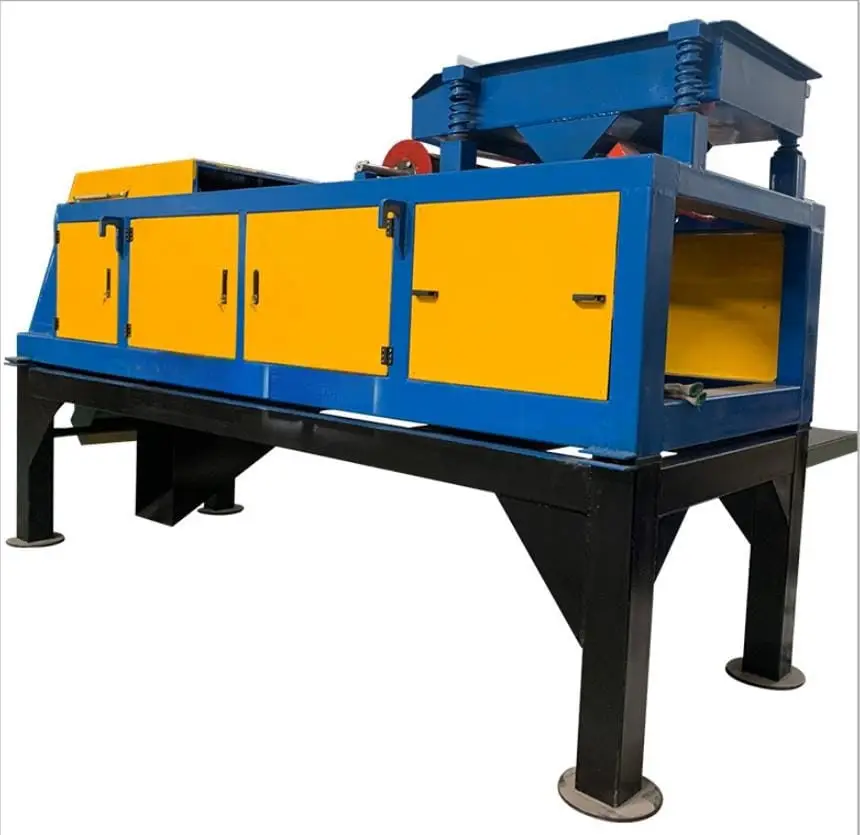
For buyers evaluating a complete processing line, the practical question is how magnetic separation connects with screening, washing, classification, and downstream recovery. ORO Mineral’s magnetic separation equipment range and magnetic separator machines can be reviewed alongside the material’s process requirements.
We recommend that buyers share representative feed samples, target product specifications, capacity requirements, and site conditions before finalizing a machine configuration. This gives the technical team a clearer basis for discussing the appropriate magnetic system, supporting equipment, and process layout.
Expert Recommendation: Choose the Separation Result, Not the Machine Name
From our experience, the best magnetic separation equipment is the one that reliably meets the required product specification at the lowest practical lifecycle cost. It is rarely the machine with the most impressive headline field strength or the longest list of optional features.
For coarse, strongly magnetic material or routine tramp iron protection, start by evaluating permanent magnetic equipment. For non-metallic minerals with more demanding iron-removal targets, assess electromagnetic separation. When fine, weakly magnetic contaminants must be removed from a slurry, WHIMS is often the more relevant option. Dry systems deserve serious consideration where water is scarce and the feed is suitable. Superconducting separators should be reserved for applications where conventional systems cannot meet the required performance and the premium investment can be justified.
- Confirm the target mineral and contaminant.
- Obtain particle-size, moisture, and feed-composition data.
- Set measurable product grade and recovery targets.
- Choose wet or dry processing based on the full plant flowsheet.
- Request representative material testing and documented results.
- Compare installation, utilities, maintenance, service, and spare-parts costs.
Do not approve a major equipment purchase until the supplier has explained how the proposed separator will achieve your target under realistic operating conditions.
Frequently Asked Questions About Magnetic Separation Equipment
1. What are the main types of magnetic separation equipment?
The five common types are permanent magnetic separators, electromagnetic separators, wet high-intensity magnetic separators (WHIMS), dry magnetic separators, and superconducting magnetic separators. Each type is designed for different magnetic properties, particle sizes, and wet or dry process conditions.
2. What is the difference between a permanent and an electromagnetic separator?
A permanent magnetic separator uses permanent magnet materials to create a magnetic field without continuously energizing a magnet coil. An electromagnetic separator uses an energized coil to generate its field. The best choice depends on the required field characteristics, target minerals, process duty, and operating cost.
3. What is WHIMS used for?
WHIMS is used to separate fine, weakly magnetic particles from a slurry. Typical applications include removing iron-bearing impurities from kaolin, feldspar, quartz, and other industrial minerals where product purity is important.
4. Is dry magnetic separation better than wet magnetic separation?
Neither is universally better. Dry separation can reduce water use and avoid slurry handling when the feed is dry and free-flowing. Wet separation can be more suitable for fine particles that need dispersion in water. The decision should be based on feed properties, product requirements, water availability, and total process cost.
5. Can magnetic separation remove all iron impurities?
No. Results depend on the form and magnetic susceptibility of the iron-bearing material, particle liberation, particle size, and operating conditions. Some iron-bearing minerals may be weakly magnetic, while iron chemically incorporated into a mineral structure may not be removed effectively by magnetic separation alone.
6. How do I select the right magnetic separator for a mineral processing plant?
Start with mineralogical composition, magnetic susceptibility, particle-size distribution, feed moisture, throughput, and product targets. Then compare suitable machine types and request testing with representative material. Include utilities, maintenance, water handling, installation, and service support in the evaluation.
7. Is a superconducting magnetic separator worth the investment?
It can be worthwhile for demanding applications where very high magnetic fields are needed to achieve a valuable improvement in product quality or recovery. It is usually not the first choice for routine iron removal. Buyers should compare the incremental product value against capital, cryogenic, maintenance, and operating costs.
8. What information should I send a manufacturer before requesting a quotation?
Provide the material name and composition, representative sample information, feed particle-size range, moisture or slurry solids concentration, required capacity, target impurity level, recovery expectations, operating hours, and site utilities. A clear process objective helps the manufacturer recommend a suitable configuration rather than a generic machine.
References
The following technical and industry sources provide additional background on magnetic separation, mineral processing, and equipment applications.
- Encyclopaedia Britannica – Magnetic separation. General explanation of the separation method and its industrial use.
- ScienceDirect Topics – Magnetic Separation. Technical context on magnetic separation principles and applications in engineering and mineral processing.
- U.S. Geological Survey – National Minerals Information Center. Mineral commodity and industry background useful when evaluating mineral processing markets and feed materials.
Final takeaway: Magnetic separation equipment can improve mineral recovery, product purity, and plant reliability, but only when the separator matches the material and process. Define the separation objective, test the feed, and compare lifecycle economics before choosing between permanent, electromagnetic, wet high-intensity, dry, or superconducting technology.