6 Types of equipment is needed for digging gold: A Commercial Operator’s Guide
The romanticized image of a lone prospector swirling gravel in a rusty pan is completely detached from the reality of modern precious metals extraction. In the current economic landscape, extracting viable quantities of auriferous material requires uncompromising mechanical efficiency. If your feed rate is too low, or your recovery rate of fine gold drops below 85 percent, your entire operation becomes a financial liability. To run a profitable operation, you must precisely understand what equipment is needed for digging gold and how to integrate these machines into a cohesive processing circuit.
From our experience engineering and deploying mineral processing plants globally, the failure of most mining ventures does not stem from a lack of gold in the ground. It stems from severe mismatches between the geological profile of the ore and the machinery deployed to process it. Placer deposits require entirely different workflows than hard rock deposits. In this definitive guide, we cut through the amateur noise. We will break down the exact commercial and heavy-duty machinery required to extract, classify, and concentrate gold, prioritizing high-yield recovery and operational longevity.
Quick Answer: What Equipment is Needed for Digging Gold?
To successfully operate a commercial gold mining site, specific heavy-duty equipment is needed for digging gold and processing the ore. The 6 critical types of equipment are: 1. Earth-Moving Machinery (Excavators and Wheel Loaders) for raw extraction; 2. Trommels and Wash Plants for scrubbing and size classification; 3. Centrifugal Concentrators for high-G fine gold recovery; 4. Magnetic Separators to remove heavy black sands; 5. Shaker Tables for final concentrate upgrading; and 6. Suction Dredges for alluvial river operations. Selecting the correct capacity for each step dictates your overall yield and profitability.
Table of Contents
- What It Is: The Anatomy of Gold Extraction
- How It Works: Gravity and Magnetic Processing
- The 6 Types of Equipment Needed for Digging Gold
- Product Spotlight: Dry Electromagnetic Separator
- Benefits of Commercial Upgrades
- Limitations and Operational Bottlenecks
- Who Should Use It vs. Who Does Not Need It
- Common Mistakes in Processing Circuit Design
- Buying Considerations and Capital Allocation
- Expert Recommendation from ORO Mineral
- Frequently Asked Questions
What It Is: The Anatomy of Gold Extraction
When operators ask what equipment is needed for digging gold, they are usually referring to a multi-stage processing circuit rather than a single machine. The process begins with raw extraction, where massive volumes of overburden and pay dirt are moved. This material is then transported to a classification stage where large rocks and useless debris are screened out. The remaining slurry enters the concentration phase, where the immense density of gold (specific gravity of 19.3) is utilized to separate it from lighter silicates and gravels.
In most professional situations, the equipment must scale symmetrically. If you have a 200 Tonne Per Hour (TPH) excavator but only a 50 TPH wash plant, you have created a severe operational bottleneck. Similarly, viewing gold mining alongside other heavy extraction industries puts costs into perspective; understanding the iron ore processing plant cost or the copper processing plant cost 2025 provides operators with a realistic framework for capital expenditures in precious metals.
How It Works: Gravity and Magnetic Processing
Gold recovery relies primarily on gravity. Because gold is significantly heavier than the surrounding earth, equipment is designed to agitate the material, allowing the lighter materials to wash away while the heavy gold sinks and is trapped. However, gold is rarely the only heavy mineral present. “Black sand,” primarily composed of magnetite and hematite, possesses a high specific gravity and will choke traditional sluice boxes and centrifuges if not addressed.
This is where understanding magnetic separation applications in industry becomes vital. By introducing powerful magnetic fields into your processing circuit, you can pull the highly magnetic black sands out of your gold concentrate, leaving a much cleaner product for final smelting.
| Equipment Type | Primary Function | Processing Stage |
|---|---|---|
| Excavators / Loaders | Raw material extraction and transport | Stage 1: Digging & Feeding |
| Trommel / Wash Plant | Scrubbing clay and classifying rock size | Stage 2: Sizing & Washing |
| Centrifugal Concentrator | Capturing fine and ultra-fine gold particles | Stage 3: Primary Recovery |
| Magnetic Separator | Removing magnetic black sands from concentrate | Stage 4: Upgrading & Cleaning |
| Shaker Table | Final separation of gold from remaining impurities | Stage 5: Final Concentration |
| Suction Dredge | Underwater alluvial gravel extraction | Stage 1: River/Alluvial Digging |
The 6 Types of Equipment Needed for Digging Gold
1. Earth-Moving Machinery: Excavators and Wheel Loaders
You cannot process what you cannot dig. For commercial placer mining, heavy tracked excavators are required to tear through tough overburden, break up compacted clay layers, and reach the bedrock where heavy gold settles. Wheel loaders are then utilized to transport this payload from the pit to the hopper of the wash plant. In heavy-duty applications, prioritizing machines with high breakout force and robust hydraulic systems is non-negotiable.
2. Trommels and Wash Plants
Once the earth is moved, it must be washed and classified. A trommel is a large rotating cylindrical screen. High-pressure water jets inside the drum break apart sticky clay (scrubbing) while the screen allows only materials of a certain size (e.g., under 1/2 inch) to pass through to the sluices or concentrators. Large, barren rocks are ejected out the back as tailings. Without a robust trommel, gold remains trapped in clay balls and washes right out the back of your plant.
3. Centrifugal Gold Concentrators
Traditional sluice boxes are inefficient at capturing ultra-fine (flour) gold. We recommend replacing or supplementing sluices with centrifugal concentrators (such as Knelson or Falcon type bowls). These machines spin the slurry at high speeds, creating up to 60 Gs of force. Fluidization water is pumped through the sides of the bowl, keeping the bed loose so that dense gold particles can sink into the collection rings while lighter gravel is pushed out. They are essential for maximizing recovery rates.
4. Magnetic Separators
When you empty your centrifuge or sluice, you will inevitably have a concentrate heavily diluted with black iron sands. If you run this directly over a shaker table, the dense iron will crowd out the fine gold. You must deploy magnetic separation. For a deeper understanding of this mechanics, review the WHIMS magnetic separator working principle.
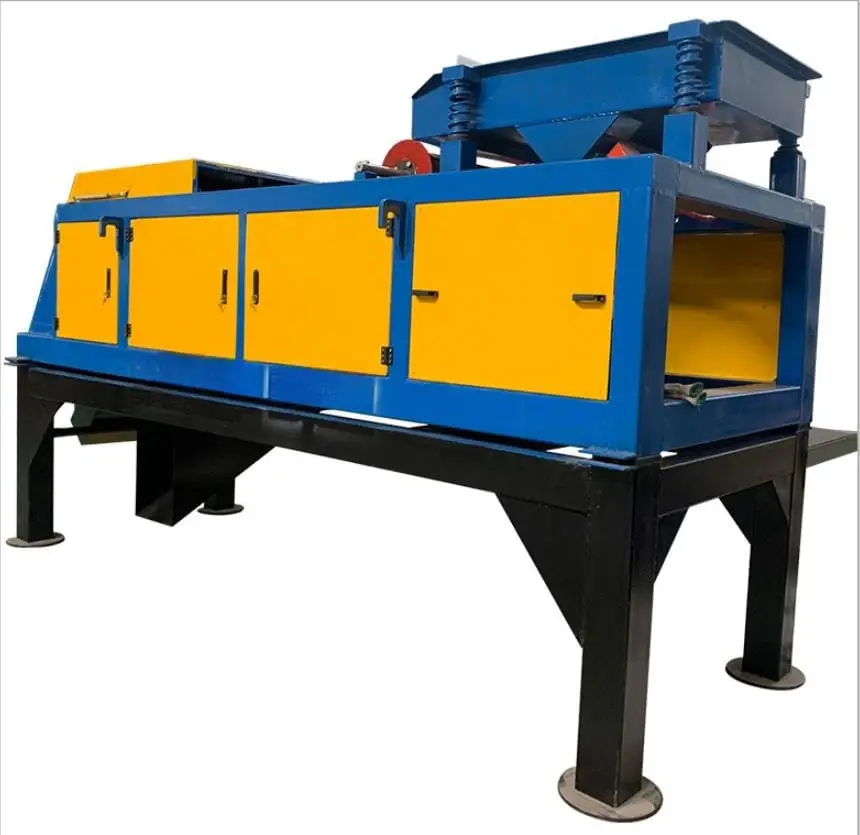
Dry Electromagnetic Separator by ORO Mineral
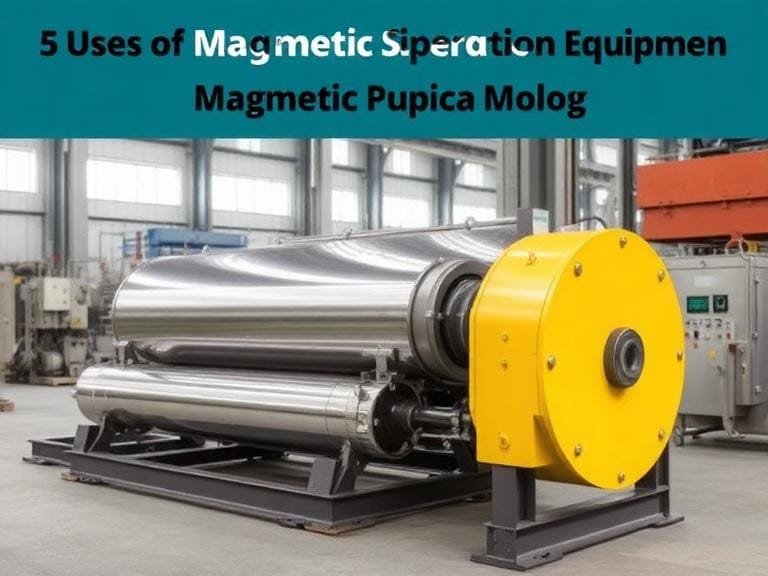
For operations dealing with dry concentrates heavily burdened with magnetite, the ORO Mineral Dry Electromagnetic Separator is the definitive tool for upgrading your gold yield. This system efficiently isolates highly magnetic gangue materials before final table separation.
- Capacity: 5-200 t/h (Scalable to your plant’s output)
- Magnetic Field Intensity: 0.5-2.0 T (Adjustable for specific ore profiles)
- Material Construction: Durable Stainless Steel and Cast Iron alloys to withstand abrasive sands
- Operating Reliability: Functional in extreme conditions (-20°C to 50°C)
5. Shaker Tables
The shaker table is the final mechanical step before smelting. It is a vibrating, slightly sloped table covered with horizontal riffles. As water flows across the vibrating deck, the extreme density of gold causes it to walk along the riffles to a distinct collection point, while the slightly lighter remaining impurities wash off the lower edge. In our testing, a properly tuned shaker table operating on demagnetized concentrate yields a product that is 95% to 98% pure gold.
6. Suction Dredges
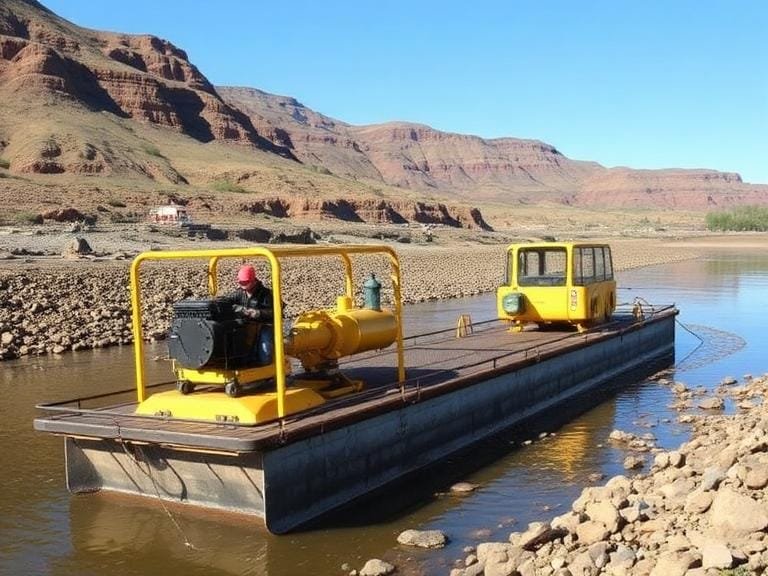
If your claim is situated in an active riverbed, traditional excavators are often ecologically prohibited or physically impractical. A suction dredge operates like a massive underwater vacuum cleaner. Divers use high-pressure water pumps to create a venturi vacuum, sucking up gravel from cracks in the riverbed bedrock and pumping it over a floating sluice box system on the surface.
Benefits of Commercial Upgrades
Upgrading your operation with specialized equipment provides immediate financial returns. Transitioning from basic gravity sluices to centrifugal concentrators and magnetic separators increases fine gold recovery by up to 40 percent. Furthermore, automation reduces your reliance on manual labor, dropping your Cost Per Ounce produced. Partnering with the mineral processing companies worldwide ensures your equipment integration meets modern metallurgical standards.
Limitations and Operational Bottlenecks
We believe in commercial reality: adding heavy machinery introduces complex maintenance requirements. Centrifugal concentrators require clean, high-pressure fluidization water; if your site recycles water without a proper settling pond, silt will destroy the concentrator’s internal valves. Additionally, relying solely on heavy machinery without conducting proper geological core sampling means you might efficiently process thousands of tons of barren rock. The equipment cannot invent gold that isn’t there.
| Equipment Strategy | Decisive Advantages (Pros) | Operational Drawbacks (Cons) |
|---|---|---|
| Full Mechanized Wash Plant | Massive daily tonnage; captures microscopic gold; minimizes labor costs. | High initial capital expenditure; requires massive water supply and settling ponds. |
| Light Placer Equipment (Sluices/Pans) | Highly mobile; excellent for scouting and narrow canyons; low cost. | Extremely low throughput; loses up to 50% of fine gold; labor-intensive. |
Who Should Use It vs. Who Does Not Need It
For commercial users: If you hold a verified lease and possess ore grading above 0.5 grams per ton, you absolutely must deploy excavators, trommels, centrifuges, and magnetic separators. The capital investment is justified by the throughput volume. Relying on outdated sluice technology in a high-volume scenario is a gross mismanagement of resources.
Who does not need it: Recreational hobbyists panning in local streams on weekends do not need a $50,000 centrifugal concentrator. A simple high-banker and a basic hand-crank magnetic separator are entirely sufficient for recovering a few grams of gold per month.
Common Mistakes in Processing Circuit Design
The most devastating mistake operators make is failing to classify their feed properly. If you feed 2-inch rocks into a centrifuge designed to capture minus 10-mesh gold, the large rocks will scour the bowl and wash your trapped gold right back into the tailings.
Another major error is skipping the magnetic separation phase. Attempting to run a heavy black sand concentrate over a shaker table without first passing it through a Dry Electromagnetic Separator forces the table to process highly dense iron, burying the gold and ruining the final recovery line. It is a critical error of omission.
Buying Considerations and Capital Allocation
When selecting what equipment is needed for digging gold, prioritize throughput matching. Your excavator’s bucket size, the hopper’s grizzly bars, the trommel’s processing speed, and the centrifuge’s feed limits must all align perfectly.
| Target Output (TPH) | Extraction Equipment | Classification & Recovery | Refining Needs |
|---|---|---|---|
| 10 – 50 TPH | Mini-Excavator, Skid Steer | Portable Trommel, Basic Sluice | Small Shaker Table, Hand Magnet |
| 50 – 200 TPH | 20+ Ton Excavator, Articulated Loader | Large Wash Plant, Single Centrifuge | Electromagnetic Separator, Large Shaker Table |
| 200+ TPH | Multiple 40+ Ton Excavators | Multi-deck Vibrating Screens, Multiple Centrifuges | Full Gravity & Magnetic Refining Circuit |
Expert Recommendation from ORO Mineral
In most professional situations, the fastest way to bankrupt a mining operation is deploying inadequate recovery equipment. Digging the dirt is only 20% of the battle; holding onto the micron-sized gold particles is the remaining 80%. We strongly recommend that commercial operators abandon reliance on static sluice boxes and upgrade their final recovery circuits immediately. By integrating the ORO Mineral Dry Electromagnetic Separator before your shaker tables, you strip out the heavy iron gangue that blinds your recovery process, ensuring your final smelt is highly pure and your profit margins remain intact. Do not leave your gold in the tailings pile.
Frequently Asked Questions (FAQ)
Authoritative References & Further Reading
To ensure our operational advice aligns with global geological and safety standards, we consult the following authoritative bodies:
- United States Geological Survey (USGS) – Comprehensive data on domestic and global mineral deposits, specific gravity metrics, and geological surveying.
- Mine Safety and Health Administration (MSHA) – Federal safety regulations and operational guidelines for heavy machinery deployment in commercial mining environments.
- Society for Mining, Metallurgy & Exploration (SME) – Professional association providing peer-reviewed research on advancements in centrifugal concentration and magnetic separation.