7 Best silica sand washing machines
We see it constantly across global mining operations: plant managers relying on standard aggregate washing equipment to process high-value silica sand, only to wonder why their final product gets rejected by glass manufacturers for having iron content above 0.01%. At Oromineral, we do not sugarcoat the facts. Silica sand is not your average river sand. It demands rigorous attrition, exact particle classification, and thorough desliming. If you want to achieve the stringent purity levels required by the foundry, solar panel, and optical glass industries, throwing a cheap rinser at the problem will inevitably destroy your profit margins.
The processing of silica sand is a precision engineering discipline. The impurities found in raw quartz deposits—such as sticky clays, mica, feldspar, and microscopic iron oxides—form resilient chemical and physical bonds around the silica grains. Standard washing just rinses the loose dirt; it does not break these bonds. That is why selecting the best silica sand washing machines is a critical capital expenditure, not just a casual procurement task. In this expert guide, we are going to cut through the marketing noise, evaluate the premier equipment available in 2026, and break down exactly when to use each type to maximize your operational efficiency and final product purity.
Table of Contents
- Why Silica Sand Demands Highly Specialized Washing
- The 4 Best Silica Sand Washing Machines on the Market
- Our Top Pick: Oromineral’s Heavy-Duty Solution
- Integrating Washing into the Complete Plant Flowsheet
- Summary Table: Equipment Comparison Matrix
- Advanced Troubleshooting and Fines Recovery
- Frequently Asked Questions
- Industry References
Why Silica Sand Demands Highly Specialized Washing
Before you even look at a catalog, you must understand the physics of your raw feed. In our operations, we classify impurities into two categories: free-floating slimes and surface-bonded contaminants. Free-floating slimes are relatively easy to flush out, but surface-bonded contaminants require violent mechanical energy to dislodge. The best silica sand washing machines are engineered specifically to provide this kinetic energy while precisely controlling water flow to separate the heavy silica from the light waste.
We highly recommend mapping out your sand washing process steps before deciding on equipment. A singular machine rarely solves every problem. Instead, silica purification is a multi-stage process. If you feed heavily clay-bound ore into a light-duty washer, the clay will simply absorb the water, swell into an unmanageable paste, and choke your entire production line. Choosing the best silica sand washing machines means pairing the right mechanical action—be it spiral raking, wheel lifting, or attrition scrubbing—with your specific deposit geology.
The 4 Best Silica Sand Washing Machines on the Market
Choosing between attrition, spiral, log, or wheel washing requires a deep dive into our sand washing methods guide. However, from our experience engineering high-yield plants worldwide, the market is dominated by four primary machine architectures. Here is our unfiltered analysis of each.
1. Spiral Sand Washers: The Heavy-Duty Desliming Standard
When it comes to the heavy lifting of desliming, the spiral sand washer is the undisputed industry workhorse. Operating in a tilted, U-shaped tank, this machine utilizes a rotating helical screw to agitate the slurry. According to Stokes’ Law of settling velocity, the heavier silica grains sink to the bottom where the spiral screw continuously drags them upward to the discharge port. Meanwhile, the lighter clay slimes remain suspended and overflow the rear weir.
From our perspective, spiral washers are among the best silica sand washing machines for heavy clay aggregates because their long wash tanks provide maximum residence time. We strongly recommend choosing a model with adjustable weir heights, which allows your operators to fine-tune the classification cut-point between 14 and 325 mesh depending on real-time feed variations.
2. Attrition Scrubbers: The Sticky Clay Terminator
Sometimes, spirals are not enough. When silica grains are coated with stubborn iron oxide stains or hardened clay films, you need an attrition scrubber. These cells utilize intense, high-speed impellers pitched in opposing directions to create violent turbulence in a dense slurry (typically 70% solids). The secret here is not the water washing the sand, but rather the sand washing the sand. The extreme particle-on-particle abrasion literally grinds the impurities off the silica surface.
If you are targeting the premium optical glass or photovoltaic solar panel market, an attrition scrubber is absolutely mandatory. Without it, even the best silica sand washing machines of other types will leave microscopic impurities on the grain surface, resulting in a rejected batch.
3. Wheel Sand Washers: The Fine Sand Saver
Wheel (or bucket) sand washers consist of a large, vertically rotating wheel equipped with mesh buckets. As the wheel turns through a water bath, the buckets scoop up the settled sand, allowing the dirty water to drain back into the tank before discharging the clean product.
We recommend wheel washers primarily when water conservation and compact footprint are your top priorities. They consume roughly 30% to 50% less water than their spiral counterparts. Furthermore, the gentle lifting action results in lower fine-sand loss. However, frankly speaking, a wheel washer struggles with heavily contaminated raw feed. It is best utilized as a secondary polishing wash rather than the primary desliming stage.
4. Log Washers: The Coarse Material Specialist
For operations dealing with extremely tough, plastic clays mixed with large gravel and cobbles, log washers are the first line of defense. They feature robust, intermeshing paddles mounted on twin counter-rotating shafts inside an inclined tub. The aggressive chopping and scrubbing action acts like an industrial blender for rocks, breaking down stubborn clay clumps that would easily plug up a spiral classifier.
While a log washer does not produce the final polished silica product, it is an indispensable pre-cleaner. When designing a circuit with the best silica sand washing machines, placing a log washer at the front end protects your sensitive downstream equipment from excessive wear and tear.
Our Top Pick: Oromineral’s Heavy-Duty Solution
At Oromineral, we have spent decades analyzing the failure points of conventional washing equipment. We recognized that plant operators needed a machine that combined the aggressive scrubbing of an attrition cell with the high-volume desliming capacity of a spiral washer. We engineered our flagship product to specifically address the rigorous demands of the global silica market.
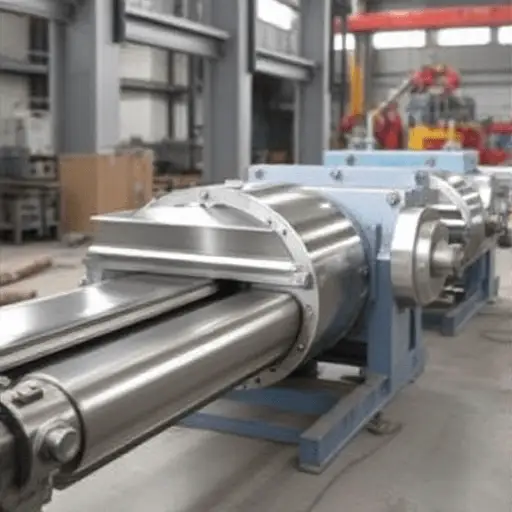
Sand Washing Machine 100 TPH Long Life
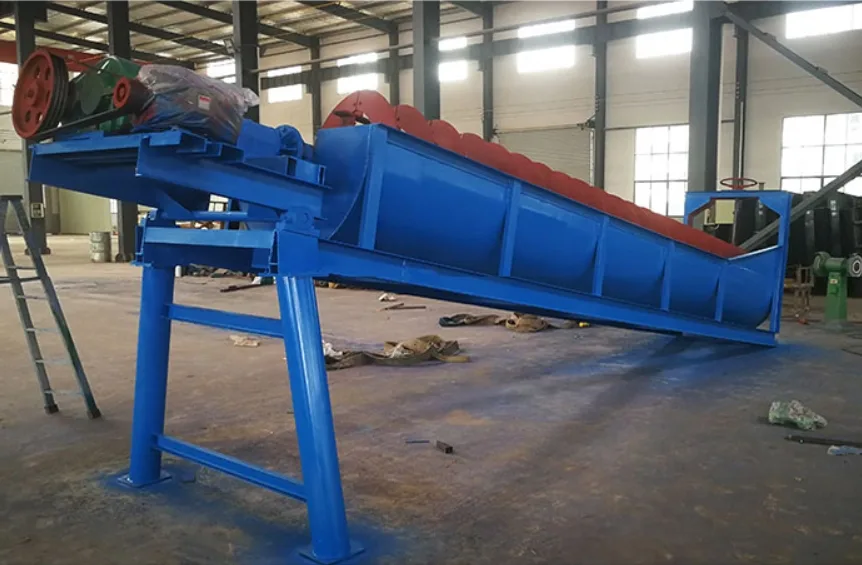
Main Features of Sand Washing Machine
- Heavy duty construction with long service life
- Powerful self-contained spiral lifting device
- Continuous spiral raking system
- High classification efficiency with low maintenance requirements
- Wide choice of weir height for different applications
- Rigid tank and durable substructure design
- Customizable tank design options
- Applicable across a wide range of industries
We engineered this unit to be one of the best silica sand washing machines globally, focusing heavily on uptime. The continuous spiral raking system prevents the buildup of dead zones in the tank, while the durable substructure ensures the machine absorbs the immense torque generated when processing 100 tons per hour of dense silica slurry.
Integrating Washing into the Complete Plant Flowsheet
While evaluating the best silica sand washing machines, it is critical to understand how washing fits into the broader picture. A standalone washer cannot achieve high-purity silica on its own. You can review the mineral processing stages explained to see exactly where scrubbing and desliming sit within your complete flowsheet.
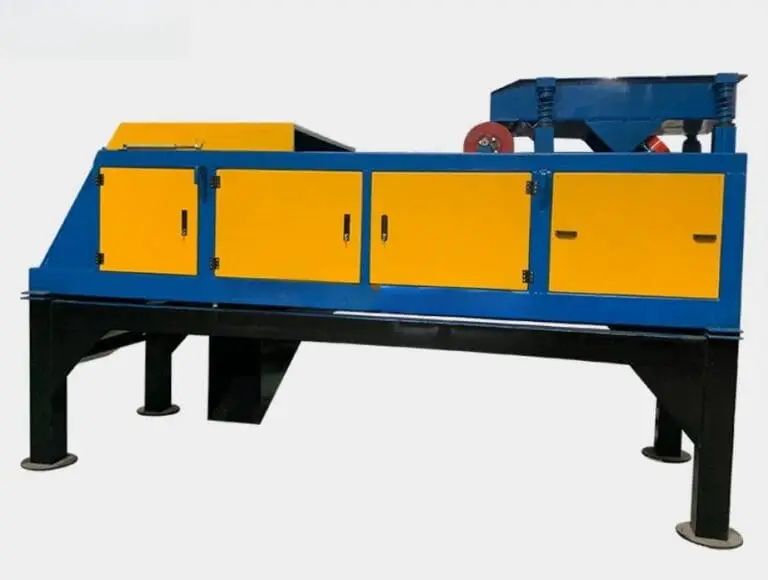
After the silica sand is washed, it often still contains non-magnetic and weakly magnetic iron impurities. To achieve the sub-100 ppm iron levels required for clear glass, the washed slurry must be routed through high-gradient magnetic separators. We recommend that plant managers research the top magnetic separator manufacturers worldwide to ensure their magnetic circuits match the throughput of their washing plant. Similarly, if your raw deposit suffers from non-ferrous metallic contamination, factoring in the eddy current separator cost during your initial CAPEX planning is essential to avoid downstream bottlenecks.
Summary Table: Equipment Comparison Matrix
To help you navigate your procurement strategy, our engineering team has developed this quick-reference matrix comparing the best silica sand washing machines based on application and efficiency.
| Machine Type | Primary Function | Water Consumption | Best Application | Oromineral’s Verdict |
|---|---|---|---|---|
| Spiral Sand Washer | Desliming and Classification | High | Medium to heavy clay, high-volume operations. | The most reliable primary washer. Essential for controlling particle size distribution. |
| Attrition Scrubber | Surface Polish / Decrating | Low (Operates at high density) | High-purity glass sand, removing iron stains. | Mandatory for premium silica grades. Cannot be skipped if surface bonds are tight. |
| Wheel Sand Washer | Secondary Washing / Dewatering | Low | Water-restricted sites, polishing clean feed. | Excellent for reducing water costs, but ineffective on highly plastic clay deposits. |
| Log Washer | Aggressive Breakdown | Medium to High | Coarse aggregates packed in sticky clay. | The ultimate pre-cleaner to protect downstream fine-sand equipment. |
Advanced Troubleshooting and Fines Recovery
One of the most massive operational pitfalls we observe in the field is the loss of ultra-fine (100-200 mesh) silica sand. When operating the best silica sand washing machines at high capacities, turbulent water flows can easily carry highly valuable fine silica over the overflow weir, dumping your profits directly into the tailings pond.
From our experience, relying solely on gravity settling in a washer tank is a mistake. We strongly advise outfitting the overflow discharge of your spiral or wheel washers with a dedicated hydrocyclone and dewatering screen circuit. A hydrocyclone utilizes centrifugal force to separate the valuable fine silica grains from the ultra-fine clay slimes, effectively recovering up to 15% of total production volume that would otherwise be lost. Additionally, maintaining the polyurethane wear shoes on your spiral screws is paramount; worn shoes alter the hydrodynamic flow within the tank, drastically reducing classification efficiency.
Frequently Asked Questions
Industry References
To ensure your processing plant meets global metallurgical standards, we recommend consulting the latest peer-reviewed data and processing standards from leading geological and mining institutions: