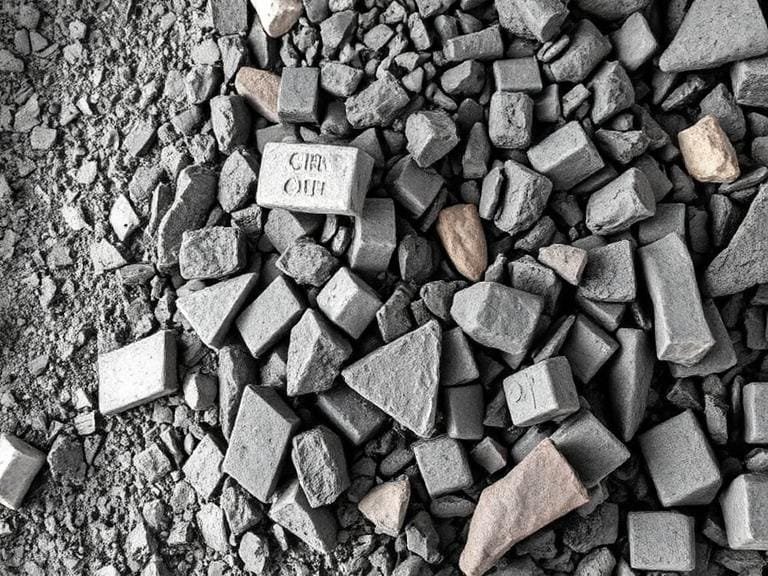
What is an Eddy Current Separator Machine?
By Oromineral
At Oromineral, we specialize in delivering world-class industrial separation solutions. From our experience in engineering and deploying robust processing equipment globally, we understand that achieving high-purity separation is the cornerstone of profitability in both recycling and mineral processing. In this authoritative guide, we provide an in-depth technical analysis of the Eddy current separator machine, exploring its underlying physics, mechanical components, and industrial applications.
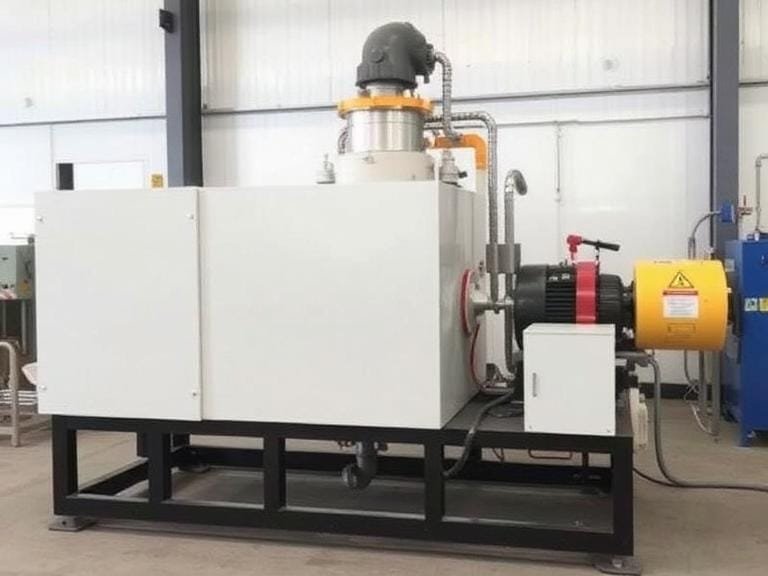
In modern material recovery, electronic waste recycling, and municipal solid waste management, separating non-ferrous metals from inert non-metallic streams is a highly complex challenge. While ferrous metals like iron and steel can be easily extracted using standard magnetic separators, valuable non-ferrous metals—such as aluminum, copper, brass, and zinc—remain unaffected by traditional magnets. This is where the Eddy current separator machine becomes an indispensable asset. Utilizing the principles of electromagnetic induction, this specialized equipment forcefully repels non-ferrous metals, effectively purifying the material stream and recovering high-value commodities.
Table of Contents
- 1. The Physics: How Does an Eddy Current Separator Machine Work?
- 2. Core Components of the Eddy Current Separator Machine
- 3. Key Industrial Applications and Deployments
- 4. The Oromineral Engineering Advantage
- 5. Integrating with Other Mineral Processing Stages
- 6. Summary Comparison Table
- 7. Frequently Asked Questions (FAQs)
- 8. Authoritative References
1. The Physics: How Does an Eddy Current Separator Machine Work?
To understand what an Eddy current separator machine is, one must first understand the fundamental physics of electromagnetic induction, primarily governed by Faraday’s Law and Lenz’s Law. When a conductive, non-ferrous metal particle passes through a rapidly alternating magnetic field, electrical currents are induced within the particle itself. These swirling, localized currents are known as “eddy currents.”
According to Lenz’s Law, these induced eddy currents generate their own magnetic field, which directly opposes the primary magnetic field that created them. This opposition results in a sudden and powerful repulsive force. In the context of an Eddy current separator machine, this repulsive force physically launches the non-ferrous metal particles forward and out of the primary material stream. Meanwhile, non-conductive materials—such as plastics, glass, wood, and stones—are unaffected by the alternating magnetic field and simply fall off the end of the conveyor belt under the natural influence of gravity.
We recommend optimizing the separation efficiency by carefully calibrating the machine settings to match the particle size and conductivity-to-density ratio of the target metals. Aluminum, for example, has an excellent conductivity-to-density ratio, meaning it experiences a massive repulsive force and is thrown far from the belt. Copper and brass also separate well, though their higher densities mean their ejection trajectory is slightly shorter than that of aluminum.
2. Core Components of the Eddy Current Separator Machine
An industrial-grade Eddy current separator machine is a marvel of mechanical and magnetic engineering. From our experience manufacturing advanced processing systems, the reliability of the machine depends entirely on the precision of its components. The primary elements include:
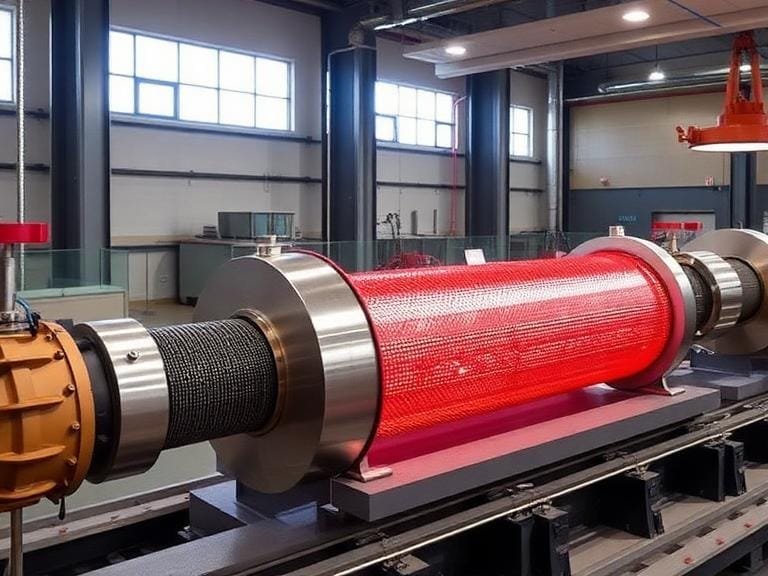
- The Magnetic Rotor: This is the heart of the Eddy current separator machine. Housed inside a non-metallic outer drum, the rotor is lined with alternating rows of powerful rare-earth permanent magnets, typically Neodymium-Iron-Boron (NdFeB). The rotor spins at incredibly high speeds (often between 2,000 and 3,000 RPM) independent of the outer drum, creating the high-frequency alternating magnetic field required to induce eddy currents.
- The Outer Drum (Head Pulley): Constructed from non-conductive materials like fiberglass or specialized composites, the outer drum revolves at the speed of the conveyor belt. It protects the rapidly spinning inner magnetic rotor from damage and material buildup.
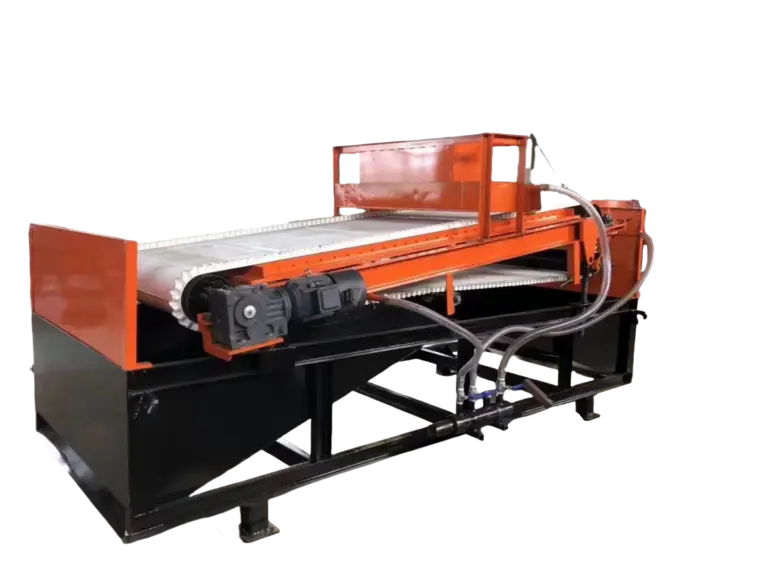
- The Conveyor Belt: The belt carries the mixed material stream toward the magnetic rotor. We recommend using a highly durable, thin belt to ensure the material remains as close to the magnetic field as possible, maximizing the repulsive force.
- The Splitter (Divider Plate): Situated at the discharge end of the Eddy current separator machine, the splitter is an adjustable physical barrier. Because non-ferrous metals are thrown forward in a parabolic arc, while non-metals drop straight down, the splitter is precisely positioned to catch and divide these two distinct trajectories into separate collection bins.
3. Key Industrial Applications and Deployments
The versatility of the Eddy current separator machine makes it a vital component across multiple industrial sectors. At Oromineral, we see high demand for these machines in the following applications:
Material Recovery Facilities (MRFs): In municipal recycling, the Eddy current separator machine is heavily utilized to recover aluminum beverage cans from co-mingled plastics and glass. This automated recovery is vastly more efficient and safer than manual sorting.
Electronic Waste (WEEE) Processing: The shredding of old computers, smartphones, and household appliances results in a complex mix of plastics, circuit boards, copper wire, and aluminum casings. An Eddy current separator machine is crucial for extracting the high-value copper and aluminum fragments from the shredded plastic matrix.
Automobile Shredder Residue (ASR): When end-of-life vehicles are shredded, massive magnets remove the steel and iron. The remaining material, known as “zorba,” is a mix of non-ferrous metals and fluff (rubber, glass, plastic). The Eddy current separator machine is deployed to refine this zorba, extracting the non-ferrous commodities for smelting.
Glass Cullet Purification: In glass recycling, aluminum caps and lead seals must be removed before the glass can be melted down in a furnace. The Eddy current separator machine ensures the glass cullet is entirely free of conductive metal contaminants.
4. The Oromineral Engineering Advantage

When selecting capital equipment for your facility, precision and durability are non-negotiable. The Oromineral Eddy Current Separator Machine is engineered to deliver unmatched performance in the most demanding environments. Our equipment integrates several advanced features:
- High Separation Efficiency: The powerful magnetic field generated by our proprietary rotor design, combined with adjustable drum and belt speeds, ensures maximum separation of non-ferrous metals, even down to fine particle sizes.
- Robust Construction: The industrial recycling environment is highly abrasive. Our machines are built with high-quality materials for durability and long-term performance, protecting your investment from premature wear.
- Easy Maintenance: Designed for easy access and maintenance, our systems feature drop-down side panels and accessible bearing housings, significantly reducing downtime and operational costs.
- Customizable Options: We understand that every material stream is unique. Various models and configurations are available, including both concentric and eccentric rotor designs, to meet specific application requirements and prevent ferrous metal carryover damage.
5. Integrating with Other Mineral Processing Stages
An Eddy current separator machine rarely operates in isolation. To protect the high-speed magnetic rotor, it is strictly required that all ferrous metals be removed from the material stream before it reaches the eddy current belt. If stray iron pieces enter the alternating magnetic field, they will rapidly heat up and can melt or tear the conveyor belt. Therefore, it must be preceded by strong magnetic separation equipment. For insights on sourcing this precursor equipment, we recommend reviewing our guide on magnetic separator manufacturers China.
Furthermore, the engineering precision required to build an Eddy current separator machine mirrors the strict tolerances found in primary mining operations. For instance, the exactness required by the gold mining equipment manufacturers to extract fine gold particles is similar to the precision needed to separate fine copper granules. Whether an operator is optimizing a wet pan mill for gold processing or finalizing the sand washing process steps, understanding the sequential logic of material refinement is essential. You can learn more about these comprehensive workflows in our article detailing the mineral processing stages explained.
6. Summary Comparison Table
To assist plant managers and engineers in understanding the operational parameters, we have provided a summary of how an Eddy current separator machine interacts with different material classes.
| Material Type | Conductivity / Density Ratio | Interaction with Eddy Current Separator Machine | Trajectory Outlet |
|---|---|---|---|
| Aluminum (Cans, Extrusions) | Very High | Massive repulsive force | Thrown farthest over the splitter |
| Copper & Brass | High | Strong repulsive force | Thrown over the splitter |
| Plastics, Glass, Wood | Zero (Non-conductive) | No interaction | Drops vertically under gravity |
| Ferrous Metals (Iron, Steel) | Magnetic | Attracted to rotor (Must be removed prior) | Clings to belt (Requires specialized scraper or prior removal) |
| Stainless Steel (Austenitic) | Very Low | Weak to no repulsive force | Generally drops with non-metals (Requires sensor sorting) |
7. Frequently Asked Questions (FAQs)
Can an Eddy current separator machine separate stainless steel?
From our experience, standard austenitic stainless steel has a very low electrical conductivity and is weakly magnetic or non-magnetic. Because it does not generate strong eddy currents, it will generally drop straight down with the non-metallic waste. Specialized induction sensor sorters are usually required to recover stainless steel.
Why is it important to use an eccentric rotor design?
We highly recommend eccentric rotor designs for mixed waste streams. In an eccentric setup, the magnetic rotor is positioned slightly off-center inside the outer drum, concentrated at the discharge point. This prevents stray, small ferrous materials from being pinned continuously around the drum, thereby eliminating the risk of belt burn-through and reducing maintenance costs.
How fine of a particle can the machine separate?
The separation of ultra-fine non-ferrous particles (below 2mm) is incredibly difficult due to their low mass and surface area. However, high-frequency Eddy current separator machines equipped with specialized rotors spinning at 3,000+ RPM can effectively recover particles down to 1mm to 2mm in size, which is highly beneficial for incinerator bottom ash processing.
8. Authoritative References
To further support the technical specifications and environmental impact discussed in this guide, we recommend consulting the following authoritative and academic sources regarding recycling and electromagnetic induction technologies:
- United States Environmental Protection Agency (EPA) – Recycling Guidelines and Infrastructure
- U.S. Department of Energy (DOE) – Advanced Manufacturing and Material Recovery
- National Institute of Standards and Technology (NIST) – Magnetic Materials and Electromagnetic Measurements
In conclusion, deploying a high-quality Eddy current separator machine is a critical step toward maximizing the commercial viability of any material recovery operation. By leveraging the advanced engineering and customizable features offered by Oromineral, operators can ensure continuous, high-purity non-ferrous metal recovery, transforming raw mixed waste into highly profitable commodities.