Quartz Sand Processing Equipment Price 2026: What Buyers Should Actually Budget
If you are trying to pin down the Quartz sand processing equipment price for 2026, the honest answer is that there is no single sticker price. A simple wheel washer and a fully automatic high-purity quartz line are not even close to the same buying decision. Public 2026 data from ORO Mineral shows that a 40–60 TPH bucket wheel or spiral setup sits around ₹6,00,000–₹15,00,000, 80–120 TPH hydrocyclone combos land around ₹15,00,000–₹28,00,000, 150–200 TPH advanced lines move to ₹30,00,000–₹55,00,000, and 200–300+ TPH fully automatic water-recycling systems can reach ₹60,00,000–₹95,00,000+.
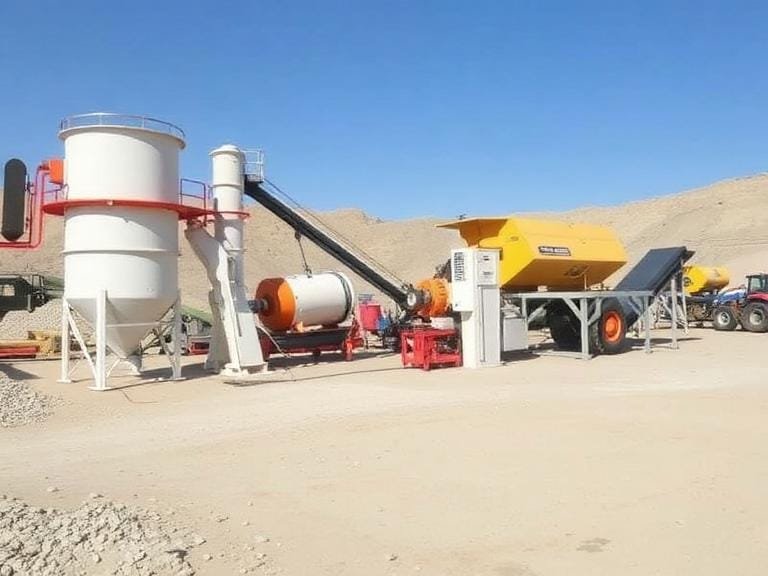
ORO Mineral Co., Ltd. is a large-scale intelligent mineral processing, screening, and sand washing equipment manufacturer integrating R&D, production, and sales. Since 2014, the company has built deep experience in screening, solid waste resource recovery, beneficiation, washing, and separation.
Our position: the Quartz sand processing equipment price is driven less by the word “quartz” and more by capacity, washing method, classification depth, magnetic removal, dewatering, and whether you need water recycling. From our experience, buyers who skip those variables almost always pay twice.
Quick summary table
| Equipment level | Typical 2026 budget band | Common capacity | Best for |
|---|---|---|---|
| Wheel-based washing line | ₹6,00,000–₹15,00,000 | 40–60 TPH | Smaller quartz sand cleaning projects that want low complexity |
| Hydrocyclone combo line | ₹15,00,000–₹28,00,000 | 80–120 TPH | Plants that need desliming and tighter grading |
| Advanced washing + dewatering | ₹30,00,000–₹55,00,000 | 150–200 TPH | Serious industrial output with better control and consistency |
| Fully automatic recycling line | ₹60,00,000–₹95,00,000+ | 200–300+ TPH | High-throughput operations with water recovery and automation |
These 2026 bands are drawn from ORO Mineral’s published estimated price matrix and should be treated as core machinery budgets, not finished project totals. Land, civil works, and deep-water infrastructure are excluded.
What is actually included in quartz sand processing equipment
Most buyers search the Quartz sand processing equipment price as if they are buying one machine. That is usually the wrong frame. A proper quartz sand processing setup often includes a feeder, screening stage, washing machine, classifier or hydrocyclone, dewatering screen, magnetic separation stage, and sometimes drying or water recycling. ORO Mineral’s 2025 and 2026 guides both show that sand washing is a system, not a single box.
We recommend starting with the processing goal before comparing suppliers. If the objective is simple construction-grade quartz cleaning, the chain can stay short. If the objective is high-purity silica for glass, filtration, or industrial use, the plant gets deeper, more selective, and more expensive. That is why the Quartz sand processing equipment price changes so dramatically across projects.
When the feed contains clay, silt, and ultrafines, washing and desliming are unavoidable. ORO’s process guide shows the sequence clearly: feeding, screening, washing, desliming, dewatering, and recycling or waste management. For buyers who need a cleaner visual overview, the sand washing plant working principle and the sand washing process guide are the right starting points.
From our experience, the fastest way to overspend is to buy a system that is too complex for the feed and too weak for the spec. The smart path is to match the equipment train to the actual impurity load, particle size target, and throughput requirement.
2026 Quartz sand processing equipment price ranges
Public market data shows that the Quartz sand processing equipment price follows capacity bands more than brand names. ORO Mineral’s 2025 guide puts wheel-based sand washer plants at $15,000–$40,000 for 10–50 TPH, spiral sand washer plants at $35,000–$120,000 for 30–100+ TPH, and combined sand washing and recycling plants at $50,000–$200,000. Those ranges remain the clearest dollar-based benchmark for 2026 procurement planning.
| Price band | Typical equipment | Typical use case | Procurement reality |
|---|---|---|---|
| $15,000–$40,000 | Wheel-based quartz sand washer | Light to medium duty cleaning | Low complexity, compact footprint, lower water use |
| $35,000–$120,000 | Spiral sand washer | Heavier continuous duty quartz sand washing | Better classification and longer service life |
| $50,000–$200,000 | Combined washing and recycling line | Water-sensitive or high-recovery plants | Higher capex, lower water loss, better recovery economics |
OFO Mineral’s 2026 India matrix then pushes the story further: 40–60 TPH bucket wheel or spiral systems at ₹6,00,000–₹15,00,000, 80–120 TPH hydrocyclone combinations at ₹15,00,000–₹28,00,000, 150–200 TPH advanced hydrocyclone plus dewatering systems at ₹30,00,000–₹55,00,000, and 200–300+ TPH fully automatic dual-wash or high-frequency screen systems at ₹60,00,000–₹95,00,000+. This is the right way to read Quartz sand processing equipment price in 2026: the more control, automation, and water management you add, the more the price climbs.
We recommend treating those figures as the core machinery budget only. ORO explicitly notes that the 2026 matrix excludes civil foundation works, land acquisition, and deep-well water infrastructure. That is important because many buyers compare machine quotes and then discover the real project budget is much higher.
Why the Quartz sand processing equipment price varies so much
1. Throughput changes everything
A 40 TPH plant and a 300+ TPH plant are not scaled versions of the same purchase. They are different layouts, different motors, different structural requirements, and different water handling systems. That is why the Quartz sand processing equipment price grows sharply with capacity.
2. Water recycling adds value and cost
Combined washing and recycling systems cost more because they do more. They wash, recover fines, and recycle water, which is precisely why they command the higher end of the market. If water is scarce or disposal is expensive, that extra investment usually pays back.
3. Classification depth matters
When you need tighter sizing, hydrocyclones and classifiers enter the circuit. That makes the plant more expensive, but it also makes the product better. Buyers who care about final purity should expect the Quartz sand processing equipment price to move upward accordingly.
4. Magnetic removal is not optional in high-purity quartz
Quartz feeds often contain iron-bearing contamination that must be removed before the product can be used in higher-value applications. ORO’s 2025 process guide lists magnetic separators among the essential equipment used in sand washing, and its broader mineral processing content repeatedly ties quartz work to magnetic cleanup. This life-cycle assessment paper on silica sand processing is useful if you care about the environmental side of choosing a more complete circuit.
The real lesson is simple. If the equipment removes more contamination, recovers more water, and handles more tonnage, the price rises for a reason. We recommend paying for the process you need, not the brochure you like.
The processing flow that should shape your budget
If you want the Quartz sand processing equipment price to make sense, you have to understand the flow first. Quartz is not just “washed sand.” Depending on final use, the feed may need crushing, screening, attrition, scrubbing, desliming, magnetic separation, flotation, dewatering, and drying. In high-purity routes, the process can become even more intensive.
That is why we always advise buyers to look at the plant as a chain. A weak screen will choke the washer. A weak washer will overload classification. A weak classifier will reduce purity. A weak dewatering stage will create handling problems downstream. The machine price alone never tells the whole story. For a broader framework, see mineral processing techniques and equipment and compare it with sand washer machines industrial layouts.
Quartz sand is also a material with real downstream demand. The USGS notes silica sands are used in glassmaking, foundry, abrasive, and hydraulic fracturing applications, while industrial associations list glass, fiberglass, and related uses as major end markets. That matters because the end market determines how clean your final product needs to be. USGS Silica PDF
From our experience, the more demanding the end market, the less you should care about the cheapest line and the more you should care about process design. The Quartz sand processing equipment price is only expensive when the plant is mis-specified. When the plant is designed properly, it is simply the cost of making sellable material.
High-purity quartz costs more for a reason
Once quartz moves into high-purity territory, the Quartz sand processing equipment price changes fast. High-purity quartz work often adds calcination, water quenching, classification, magnetic separation, flotation, acid leaching, cleaning, and chlorination roasting. That is a very different plant from a simple construction-sand washer.
We recommend using the presence of these steps as a warning sign that your budget should include more than just the washer. If you need deep impurity reduction, you will likely need better control systems, more corrosion-resistant components, and a more disciplined wastewater strategy. That is why the Quartz sand processing equipment price rises in a non-linear way as purity targets tighten.
Important: high-purity quartz is not the same project as ordinary quartz sand cleaning. If your product has to serve glass, filtration, electronics, or similar markets, the plant must be priced like a high-spec beneficiation line, not a basic sand wash station.
This is also where a buyer should think like they would when comparing gold processing equipment manufacturers or mining equipment manufacturers global. In both cases, the lowest quote is rarely the smartest quote. The right supplier is the one that understands flow, wear, recovery, and operability, not just fabrication.
If you are adding magnetic cleanup to quartz, a dedicated magnetic separation process guide is worth reading before you buy. In quartz processing, that stage is often where product quality is won or lost.
How we recommend buying
We recommend buying in this order: define the target product, confirm feed quality, fix the throughput, select the washing route, then compare quotes. Not the other way around. Most bad procurement starts with “How much does this machine cost?” and ends with “Why does the line not work?”
If your feed is relatively clean and your product target is ordinary industrial sand, a wheel-based line is often enough. If your feed carries more slime or you need tighter grading, move toward hydrocyclone and dewatering combinations. If you need high recovery or water management, the combined recycling line is the more serious answer. ORO’s own price guides and equipment pages support that exact progression.
From our experience, the easiest way to waste money is to under-spec the dewatering or over-spec the entire line. A balanced plant beats a flashy plant every time. That is why the Quartz sand processing equipment price should be evaluated as a complete circuit budget, not a single machine purchase.
ORO Mineral’s equipment pages also show how the company structures its washing-machinery range around a 1–100 TPH capacity envelope, with spiral and wheel-based models and project support services. That capacity flexibility is one reason buyers often start with a washer and expand the circuit later.
FAQs
What is the most realistic Quartz sand processing equipment price in 2026?
For basic industrial washing systems, the public benchmark remains in the low tens of thousands of dollars, while more complex combined washing and recycling lines can reach the low hundreds of thousands. ORO’s 2026 capacity matrix also shows line budgets rising from ₹6,00,000 to ₹95,00,000+ depending on throughput and automation.
Does quartz always need magnetic separation?
No, but high-purity quartz usually does. Magnetic removal becomes much more important when iron contamination is a quality problem. ORO’s process materials repeatedly list magnetic separators as part of the sand washing and mineral-cleaning toolkit.
Is a wheel washer cheaper than a spiral washer?
Yes. ORO’s 2025 benchmark shows wheel-based plants at $15,000–$40,000 and spiral plants at $35,000–$120,000. That price difference reflects the heavier-duty design and higher continuous-duty capability of spiral systems.
What should be excluded from the equipment price?
Do not assume the machine quote includes civil works, land acquisition, or deep-water infrastructure. ORO’s 2026 matrix explicitly states those costs are excluded.
Why do water-recycling plants cost more?
Because they do more work. They wash, recover fines, and recycle water, which requires more equipment and control. The higher capex is usually justified when water cost, discharge limits, or recovery economics are important.
Should I compare quartz sand plant pricing with other mineral plants?
Yes, but only as a reference, not as a shortcut. Similar procurement logic applies to gold processing equipment manufacturers and broader mining equipment suppliers, because process fit matters more than the lowest quote.