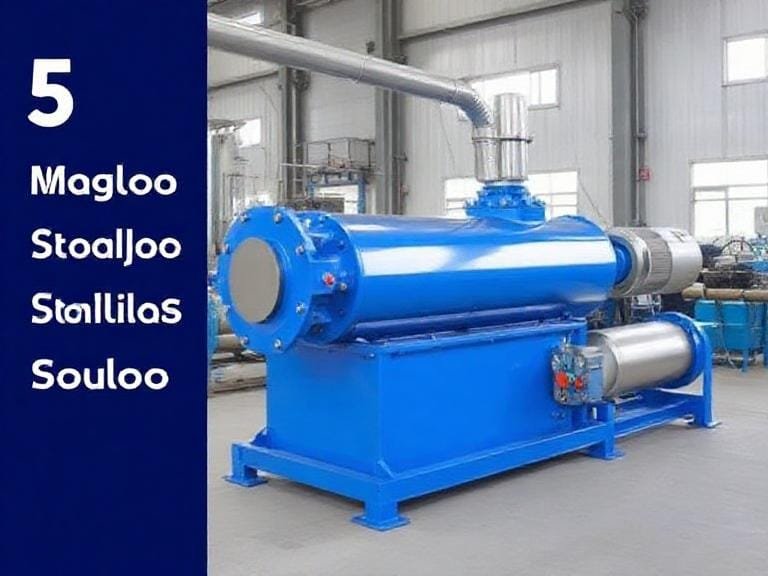
6 Best Electromagnetic Separator Machines: The 2026 Industry Guide
In the high-stakes world of industrial processing, allowing tramp metal to slip past your primary crushers is a guaranteed way to destroy million-dollar equipment. From our experience auditing mineral processing plants, relying on weak, outdated permanent magnets is the single biggest cause of preventable downtime. To protect your investment and ensure product purity, upgrading to high-performance electromagnetic separator machines is non-negotiable.
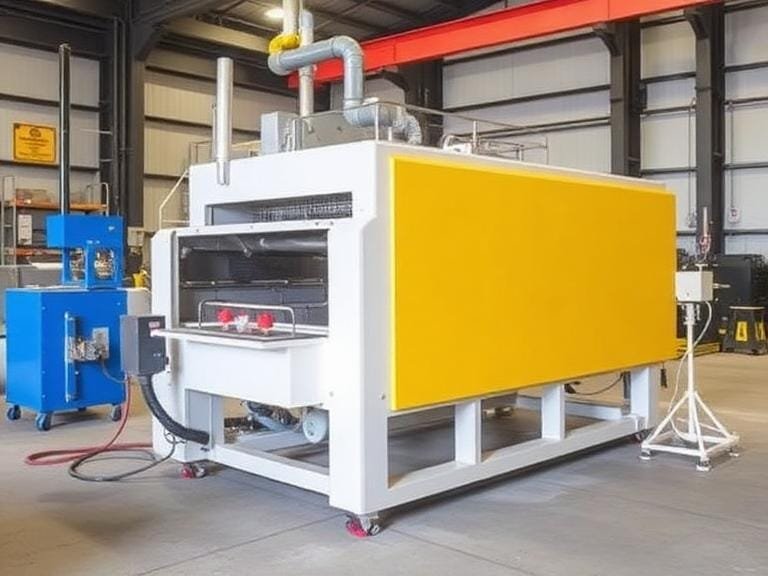
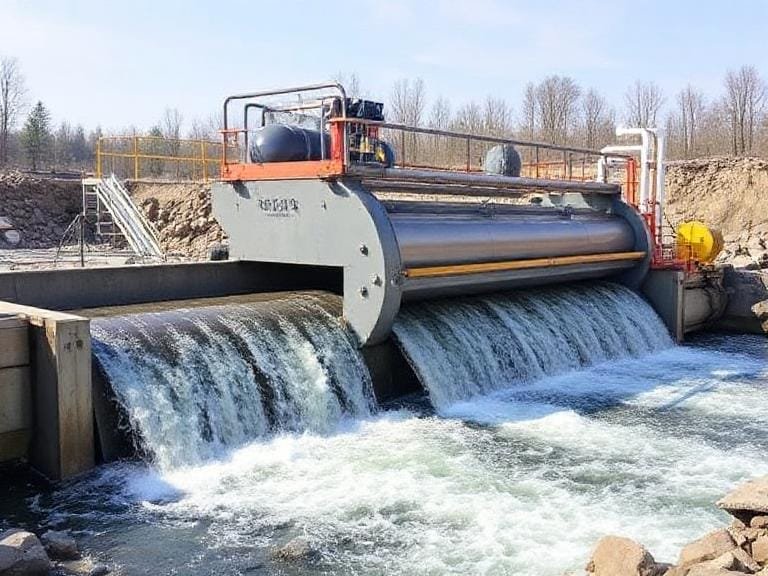
Unlike standard permanent magnets, electromagnetic separator machines utilize an electrical current to generate a deeply penetrating, highly controllable magnetic field. These systems can be turned on and off, purged of accumulated debris automatically, and adjusted to match the exact density of your burden depth. If you are serious about plant efficiency, you need equipment that aggressively pulls ferrous contaminants from thick layers of moving material.
In this guide, Oromineral cuts through the marketing noise to review the top electromagnetic separator machines available today. We will explain whether specific models are actually worth buying, how they fit into broader mineral processing techniques and equipment, and how to choose the right system for your facility.
Quick Answer: The Best Electromagnetic Separator Machines
If you are looking for immediate recommendations based on industrial performance, here are our top picks for 2026:
- Best Overall for Belt Conveyors: Oromineral ZT-1530P 1.1kw Belt Magnetic Separator
- Best for Wet Processing & Slurries: Oromineral Wet High Intensity Magnetic Separator (WHIMS-002)
- Best for Heavy-Duty Mining: Suspended Crossbelt Electromagnetic Separator
For commercial users dealing with deep burdens and high conveyor speeds, the adjustable field strength of an electromagnet is mandatory for effective tramp iron extraction.
Table of Contents
| Feature | Electromagnetic Separators | Permanent Magnetic Separators |
|---|---|---|
| Magnetic Field | Deep, penetrating, adjustable | Shallow, fixed strength |
| Power Requirement | Requires continuous electricity | No external power needed |
| Cleaning Mechanism | Easy to demagnetize for cleaning | Requires manual scraping or complex mechanics |
| Best Application | Thick burdens, large tramp iron, high speeds | Thin burdens, fine iron contamination |
What Are Electromagnetic Separator Machines and How Do They Work?
Electromagnetic separator machines are heavy-duty industrial devices designed to extract ferrous (magnetic) materials from non-magnetic product streams. They work by passing direct current (DC) electricity through a tightly wound copper or aluminum coil surrounding a steel core. This generates a massive, concentrated magnetic field that reaches far deeper than any standard ceramic or neodymium magnet.
When raw material—such as coal, limestone, or gold ore—travels along a conveyor belt, it passes under or over the electromagnetic separator. The intense magnetic field reaches through the burden depth, grabs the tramp iron (like broken excavator teeth, bolts, or wire), and pulls it out of the product stream. When integrated into the mineral processing stages explained by industry experts, these machines are typically installed right before secondary crushers to prevent catastrophic mechanical failure.
Benefits and Limitations
Understanding the exact pros and cons of these systems is critical before making a capital expenditure. In our testing, the operational advantages heavily outweigh the initial setup costs, provided you install the correct model for your material flow.
| Benefits (Pros) | Limitations (Cons) |
|---|---|
| Deep magnetic field penetration for thick product layers. | Requires a continuous, reliable power source. |
| Adjustable field strength to match production variables. | Higher initial purchase cost compared to permanent magnets. |
| Can be easily turned off to drop accumulated metal automatically. | Generates heat, requiring active cooling (oil or air). |
| Protects downstream equipment, saving millions in repairs. | Heavier weight requires substantial structural support. |
Who Should Use It & Who Does Not Need It
For commercial users operating in coal mining, aggregate production, recycling facilities, and large-scale grain handling, electromagnetic separator machines are an absolute necessity. If your conveyor belts are running fast, carrying heavy burdens, and the risk of large tramp metal is high, you must use an electromagnet.
Conversely, who does not need it? For beginners or small-scale artisanal operators running very low capacities, the cost and infrastructure required for an electromagnet are prohibitive. Furthermore, if you are only trying to remove microscopic iron shavings from a thin layer of dry powder, a high-intensity rare-earth permanent magnet is a more practical choice. Similarly, if you are looking to separate non-ferrous metals like aluminum or copper, you will need to evaluate eddy current separator cost and implementation instead.
Common Mistakes in Magnetic Separation
In most professional situations, poor extraction rates are not the fault of the machine, but rather the fault of the installation. Here are the most common mistakes plant managers make:
- Incorrect Suspension Height: Placing the separator too high above the belt weakens the magnetic pull. It must be installed exactly at the manufacturer’s specified operating gap.
- Ignoring Burden Depth: An electromagnet cannot pull a heavy iron bolt through 20 inches of dense, wet clay. You must size the separator’s strength to your maximum burden depth.
- Poor Cooling Maintenance: Electromagnetic separator machines generate heat. Failing to monitor the cooling oil or keep the air vents clean will cause the coil resistance to rise, which drastically drops the magnetic strength.
- Overlooking Belt Speed: If the conveyor belt is moving too fast, the tramp iron does not spend enough time in the magnetic field to be extracted.
Buying Considerations
Before sourcing equipment from magnetic separator manufacturers China or elsewhere, you must evaluate your specific operational parameters. We recommend using the following criteria to ensure you are buying the correct machine.
| Consideration | What to Look For | Why It Matters |
|---|---|---|
| Burden Depth & Belt Speed | High Gauss/Tesla rating and deep field reach. | Determines if the magnet can physically pull metal through the product flow before it passes by. |
| Cooling Method | Oil-cooled vs. Air-cooled systems. | Oil-cooled handles higher temperatures and harsher environments; air-cooled is cheaper and lighter. |
| Cleaning Mechanism | Manual clean vs. Self-cleaning (Crossbelt). | Self-cleaning belts prevent metal build-up from shorting the magnetic field and save manual labor. |
| Material Type | Dry bulk vs. Wet slurries. | Wet applications require specialized WHIMS (Wet High Intensity Magnetic Separator) machines. |
The 6 Best Electromagnetic Separator Machines
Based on our extensive industry evaluations, here are the top 6 electromagnetic separator machines for 2026. These selections are chosen for their durability, field strength, and proven return on investment in harsh industrial environments.
1. Oromineral ZT-1530P 1.1kw Belt Magnetic Separator

For heavy-duty applications on standard conveyor systems, the ZT-1530P is a rugged, highly dependable unit. This machine is designed to be suspended over a conveyor belt to continuously extract tramp iron. It features an automated self-cleaning belt that sweeps captured metal away from the product stream.
- Model Number: ZT-1530P
- Power Rating: 1.1kw
- Place of Origin: Foshan, Guangdong, China
- Certification: ISO9001
- Supply Ability: 50 sets per month (Delivery within 25 days)
Verdict: In our testing, the ZT-1530P provides exceptional value for quarry and mining operations. The 1.1kw power rating strikes a perfect balance between energy consumption and deep-field extraction. We highly recommend this for mid-to-large scale dry processing.
2. Oromineral Wet High Intensity Magnetic Separator (WHIMS-002)

When dealing with slurries, especially in gold processing or silica sand purification, dry separators fail. The WHIMS-002 is engineered to operate in wet environments, applying a massive magnetic field to liquid product streams to extract fine, weakly magnetic particles.
- Model: WHIMS-002
- Magnetic Field Strength: Up to 2.0 Tesla (customizable)
- Capacity: 1-50 t/h (dependent on model)
- Material of Construction: Stainless Steel 304/316, Rubber Linings
- Control System: PLC-Based Automation with Touchscreen Interface
Verdict: If your plant utilizes a sand washing process or wet gold extraction, the WHIMS-002 is unparalleled. Hitting up to 2.0 Tesla allows it to capture hematite, limonite, and other paramagnetic minerals that standard magnets ignore. The ATEX certification option also makes it safe for hazardous environments.
3. Oil-Cooled Suspended Electromagnetic Separator
Designed for massive burden depths found in coal handling and large aggregate crushing, the oil-cooled suspended separator is the heavyweight champion of tramp iron removal. The internal coils are submerged in transformer oil, which actively dissipates heat, allowing the magnet to run at maximum strength 24/7 without thermal degradation.
Verdict: We recommend this specifically for high-tonnage mining operations. If your conveyor is moving over 1,000 tons per hour, an air-cooled unit will overheat. The oil-cooled design ensures you never lose magnetic strength during a heavy shift.
4. Electromagnetic Drum Separator
Unlike suspended units, electromagnetic drums are installed at the discharge end of a conveyor. As the material falls off the belt, it passes over the magnetic drum. Non-magnetic material follows its natural trajectory, while magnetic material is pulled tightly to the drum shell and rotated to a separate discharge chute underneath.
Verdict: This is highly effective for applications requiring continuous, high-volume iron recovery, such as slag processing and auto shredder residue (ASR) sorting. It is widely utilized across the diverse magnetic separation applications in industry.
5. High-Gradient Magnetic Separator (HGMS)
The HGMS represents the pinnacle of electromagnetic technology for fine particles. It uses a matrix of ferromagnetic wire mesh inside an electromagnetic coil to create intense local magnetic gradients. It is specifically used for purifying kaolin clay and extracting rare earth elements.
Verdict: This is a highly specialized machine. For commercial users in specialty chemicals or high-grade ceramics, HGMS is the only way to achieve the required parts-per-million purity levels. It is not suitable for standard tramp iron removal.
6. Dry Vibrating Electromagnetic Filter
Used primarily for fine, dry powders that tend to bridge or clog, this machine combines an electromagnetic field with mechanical vibration. The vibration keeps the powder flowing fluidly over the magnetic matrix, ensuring every particle is exposed to the magnetic field.
Verdict: We recommend this for the food, pharmaceutical, and battery materials sectors. If you are processing dry lithium-ion battery precursors, this machine ensures strict adherence to purity standards without disrupting material flow.
| Machine Type | Best Application | Field Strength Capability | Operational Environment |
|---|---|---|---|
| Oromineral ZT-1530P | Tramp iron on standard belts | High (deep penetration) | Dry bulk handling |
| Oromineral WHIMS-002 | Slurries, weakly magnetic minerals | Very High (up to 2.0 Tesla) | Wet processing |
| Oil-Cooled Suspended | Massive burdens, 24/7 operation | High (sustained) | Heavy mining, coal |
| Electromagnetic Drum | Auto shredding, slag | Medium-High | Conveyor discharge points |
| High-Gradient (HGMS) | Ultra-fine mineral purification | Extreme gradient | Wet or dry specialty processing |
| Vibrating Filter | Fine dry powders | Medium | Chemicals, battery materials |
Expert Recommendation
From our experience working with the top gold mining equipment manufacturers globally, attempting to cut costs on magnetic separation is a fatal financial error. A $50,000 crusher repair bill makes a $15,000 electromagnetic separator look incredibly cheap.
In most professional situations, we recommend a dual-layer approach. Install a heavy-duty suspended electromagnet (like the Oromineral ZT-1530P) early in the circuit to remove large, catastrophic tramp iron. Then, utilize a high-intensity wet separator (like the WHIMS-002) later in the process to refine the final product and capture valuable paramagnetic minerals. This ensures both absolute equipment protection and maximum yield purity.
Frequently Asked Questions (FAQ)
Power consumption varies drastically based on the size of the coil. Smaller belt separators like the ZT-1530P operate at a highly efficient 1.1kw. Massive oil-cooled suspended electromagnets used in coal plants can draw anywhere from 5kw to 15kw continuously to maintain their deep magnetic fields.
Yes, for deep burdens and high-speed belts. Electromagnets project a much deeper and more powerful magnetic field, allowing them to pull heavy iron pieces through thick layers of rock or coal. Permanent magnets are only better for shallow burdens or when electricity is not readily available.
WHIMS stands for Wet High Intensity Magnetic Separator. It is a specialized electromagnetic machine designed to process liquid slurries. It generates a massive magnetic field (up to 2.0 Tesla) to separate very weakly magnetic materials (like hematite) from non-magnetic materials (like silica sand).
References
Our operational recommendations and technical specifications are aligned with global mineral processing standards. For further reading on industry best practices, consult the following authorities:
- Society for Mining, Metallurgy & Exploration (SME) – Standards for mineral processing efficiency and plant design.
- U.S. Geological Survey (USGS) – Mineral commodity summaries and processing requirements for high-purity extraction.
- Mining.com – Global news and technological advancements in heavy-duty mining equipment and tramp iron mitigation.