Silica Sand Beneficiation Plant Cost 2026: An Expert Guide to Pricing, Equipment, and Process Design
The global transition toward renewable energy and advanced manufacturing has catapulted the demand for high-purity silica sand to unprecedented levels in 2026. Photovoltaic (solar) glass panels, ultra-clear smartphone displays, modern semiconductors, high-end foundry casting, and hydraulic fracturing all rely heavily on silica sand as a primary raw material. However, extracting raw sand straight from the earth is merely the absolute first step. To achieve the rigorous chemical specifications required by modern industry—such as driving iron oxide (Fe2O3) levels below 100 parts per million (ppm)—a well-engineered silica sand beneficiation plant is strictly mandatory.
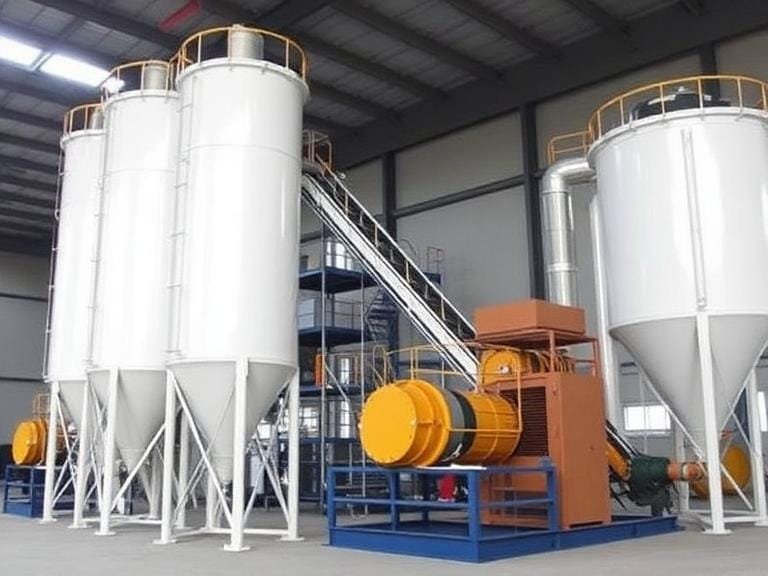
But exactly how much capital is required to build and operate one? From our experience at Oromineral, many investors walk into this sector with wildly inaccurate financial models. They assume processing silica sand is simply a matter of washing dirt. We are here to tell you that achieving glass-grade purity is a complex, multi-stage metallurgical endeavor. Make no mistake: undercapitalizing your process design will result in off-spec products that you simply cannot sell. In this comprehensive guide, we will break down the true silica sand beneficiation plant cost for 2026, detail the critical physical and chemical processing stages, and provide actionable advice to maximize your return on investment.
Table of Contents
- 1. The 2026 Market Outlook for High-Purity Silica Sand
- 2. Capital Expenditure (CapEx): Silica Sand Beneficiation Plant Cost Breakdown
- 3. Operating Expenses (OpEx) and Long-Term Profitability
- 4. Core Processing Stages in a Silica Sand Beneficiation Plant
- 5. Equipment Sizing and Selection
- 6. Summary Table: Estimated CapEx by Plant Capacity
- 7. Frequently Asked Questions (FAQs)
- 8. Industry References
1. The 2026 Market Outlook for High-Purity Silica Sand
The market for washed and beneficiated silica sand is booming, completely reshaping the industrial minerals sector. While standard construction sand might sell for $10 to $25 per ton depending on regional logistics, high-purity industrial silica commands premium pricing ranging from $50 to well over $150 per ton. This staggering price premium entirely justifies the capital investment required for deep beneficiation.
When investors analyze non-metallic mining ventures, they frequently consult a limestone extraction method guide or a magnesium extraction process guide to gauge profitability. However, we firmly recommend establishing a silica sand beneficiation plant because the end-market demand is structurally locked in for the next decade. The aggressive expansion of solar panel mega-factories globally means that any producer who can reliably output 3N or 4N purity silica sand (99.9% to 99.99% SiO2) will find eager buyers waiting at their gates.
2. Capital Expenditure (CapEx): Silica Sand Beneficiation Plant Cost Breakdown
How much does a silica sand beneficiation plant cost in 2026? The practical answer is that it ranges from roughly $450,000 for a modest 50 Tons Per Hour (TPH) basic washing setup, to over $9,500,000 for a 350,000 Tons Per Year (TPY) fully integrated, high-purity facility featuring advanced reverse flotation and thermal drying circuits.
While an investment of several million dollars might sound substantial, it is highly accessible when compared to base metal operations. For context, an iron ore processing plant cost or a copper processing plant cost 2025 routinely runs into the hundreds of millions due to the necessity of heavy crushing infrastructure, massive ball mills, and complex chemical leaching tanks. A silica sand beneficiation plant is predominantly a wet physical separation process, making it significantly cheaper to build and faster to commission.
Here is a realistic breakdown of where your capital will be allocated when building a modern silica sand beneficiation plant:
- Process Equipment (50% – 65%): This is your core machinery. It includes spiral washers, attrition scrubbers, high-frequency dewatering screens, hydrocyclones, and high-intensity magnetic separators. Do not buy cheap, unproven equipment here; downtime will destroy your operational margins.
- Civil Works & Structural Steel (15% – 20%): Building foundations, retaining walls, slurry pits, and the structural steel platforms required to elevate your processing equipment for gravity-fed slurry flows.
- Electrical, Instrumentation, & Automation (10% – 15%): Motor Control Centers (MCC), PLCs, cabling, and automated slurry density sensors. In 2026, automation is not a luxury; it is a strict requirement to maintain consistent product grade.
- Installation, Logistics, & Commissioning (5% – 10%): Freight costs to site, professional mechanical assembly, and the crucial wet-commissioning phase.
3. Operating Expenses (OpEx) and Long-Term Profitability
Understanding your daily Operating Expenses (OpEx) is arguably more critical than the initial silica sand beneficiation plant cost. A poorly optimized plant will bleed cash every single hour it runs.
Typically, raw material acquisition (mining and hauling to the crusher) accounts for 40% to 50% of your OpEx. Utilities—specifically electricity and water—make up another 20% to 30%. From our experience, undercapitalizing the water recovery system is the single biggest operational mistake new mine owners make. A silica sand beneficiation plant requires massive volumes of water to scrub, classify, and transport the sand as a slurry.
We highly recommend installing a closed-circuit water recycling system featuring high-density deep-cone thickeners and heavy-duty filter presses. If you do not aggressively recycle your process water (aiming for 90%+ recovery), your fresh water pumping costs and environmental tailings compliance fees will obliterate your profit margins. Taking the hit on higher initial CapEx for water management always pays off in long-term OpEx reduction.
4. Core Processing Stages in a Silica Sand Beneficiation Plant
To transform raw, stained pit sand into premium glass-grade silica, a modern silica sand beneficiation plant utilizes a sequence of targeted metallurgical stages. Each stage is designed to attack a specific type of impurity.
Washing, Desliming, and Classification
Raw sand often contains 10% to 20% ultrafine clays (kaolin, illite) which carry a significant portion of the iron and aluminum impurities. The raw feed is mixed with water and pumped through hydrocyclone clusters to execute precise particle size classification. The “slimes” (particles under 0.1mm) are forced out the overflow, while the clean underflow moves to the next stage.
High-Density Attrition Scrubbing
Washing alone will not remove iron stains that are physically baked onto the surface of the quartz grains. We use dual-shaft attrition scrubbers operating at high pulp densities (70% to 75% solids). The intense mechanical agitation forces the quartz grains to aggressively grind against one another, physically shearing off the iron oxide coatings and clay bindings.
Magnetic Separation
Do not cut corners on magnetic separation. To remove weakly magnetic iron-bearing minerals like hematite, limonite, and tourmaline, powerful magnetic fields are strictly required. From our experience, utilizing a Wet High-Intensity Magnetic Separator (WHIMS) is the only reliable, continuous method to drive Fe2O3 levels below the critical 100 ppm threshold for solar glass. To fully grasp the physics of this technology, review our WHIMS magnetic separator working principle guide. Furthermore, understanding broader magnetic separation applications in industry will help you optimize the placement of magnetic drums and WHIMS rings within your plant’s flowsheet.
Reverse Flotation (For Ultra-High Purity)
If your deposit contains refractory heavy minerals, mica, or feldspar, magnetic separation is not enough. The sand must enter a flotation circuit. Using an acidic medium (pH 2.5 – 3) and specialized amine collectors, air bubbles are introduced into the slurry tanks. The impurities attach to the bubbles and float to the surface as froth to be scraped away, leaving the pure silica in the tailings. This is known as reverse flotation.
5. Equipment Sizing and Selection
Partnering with the right original equipment manufacturer (OEM) is a make-or-break decision. Before signing any heavy procurement contracts, you must thoroughly vet the top mineral processing companies worldwide to ensure they have proven, deployed experience specifically in silica sand. An OEM that excels in gold processing may struggle with the specific abrasive nature of silica.
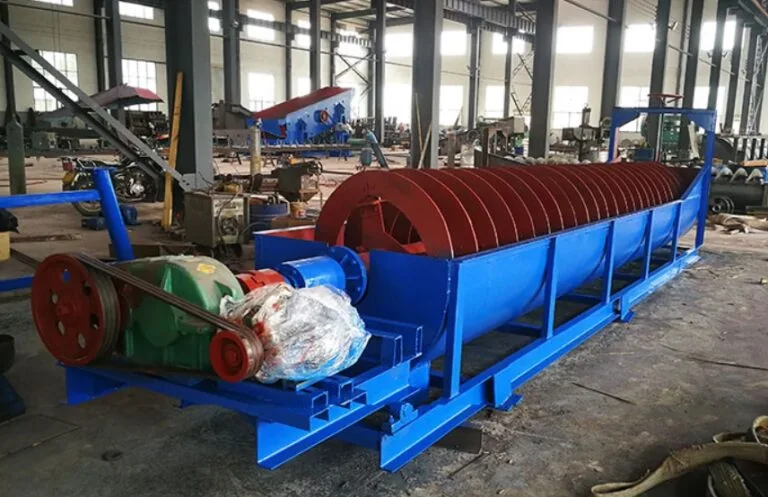
For example, the primary washing stage sets the baseline efficiency for your entire plant. If you fail to remove the sticky clays early, your downstream magnetic separators and flotation cells will choke, consuming excessive chemical reagents and electrical power. For heavy-duty washing, we strongly recommend spiral washing machines over traditional wheel washers, as they provide superior agitation and better fines retention.
Oromineral Sand Washing Machine 100 TPH Long Life
View Full Equipment Specifications & Pricing
Engineered explicitly for abrasive silica environments, this machine guarantees maximum clay removal before the sand enters your magnetic and flotation circuits.
Main Features of the Oromineral Sand Washing Machine:
- Heavy duty construction lined with wear-resistant polyurethane for a long service life.
- Powerful self-contained spiral lifting device designed to handle high-density slurries.
- Continuous spiral raking system that prevents material settling and blockages.
- High classification efficiency with incredibly low maintenance requirements.
- Wide choice of weir height for different washwater overflow applications.
- Rigid tank and durable substructure design to eliminate operational vibration.
- Customizable tank design options to seamlessly fit existing plant footprints.
- Applicable across a wide range of industries, from frac sand to high-purity glass sand.
6. Summary Table: Estimated CapEx by Plant Capacity
To assist in your preliminary financial modeling, we have compiled a realistic estimate of the silica sand beneficiation plant cost based on throughput capacity. Note that these figures reflect the machinery, steelwork, and basic electrical systems, but exclude land acquisition and civil foundation pouring.
| Plant Capacity (Raw Feed) | Estimated CapEx Range (USD) | Ideal Target Market & Application |
|---|---|---|
| 20 – 50 TPH | $250,000 – $600,000 | Local foundries, basic construction sand, low-impurity raw deposits requiring only wash/screen. |
| 50 – 100 TPH | $600,000 – $1,500,000 | Standard float glass manufacturing, mid-tier industrial supply, ceramics. |
| 100 – 200 TPH | $1,500,000 – $3,500,000 | Frac sand production, large-scale automotive glass, water filtration media. |
| 200+ TPH (High-Purity 3N/4N) | $4,000,000 – $10,000,000+ | Photovoltaic (solar) glass, ultra-clear display screens, semiconductor base materials. Requires full flotation and WHIMS. |
7. Frequently Asked Questions (FAQs)
Do I always need to include a flotation circuit in my silica sand beneficiation plant?
No. Flotation is highly expensive regarding both CapEx and reagent OpEx. If your raw geological deposit naturally features low levels of alumina, mica, and feldspar, you can often reach standard glass-grade purity using only aggressive attrition scrubbing and high-intensity magnetic separation. We recommend executing rigorous metallurgical bench testing before purchasing flotation cells.
What is the biggest hidden cost when operating a silica sand beneficiation plant?
From our experience, the largest hidden cost is tailings and water management. A plant running at 100 TPH can consume upwards of 150 to 200 cubic meters of water per hour. If you do not have a robust thickener and filter press system to recover 90% of that water, the costs of fresh water sourcing and building massive toxic tailings dams will quickly cripple your operation.
How long does it take to build and commission a full processing plant?
Assuming environmental and civil permits are already secured, manufacturing the equipment typically takes 3 to 4 months. Ocean freight, site installation, and electrical wiring require an additional 2 to 3 months. Finally, wet commissioning and optimizing the slurry flow parameters take roughly 1 month. You should plan for an 8 to 10-month timeline from placing the purchase order to producing saleable sand.
8. Industry References
To ensure your feasibility study is grounded in accurate geological data and processing standards, we highly advise consulting the following authoritative institutional resources: