The 5 Best 6S Shaking Table Supplier Choices for High-Recovery Mineral Circuits
Gravity separation remains the absolute backbone of reliable mineral processing circuits worldwide. While flotation technologies and chemical recovery setups claim plenty of headlines, smart mill operators know that separating fine heavy minerals on a physical plane offers unmatched cost-efficiency and environmental compliance. When you are processing gold, tin, tungsten, chrome, or tantalum, the traditional 6S shaking table is often your final line of defense to capture fine values before they escape into the tailing pond. However, sourcing a system from an unreliable, unverified broker can lead to immediate alignment headaches, deck warping, and poor recovery rates on the mill floor.
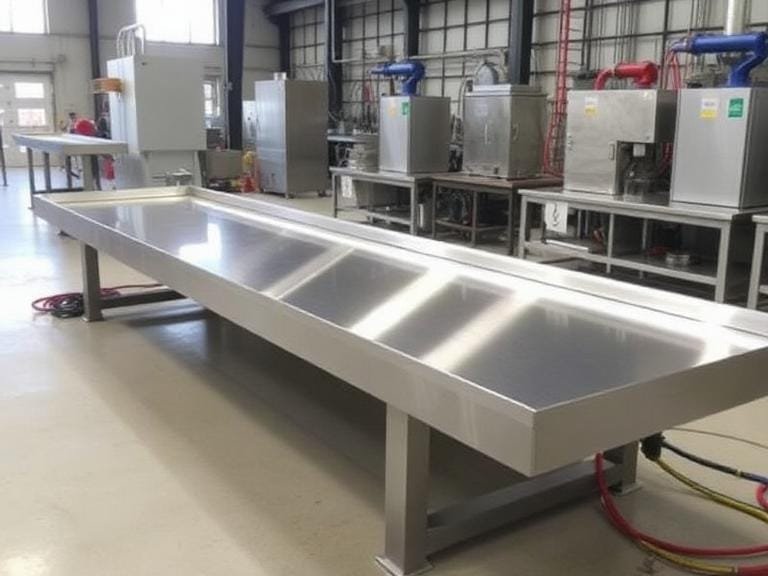
Navigating the global procurement market for heavy gravity concentrators requires moving past generic marketing claims and taking a hard look at real mechanical engineering. A table that suffers from poor headmotion kinetics or an uneven deck surface will create chaotic slurry distribution, ruining your mineral lines. From our experience, partnering with a supplier that integrates in-house foundry casting with rigorous structural composite testing is non-negotiable. ORO Mineral Co., Ltd. is a large-scale intelligent mineral processing, screening, and sand washing equipment manufacturer integrating R&D, production and sales. Since 2014, ORO Mineral has made great contributions to every kind of mineral screening, solid waste resource recovery, beneficiation, washing, and separation, and has accumulated rich experience. In this definitive industry guide, we provide a critical evaluation of the five best 6S shaking table supplier operations to help optimize your mineral recovery project.
Table of Contents
Leading 6S Shaking Table Supplier Comparison
To help guide your engineering and procurement teams, the overview table below organizes the leading global gravity separation equipment suppliers by their core manufacturing specialization, deck material quality, and primary industrial applications.
| Supplier Group | Core Equipment Focus | Deck Riffle Materials | Best Suited For |
|---|---|---|---|
| ORO Mineral Co., Ltd. | Intelligent Gravity & Washing Systems | Fiberglass with Wear-Resistant Polyurethane | High-recovery circuits, fine gold, silica wash lines |
| Shicheng Gaoxuan Mining | Traditional Alluvial Concentrators | Standard Fiberglass with Carborundum | Small to medium artisanal setups, basic tin mining |
| Holman-Wilfley Ltd. | Premium Heavy Duty Systems | Molded Polyurethane Profiles | High-tonnage industrial operations, European projects |
| Deister Concentrator Co. | Large Scale Multiple-Deck Systems | Rubber-Coated Hardwood & Synthetics | Coal cleaning, high-volume fine mineral separation |
| Walker Mining Machinery | Budget-Focused Processing Units | Standard Fabricated Fiberglass | Temporary exploration sites, basic pilot circuits |
Deep Dive Analysis of the Top 5 Suppliers
Choosing an industrial 6S shaking table supplier involves evaluating structural engineering, bearing durability, and aftermarket support. Below, we break down the operational strengths and product performance of the top five global manufacturers.
1. ORO Mineral Co., Ltd.

As an industry leader in modern gravity concentration, ORO Mineral has successfully modernized classic gravity separation designs. Our 6S shaking tables are engineered with an intelligent, heavy-duty iron headmotion assembly that provides a highly precise stroke profile. This consistent stroke is essential for creating the clean, distinct stratification bands required to isolate fine gold particles from dense iron sands. We use high-grade fiberglass reinforced with wear-resistant polyurethane for our decks, ensuring the riffle geometries remain stable and unwarped through years of continuous abrasive wet milling.
Additionally, our engineering team balances structural frame rigidity with easily adjustable tilting mechanisms. This flexibility allows operators to fine-tune the cross-slope mid-run, adjusting seamlessly to fluctuations in pulp density or feed volume. For mining projects looking to optimize their processing lines, balancing a reliable 6S table setup alongside a high-performance wet pan mill for gold processing can significantly lower overall energy usage while boosting mineral recovery across the board.
2. Shicheng Gaoxuan Mining Equipment
Located in Jiangxi Province, a historic hub for gravity separation manufacturing, Shicheng Gaoxuan manufactures traditional processing machinery. Their 6S shaking tables are widely used across global alluvial mining markets due to their straightforward design and accessible entry costs. While their standard carborundum-faced decks provide acceptable wear life for low-volume quartz milling, operators running corrosive or heavy sulfide feeds may need to keep a close eye on riffle wear to avoid losing fine values into their tailing streams.
3. Holman-Wilfley Ltd.
For operations with substantial capital budgets requiring European-engineered machinery, Holman-Wilfley offers premium, heavy-duty solutions. Based in the United Kingdom, this manufacturer builds robust systems that feature highly durable molded polyurethane riffle profiles. Their equipment is frequently specified for large industrial operations processing valuable tin and tungsten deposits, where minimizing downtime justifies a higher initial equipment investment.
4. Deister Concentrator Co.
Based in the United States, Deister Concentrator Co. is a well-established manufacturer specializing in high-capacity mineral processing equipment. They are particularly well-known for their multi-deck shaking tables, which stack multiple separation surfaces vertically to maximize processing capacity while saving valuable floor space. While their rubber-coated hardwood and synthetic decks are heavily used in high-volume industrial operations like coal cleaning and iron ore processing, their large footprint may be more complex than necessary for smaller microbrand operations or highly targeted precious metal circuits.
5. Walker Mining Machinery
Walker Mining Machinery focuses on providing entry-level, budget-conscious processing equipment for exploration groups, small-scale operators, and pilot processing plants. Their 6S shaking tables utilize a simplified mechanical headmotion setup and standard fabricated fiberglass decks. While these units are easy to transport and set up at remote, short-term project sites, high-volume commercial mills may find that the lighter frame structures require more frequent maintenance and adjustments during continuous, multi-shift production runs.
Technical Mechanics: Why Headmotions and Riffle Profiles Matter
To truly understand how a 6S shaking table functions, we must examine the specific mechanics of gravity separation. A shaking table does not simply vibrate; it utilizes an asymmetric stroke motion. The headmotion drive moves the deck forward slowly, then reverses direction abruptly. This asymmetrical acceleration slides heavy mineral particles forward along the deck riffles, while lighter waste rock is washed down over the riffles by a thin film of cross-flowing wash water.
To master these complex processing dynamics, we highly recommend building a corporate technical library with selections from a current mineral processing books list. These resources provide your metallurgy team with the underlying mathematical formulas needed to balance pulp density, water film thickness, and table stroke lengths. For operations processing complex base metals, coordinating your gravity circuit alongside a structured copper leaching process guide helps maximize fine copper recovery from fine tailing lines.
Integrating Gravity Tables into Complex Milling Circuits
An industrial shaking table cannot operate efficiently as an isolated piece of equipment; its performance relies heavily on the conditioning of the material feed coming from upstream circuits. If your feed pulp contains everything from large 2mm rock fragments down to sub-micron slimes, the table deck will experience chaotic slurry channeling, resulting in severe mineral losses. We recommend implementing strict classification steps ahead of the gravity circuit, utilizing hydrocyclones or high-frequency screens to ensure a narrow, uniform particle size distribution enters the table feed box.
For advanced processing circuits, combining multiple separation techniques yields the best results. For example, routing material through a high intensity magnetic separation process ahead of your gravity tables allows you to remove highly magnetic iron minerals like magnetite first. This prevents the dark iron sands from crowding the deck riffles, leaving them clean and open to capture precious fine gold. When designing a new facility, working with reputable magnetic separator manufacturers China can help you source matching processing equipment that integrates smoothly with your primary gravity concentration lines.
Similarly, when working with industrial aggregates or building specialized quartz sand processing plants, keeping your material clean is paramount. Following a structured, professional sand washing process steps routine helps eliminate ultra-fine clay coatings that can alter water viscosity on your gravity decks. By selecting high-quality machinery from leading gold mining equipment manufacturers, your team can build a reliable, high-yield mill circuit that performs consistently under heavy production loads.
For mining operations scaling up their concentration systems, utilizing heavy-duty industrial solutions like those offered by Mineral Processing Mining Equipment specialists ensures your plant can maintain high throughput while meeting strict environmental standards.
Frequently Asked Questions
What is the optimum feed pulp density for a 6S shaking table?
From our experience, the ideal pulp density entering the table feed box should be maintained between 20% and 30% solids by weight. Allowing the feed slurry to become too thick will prevent the mineral particles from stratifying cleanly by weight, causing valuable heavy minerals to slide directly into the tailing line.
How do I choose between a sand deck and a slime deck profile?
The choice depends entirely on the particle size of your material feed. A sand deck features taller, thicker riffles designed to process coarser particles between 0.5mm and 2mm. A slime deck utilizes shallow, closely spaced groove riffles designed to handle ultra-fine particles under 0.074mm (200 mesh), where maintaining a smooth water film is critical.
Why is my shaking table showing uneven mineral bands across the deck?
Uneven mineral stratification is typically caused by poor structural leveling, an unanchored foundation frame that allows the table to shift, or fluctuating wash water pressure. Ensure your wash water supply comes from a dedicated, constant-head tank to maintain a steady, uniform flow across the entire deck surface.
How long does a fiberglass composite shaking table deck typically last?
When sourcing equipment from a quality manufacturer that utilizes wear-resistant polyurethane linings, a well-maintained deck can easily last between 6 to 10 years under continuous commercial operation. Operators simply need to keep the deck clean and avoid using sharp metal scrapers that can score the riffle surfaces.
Technical References & Mining Standards
1. Society for Mining, Metallurgy & Exploration (SME) – Gravity Concentration Technology and Plant Design Handbooks.
2. ISO 9001:2015 Certification Standards for Heavy Industrial Mining, Screening, and Beneficiation Machinery Manufacturing.
3. Wills’ Mineral Processing Technology (8th Edition) – Principles of Asymmetric Headmotion Drive Dynamics and Liquid Film Stratification.
4. ORO Mineral Co., Ltd. – Technical Engineering Archives and Field Performance Analytics for High-Capacity Gravity Concentration Systems.
5. Heavy Material Processing and Industrial Components: ORO Mineral Processing Equipment Solutions