5 Best Magnetic Separator for Kaolin in 2026
Kaolin clay is one of the most versatile and highly demanded industrial minerals in the world, serving as a critical raw material for paper coating, ceramics, paints, cosmetics, and advanced polymers. However, the commercial value of kaolin is entirely dependent on its brightness and whiteness. Raw kaolin deposits are frequently contaminated with iron-bearing minerals (such as hematite and goethite) and titanium-bearing minerals (such as anatase and rutile). Even trace amounts of these weakly magnetic impurities can severely degrade the optical properties of the final product. Therefore, identifying and integrating the Best magnetic separator for kaolin is the most critical step in the modern kaolin beneficiation process.
Authored by ORO Mineral. We are a premier manufacturer and supplier of advanced mineral processing equipment. With deep expertise in magnetic separation technology, we provide innovative solutions to mining enterprises globally, ensuring maximum purity and yield in non-metallic and metallic ore beneficiation.
From our experience at ORO Mineral, removing these micron-sized, weakly magnetic impurities requires sophisticated engineering. Standard low-intensity magnetic drums are entirely ineffective for this task. Instead, kaolin purification demands high-intensity magnetic separation (HIMS) or high-gradient magnetic separation (HGMS) systems capable of generating massive magnetic fields. When a processing plant invests in the Best magnetic separator for kaolin, they immediately witness a dramatic increase in the ISO brightness index of their clay, elevating their product from low-tier ceramic grade to premium paper-coating grade.
In this comprehensive technical guide, we will leverage our engineering expertise to evaluate the 5 Best magnetic separator for kaolin available in 2026. We will explore equipment specifications, operational efficiencies, and how choosing the right magnetic separator impacts your overall plant profitability.
Table of Contents
Summary Table: 5 Best Magnetic Separator for Kaolin
To assist procurement managers and metallurgical engineers in their selection process, we have compiled a summary matrix of the Best magnetic separator for kaolin technologies dominating the market in 2026.
| Rank | Equipment Model / Technology | Magnetic Field Strength | Primary Application in Kaolin | Key Advantage |
|---|---|---|---|---|
| 1 | ORO Mineral ZT-1530P Belt Separator | High Intensity | Dry kaolin processing / Pre-concentration | Low power consumption (1.1kw), continuous operation |
| 2 | ORO Mineral ORO003 Machine | 5000 – 15000 Gauss | High-capacity slurry processing (5-100 TPH) | Highly customizable, exceptional fine particle capture |
| 3 | Vertical Ring WHIMS | Up to 1.5 Tesla (15000 Gauss) | Wet processing of ultra-fine kaolin slurry | Prevents magnetic matrix clogging via pulsation |
| 4 | Superconducting Separator | Up to 5.0 Tesla (50000 Gauss) | Removal of microscopic anatase (TiO2) | Unmatched magnetic force, zero electrical resistance |
| 5 | Electromagnetic HGMF | Up to 2.0 Tesla (20000 Gauss) | Batch processing of kaolin slip | Stainless steel wool matrix creates extreme gradients |
Engineering Criteria: Choosing the Best Magnetic Separator for Kaolin
Before analyzing specific models, it is vital to understand the physics of kaolin beneficiation. The impurities in kaolin, primarily iron oxides and titanium dioxide, possess extremely low magnetic susceptibility. Furthermore, kaolin particles are incredibly fine, often less than 2 microns in diameter. Therefore, the Best magnetic separator for kaolin must overcome fluid drag forces and capture microscopic, weakly magnetic particles.
We recommend evaluating the Best magnetic separator for kaolin based on three critical metrics: Background Magnetic Field Strength (which must exceed 10,000 Gauss or 1 Tesla for effective titanium removal), Magnetic Field Gradient (the rate of change of the magnetic field, generated by specialized matrices like steel wool or grooved plates), and Rheological Handling (the machine’s ability to process thick, viscous kaolin slurries without matrix blockage).
Detailed Review of the 5 Best Magnetic Separator for Kaolin
1. ORO Mineral ZT-1530P 1.1kw Belt Magnetic Separator

As the flagship dry-processing unit in our catalog, the ORO Mineral ZT-1530P is undeniably one of the Best magnetic separator for kaolin for preliminary beneficiation. Originating from our advanced facilities in Foshan, Guangdong, this ISO9001-certified machine is engineered for extreme energy efficiency, requiring a power rating of only 1.1kw.
From our experience, many kaolin plants waste massive amounts of energy processing bulk ore through wet high-intensity systems prematurely. By deploying the ZT-1530P as a pre-concentrator, facilities can effectively remove larger ferromagnetic and strongly paramagnetic impurities before the milling and slurry stages. With a supply ability of 50 sets per month and a swift delivery time of within 25 days after downpayment, it is the Best magnetic separator for kaolin operations looking to scale up their dry-side processing rapidly.
2. ORO Mineral ORO003 Magnetic Separator Machine
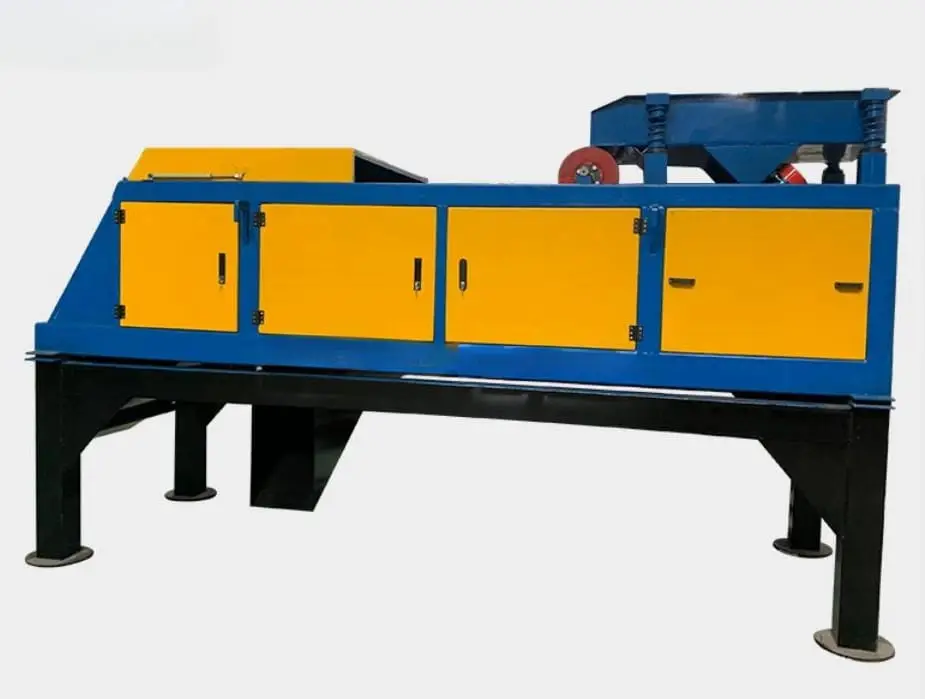
When the process moves from dry crushing to wet slurry refinement, the ORO Mineral ORO003 stands as the absolute Best magnetic separator for kaolin available on the global market. We engineered this machine to deliver a staggering magnetic field strength ranging from 5,000 to 15,000 Gauss, making it perfectly suited for capturing weakly magnetic hematite and limonite from kaolin slip.
The ORO003 is highly versatile, boasting a processing capacity ranging from 5 to 100 TPH (Tons Per Hour) and accepting a maximum feed size of ≤ 300 mm prior to final milling. Constructed from premium Stainless Steel to prevent secondary rust contamination, it operates with a power consumption footprint of 5.5 to 160 kW, depending on the required throughput. Weighing between 5,000 and 20,000 kg and measuring 2500 x 1500 x 2000 mm, it is a heavy-duty industrial powerhouse. We highly recommend utilizing its customizable options, such as integrating a Belt Conveyor or Vibrating Feeder, to ensure seamless automated operation. Without a doubt, this is the Best magnetic separator for kaolin for modern, high-yield plants.
3. Vertical Ring Wet High-Intensity Magnetic Separator (WHIMS)
The Vertical Ring Wet High-Intensity Magnetic Separator (WHIMS) is an industry-standard technology and represents a strong contender for the title of Best magnetic separator for kaolin. Traditional electromagnetic filters often suffer from matrix clogging when processing highly viscous kaolin clay. The Vertical Ring WHIMS solves this by rotating the magnetic matrix vertically through the slurry and utilizing a mechanical pulsation mechanism to keep the particles in a loose state, preventing mechanical entrapment of non-magnetic kaolin particles.
This technology is exceptionally efficient at capturing fine, weakly magnetic particles. To understand the mechanics deeper, we recommend reading our expert guide on the WHIMS magnetic separator working principle. The continuous operation and high recovery rates make WHIMS an essential component in comprehensive non-metallic mineral processing.
4. Cryogenic Superconducting Magnetic Separator
When absolute maximum brightness is required—such as in premium paper coating grades—the Best magnetic separator for kaolin is the Cryogenic Superconducting Magnetic Separator. Conventional electromagnets max out around 1.8 to 2.0 Tesla due to the core saturation of iron. Superconducting separators utilize liquid helium to cool niobium-titanium coils to near absolute zero, eliminating electrical resistance and allowing the generation of massive magnetic fields up to 5.0 Tesla (50,000 Gauss).
This extreme force is required to extract ultra-fine anatase (TiO2), which has incredibly low magnetic susceptibility. While the capital expenditure (CAPEX) for superconducting technology is immense, the operational expenditure (OPEX) is surprisingly low due to zero electrical resistance in the coils. If you are analyzing the financial viability of massive plant upgrades, exploring the iron ore processing plant cost or the copper processing plant cost 2025 provides excellent context on how high-end magnetic technology impacts overall capital investment.
5. Electromagnetic High-Gradient Magnetic Filter (HGMF)
Rounding out our list of the Best magnetic separator for kaolin is the Electromagnetic High-Gradient Magnetic Filter (HGMF). This is a batch-processing technology where kaolin slurry is pumped through a canister densely packed with magnetizable stainless steel wool. The sharp edges of the steel wool amplify the background magnetic field, creating microscopic zones of extreme magnetic gradient.
As the slurry passes through, iron and titanium impurities are aggressively pulled out of suspension and trapped on the steel wool. Once the matrix is saturated, the electromagnet is powered down, and high-pressure water flushes the impurities away. It remains one of the most reliable and widely used methods for achieving high-brightness kaolin clay among leading mineral processing companies worldwide. Furthermore, this filtration principle is highly adaptable and often integrated into other non-metallic sectors; you can learn more by reviewing our limestone extraction method guide.
Expert Buying Guide: Maximizing Your Kaolin Yield
Procuring the Best magnetic separator for kaolin is a complex metallurgical decision. From our experience at ORO Mineral, we strongly advise plant managers to conduct rigorous laboratory-scale pilot testing before finalizing equipment procurement. You must send a representative sample of your raw kaolin to the manufacturer to determine its exact mineralogical composition.
If your kaolin contains large, liberated iron particles, a lower-cost machine like our ZT-1530P Belt Separator will yield excellent returns. However, if the iron is finely disseminated or locked within the kaolin matrix, you must invest in wet grinding followed by the extreme Gauss ratings of the ORO003 or a WHIMS machine. Additionally, consider the rheology of your slurry. Kaolin slip can be highly viscous; the Best magnetic separator for kaolin will feature specialized matrix gaps to prevent pressure buildup and channeling within the separation chamber.
Frequently Asked Questions (FAQs)
Why is it necessary to use a magnetic separator for kaolin processing?
Kaolin’s primary industrial value lies in its brilliant white color. Impurities like iron oxides (which cause reddish/brown tints) and titanium oxides (which cause yellowish tints) must be removed. The Best magnetic separator for kaolin extracts these impurities without relying solely on harsh, environmentally damaging chemical leaching processes.
What is the ideal magnetic field strength for removing iron from kaolin?
Because the iron and titanium impurities in kaolin are weakly magnetic (paramagnetic) and microscopic, you require high-intensity fields. The Best magnetic separator for kaolin must generate a minimum of 10,000 Gauss (1 Tesla). For capturing ultra-fine anatase, 15,000 to 20,000 Gauss is recommended.
Wet vs. Dry Magnetic Separation: Which is better for kaolin?
Wet magnetic separation is vastly superior for the final purification of kaolin. Kaolin particles are incredibly fine and tend to agglomerate in a dry state, trapping iron particles inside dust clusters. Creating a dispersed aqueous slurry ensures that the Best magnetic separator for kaolin can act upon individual, liberated impurity particles.
Can the ORO003 Magnetic Separator Machine be customized?
Absolutely. At ORO Mineral, we understand that no two processing plants are identical. The ORO003 is recognized as the Best magnetic separator for kaolin because it can be fully customized with integrated Belt Conveyors, Vibrating Feeders, and specific matrix configurations tailored to the exact throughput and viscosity of your operations.
Industry References
To ensure the highest standards of metallurgical accuracy and industrial compliance, the engineering principles and beneficiation methodologies discussed in this article are aligned with data from authoritative geological and environmental organizations: