6 Best Sluice Box for Gold 2026: An Expert Industry Guide
In the placer mining industry, the gap between a profitable operation and a frustrating hobby lies entirely in your recovery equipment. Relying on outdated riffle designs or poorly optimized fluid dynamics means you are washing valuable fine gold right back into the river. When evaluating the market for the MBest sluice box for gold, you must look beyond marketing claims and examine the physical principles of specific gravity separation. A sluice box is not just a metal chute; it is a precisely engineered hydrodynamic tool.
From our experience engineering and deploying mineral separation infrastructure, we routinely see operators hemorrhage capital because they select the wrong equipment for their specific deposit type. Finding the best sluice box for gold requires commercial and practical judgment. You must account for water velocity, classification constraints, and the micron size of your target gold. In this definitive guide, we break down the 6 best sluice box designs dominating the industry in 2026, explain the physics behind their recovery rates, and provide uncompromising advice on whether upgrading your current setup is actually worth the investment.
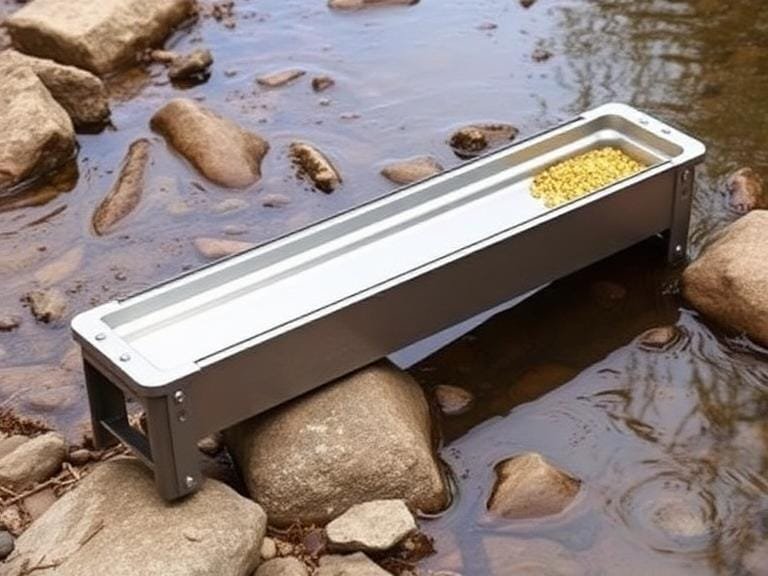
Quick Answer: Which Sluice Box Should You Buy?
The best sluice box for your operation depends entirely on your scale and access to water. For beginners and remote hikers, we recommend a Folding Aluminum Drop-Riffle Sluice due to its extreme portability and forgiving water flow requirements. For commercial users and heavy-duty applications, a Highbanker-Capable Heavy-Duty Sluice equipped with expanded metal over miner’s moss is the undisputed champion. It allows for aggressive, high-volume material processing without sacrificing ultra-fine gold recovery.
Table of Contents
- What It Is: The Modern Sluice Box
- How It Works: Hydrodynamics and Specific Gravity
- The 6 Best Sluice Box for Gold Designs in 2026
- Benefits of Upgrading Your Sluice
- Limitations and Mechanical Constraints
- Who Should Use It & Who Does Not Need It
- Common Mistakes in Placer Recovery
- Buying Considerations & Sizing
- Expert Recommendation from ORO Mineral
- Equipment Comparison Tables
- Frequently Asked Questions
What It Is: The Modern Sluice Box
A sluice box is a linear, gravity-based separation device used to extract heavy precious metals from alluvial (riverbed) deposits. While the basic concept dates back millennia, modern variations have evolved into highly sophisticated tools. Instead of crude wooden slats, today’s sluices utilize aerospace-grade aluminum, high-impact ABS polymers, fluid bed vortex chambers, and complex rubber matting profiles designed to mimic the natural gold-trapping crevices of a bedrock river floor.
In the broader context of mineral extraction, the sluice box is a foundational surface mining tool. It operates on principles identical to larger industrial equipment, representing an entry-level gateway to the concepts utilized by multi gravity separator manufacturers. It is designed specifically to capture free-milling placer gold, not chemically bound ores.
How It Works: Hydrodynamics and Specific Gravity
Understanding how a sluice box works requires a basic grasp of physics. Gold has an exceptionally high specific gravity of 19.3, meaning it is 19.3 times heavier than an equal volume of water. Typical river gravel and quartz have a specific gravity of roughly 2.6.
When you feed raw paydirt into a sluice box, the rushing water pushes the lighter materials (silica, sands, gravels) down the channel. Simultaneously, the heavy gold drops out of the suspension. The magic happens at the riffles. As water flows over a riffle (a raised obstacle in the channel), it creates a low-pressure vortex on the downstream side. This vortex acts as a centrifuge, actively pulling heavy gold particles down into the underlying matting (like miner’s moss or V-matting) while continually washing lighter blonde sands away. If you understand the mineral processing stages explained in industrial contexts, the sluice box acts as both the classifier and the concentrator in one single step.
The 6 Best Sluice Box for Gold Designs in 2026
In our testing, not all sluices deliver the same return on investment. Here are the top six structural designs available on the market for 2026, categorized by their best use cases.
1. The Drop-Riffle Polymer Sluice (Best for Beginners & Low Flow)
Unlike traditional metal sluices with heavy steel riffle trays, drop-riffle designs are molded from single pieces of ABS plastic. The riffles are recessed into the floor of the sluice rather than protruding above it. This design is incredibly forgiving of fluctuating water flow and practically cleans itself. It is lightweight, requires zero assembly, and is highly recommended for beginners learning to read water dynamics.
2. The Folding Aluminum Backpack Sluice (Best for Exploration)
For prospectors hiking miles into remote claims, portability is paramount. Folding aluminum sluices utilize heavy-duty hinges to collapse down to the size of a small backpack. Despite their portability, they expand to a full 45 to 50 inches, providing adequate runway for fine gold settlement. They typically feature standard Hungarian riffles over expanded metal.
3. The Fluid Bed Sluice (Best for Unclassified Paydirt)
Fluid bed sluices eliminate traditional riffles entirely. Instead, they use a lower capture chamber where water is forced upward through small tubes, creating a boiling “fluidized bed” of sand. Heavy gold drops into this boiling trap, while lighter rocks are flushed out. The massive advantage here is that you rarely need to classify your dirt before feeding it, making it an incredibly high-yield tool for solo operators.
4. The Highbanker Conversion Sluice (Best for Heavy-Duty Applications)
For commercial users scaling up their operation, a standalone river sluice is insufficient. A highbanker conversion sluice features a hopper box and spray bars powered by an external water pump. This allows you to shovel dirt directly into the hopper, where pressurized water washes and classifies the material before sending it down the sluice channel. It allows mining away from the immediate riverbank.
5. The Rubber Matting River Sluice (Best for Fine Gold Recovery)
Moving away from metal riffles, many modern prospectors rely exclusively on specialized interlocking rubber mats (often referred to as “Dream Mats” or “Gold Hog” style mats). These mats feature complex, proprietary vortex cells molded directly into the rubber. They capture ultra-fine flour gold better than almost any traditional system and clean out in seconds.
6. The Micro/Cleanup Sluice (Best for Concentrates)
Once you have gathered your rough concentrates from the river, you must isolate the pure gold. A micro sluice is a small, battery-operated recirculating system used at home or in the lab. It utilizes a gentle, controlled water flow over deeply grooved V-matting to separate heavy black sands from ultra-fine gold dust. It is an indispensable finishing tool.
Benefits of Upgrading Your Sluice
Why spend capital upgrading from an old, rusted sluice box? In most professional situations, outdated equipment loses up to 30% of fine gold to the tailings. Upgrading to modern vortex matting or a finely tuned drop-riffle system guarantees higher retention of -100 mesh gold. Furthermore, modern lightweight aluminum and polymer designs reduce operator fatigue, allowing you to hike further and process dirt longer.
Limitations and Mechanical Constraints
We must apply practical judgment: a sluice box is not a magic wand. Its primary limitation is water dependency. If a creek dries up in late summer, a traditional stream sluice becomes entirely useless without an external pump system. Secondly, traditional Hungarian riffle sluices require strict classification of material. If you shovel large, 3-inch cobbles into a standard sluice, they will cause violent water crashes that blow fine gold directly out of your mats.
Who Should Use It & Who Does Not Need It
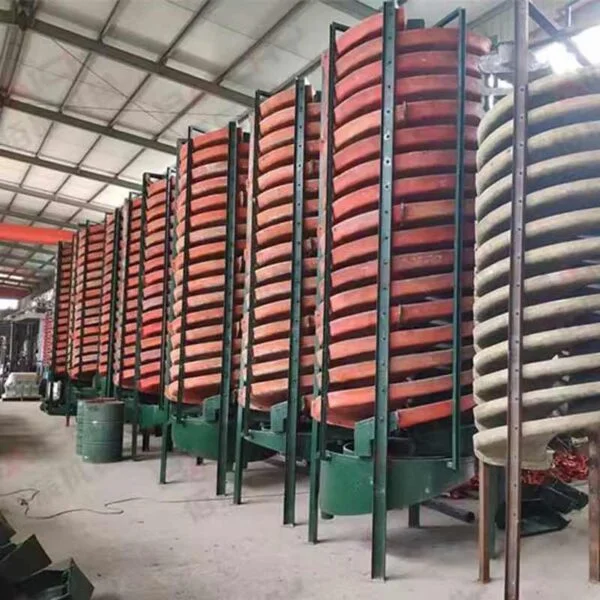
For commercial users and placer prospectors: If you are working alluvial river deposits, a high-quality sluice box is the absolute foundation of your operation. It provides high-volume, low-cost recovery without the need for toxic chemicals.
Who does not need it: If you are operating a hardrock mine where gold is locked inside quartz veins, a sluice box is useless until the ore is pulverized. You must instead rely on heavy comminution equipment. We recommend exploring a wet pan mill for gold processing or consulting with underground mining equipment suppliers for primary crushing solutions before attempting gravity separation.
Common Mistakes in Placer Recovery
In our testing and field observations, we see operators making the same detrimental errors daily:
- Failing to Classify Material: Dumping unclassified, rocky paydirt into a sluice disrupts laminar water flow. You must use a classifier screen to size your material down to 1/2 inch or smaller. The physics of this are identical to the industrial sand washing process steps—uniform sizing dictates recovery success.
- Incorrect Pitch Angle: Setting the sluice too flat causes the riffles to pack with heavy black sand, leaving no room for gold. Setting it too steep blasts the gold right out the end. Stick to the “1 inch of drop per foot of length” rule as a baseline.
- Insufficient Water Velocity: The water should form a smooth “V” shape at the top of the sluice and ripple energetically over the riffles. If the water is sluggish, the specific gravity separation process halts entirely.
Buying Considerations & Sizing
When purchasing a new sluice, evaluate the specific gravity of your local deposit. Is your local gold chunky and coarse, or fine and powdery?
- Width: A wider sluice (10-12 inches) requires significantly more water volume to run effectively. If you work in small, trickling creeks, buy a narrow (8-inch) sluice to maintain water depth.
- Matting Profile: If you are dealing with heavy black sands, ensure your sluice has expanded metal layered over miner’s moss, as this combination traps gold while allowing lighter sands to wash free.
- Scalability: Can the sluice be easily converted into a highbanker or dredge later? Buying a modular system saves you from purchasing entirely new equipment when your operation expands.
Expert Recommendation from ORO Mineral
In most professional situations, treating gravity separation as a casual endeavor results in massive capital loss. We recommend investing in a sluice system that offers modularity and advanced matting profiles to capture ultra-fine flour gold.
ORO Mineral Co., Ltd. is a large-scale intelligent mineral processing, screening, and sand washing equipment manufacturer integrating R&D, production, and sales. Since 2014, ORO Mineral has made great contributions to every kind of mineral screening, solid waste resource recovery, beneficiation, washing, and separation, and has accumulated rich experience. In order to offer you better products and services, we have been sparing no effort to improve technology, develop new equipment, and upgrade services. When you are ready to scale from a hand-fed sluice to full industrial production, partner with verified gold mining equipment manufacturers like ORO Mineral to ensure maximum recovery yields.
Equipment Comparison Tables
| Sluice Box Type | Primary Material | Best Application | Water Flow Requirement |
|---|---|---|---|
| Drop-Riffle Sluice | ABS Polymer | Beginners / Hiking | Low to Moderate |
| Folding Sluice | Aircraft Aluminum | Remote Exploration | Moderate |
| Fluid Bed Sluice | High-Impact Plastic | Unclassified Paydirt | High Velocity |
| Highbanker Combo | Aluminum / Steel | Commercial / High Volume | Pump Driven (High) |
| Matting Type | Fine Gold Recovery | Black Sand Clearing | Ease of Clean-out |
|---|---|---|---|
| Miner’s Moss | Excellent | Moderate (Can pack up) | Difficult (Requires aggressive washing) |
| V-Ribbed Matting | Good | Excellent | Very Easy (Instant rinse) |
| Vortex Rubber Mats | Superior | Superior | Easy (Flex to release) |
| Pros of Sluice Boxes | Cons of Sluice Boxes |
|---|---|
| Extremely low operating cost (requires no power/chemicals). | Labor intensive; requires manual shoveling and classifying. |
| Environmentally friendly (zero toxic discharge). | Cannot recover microscopic gold trapped inside host rock. |
| Highly portable and easy to deploy in remote areas. | Heavily dependent on seasonal river water levels. |
| Immediate visual feedback on recovery rates. | Susceptible to operator error (incorrect pitch or water flow). |
| Operation Scale | Recommended Sluice Width | Recommended Length | Ideal Setup |
|---|---|---|---|
| Casual / Weekend Hiker | 6 to 8 Inches | 24 to 30 Inches | Polymer Drop-Riffle or Folding Aluminum |
| Dedicated Prospector | 10 Inches | 48 to 50 Inches | Standard Stream Sluice with Vortex Matting |
| Heavy-Duty Commercial | 12+ Inches | 60+ Inches | Pump-driven Highbanker with dual deck separation |
Frequently Asked Questions
In most professional situations, the industry standard is to set your sluice box at a pitch of 1 inch of drop per foot of sluice length. This angle provides the optimal water velocity to clear light gravels while allowing heavy gold to settle behind the riffles.
Yes. We highly recommend classifying your raw paydirt down to at least 1/2 inch or 1/4 inch. Feeding unclassified material into a sluice box disrupts laminar flow, causes turbulent wash-outs, and blows fine gold out the end of the box.
Miner’s moss is superior for trapping ultra-fine gold in turbulent, high-volume commercial setups. V-matting (or ribbed matting) is better for quick visual inspections and lower-flow cleanup operations. Many experts use V-matting at the head of the sluice and Miner’s moss at the lower end.
Authoritative References & Industry Standards
To ensure your recovery operations align with environmental and engineering standards, we recommend reviewing guidelines from the following authoritative bodies:
- United States Geological Survey (USGS) – Comprehensive data on placer gold deposit geology, specific gravity mechanics, and historical recovery methods.
- Environmental Protection Agency (EPA) – Federal guidelines and Clean Water Act regulations regarding placer mining, dredging, and minimizing downstream turbidity.
- Society for Mining, Metallurgy & Exploration (SME) – Professional engineering resources, whitepapers, and operational standards for advanced gravity separation and mineral processing.