5 Main Types of Magnetic Separators for Belt Conveyors: How to Choose the Right One
Choosing a magnetic separator for a belt conveyor is not simply a matter of buying the strongest magnet available. The right equipment depends on where ferrous contaminants enter the material stream, how deeply they are buried, how much material the conveyor carries, and whether the captured metal needs to be removed continuously. A poorly selected separator can leave tramp iron in the process, create unnecessary maintenance, or cost more than the production risk it is meant to prevent.
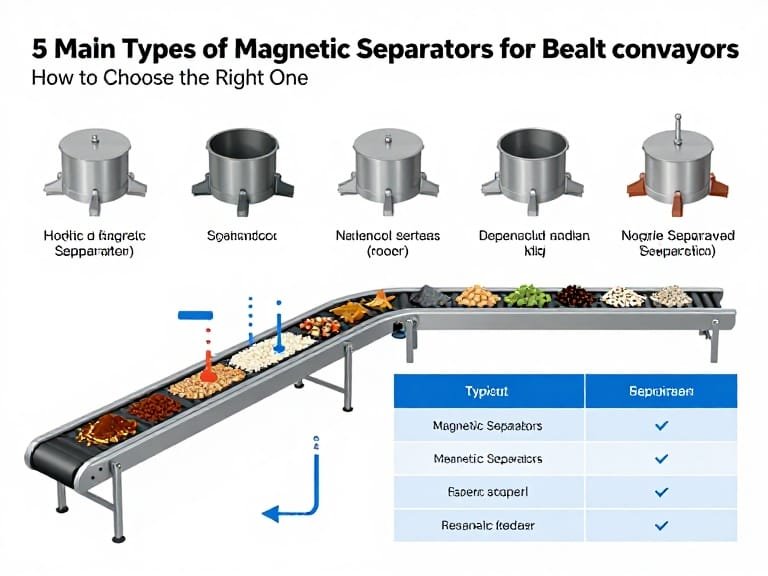
For mining, quarrying, aggregate handling, mineral processing and recycling operations, five designs deserve the closest attention: manually cleaned suspended magnets, self-cleaning overband magnetic separators, magnetic head pulleys, magnetic drum separators and plate-type magnetic separators. Each has a different installation position and operating purpose.
Quick Answer: Which Magnetic Separator Should You Choose?
For most continuous-duty belt conveyors handling bulk minerals, a self-cleaning overband magnetic separator is the strongest starting point. It removes ferrous tramp metal from the moving burden and discharges it away from the product stream without requiring operators to stop the conveyor for routine cleaning.
A manually cleaned suspended magnet may be more economical for low-contamination lines. A magnetic head pulley is useful when separation at the conveyor discharge is preferred, while a magnetic drum is better suited to a controlled feed arrangement. A plate magnet is a practical option for targeted protection in chutes and transfer points.
The final choice should be based on belt width, belt speed, material depth, throughput, target metal, installation clearance and cleaning frequency—not magnet strength alone.
What Is a Magnetic Separator for a Belt Conveyor?
A magnetic separator for a belt conveyor is equipment designed to attract and remove magnetically responsive materials—mainly iron and steel—from bulk solids moving along a conveyor. In mining and mineral processing, these unwanted materials are commonly called tramp iron. They may include broken crusher parts, bolts, nuts, wire, drill steel fragments and pieces of worn machinery.
The separator creates a magnetic field in or near the material flow. When a ferrous object enters that field, magnetic attraction pulls it away from the surrounding non-magnetic material or holds it against a moving surface until it can be discharged separately.
How Does Conveyor Magnetic Separation Work?
The operating principle is straightforward, but real-world performance depends on several interacting conditions. The magnetic field must reach the target metal with sufficient force to overcome its weight, the resistance of the surrounding material and the movement of the conveyor. The captured object must then be moved far enough away from the product stream that it cannot fall back into the cleaned material.
There are two broad operating arrangements:
- Over-belt separation: A magnet is suspended above the conveyor. It attracts ferrous objects upward and away from the material bed. Some units use a moving cleaning belt to discharge captured metal automatically.
- At-the-pulley or material-transfer separation: The magnetic field is integrated into a head pulley or drum, or positioned beside a chute. The equipment separates metal as material moves around a pulley or passes through a controlled flow path.
One important limitation needs to be understood: conventional magnetic separators do not remove every kind of metal. They are primarily intended for ferromagnetic materials. Non-ferrous metals such as aluminium and copper generally require other separation technologies. Some stainless-steel grades are also weakly magnetic or effectively non-magnetic, so a magnetic separator should not be treated as a universal metal detector.
Who Should Use Conveyor Magnetic Separators?
They are particularly valuable for mines, quarries, cement plants, aggregate producers, coal handling facilities, recycling plants and mineral processing operations where metal contamination can damage crushers, screens, mills or downstream equipment.
They may be unnecessary on a low-risk conveyor carrying a clean, controlled material with no meaningful tramp-metal exposure. In that situation, the capital and maintenance costs may outweigh the likely benefit. The decision should be based on the cost of equipment damage, downtime, product contamination and operator intervention—not on the assumption that every conveyor needs a magnet.
The 5 Main Types of Magnetic Separators for Belt Conveyors
1. Manually Cleaned Suspended Permanent Magnetic Separator
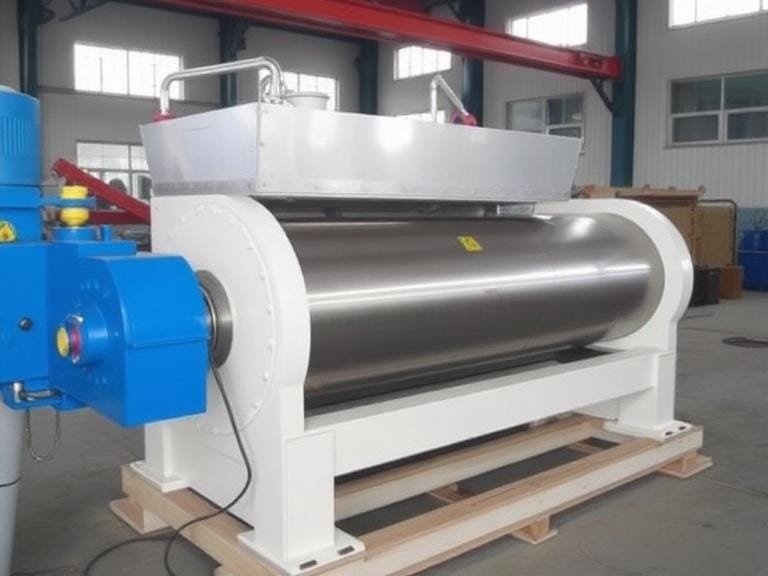
A manually cleaned suspended permanent magnet is installed above a conveyor belt. It uses permanent magnetic material to attract ferrous objects from the moving burden. When metal accumulates on the magnet face, an operator removes it manually according to the cleaning procedure and the plant’s safety requirements.
This design is often suitable for conveyors where tramp iron occurs occasionally rather than continuously. It has a relatively simple operating arrangement because it does not require a powered self-cleaning belt or an electromagnet power supply. That simplicity can make it an economical choice for smaller operations, secondary conveyors or lines with manageable contamination levels.
Best use cases:
- Low or moderate tramp-iron loading.
- Smaller mining and aggregate conveyors.
- Applications where planned cleaning stops are acceptable.
- Installations where a simple, low-complexity magnetic protection system is preferred.
Limitations: Captured metal remains on the magnet until it is removed. If operators do not clean it at the correct intervals, accumulated material can reduce available capture area or create a maintenance and safety problem. Manual cleaning also means the conveyor may need to be stopped or the magnet safely isolated before service.
Our recommendation is to choose this type only when the expected iron loading and cleaning schedule are realistic. A low purchase price is not a saving if frequent manual intervention interrupts production.
2. Self-Cleaning Overband Magnetic Separator
A self-cleaning overband magnetic separator is suspended above a conveyor and uses a moving belt to carry captured ferrous material away from the main magnetic field. As tramp iron is attracted from the product bed, the cleaning belt transports it toward a discharge point, where it falls into a collection area or reject chute.
The magnetic system may use permanent magnets or an electromagnet, depending on the application and required operating conditions. Electromagnetic designs can be configured for demanding duties where a stronger or deeper magnetic field is needed. Permanent-magnet versions avoid the need to energise a magnetic coil, while still providing continuous separation when paired with the cleaning belt.
Best use cases:
- High-throughput mineral and aggregate conveyors.
- Primary crushing and screening circuits.
- Recycling lines with frequent ferrous contamination.
- Continuous production where stopping the conveyor for manual cleaning is undesirable.
Limitations: A self-cleaning unit has more mechanical components than a manually cleaned magnet. Its cleaning belt, drive, rollers, bearings and belt tracking require inspection and maintenance. It also needs enough space for captured metal to discharge without returning to the product stream.
For most professional situations involving continuous production and regular tramp iron, this is the first design we recommend evaluating. It combines automatic removal with a practical arrangement for protecting downstream equipment. However, the magnet must be correctly sized and positioned. An undersized overband separator installed too high above a deep material bed can still perform poorly.
3. Magnetic Head Pulley Separator
A magnetic head pulley replaces the conventional head pulley at the discharge end of a conveyor. Its magnetic field attracts ferrous material as the conveyed product travels around the pulley. The captured metal remains close to the belt as the belt curves underneath, then releases after it moves beyond the effective magnetic field. The non-magnetic product follows its normal discharge trajectory.
This arrangement can be attractive when a plant wants to integrate magnetic separation into an existing conveyor discharge point rather than suspend a separate magnet above the belt.
Best use cases:
- Conveyors where the head pulley is an accessible separation point.
- Removal of ferrous contamination from relatively thin material burdens.
- Retrofit projects where overhead installation space is limited.
- Applications that benefit from continuous separation without a separate cleaning belt.
Limitations: A head pulley magnet must match the conveyor’s mechanical design, including pulley dimensions, shaft and bearing arrangements, belt compatibility, speed and discharge geometry. Its effectiveness can be reduced when the burden is too deep or when ferrous objects are buried inside a thick material layer. The discharge splitter must also be arranged so that separated metal does not mix back into the clean product.
We recommend checking the full conveyor interface before choosing this option. It is not simply a matter of ordering a magnetic pulley with the same nominal diameter as the existing one.
4. Magnetic Drum Separator
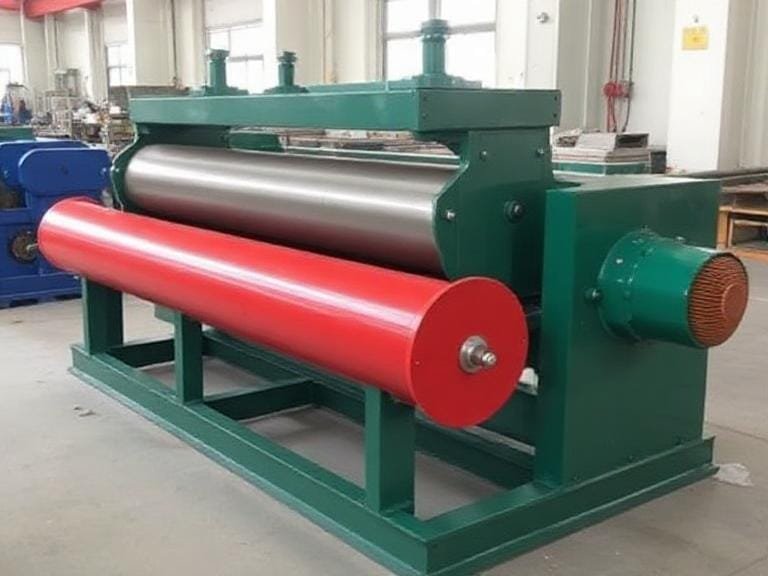
A magnetic drum separator uses a rotating cylindrical shell around a stationary or configured magnetic assembly. Material is fed onto or over the drum in a controlled flow. Magnetic particles are attracted to the drum surface and carried along with it, while non-magnetic material follows a different discharge path. A splitter separates the resulting streams.
Magnetic drums are widely used in mineral processing because they can provide continuous separation under a controlled feed arrangement. Depending on the magnetic system and process configuration, they can be used for recovering magnetic minerals or removing ferrous contamination from bulk material.
Best use cases:
- Mineral processing circuits with a consistent feed presentation.
- Applications requiring separation into magnetic and non-magnetic product streams.
- Dry or wet processing duties when the drum is specifically designed for the feed condition.
- Process stages where controlled separation is more important than simply removing occasional tramp iron.
Limitations: A drum separator is not automatically a direct replacement for an overband magnet above a long conveyor. It requires suitable feed distribution, installation space, a correctly positioned splitter and a process arrangement that presents material to the magnetic surface. Poor feed control can lead to inconsistent separation even when the magnetic system itself is appropriate.
For operators evaluating a wider mineral beneficiation circuit, drum separation should be considered alongside other separation stages. Depending on the ore and target mineral, a plate type permanent magnetic separation system or a more intensive magnetic process may be a better fit for a specific stage.
5. Plate-Type Magnetic Separator
A plate-type magnetic separator uses a flat magnetic surface installed above, below or beside a material flow. In conveyor applications, plate magnets are commonly fitted at transfer points, chute sections, hoppers or other locations where the material passes close to the magnetic face.
The plate attracts ferrous objects as they pass through its magnetic field. Depending on the design, cleaning may be manual or supported by a particular release or access arrangement. Plate magnets are often used as local protection rather than as a substitute for a large overband separator on a high-volume conveyor.
Best use cases:
- Chutes and transfer points where material can be brought close to the magnet.
- Local protection for equipment exposed to occasional metal contamination.
- Smaller material streams and compact conveyor arrangements.
- Applications where a straightforward magnetic surface is easier to install than a suspended assembly.
Limitations: The working distance is critical. If the plate is too far from the material, or the material layer is too deep, the magnetic field may not capture objects near the bottom of the burden. Manual cleaning can also interrupt the process if the unit is not designed for safe cleaning while operating.
For a plant with several transfer points, plate magnets can be a useful part of a layered protection strategy. They should be positioned based on the actual flow path, not simply attached wherever there is available space.
Comparison Table: Which Magnetic Separator Is Best for Your Conveyor?
The table below compares the five main designs by operating arrangement and practical application. It is intended as a first-stage selection guide; final sizing still requires conveyor and material data.
| Separator Type | Installation Position | Cleaning Method | Best Application | Main Limitation |
|---|---|---|---|---|
| Suspended permanent magnet | Above the conveyor | Manual cleaning | Low to moderate tramp-iron loading | Requires planned cleaning and safe access |
| Self-cleaning overband magnet | Above or across the conveyor | Automatic moving cleaning belt | Continuous, high-volume material handling | Higher equipment complexity and maintenance needs |
| Magnetic head pulley | At the conveyor discharge | Continuous release beyond the magnetic field | Thin or controlled material burden at discharge | Must match conveyor geometry and discharge path |
| Magnetic drum separator | At a controlled feed or discharge point | Continuous rotating drum | Mineral separation and controlled magnetic recovery | Needs suitable feed distribution and splitter design |
| Plate-type magnetic separator | Above, below or beside a chute or transfer point | Usually manual or design-specific | Local ferrous contamination control | Limited by working distance and material depth |
Permanent Magnet vs Electromagnetic Separator
The magnetic source is another important decision. Permanent magnets generate a magnetic field without a continuous electrical supply to a magnet coil. Electromagnets create a magnetic field when energised and can be engineered for demanding applications that require a particular field strength and operating configuration.
| Factor | Permanent Magnetic Separator | Electromagnetic Separator |
|---|---|---|
| Magnetic field source | Permanent magnetic materials | Electrically energised coil |
| Power requirement | No coil power for magnetisation | Requires an electrical supply and suitable controls |
| Typical advantage | Simpler operating arrangement | Can be configured for demanding separation duties |
| Maintenance focus | Mounting, surface condition and cleaning system | Electrical system, cooling where applicable, coil condition and cleaning system |
| Selection priority | Suitable magnetic performance at the actual working distance | Required field performance, duty cycle and thermal design |
Do not assume that an electromagnetic model is always better, or that a permanent magnet is always cheaper over its service life. Compare the required separation performance, energy use, maintenance, downtime exposure and total installation cost.
Pros and Cons of Magnetic Separators for Belt Conveyors
| Advantages | Disadvantages and Limitations |
|---|---|
| Can remove ferrous tramp metal before it reaches crushers, screens and other equipment. | Does not reliably remove all non-ferrous metals or every stainless-steel grade. |
| Can operate continuously when configured with automatic discharge. | Self-cleaning systems introduce moving parts that require inspection and maintenance. |
| Available in suspended, pulley, drum and plate configurations for different plant layouts. | Incorrect installation height or material burden depth can reduce separation efficiency. |
| Can reduce unplanned downtime and damage associated with ferrous contaminants. | Initial equipment, structural support, electrical work and installation may add cost. |
| Can be integrated into new conveyor systems or selected for suitable retrofit projects. | Performance depends on material properties, belt speed, feed consistency and target metal. |
In our view, the most important benefit is not the amount of metal a magnet can collect in a demonstration. It is the protection it provides to the complete production line over time. A separator that prevents one serious crusher failure may justify its investment, but only if it is correctly selected and maintained.
How to Select the Right Magnetic Separator for a Belt Conveyor
Before requesting a quotation, prepare the operating information below. A supplier who recommends equipment based only on conveyor width is missing several factors that directly affect performance.
1. Confirm the Type of Metal You Need to Remove
Identify whether the target is large tramp iron, small steel fragments, wire, bolts, wear parts or magnetic minerals that need to be recovered as a product. Record the approximate size, shape, quantity and frequency of contamination. A separator designed to lift occasional large pieces may not be the best solution for fine ferrous particles mixed throughout the burden.
2. Measure Conveyor Width and Belt Speed
Provide the belt width, operating speed and direction of travel. These details influence the magnetic coverage, mounting arrangement and time available for the magnetic field to act on the material. Do not use a catalogue model’s nominal width as proof that it will suit the actual conveyor.
3. Calculate Material Depth and Throughput
Material depth is one of the most commonly overlooked selection factors. Ferrous objects near the top of a thin burden are easier to capture than objects buried below a deep layer of rock or aggregate. Provide the normal and maximum throughput, bulk density, maximum lump size and expected burden profile.
If the conveyor is frequently overloaded or the material forms uneven piles, consider whether a feed leveller or changes to the transfer arrangement are needed. A magnet cannot compensate for an uncontrolled material bed.
4. Determine the Required Cleaning Method
Estimate how frequently tramp iron is likely to accumulate. If contamination is rare and planned cleaning is acceptable, a manually cleaned suspended magnet may be sufficient. If the line runs continuously and metal appears regularly, self-cleaning equipment is generally more practical.
Also confirm where rejected metal will go. The discharge point must be accessible for inspection and collection, and the removed metal must not fall back onto the conveyor or enter another product stream.
5. Check Installation Space and Structural Support
Suspended separators need adequate lifting points and structural support. Their mounting height, angle and position must be compatible with the conveyor, material trajectory and maintenance access. Nearby steel structures, idlers and support components can influence the magnetic circuit or complicate installation.
For head pulley systems, confirm the pulley interface, shaft, bearings, belt and discharge chute. For plate magnets, confirm the chute opening and distance between the magnetic face and material. For drums, confirm feed distribution, splitter position and service access.
6. Compare Total Cost of Ownership
Purchase price is only one part of the investment. Include installation, structural modifications, electrical supply, power consumption, routine inspection, cleaning labour, spare parts and the potential cost of production stoppages.
For commercial users, the correct question is not simply which separator has the lowest quotation. It is which configuration provides the required protection at the lowest realistic lifetime cost.
Common Mistakes When Choosing and Installing Magnetic Separators
Choosing by Gauss Rating Alone
A magnetic field measurement is useful only when the measurement location and test conditions are understood. Surface readings do not automatically tell you how much force is available at the actual target position inside a moving material bed. Ask for performance information at the specified working distance and under representative operating conditions.
Installing the Magnet Too High
Magnetic attraction decreases rapidly as the distance between the magnet and target increases. Excessive suspension height can make a suitable magnet ineffective. Set the installation height according to the equipment design, material profile, largest lump size and safe operating clearance.
Ignoring Material Burden Depth
A thick layer of ore or aggregate can shield ferrous objects from effective capture. The supplier needs to know the normal and maximum material depth, not only the belt width. A leveller or improved feed distribution may be necessary before increasing magnet size.
Failing to Plan the Metal Discharge Route
Captured tramp iron must leave the product stream. If the discharge path is poorly designed, the removed metal can fall back into the clean material or accumulate around the equipment. For self-cleaning systems, check that the cleaning belt and reject chute have enough clearance and that the discharge area can be inspected safely.
Expecting a Magnetic Separator to Detect Every Metal
Magnetic separators are designed around magnetic response. They should not be relied upon to detect or remove all aluminium, copper, brass or weakly magnetic stainless steel. Where non-ferrous tramp metal is also a concern, evaluate a metal detector or another suitable separation technology as part of the protection system.
Neglecting Maintenance After Commissioning
Commissioning is the beginning of operation, not the end of the selection process. Inspect the magnet, mounting structure, cleaning belt, drive components, bearings, electrical connections and reject area according to the manufacturer’s instructions. Record contamination findings and adjust inspection intervals based on actual plant conditions.
How ORO Mineral Supports Mineral Processing Projects
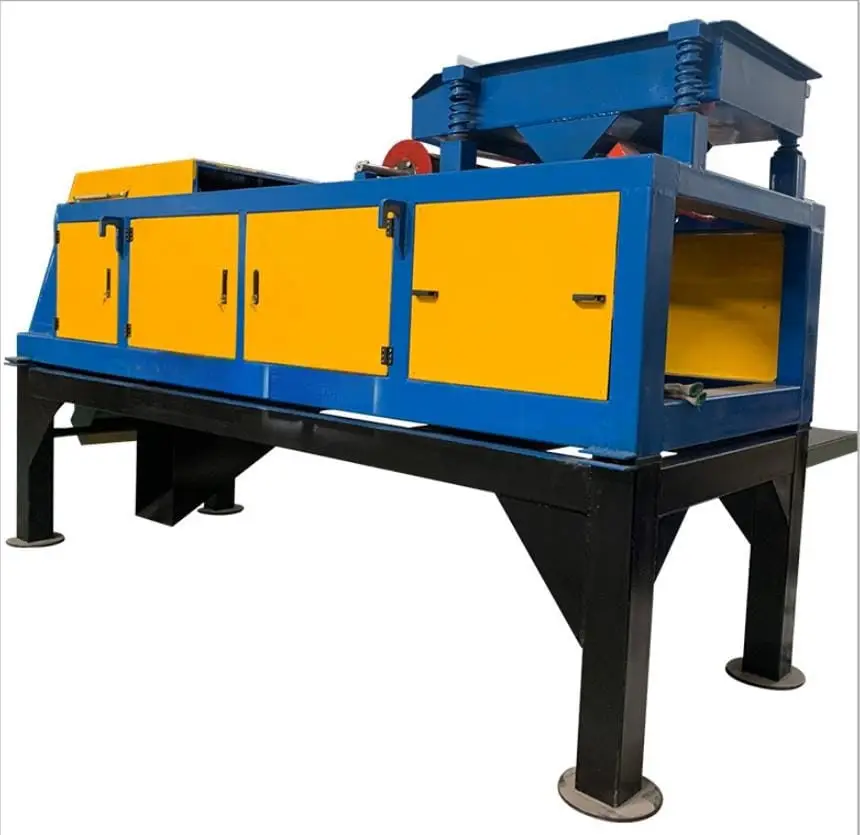
ORO Mineral Co., Ltd. is a mineral processing, screening and sand washing equipment manufacturer integrating research and development, production and sales. Since 2014, the company has supplied equipment and technical solutions for mineral screening, solid waste resource recovery, beneficiation, washing and separation.
Its equipment range supports projects that need to coordinate several stages of material handling and processing rather than select one machine in isolation.
Magnetic separation is often one part of a wider process flow. A plant may also require screening to control feed size, washing to remove clay and surface impurities, or gravity separation to recover minerals based on density differences.
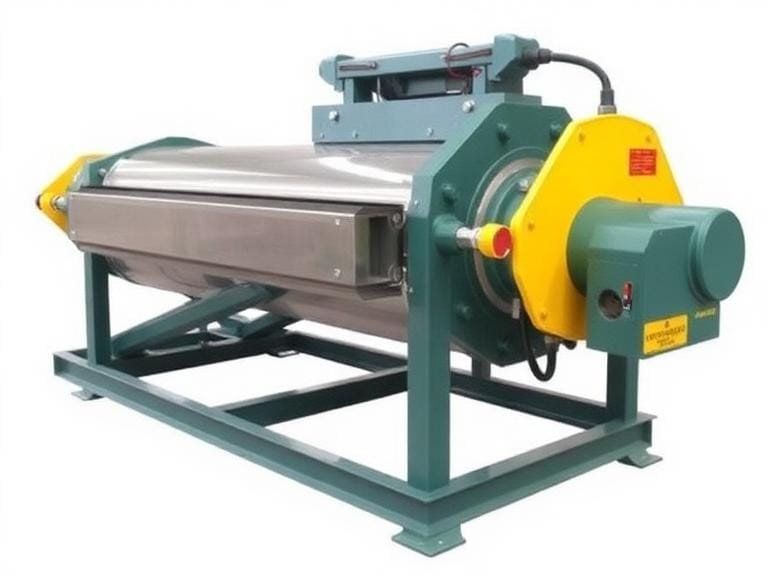
For example, a 1.1 kW belt magnetic separator is a relevant equipment option to discuss when evaluating belt-based magnetic separation. The exact application suitability should be confirmed against the required throughput, material characteristics, installation layout and target contaminants.
Where the process requires additional magnetic treatment, ORO Mineral also provides a plate-type permanent magnetic separation equipment option. For more demanding mineral separation applications involving fine magnetic materials, it may be appropriate to evaluate a wet high intensity magnetic separator or the water-cooling electromagnetic separator designed for materials such as kaolin, feldspar and quartz.
These machines do not all perform the same job. A conveyor tramp-iron separator protects the material-handling line, while high-intensity magnetic separation is generally used as a mineral beneficiation process. Treating them as interchangeable can lead to incorrect equipment selection.
For projects that combine magnetic separation with gravity concentration, a 6-S shaking table or spiral chute may also be relevant, depending on the mineral’s density, particle size and liberation characteristics.
Our Expert Recommendation: Match the Separator to the Production Risk
There is no single magnetic separator that is best for every belt conveyor. The right choice is the one that removes the target ferrous material reliably without creating unnecessary operating cost or maintenance work.
Our practical recommendations are:
- For occasional tramp iron: Start by evaluating a manually cleaned suspended permanent magnet. Confirm that the cleaning frequency and safe access arrangements are manageable.
- For continuous, high-volume conveying: Evaluate a self-cleaning overband magnetic separator first. It is often the most practical option when regular tramp iron must be removed without routine conveyor stoppages.
- For a suitable conveyor discharge point: Consider a magnetic head pulley when the belt geometry, material depth and discharge trajectories support reliable separation.
- For controlled mineral separation: Consider a magnetic drum separator where feed distribution and separate magnetic/non-magnetic product streams can be properly managed.
- For local chute protection: A plate-type magnetic separator can provide targeted protection where material passes close to the magnetic face.
Before placing an order, ask the equipment supplier to review the actual conveyor conditions. Share belt width, speed, throughput, material density, burden depth, maximum lump size, target metal dimensions, installation height and operating hours. Where possible, request an application review or test using representative material.
Frequently Asked Questions About Magnetic Separators for Belt Conveyors
1. What are the main types of magnetic separators for belt conveyors?
The five main types covered in this guide are manually cleaned suspended permanent magnets, self-cleaning overband magnetic separators, magnetic head pulleys, magnetic drum separators and plate-type magnetic separators. They differ in installation position, cleaning method and separation purpose.
2. Which magnetic separator is best for a mining conveyor?
For many high-volume mining conveyors with regular tramp-iron contamination, a self-cleaning overband magnetic separator is a strong starting point. It can remove ferrous objects continuously and discharge them away from the product stream. The final selection depends on belt speed, material depth, throughput, target metal and installation conditions.
3. What is the difference between an overband magnet and a magnetic head pulley?
An overband magnet is suspended above the conveyor and attracts ferrous objects out of the material bed. A magnetic head pulley is installed at the conveyor discharge and attracts ferrous material as the belt travels around the pulley. The overband design is a separate overhead unit, while the magnetic pulley becomes part of the conveyor’s pulley arrangement.
4. Is a permanent magnetic separator better than an electromagnetic separator?
Neither is universally better. Permanent magnets provide a magnetic field without continuous coil power, which can simplify the operating arrangement. Electromagnetic separators require electrical power and suitable controls but can be configured for demanding separation duties. Compare performance at the actual working distance, operating conditions, maintenance requirements and lifetime cost.
5. Can a magnetic separator remove stainless steel?
Some stainless steels are magnetic, while others have weak or negligible magnetic response. A conventional magnetic separator may capture certain grades but should not be assumed to remove all stainless-steel contaminants. Identify the stainless-steel grade and test representative samples if its removal is important to the process.
6. Can magnetic separators remove aluminium and copper?
Conventional magnetic separators are not designed to attract non-ferrous metals such as aluminium and copper. If these materials are a contamination risk, consider complementary technologies such as metal detection or eddy-current separation, depending on the material and process arrangement.
7. How does conveyor belt speed affect magnetic separation?
Belt speed affects how long material is exposed to the magnetic field and how the material travels through the separation zone. Higher speeds can make it more difficult to capture some objects, particularly when the burden is deep or the installation is not correctly configured. The separator should be selected and positioned for the actual operating speed, including any planned future increase.
8. How high should a suspended magnetic separator be installed?
There is no universal suspension height. The correct distance depends on the separator’s magnetic design, conveyor speed, burden depth, largest material size, target metal and required clearance. Install as close to the material as the equipment design and safe operation allow, following the manufacturer’s installation instructions.
9. Does every conveyor need a self-cleaning magnetic separator?
No. A self-cleaning unit is most useful when ferrous contamination occurs frequently or the conveyor must run continuously. For occasional contamination on a low-risk line, a manually cleaned suspended magnet or a plate magnet may be sufficient. Evaluate the cost of cleaning labour and downtime before deciding.
10. What information should I send a manufacturer when requesting a quotation?
Provide conveyor belt width and speed, throughput, material type and bulk density, normal and maximum burden depth, maximum lump size, target metal type and approximate dimensions, installation position, available clearance, operating hours and preferred cleaning method. Photos, layout drawings and representative material samples can help the manufacturer assess the application more accurately.
References
- Agg-Net – Detecting and Removing Tramp Metal from Conveyors. Industry overview of overband magnets, pulley magnets and the role of magnetic separation in conveyor protection.
- Eriez – Suspended Permanent Magnet Installation and Operation Manual. Technical guidance on installation positions, suspension height, cleaning arrangements and safe operating clearances.
- Industrial Magnetics, Inc. – Magnetic Separation Pulleys Installation and Operations Manual. Manufacturer documentation explaining the operating principle and conveyor application of magnetic separation pulleys.