What is the Copper Leaching Process? Complete Guide 2025
Table of Contents
- Introduction
- Definition of Copper Leaching
- Importance of Copper Leaching in Modern Mining
- Types of Copper Leaching Processes
- Step-by-Step Copper Leaching Process
- Key Equipment in Copper Leaching
- About ORO Mineral and Its Role
- Advantages and Limitations of Copper Leaching
- Environmental Impact and Sustainability
- Future Trends in Copper Leaching
- Conclusion
- Summary Table
- References
Introduction to Copper Leaching Process
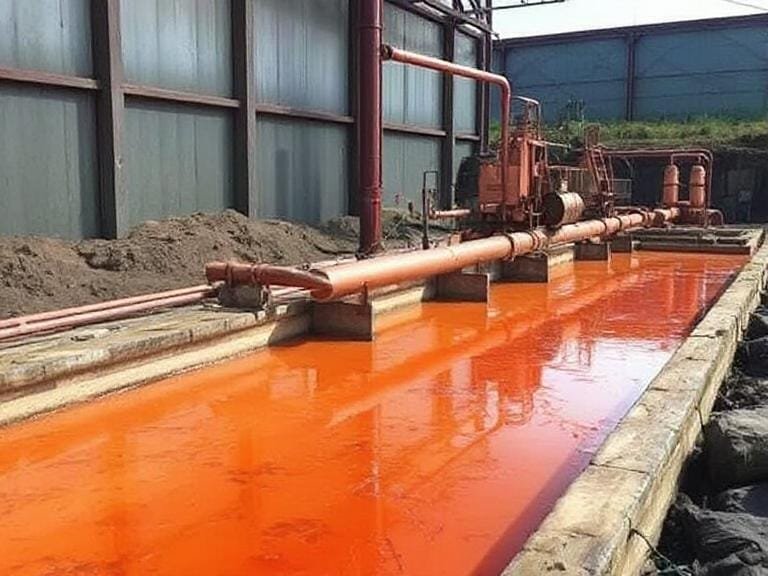
The copper leaching process is a critical method in modern metallurgy that extracts copper from low-grade ores using aqueous solutions. With global copper demand rising due to the electric vehicle boom, renewable energy infrastructure, and electronics industry, efficient and eco-friendly extraction methods like leaching are gaining momentum. This guide explores what copper leaching is, how it works, the equipment involved, and its role in building a more sustainable mining industry.
Definition of Copper Leaching
Copper leaching is the process of dissolving copper from ore using a chemical solution, allowing it to be recovered through precipitation or electrowinning. Unlike smelting, which requires high-temperature furnaces, leaching is a hydrometallurgical process performed at relatively low temperatures, making it energy-efficient and suitable for low-grade ores.
Importance of Copper Leaching in Modern Mining
- Cost-Effective: Enables recovery of copper from low-grade ores that would be uneconomical to smelt.
- Energy Efficient: Uses less energy compared to pyrometallurgical processes.
- Environmentally Friendly: Produces lower greenhouse gas emissions.
- Scalable: Ideal for both small-scale and large-scale mining operations.
- Supports Circular Economy: Can be used to recover copper from mine tailings and waste material.
Types of Copper Leaching Processes
1. Heap Leaching
Heap leaching is the most widely used method for copper extraction. Ore is crushed, heaped on a leach pad, and irrigated with a leaching solution such as dilute sulfuric acid.
- Advantages: Low capital cost, scalable, easy to implement.
- Disadvantages: Slower process, requires large land area.
2. In-Situ Leaching
This method involves injecting leaching solution directly into the ore body through wells, dissolving copper in place, and pumping the solution back to the surface.
- Advantages: Minimal surface disturbance, lower labor requirements.
- Disadvantages: Limited to permeable ore deposits, risk of groundwater contamination if not managed properly.
3. Agitated Leaching
Finely ground ore is mixed with leaching solution in stirred tanks to speed up dissolution.
- Advantages: High recovery rate, faster leaching time.
- Disadvantages: Higher operational costs, energy-intensive mixing.
4. Dump Leaching
Low-grade ore is dumped in large piles and irrigated with solution. This is the cheapest but slowest leaching method.
Step-by-Step Copper Leaching Process
1. Ore Preparation
The ore is crushed and screened to a uniform size for optimal solution percolation.
2. Leaching
A leaching solution (often dilute sulfuric acid) is applied to the ore heap or tank. Copper dissolves and forms a pregnant leach solution (PLS).
3. Solution Collection
The PLS is collected at the bottom of the heap or tank and pumped to a processing facility.
4. Solvent Extraction (SX)
The PLS undergoes solvent extraction to separate copper from impurities.
5. Electrowinning (EW)
High-purity copper is recovered by electroplating onto cathodes.
6. Refining
The copper cathodes are melted and cast into shapes suitable for manufacturing.
Key Equipment in Copper Leaching
- Leach Pads and Liner Systems: Prevent solution loss and environmental contamination.
- Agitation Tanks: Provide mixing for agitated leaching processes.
- Pumps and Piping Systems: Transport leach solution and PLS efficiently.
- Solvent Extraction Units: Separate copper ions from leach solution.
- Electrowinning Cells: Recover high-purity copper metal.
About ORO Mineral and Its Role
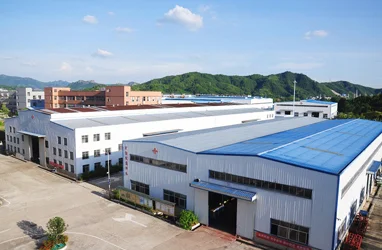
ORO Mineral is a large-scale intelligent mineral processing, screening, and sand washing equipment manufacturer integrating R&D, production, and sales since 2014. The company has significantly contributed to:
- Mineral screening and grading
- Beneficiation and separation
- Solid waste resource recovery
- Sand washing and recycling
Key products include:
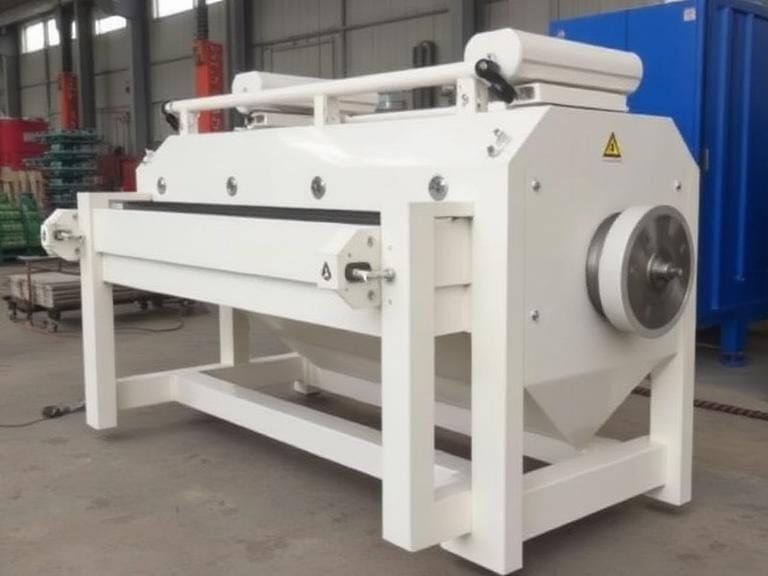
- 1.1 kW Belt Magnetic Separator: Removes ferrous impurities to protect downstream leaching equipment.
- 6-S Shaking Table: Concentrates fine copper particles prior to leaching for improved recovery rates.
- Gravity Spiral Chute Separator: Pre-concentrates heavy minerals, reducing leach solution consumption.
Advantages and Limitations of Copper Leaching
Advantages
- Lower Operating Costs: No need for expensive smelters.
- Energy Efficiency: Requires less energy than pyrometallurgy.
- Applicability to Low-Grade Ores: Expands economic resource base.
- Scalability: Suitable for large mines and small operations alike.
Limitations
- Longer Processing Times: Heap leaching can take months to years.
- Solution Management: Requires careful control to prevent leaks or contamination.
- Lower Recovery for Certain Ores: Not all copper minerals are easily leachable.
Environmental Impact and Sustainability
- Water Management: Recycling leach solutions minimizes fresh water consumption.
- Tailings Reprocessing: Leaching allows recovery of copper from waste dumps.
- Reduced Emissions: Compared to smelting, leaching produces fewer air pollutants.
- Land Reclamation: Proper closure plans ensure leach pads are detoxified and restored.
Future Trends in Copper Leaching
- Bioleaching: Use of bacteria to enhance copper dissolution and improve recovery.
- Automation: AI-controlled irrigation systems to optimize leach rates.
- Modular Leaching Units: Fast deployment in remote areas.
- Green Chemistry: Development of alternative leach reagents with lower environmental impact.
Conclusion
The copper leaching process is a cornerstone of modern copper production, offering a cost-effective, scalable, and environmentally responsible way to extract copper from low-grade ores. With rising copper demand in the green energy and technology sectors, leaching technology continues to evolve. Companies like ORO Mineral are helping mining operations optimize recovery and efficiency through advanced equipment like magnetic separators, shaking tables, and spiral chutes. By embracing innovation and sustainability, the copper industry is poised to meet global needs while minimizing its environmental footprint.
Summary Table
| Aspect | Key Details | Impact |
|---|---|---|
| Definition | Dissolving copper from ore using chemical solutions | Allows recovery from low-grade ores |
| Main Types | Heap leaching, in-situ leaching, agitated leaching, dump leaching | Varies in cost, speed, and scalability |
| Process Steps | Ore preparation → Leaching → Solution collection → SX → EW | Yields high-purity copper |
| Equipment | Leach pads, tanks, pumps, SX-EW units | Ensures efficiency and recovery |
| Advantages | Low cost, energy-efficient, scalable | Expands copper supply |
| Challenges | Long leach times, solution management | Requires careful planning |
| Future Trends | Bioleaching, automation, modular systems | Boosts recovery and sustainability |