Top 6 Disc Magnetic Separator Technologies for 2026
In the highly exact field of dry mineral beneficiation, separating paramagnetic and ferromagnetic minerals from non-magnetic gangue requires unparalleled precision. Whether you are processing beach sands for heavy minerals or purifying crushed ores, the efficiency of your concentration circuit heavily dictates your operational profitability. At the pinnacle of this precise separation technology is the Disc Magnetic Separator. This highly specialized equipment utilizes intense magnetic gradients concentrated on the edges of rotating discs to lift and separate minerals based on their specific magnetic susceptibility.
Authored by the engineering team at ORO Mineral. ORO Mineral Co., Ltd. is a large-scale intelligent mineral processing, screening, and sand washing equipment manufacturer integrating R&D, production and sales. Since 2014, ORO Mineral has made great contributions to every kind of mineral screening, solid waste resource recovery, beneficiation, washing, and separation, and has accumulated rich experience. In order to offer you better products and services, we have been sparing no effort to improve technology, develop new equipment, and upgrade services.
From our experience engineering advanced mineral processing circuits globally, we recognize that not every Disc Magnetic Separator is suited for every ore body. Processing tantalite, columbite, ilmenite, rutile, and monazite demands varying magnetic field intensities and mechanical configurations. A single-disc unit might suffice for basic laboratory testing or low-yield specialty minerals, but a continuous industrial mining operation requires robust, multi-stage separation. In this comprehensive technical manual, we will outline the mechanical principles of these machines, detail the top 6 Disc Magnetic Separator configurations dominating the industry in 2026, and explain how to seamlessly integrate them with your upstream milling and gravity separation equipment.
Table of Contents
1. The Operational Mechanics of a Disc Magnetic Separator
To maximize your recovery rates, you must first understand the physics driving a Disc Magnetic Separator. Dry ore is fed evenly onto a continuous conveyor belt via a vibratory feeder. Above this belt, one or more horizontally rotating magnetic discs are suspended. These discs are mechanized with serrated or precisely grooved edges that concentrate the magnetic flux into a very high gradient. As the ore passes beneath the rotating disc, paramagnetic minerals (minerals that are weakly attracted to a magnetic field) are pulled upward against gravity and adhere to the edge of the disc.
As the disc continues to rotate, it carries the attached minerals away from the magnetic field generated by the electromagnetic coils below the belt. Once the disc rotates out of the zone of highest magnetic intensity, the minerals drop cleanly into collection chutes. We recommend paying critical attention to two specific adjustments on your Disc Magnetic Separator: the physical air gap between the disc and the conveyor belt, and the electrical amperage supplied to the electromagnetic coils. By fine-tuning these two parameters, an operator can selectively separate multiple minerals with varying magnetic susceptibilities from a single ore stream.
2. The Top 6 Disc Magnetic Separator Configurations
Based on our proprietary R&D, metallurgical testing, and global client feedback, we have categorized the six most reliable and highly engineered Disc Magnetic Separator configurations available for precision dry beneficiation applications.
1. Single-Disc High-Intensity Magnetic Separator
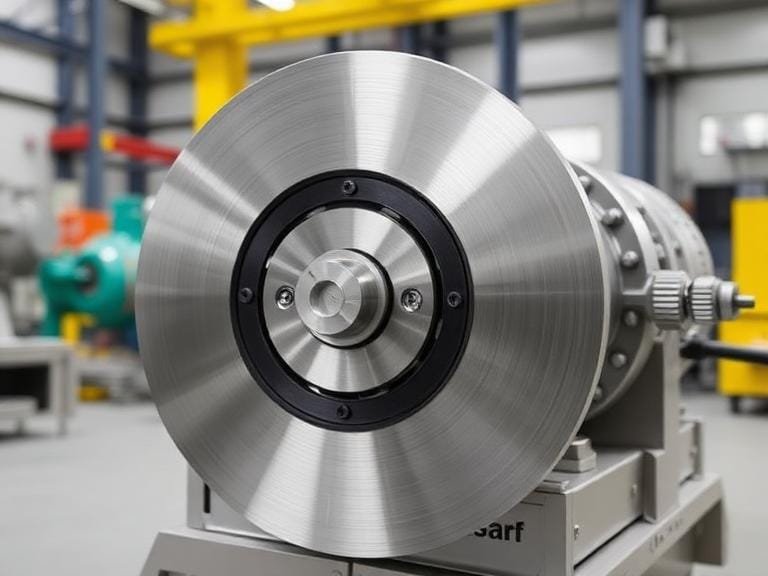
The Single-Disc Magnetic Separator is the foundational model of dry magnetic separation. It features one rotating disc and is typically deployed in laboratory settings, pilot plants, or for the final cleaning stage of highly concentrated specialty minerals. From our experience, this Disc Magnetic Separator is ideal for operations where the feed volume is low but the requirement for absolute purity is exceptionally high. By focusing all electromagnetic power into a single separation zone, operators can isolate highly specific paramagnetic minerals like wolframite or fine garnet with unmatched precision.
2. Double-Disc Magnetic Separator
Stepping up in processing capacity, the Double-Disc Magnetic Separator incorporates two rotating discs suspended over the same conveyor belt in a sequence. We recommend this configuration for processing ore bodies that contain two distinct magnetic minerals alongside non-magnetic gangue. The first disc is usually set at a lower amperage and a larger air gap to remove strongly magnetic minerals (such as magnetite or ilmenite). The second disc is set with a tighter air gap and higher amperage to generate a much stronger magnetic field, pulling out weakly magnetic minerals like tantalite. This sequential extraction prevents magnetic entanglement and vastly improves grade quality.
3. Triple-Disc Electromagnetic Separator
The Triple-Disc Magnetic Separator is the absolute industry standard for complex heavy mineral sands processing. Placer deposits often contain a complex mixture of ilmenite, garnet, monazite, zircon, and rutile. A triple-disc system acts as a complete dry separation circuit in a single machine. The feed material passes under three consecutive discs, each configured with escalating magnetic intensities. This Disc Magnetic Separator allows a processing plant to yield up to four distinct product streams (three magnetic concentrates and one non-magnetic tailing) simultaneously, making it the most cost-effective solution for high-volume beach sand beneficiation.
4. Permanent Magnet Disc Separator

While electromagnets are the norm, advancements in rare-earth materials have led to the development of the Permanent Magnet Disc Separator. Utilizing high-grade Neodymium-Iron-Boron (NdFeB) magnetic blocks, this Disc Magnetic Separator does not require continuous electrical power to generate its magnetic field. While it lacks the infinite adjustability of an electromagnetic unit, it is highly energy-efficient and operates with zero thermal drift (a phenomenon where electromagnets lose strength as their copper coils heat up). We recommend this unit for remote mining sites with limited power infrastructure processing consistent, predictable ore bodies.
5. Variable High-Gradient Disc Separator
When processing ultra-fine dry powders (typically below 74 microns or 200 mesh), standard discs struggle to overcome the electrostatic and Van der Waals forces that cause particles to clump together. The Variable High-Gradient Disc Magnetic Separator is engineered with specialized matrix grooves on the disc edge that create exceptionally sharp, concentrated magnetic nodes. Coupled with a high-frequency vibrating conveyor belt that fluidizes the fine powder, this Disc Magnetic Separator ensures that even microscopic particles of weakly magnetic contaminants are effectively removed from valuable non-magnetic materials like high-purity silica sand or feldspar.
6. Automated Continuous-Feed Disc Separator
For large-scale, 24/7 processing plants, labor costs and operator error must be minimized. The Automated Continuous-Feed Disc Magnetic Separator integrates PLC (Programmable Logic Controller) technology to constantly monitor and adjust the machine’s parameters. If sensors detect a change in the feed density or ambient temperature, the system automatically recalibrates the belt speed and coil amperage. From our experience at ORO Mineral, integrating this level of automation ensures that your Disc Magnetic Separator maintains maximum recovery rates without requiring constant manual supervision.
3. Integrating Pre-Processing Equipment with Your Separator
A Disc Magnetic Separator is a precision finishing tool; it requires a properly prepared feed to function efficiently. If the ore is not milled to the correct liberation size, or if it contains too much barren silica, the capacity of the magnetic separator will be severely bottlenecked. At ORO Mineral, we provide the complete upstream circuit to ensure your magnetic separation is flawless.
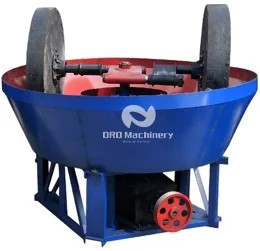
The first step in any hard-rock beneficiation circuit is comminution (grinding). We recommend utilizing our Wet Pan Mill for Gold Processing and general ore grinding. Our Wet Pan Mill is packed with features and benefits that make it the perfect choice for your ore grinding needs, including highly durable construction for long-lasting performance, easy operation and maintenance for hassle-free usage, and an adjustable grinding speed to suit different materials and desired fineness. Its energy-efficient design minimizes power consumption, while its compact and space-saving footprint makes it ideal for both small and large-scale operations. Properly milling the ore ensures that the magnetic minerals are fully liberated from the host rock.
Following the milling stage, the ore must be pre-concentrated to remove the bulk of the lightweight, non-magnetic gangue before drying and feeding it into the Disc Magnetic Separator. For this, we highly recommend the ORO Mineral Gravity Spiral Chute Separator. Gravity separation is the most cost-effective method to upgrade your ore.
| Feature | Description |
|---|---|
| Reasonable Structure & Small Occupation Area | The Oromineral Gravity Spiral Chute Separator boasts a well-thought-out design that maximizes efficiency while minimizing space utilization. Its compact footprint makes it ideal for installation in even the most constrained environments. |
| High Recovery, High Efficiency, & Precise Separation | Engineered for optimal performance, the chute ensures high recovery rates and precise separation of materials. Its advanced design allows for efficient classification and separation, reducing waste and enhancing productivity. |
| Lightweight, Rust & Corrosion Resistant | Constructed from high-quality, lightweight materials, the Oromineral Gravity Spiral Chute Separator is built to last. Its rust and corrosion-resistant properties ensure long-term durability and reliability, even in harsh operational conditions. |
| Simple Installation & Minimal Maintenance Requirements | Installation of the Oromineral Gravity Spiral Chute is quick and straightforward, requiring minimal downtime. With minimal maintenance needs, you can focus on your core operations without the hassle of constant repairs and upkeep. |
| Low Operating Cost & Long Operating Life | The chute’s energy-efficient design ensures low operating costs, saving you money in the long run. Coupled with its durable construction, the Oromineral Gravity Spiral Chute offers an extended operational lifespan, maximizing your investment. |
| Reliable Running with Minimal Operator Attention | Designed for reliability, the chute requires minimal operator intervention, allowing for seamless integration into your existing processes. Its dependable performance ensures consistent results and reduced downtime. |
| Strong Adaptability to Fluctuation of Feeding Amount, Density, Size, and Grade | The Oromineral Gravity Spiral Chute Separator demonstrates exceptional adaptability, easily accommodating variations in feeding amounts, material densities, sizes, and grades. This ensures consistent performance and separation accuracy across a wide range of operational conditions. |
By pre-concentrating the heavy minerals using our Gravity Spiral Chute Separator, you vastly reduce the total tonnage that must be thermally dried and processed by the Disc Magnetic Separator, resulting in massive energy savings and drastically improved final concentrate grades.
4. Summary Table: Disc Magnetic Separator Comparison
To assist plant managers in identifying the correct equipment, we have summarized the primary applications for the top 6 Disc Magnetic Separator configurations.
| Separator Configuration | Number of Product Streams | Primary Industrial Application |
|---|---|---|
| Single-Disc High-Intensity | 2 (1 Magnetic, 1 Non-Magnetic) | Laboratory testing, pilot plants, final high-purity cleaning. |
| Double-Disc Electromagnetic | 3 (2 Magnetic, 1 Non-Magnetic) | Medium capacity, dual-mineral separation (e.g., Ilmenite and Tantalite). |
| Triple-Disc Electromagnetic | 4 (3 Magnetic, 1 Non-Magnetic) | High-volume beach sand and complex heavy mineral processing. |
| Permanent Magnet Disc | Variable | Energy-efficient separation in remote locations with limited power grids. |
| Variable High-Gradient Disc | 2 to 3 | Purification of ultra-fine dry powders like silica and feldspar. |
| Automated Continuous-Feed | Variable | Hyper-scale operations requiring continuous, unmanned automated optimization. |
5. Frequently Asked Questions (FAQs)
Can a Disc Magnetic Separator process wet slurry?
No. From our experience, a Disc Magnetic Separator is strictly designed for dry beneficiation. The ore must be thoroughly dried in a rotary dryer before entering the machine. If moisture is present, capillary action causes the particles to stick together and to the conveyor belt, destroying the precision of the magnetic separation process.
How do you adjust the magnetic intensity of a Disc Magnetic Separator?
On electromagnetic models, the magnetic intensity (measured in Gauss or Tesla) is adjusted primarily by changing the electrical current (amperage) supplied to the copper coils. Secondary adjustments are made by physically raising or lowering the rotating disc to change the air gap distance between the disc’s serrated edge and the mineral bed on the conveyor belt.
What is the optimal particle size for a Disc Magnetic Separator?
We recommend feeding particles that are between 0.1mm and 2.0mm in size. If the particles are too large, they are too heavy to be lifted against gravity by the magnetic field. If they are too fine (dust-like), electrostatic forces interfere with separation. Proper upstream milling with equipment like our Wet Pan Mill is crucial to achieving this optimal size range.
Why use a Disc Magnetic Separator instead of a standard magnetic drum?
A standard magnetic drum separator is excellent for removing highly magnetic materials like tramp iron or magnetite. However, a Disc Magnetic Separator concentrates the magnetic flux onto sharp disc edges, generating exceptionally high magnetic gradients capable of lifting weakly paramagnetic minerals like tantalite, monazite, and fine garnet that a standard drum would leave behind.