What is Flotation in Mining? Complete 2025 Guide
Introduction to Flotation in Mining
Flotation is one of the most critical processes in modern mineral processing. It is used extensively in the mining industry to separate valuable minerals from waste rock. Understanding what flotation is and how it works can help miners, investors, and students grasp how raw ore is turned into usable metals. This article explores what flotation in mining is, how it works, and its importance in the global mining sector.
Key Insight: Over 80% of the world’s copper, lead, and zinc production relies on flotation to separate ore from waste material efficiently.
About ORO Mineral
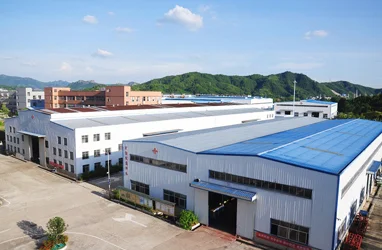
ORO Mineral is a leading manufacturer of intelligent mineral processing, screening, and sand washing equipment, providing solutions since 2014. Their expertise covers:
- Dry Electromagnetic Separator – for efficient magnetic ore separation
- Sand Washing Machine (100 TPH) – long-life, high-capacity washing system
- Plate Type Permanent Magnetic Separation Equipment – ideal for iron removal applications
With constant R&D investment and a strong focus on innovation, ORO Mineral plays a crucial role in upgrading the flotation and separation process for mining companies worldwide.
Definition of Flotation in Mining
Flotation is a mineral processing technique used to separate hydrophobic (water-repelling) valuable minerals from hydrophilic (water-attracting) gangue. It involves adding chemicals to a slurry of ground ore and water, creating bubbles that attach to valuable mineral particles and float them to the surface for collection.
How the Flotation Process Works
Step-by-Step Process
- Crushing & Grinding: Ore is crushed and ground into fine particles.
- Slurry Preparation: The ground ore is mixed with water to form slurry.
- Reagent Addition: Collectors, frothers, and modifiers are added.
- Air Injection: Air is pumped into the flotation cell, forming bubbles.
- Separation: Hydrophobic minerals attach to bubbles and float to the surface, forming froth.
- Collection: Froth is skimmed off and sent for further processing.
Types of Flotation Methods
- Direct Flotation: Valuable minerals float, leaving gangue behind.
- Reverse Flotation: Gangue floats, and valuable minerals remain in the slurry.
- Column Flotation: Uses tall, narrow flotation columns for improved separation efficiency.
- Bulk Flotation: Several valuable minerals are floated together before selective separation.
Advantages of Flotation
- High Selectivity: Can separate complex ores with precision.
- Cost-Effective: Lower energy consumption compared to gravity or magnetic methods.
- Scalability: Suitable for both small-scale and large-scale mining operations.
- Metal Recovery: Improves yield and overall profitability.
Applications in Mineral Processing
- Copper, Lead, Zinc: Most commonly processed using flotation.
- Gold and Silver: Often recovered as by-products through flotation.
- Phosphate and Potash: Key raw materials for fertilizers processed using flotation.
- Industrial Minerals: Such as feldspar, fluorspar, and graphite.
Technological Advances in 2025
With AI and IoT integration, flotation plants are becoming smarter. Real-time monitoring and automation improve recovery rates, reduce reagent consumption, and minimize environmental impact. Companies like ORO Mineral are developing next-generation flotation equipment with intelligent control systems, allowing better process optimization and remote operation.
Summary Table
| Aspect | Details |
|---|---|
| Purpose | Separate valuable minerals from gangue using bubbles |
| Main Advantage | High recovery rates and selectivity |
| Industries | Mining, Mineral Processing, Metallurgy |
| 2025 Trend | AI-driven flotation control systems |
FAQs
Q1: Why is flotation so important in mining?
Flotation allows the economic recovery of metals from low-grade ores that would otherwise be too expensive to process.
Q2: Can flotation be used for gold?
Yes, flotation is widely used to recover fine gold particles and gold-bearing sulfides.
Q3: How is flotation different from gravity separation?
Gravity separation relies on differences in density, while flotation uses surface chemistry and bubble attachment to separate minerals.