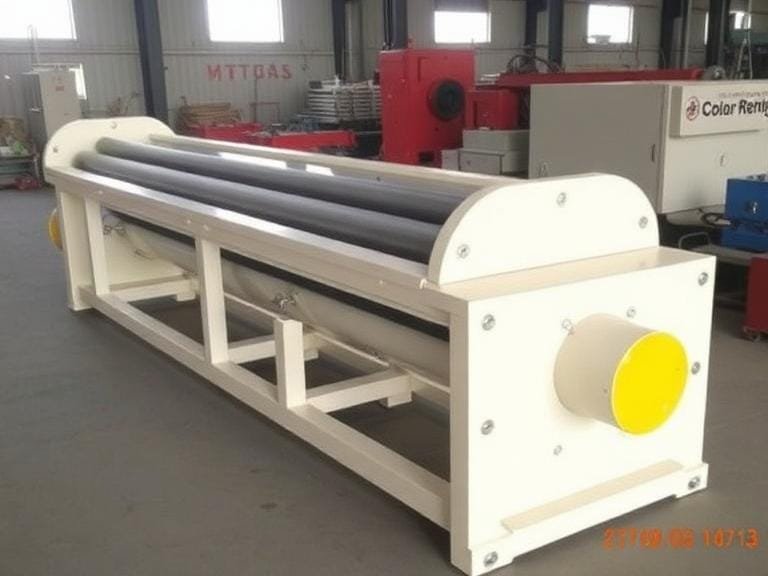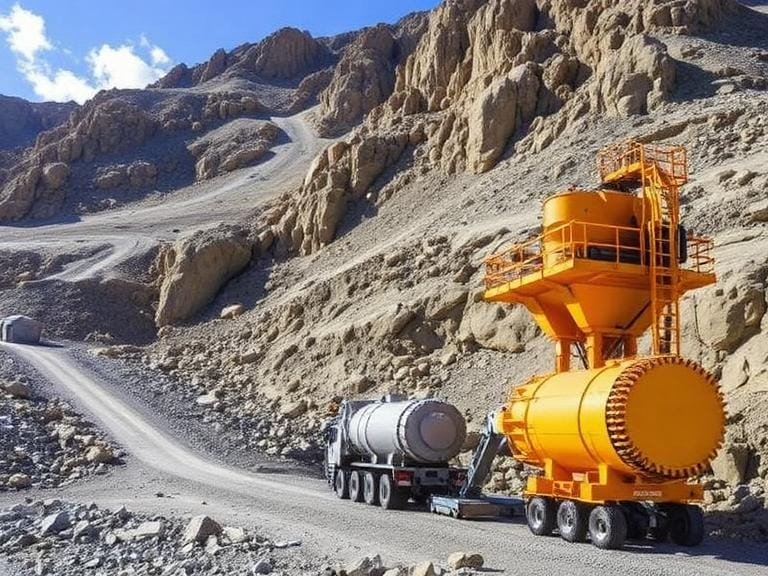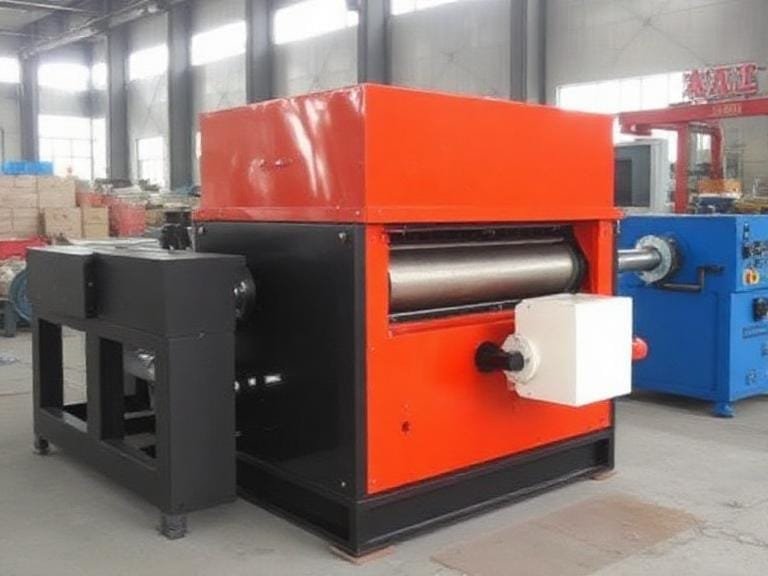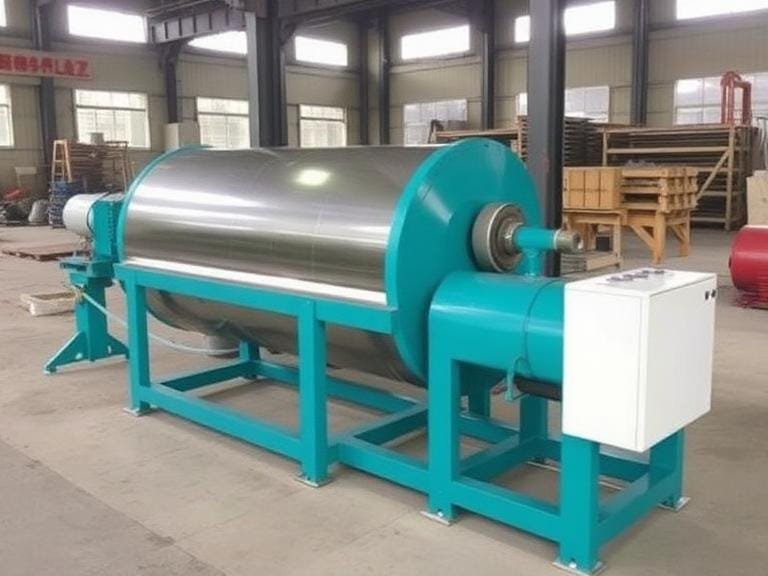
6 Types of Open-Pit Mining Equipment Used for Excavation and Extraction
Choosing the right mining equipment used for excavation and extraction is a production decision, not simply an equipment-shopping exercise. In an open-pit mine, excavators, haul trucks, bulldozers, wheel loaders, drilling rigs, and blasting systems work together to remove overburden, break rock, move ore, and prepare material for processing. A mismatch between any two stages can create queues, increase fuel consumption, and reduce the amount of saleable mineral produced per shift.
Quick Answer: What Equipment Is Used in Open-Pit Mining?
The six main equipment categories used in open-pit mining are hydraulic excavators or mining shovels, haul trucks, bulldozers, wheel loaders, drilling rigs, and blasting equipment. Excavators and loaders dig or load material; haul trucks transport it; bulldozers prepare and maintain working areas; drills create blast holes; and controlled blasting breaks competent rock for excavation.
Our recommendation: For a new project, size the loading and hauling fleet together, match drilling and blasting to the geology, and include road maintenance in the production plan. If the deposit contains minerals that require magnetic separation or other beneficiation, plan the processing stage alongside the mine fleet rather than treating extraction and recovery as unrelated projects.
What Is Open-Pit Mining Equipment?
Open-pit mining equipment consists of the machines and supporting systems used to extract rock and mineral resources from a surface excavation. The equipment removes overburden, drills and breaks rock where necessary, loads material, transports ore and waste, and maintains access to active benches and haul roads.
Unlike underground mining, open-pit operations generally have direct access to the working face and transport routes from the surface. This allows the use of large mobile machines, but it also creates long haul distances, extensive road networks, changing bench conditions, and significant fuel and maintenance demands.
Equipment selection should reflect the complete operation. A high-capacity excavator is not necessarily the best choice if the truck fleet cannot remove its output. Similarly, a large drill does not guarantee good fragmentation if its pattern, hole depth, or operating parameters do not suit the rock mass.
Quick Summary: Six Types of Mining Equipment
| Equipment type | Primary function | Best use case | Main buying consideration |
|---|---|---|---|
| Hydraulic excavator or mining shovel | Excavates and loads rock, ore, and overburden | High-volume digging and truck loading | Bucket capacity, digging conditions, cycle time, and truck match |
| Haul truck | Transports ore and waste | Moving material from benches to dumps, stockpiles, or crushers | Payload, haul profile, rolling resistance, availability, and tire costs |
| Bulldozer | Pushes material and prepares surfaces | Road maintenance, bench preparation, and stockpile management | Blade type, traction, ground conditions, and service support |
| Wheel loader | Loads material and handles stockpiles | Crusher feeding, stockpile reclaim, and flexible loading tasks | Bucket size, material density, travel distance, and visibility |
| Drilling rig | Creates holes for blasting or other drilling tasks | Hard-rock benches requiring controlled fragmentation | Rock hardness, hole diameter, depth, accuracy, and dust control |
| Blasting equipment and systems | Breaks competent rock using controlled explosive energy | Hard rock that cannot be excavated economically by direct digging | Fragmentation target, vibration limits, safety, and regulatory compliance |
1. Hydraulic Excavators and Mining Shovels
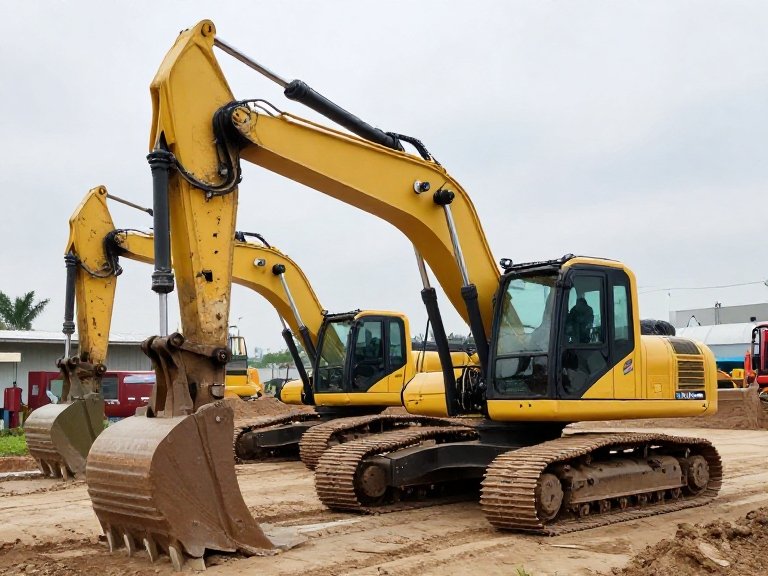
Hydraulic excavators and mining shovels are central to many open-pit operations because they dig material and load it into haul trucks. The correct machine can improve loading consistency, reduce truck waiting time, and maintain a steady flow of material from the working face.
How excavators work
A hydraulic excavator uses a boom, stick, bucket, hydraulic system, and tracked or wheeled undercarriage to dig and move material. Large mining shovels may be selected for high-volume production and demanding digging conditions. The appropriate configuration depends on the deposit, bench height, material strength, and loading method.
For softer material or deposits with favorable digging conditions, direct excavation may avoid the expense and operational complexity of drilling and blasting. For competent hard rock, however, blasting or another fragmentation method may be necessary before the excavator can load material efficiently.
When is an excavator worth upgrading?
Consider an upgrade when the existing machine repeatedly limits production, has poor availability, cannot achieve the required digging cycle, or is poorly matched to the truck payload. Before purchasing a larger machine, measure actual cycle time, bucket fill, downtime, and truck queuing. A larger bucket will not solve a loading problem if the material is poorly fragmented or the machine spends too much time repositioning.
In most professional situations, the excavator and haul truck should be evaluated as one loading system. The target is not simply maximum bucket capacity; it is consistent tonnes moved per operating hour at an acceptable cost per tonne.
Advantages and limitations
- Advantages: Versatile digging and loading, effective positioning at the face, and a broad range of machine sizes and attachments.
- Limitations: Performance depends on ground conditions, operator skill, machine availability, and the ability of the truck fleet to accept the output.
For a mine with changing geology or several working faces, excavator flexibility can be valuable. For a high-volume, repetitive operation, a larger mining shovel may offer a better production fit, provided the supporting infrastructure and haulage fleet can handle it.
2. Mining Haul Trucks
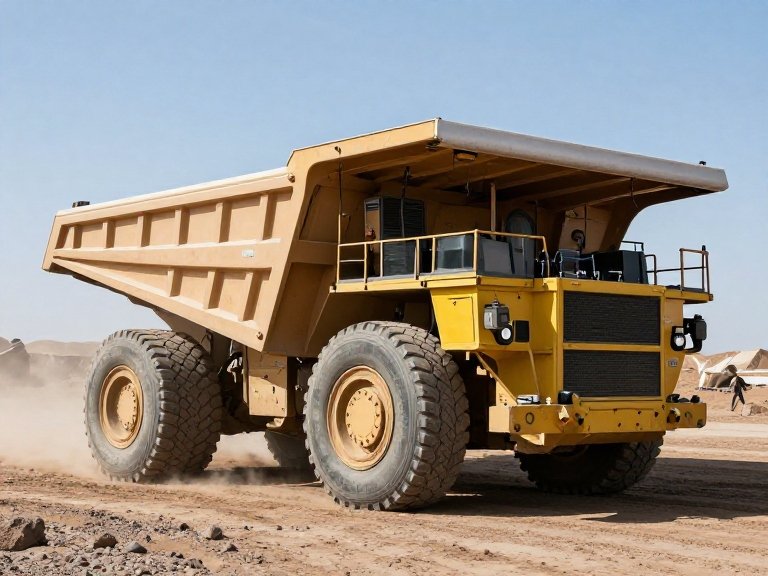
Haul trucks transport ore, waste rock, and overburden between the working face and destinations such as waste dumps, stockpiles, or primary crushers. In many open-pit mines, hauling is a major operating cost, so truck selection has a direct effect on cost per tonne.
How haul trucks affect production
Truck productivity depends on payload, loading time, travel distance, road gradient, rolling resistance, traffic conditions, dumping time, and return travel. A truck with a high nominal payload can still deliver poor productivity if the route is steep, the road surface is rough, or the loading unit takes too long to fill it.
Oversized trucks can be attractive for long-distance, high-volume hauling, but they require compatible loading equipment, adequate road width, suitable turning areas, and maintenance facilities. Smaller trucks may be more practical for compact pits, shorter hauls, or operations with changing access conditions.
What should buyers compare?
- Rated payload and the mine’s actual loading policy.
- Haul distance, road gradient, and rolling resistance.
- Fuel or energy consumption per tonne moved.
- Tire availability, replacement cost, and expected service life.
- Brake systems, retarding capability, and safe operation on downhill routes.
- Service support, parts availability, and expected mechanical availability.
We recommend using measured cycle data rather than relying only on manufacturer brochure figures. A truck fleet should be sized against actual route conditions and the loading unit’s production rate. If trucks queue at the excavator, capital is sitting idle. If the excavator waits for trucks, loading capacity is being wasted.
For heavy-duty applications, haul-road design and maintenance are essential. Drainage, road geometry, surface condition, and traffic management affect cycle times and equipment wear. These are operational design issues, not minor housekeeping tasks.
3. Bulldozers
Bulldozers are used to push material, maintain working surfaces, prepare benches, manage stockpiles, and support haul-road maintenance. They do not normally replace a production excavator and truck fleet, but they help keep the mine’s working areas accessible and organized.
Where bulldozers deliver the most value
A bulldozer can clear loose material, spread fill, maintain ramps, push waste over short distances where appropriate, and prepare surfaces for drilling or loading. Different blade configurations and undercarriage designs suit different tasks. A machine selected for rough ground and heavy pushing may not be the most economical choice for lighter support duties.
Dozers also support stockpile management and can help maintain access around dumps and loading areas. However, pushing material over long distances is often inefficient compared with a properly designed truck-haul system. The best use is generally where the dozer’s traction and pushing ability solve a specific site problem.
Buying considerations
Compare blade capacity, drawbar performance, track or undercarriage durability, visibility, operator comfort, fuel use, and access to wear parts. Ask how the machine will be used across the mine plan. A dozer working continuously in abrasive rock will face different wear demands from one maintaining relatively soft haul-road material.
From our experience, mines should budget for support equipment based on its contribution to fleet availability. A dozer that keeps ramps safe and loading areas clear can protect the productivity of much more expensive excavators and haul trucks.
4. Wheel Loaders
Wheel loaders use a front-mounted bucket to scoop and move material. In open-pit mines and associated processing facilities, they are commonly used for stockpile reclaim, loading smaller trucks, feeding crushers, moving material around laydown areas, and handling material where mobility is important.
Wheel loader vs. excavator
A wheel loader is not automatically a replacement for an excavator. Loaders are particularly useful when the material is accessible from the surface and the machine must move between nearby piles or loading points. Excavators are often better suited to digging a face, working below machine level, or handling a bench configuration that favors a digging arm.
Loader productivity depends on bucket capacity, material density, bucket fill, travel distance, turning time, tire traction, and loading cycle. A large bucket may be unsuitable for dense material if it causes excessive payload or stresses the machine. Conversely, an undersized bucket can create too many cycles and slow crusher feeding.
When should you use a wheel loader?
- Feeding a primary or secondary crusher from a nearby stockpile.
- Reclaiming ore or aggregate from storage areas.
- Handling material across multiple nearby work locations.
- Loading smaller trucks where a large excavator is unnecessary.
- Supporting maintenance and material-handling operations around the plant.
For a mine with a central processing plant, loader availability can directly affect crusher utilization. Specify the loader around the required feed rate and stockpile layout, and check that the bucket and material density are compatible.
Once material reaches the processing stage, the next challenge may involve removing unwanted mineral components or recovering valuable particles. The correct equipment depends on mineralogy and particle characteristics, not on the fact that a wheel loader delivered the material. Our guide to mineral processing techniques and equipment explains the distinction between extraction and downstream treatment.
5. Drilling Rigs
Drilling rigs create holes in the rock where explosives may be placed or where drilling is required for other mine-planning purposes. In conventional hard-rock open-pit mining, production drilling is a critical step because the quality and consistency of the holes influence the results of subsequent blasting.
What determines drilling performance?
Important factors include rock hardness, abrasiveness, jointing, required hole diameter, bench height, hole depth, drilling accuracy, and the type of drilling system. Rotary and down-the-hole drilling methods are used in different conditions; neither should be selected without considering the geology and required hole quality.
Drilling productivity is not simply the number of meters drilled per hour. A rig may drill quickly but create holes that fail to meet the required position, depth, or alignment. The result can be poor fragmentation, excessive oversize, uneven excavation, or increased secondary handling.
What to consider before buying
- Geological conditions and expected drill-bit wear.
- Required hole diameter and depth range.
- Bench geometry and the access available to the rig.
- Drilling accuracy and the mine’s blast-design requirements.
- Dust suppression or collection systems appropriate to the site.
- Compressor or power requirements, maintenance, and spare-parts availability.
For commercial users, a drilling rig should be assessed as part of the drill-and-blast cycle. A faster rig is only an improvement if the holes it produces support the desired fragmentation and downstream loading performance.
6. Blasting Equipment and Systems
Where rock is too competent for economical direct excavation, controlled blasting can break the rock into fragments that excavators and loaders can handle. The system may involve drilling equipment, approved explosives, initiation systems, blast-design software, monitoring equipment, and specialist personnel operating under applicable laws and site procedures.
Blasting is not simply an explosive charge placed in a hole. It is an engineered operation designed around rock properties, bench geometry, fragmentation targets, nearby structures, vibration constraints, flyrock risk, and the mine’s excavation and processing requirements.
Why fragmentation matters
Fragmentation affects loading time, truck fill, crusher feed, and the amount of secondary breaking or rehandling required. Material that is too coarse can obstruct loading or create crusher bottlenecks. Excessive fines may also be undesirable, depending on the ore, downstream process, and material-handling system.
The correct fragmentation target is therefore an operational balance. A blast pattern that works well in one rock mass may perform poorly in another. Geology, discontinuities, water conditions, explosive selection, and the geometry of the bench all influence results.
Safety and regulatory requirements
Blasting should only be designed and executed by qualified personnel under the relevant regulatory framework and mine safety management system. The operation requires controlled access, exclusion zones, communication procedures, misfire management, and appropriate monitoring. Exact requirements vary by jurisdiction and site conditions.
For procurement teams, the right question is whether the contractor or mine has the qualifications, documented procedures, monitoring capability, and performance records required for the project. Do not choose a blasting service solely on the lowest quoted cost per hole or per tonne.
How the Six Types of Open-Pit Mining Equipment Compare
| Equipment | Excavation or extraction role | Impact on production | Typical constraint | Upgrade priority when… |
|---|---|---|---|---|
| Excavator or mining shovel | Digging and loading | Controls loading rate and face productivity | Digging conditions, bucket cycle, mechanical availability | Trucks wait for loading or digging capacity limits output |
| Haul truck | Transport | Controls material movement between locations | Haul profile, payload, tires, road conditions | Loading units queue or required tonnes cannot be hauled |
| Bulldozer | Ground preparation and pushing | Supports access, road condition, and work-area readiness | Terrain, wear, pushing distance | Poor road or bench condition reduces fleet availability |
| Wheel loader | Flexible loading and stockpile handling | Supports crusher feed and local material movement | Travel distance, bucket match, material density | Stockpile reclaim or plant feed is a bottleneck |
| Drilling rig | Creates blast holes | Prepares competent rock for controlled fragmentation | Geology, hole accuracy, bit wear | Drilling cannot keep up with the production schedule |
| Blasting system | Rock fragmentation | Influences loading, hauling, and crushing efficiency | Rock variability, safety, vibration limits, regulation | Oversize, poor digging, or excessive secondary breaking persists |
How to Select Mining Equipment Used for Excavation and Extraction
Equipment selection should begin with a production model, not a brand shortlist. The same machine can perform very differently in a shallow, compact pit and a deep operation with long uphill hauls. The following criteria provide a practical framework for comparing alternatives.
1. Understand the geology and material properties
Identify rock strength, abrasiveness, jointing, moisture, and the variability of the ore and waste. These characteristics affect digging resistance, drill selection, fragmentation, tire and undercarriage wear, and the downstream processing route.
2. Define the required production rate
Set the target in tonnes per hour, tonnes per shift, or tonnes per year, and account for realistic operating hours and planned maintenance. Rated capacity is not the same as sustained output. Use realistic estimates for mechanical availability, utilization, cycle times, and weather or access constraints.
3. Match loading and hauling capacity
Model the excavator-to-truck relationship. Consider the number of passes required to load a truck, loading time, travel time, queue time, and dump time. Avoid buying a truck fleet that is too small for the loading unit or too large for the available haul-road and loading geometry.
4. Evaluate the complete cost of ownership
Purchase price is only the starting point. Include fuel or energy, tires, wear parts, planned and unplanned maintenance, operator training, insurance where applicable, financing, and resale value. For an existing mine, the cost of production lost during downtime can be just as important as the maintenance invoice.
5. Check service and parts support
Ask about local technicians, spare-parts lead times, warranty coverage, training, and the manufacturer’s maintenance requirements. A machine with attractive specifications can become an expensive liability if critical components are difficult to obtain or service support is unreliable.
6. Plan for safety, environmental controls, and compliance
Review visibility, access and egress, braking, dust control, noise, emissions, machine guarding, and site-specific hazards. Confirm applicable regulations and standards for the equipment and operating location. Safety features and compliance obligations should be treated as design requirements, not optional extras.
When comparing suppliers, our guide to mining equipment manufacturers worldwide can help build an initial shortlist. Use it as a starting point for due diligence, then verify the specific model’s suitability, support network, and operating economics.
Cost, Productivity, and Return on Investment
There is no defensible universal purchase price for open-pit mining equipment. Cost varies with machine class, payload, engine or drive system, configuration, operating region, new versus used condition, and support package. A useful comparison therefore starts with the required job and measures cost per productive tonne rather than comparing purchase prices alone.
What belongs in a realistic cost model?
- Initial purchase price, financing, and delivery.
- Fuel or energy use under actual operating conditions.
- Routine servicing, major component rebuilds, and wear parts.
- Tires, drill consumables, buckets, cutting edges, and undercarriage components.
- Operator and maintenance training.
- Expected mechanical availability and lost-production cost.
- Road construction and maintenance where relevant.
- Parts inventory and local service arrangements.
A cheaper machine can be the wrong purchase if it consumes more fuel, requires frequent repairs, or cannot meet the production schedule. A premium machine is not automatically a better investment either. It must deliver enough additional availability, productivity, or useful service life to justify the price difference.
When is upgrading worthwhile?
Upgrade when the current fleet creates a documented bottleneck or when maintenance and downtime have become materially more expensive than the alternatives. Establish a baseline for output, fuel consumption, availability, and cost per tonne. Compare the proposed upgrade using realistic assumptions and sensitivity tests, including lower-than-expected production and higher maintenance costs.
For smaller operations, refurbishing a suitable existing machine may be more economical than replacing it. For high-utilization fleets, the benefit of a newer machine may be greater if it improves availability, safety, fuel efficiency, or production consistency. The right decision depends on actual site data.
Why Excavation Equipment Must Match Mineral Processing
Excavation and extraction are only the first stages of a mineral production system. After ore is loaded and transported, it may need crushing, grinding, classification, gravity separation, magnetic separation, flotation, or other treatment, depending on the mineral and its physical and chemical properties.
The mining fleet and processing plant should be designed around the same production objective. If haul trucks deliver material faster than the crusher can accept it, queues and stockpiles grow. If the plant is sized for more material than the mine can supply consistently, processing capacity remains underused.
Feed consistency matters as well. Changes in ore hardness, particle size, mineral composition, and moisture can influence downstream performance. Mine planning and grade control should therefore communicate with processing teams so that the plant receives material within its intended operating range wherever practical.
Oromineral’s guide to primary mineral processing techniques provides a useful overview of how different separation and treatment approaches fit into a mineral-processing circuit.
Mineral Separation After Open-Pit Extraction
Not every open-pit mine requires magnetic separation, and a magnetic separator does not replace the excavation fleet. However, when the ore contains magnetic minerals or unwanted magnetic contaminants, separation may be an important downstream step. The correct equipment depends on magnetic susceptibility, particle size, feed condition, slurry characteristics, and the required product specification.
For example, processing kaolin, feldspar, or quartz may involve high-intensity magnetic separation where the mineralogy and impurity profile justify it. Equipment selection should be based on representative feed testing and recovery or product-quality targets, not on magnetic field strength alone.

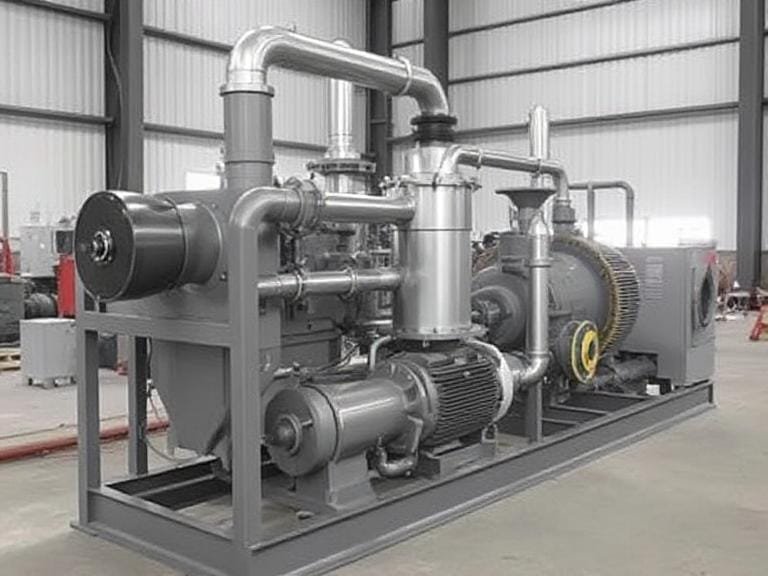
Water-Cooling Electro-Magnetic Separator for Kaolin, Feldspar, and Quartz
For projects where magnetic impurity removal is part of the processing route, this water-cooling electromagnetic separator is a relevant equipment option to investigate. It is a mineral-processing machine, not an excavation machine; its role begins after ore or mineral feed has been prepared for separation.
Listed specifications:
- Input voltage: 380 V
- Coil power: 160 kW
- Background magnetic field: 18,000–20,000 GS
- Listed slurry density: 10%–30%
- Magnetic cavity diameter: 1,000 mm
- Output capacity: 40–100 m³/h
- Dimensions: 2,300 × 2,300 × 3,100 mm
- Listed weight: 32 tonnes
The manufacturer describes a high magnetic field, limited internal temperature rise, adaptability to different mineral particle sizes and slurry densities, efficient beneficiation, and straightforward maintenance as product features. Confirm these claims against the proposed feed, test results, and guaranteed operating conditions before specifying the machine.
The listed output is a volumetric capacity range, not a guaranteed mass throughput or recovery rate. Actual performance depends on feed characteristics, slurry conditions, operating settings, and the required separation result.
Review the electromagnetic separator specifications and request a technical assessment based on representative ore samples.
What should you verify before purchasing a separator?
- Mineralogy and the type of impurity or valuable mineral to be separated.
- Feed particle-size distribution and slurry solids concentration.
- Required throughput and product-quality or recovery targets.
- Magnetic field requirements under the actual operating configuration.
- Water, power, cooling, maintenance, and installation requirements.
- Testwork results, operating guarantees, and after-sales support.
For buyers evaluating different technologies, our magnetic separation process guide explains the factors that influence process selection. If the application involves non-ferrous metal recovery from suitable mixed material, compare the requirements with an eddy current separator for aluminum and copper sorting. Eddy current separation is not a general substitute for high-intensity magnetic separation; each technology targets different material properties.
Pros and Cons of a Well-Matched Open-Pit Equipment Fleet
| Advantages | Limitations and trade-offs |
|---|---|
| Large mobile machines can move high volumes of ore and waste. | Capital costs and maintenance demands can be substantial. |
| Equipment can be selected to match different geological and production conditions. | Fleet mismatches create queues, idle time, and avoidable operating costs. |
| Mechanized drilling and loading can support repeatable production when well controlled. | Performance depends on geology, operator skill, planning, and maintenance. |
| Coordinated excavation and haulage can improve tonnes moved per operating hour. | Haul roads, stockpiles, and supporting infrastructure require ongoing investment. |
| Integration with mineral processing can improve the flow of material through the operation. | Inconsistent feed or plant bottlenecks can limit the value of additional mining capacity. |
The strongest benefit comes from system coordination. Buying the largest excavator, the highest-payload truck, or the fastest drill in isolation rarely guarantees the lowest production cost. A balanced fleet that delivers the required material reliably is generally the better investment.
Common Mistakes When Buying Open-Pit Mining Equipment
1. Comparing rated capacity instead of actual productivity
Brochure figures are useful for initial screening, but real production depends on operating conditions. Ask for performance assumptions and compare them with your site’s haul profile, geology, and operating schedule.
2. Ignoring the loading and hauling match
Excavators and trucks should be sized as a system. Too few trucks create loading-unit idle time; excessive truck capacity can increase capital and operating costs without increasing delivered tonnes.
3. Underestimating road maintenance
Road condition influences travel time, tires, fuel use, braking, and safety. Include road construction and maintenance in the operating plan rather than assigning them only when problems arise.
4. Selecting drilling equipment without considering geology
Rock hardness and abrasiveness affect penetration rate, consumable wear, and hole quality. Confirm that the proposed rig and tooling suit the deposit and required drilling pattern.
5. Treating blasting as a standalone service
Blasting results affect excavator productivity and crusher performance. Measure fragmentation and downstream effects rather than judging the blast only by the number of holes completed.
6. Overlooking parts and service support
Downtime can erase the apparent savings from a lower purchase price. Confirm service coverage, parts lead times, technician availability, and warranty conditions before placing an order.
7. Buying processing equipment without representative testwork
Mineral separation performance depends on the ore. Conduct suitable testwork and verify capacity and recovery expectations before investing in a separator or processing line.
Expert Recommendation: Build the Fleet Around the Bottleneck
For a new open-pit project, begin by defining the required production rate, geological conditions, haul distances, bench geometry, and processing capacity. Use those inputs to select a compatible loading and hauling system, then size drilling, blasting, dozing, and stockpile-handling equipment around the mine plan.
For an operating mine, collect production data before upgrading. Track loading and truck cycle times, idle hours, fuel consumption, mechanical availability, drill productivity, and crusher feed. If a bottleneck appears consistently, test whether it is caused by equipment capacity, operating practices, road condition, fragmentation, or maintenance. Replacing a machine without identifying the cause can add cost without solving the problem.
For beginners, buying a smaller, supportable fleet may be more practical than investing immediately in the largest available machines. For commercial users with sustained high production, larger equipment can make sense when road geometry, loading compatibility, service support, and utilization justify the investment. For heavy-duty applications, prioritize component durability, maintenance planning, safety systems, and proven performance in comparable conditions.
Oromineral’s role in this decision is to help buyers understand mineral-processing options as part of the wider production chain. When ore characteristics indicate that magnetic separation or another beneficiation method is necessary, evaluate that equipment against the material that the mine can reliably deliver. The goal is not to maximize the specification of every machine; it is to produce the required mineral product at a competitive total cost.
Frequently Asked Questions
1. What are the six main types of open-pit mining equipment?
The six main categories covered here are hydraulic excavators or mining shovels, haul trucks, bulldozers, wheel loaders, drilling rigs, and blasting equipment and systems. The exact fleet depends on geology, production targets, mine layout, and whether rock can be excavated directly or requires fragmentation.
2. Which machine is most important in open-pit mining?
There is no single machine that is most important in every operation. Excavators and haul trucks are central to many conventional loading and hauling systems, while drilling and blasting can determine productivity in hard rock. The key is identifying the bottleneck in the complete production cycle.
3. What is the difference between a mining excavator and a wheel loader?
An excavator uses a boom and bucket to dig and load material, often directly from a face or bench. A wheel loader uses a front-mounted bucket and is especially useful for stockpile handling, nearby material movement, and feeding crushers. The better choice depends on the material, digging conditions, and travel distance.
4. Why are haul trucks so important in open-pit mines?
Haul trucks move ore and waste between the mining face and destinations such as crushers, stockpiles, or dumps. Their payload, cycle time, road conditions, fuel use, and availability strongly influence the cost and volume of material transported.
5. Is drilling and blasting always necessary?
No. Softer or sufficiently fractured material may be excavated directly. Competent hard rock may require drilling and controlled blasting to achieve suitable fragmentation. The decision should be based on geological conditions, excavation performance, safety, and total operating cost.
6. How do I choose the right mining equipment size?
Start with the required production rate, material properties, bench geometry, haul distance, and operating schedule. Match excavator or shovel capacity with truck payload and cycle time, then evaluate availability, maintenance, fuel use, and supporting infrastructure. Use realistic site data rather than rated capacity alone.
7. What factors have the biggest effect on mining equipment costs?
Major factors include purchase price, fuel or energy, tires and wear parts, maintenance, downtime, operator training, haul-road conditions, and equipment utilization. Cost per productive tonne is usually a more useful comparison than purchase price alone.
8. What equipment is used after ore is excavated?
Depending on the deposit, downstream processing may include crushing, grinding, classification, gravity separation, magnetic separation, flotation, or other methods. The right process depends on mineralogy, particle size, liberation, and the target product specification.
9. Can a magnetic separator replace mining excavation equipment?
No. A magnetic separator is a mineral-processing machine used to separate suitable magnetic materials or impurities from a feed stream. It does not dig ore from the pit or transport it. It must be selected according to the mineralogy and operating conditions of the processing stage.
10. Should a mine buy new or used equipment?
New equipment may offer warranty coverage, current safety features, and predictable initial service requirements, while used equipment can reduce initial capital cost. Compare condition, service history, remaining component life, parts availability, expected downtime, and total cost over the planned operating period before deciding.
References
- Mine Safety and Health Administration (MSHA) — U.S. government resource for mine safety regulations, training, and hazard prevention. Consult the rules applicable to the mine’s location and operating activities.
- National Institute for Occupational Safety and Health (NIOSH), Mining — Research and guidance on mining health and safety, equipment-related hazards, and risk reduction.
- International Labour Organization (ILO), Mining — International occupational safety and health resources relevant to mining operations and working conditions.
Equipment specifications, costs, production rates, and legal requirements vary by model, site, and jurisdiction. Confirm technical claims with the equipment supplier and qualified mine-planning, engineering, and safety professionals before making a purchasing or operating decision.