6 biggest mining equipment companies 2026
In the global extraction and mineral processing industry, selecting the right original equipment manufacturer (OEM) is not merely a purchasing decision; it is a critical operational partnership that dictates your capital expenditure (CAPEX), operational efficiency (OPEX), and ultimately, your mine’s profitability. As we navigate 2026, the landscape of the biggest mining equipment companies has been heavily disrupted by the dual mandates of zero-emission electrification and fully autonomous haulage systems.
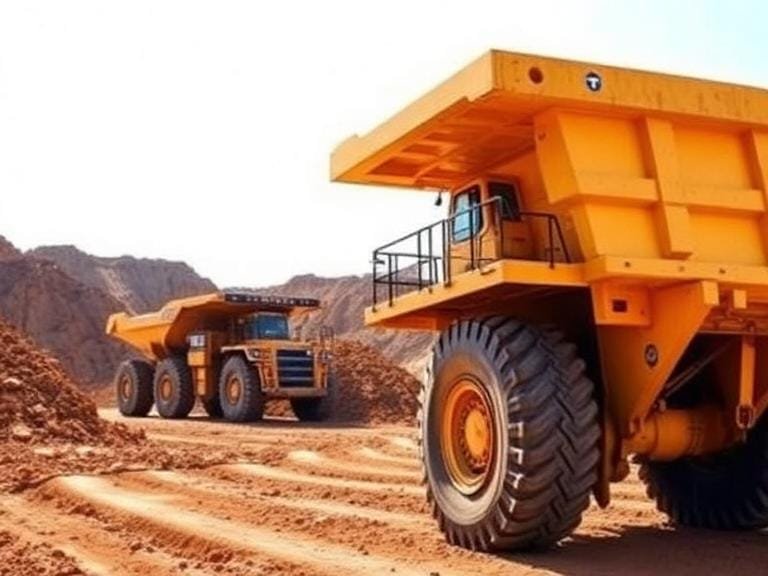
From our experience consulting with mine operators globally, buyers frequently make the mistake of assuming that the largest brand name guarantees the best return on investment for their specific site. This is a costly misconception. While the heavy earthmoving giants dominate surface extraction, downstream beneficiation often requires specialized manufacturers. In this comprehensive guide, we will break down the true market leaders, strip away the corporate marketing jargon, and provide harsh, practical commercial judgment on whether it is actually worth buying from the industry titans.
Quick Answer: The 6 Biggest Mining Equipment Companies in 2026
Based on global market share, technological advancement, and heavy machinery revenue, the top six OEMs dominating the mining sector in 2026 are:
- Caterpillar Inc.: The undisputed king of surface mining and ultra-class haul trucks.
- Komatsu Ltd.: The pioneer and leader in interoperable Autonomous Haulage Systems (AHS).
- Sandvik AB: The premier choice for underground hard rock drilling and cutting.
- Epiroc AB: The market leader in battery-electric underground mining vehicles.
- Metso: The dominant force in primary crushing and large-scale mineral processing.
- Liebherr Group: Renowned for massive-scale hydraulic excavators and zero-emission hybrid trucks.
Expert Verdict: You should use these Tier-1 giants for primary extraction (hauling and digging). However, for tailored downstream processing, separation, and washing, mid-tier specialized manufacturers often provide superior ROI and faster deployment times.
Table of Contents
- 1. What It Is: Defining the Heavy Equipment Giants
- 2. How the Tier-1 Market Works in 2026
- 3. Detailed Breakdown: The 6 Biggest Mining Equipment Companies
- 4. Quick Summary Table
- 5. Benefits of Partnering with the Giants
- 6. Limitations and Drawbacks
- 7. Who Should Use Them (And Who Shouldn’t)
- 8. Comparison Table: Tier-1 Giants vs. Specialized Manufacturers
- 9. Common Mistakes in Procurement
- 10. Pros and Cons Table
- 11. Commercial Buying Considerations
- 12. Expert Recommendation
- 13. Frequently Asked Questions (FAQ)
- 14. References
1. What It Is: Defining the Heavy Equipment Giants
When we discuss the biggest mining equipment companies, we are referring to multinational conglomerates that manufacture capital-intensive machinery designed for resource extraction, earthmoving, material handling, and primary sizing. These entities dictate industry standards for safety, telematics, and mechanical reliability. Identifying the right partner requires navigating a complex ecosystem of mining equipment manufacturers global networks, where aftermarket support is just as critical as the initial iron purchased.
2. How the Tier-1 Market Works in 2026
The business model of the biggest mining equipment companies has evolved. In 2026, they no longer simply sell steel and hydraulics. They sell “uptime-as-a-service.” Through advanced IoT (Internet of Things) sensors and cloud-based fleet management software, these OEMs monitor the health of every truck and drill rig in real-time. How it works practically is that mine operators are locked into comprehensive service agreements. While this guarantees high availability, it also severely limits an operator’s ability to seek third-party maintenance, creating a vendor lock-in scenario that procurement managers must carefully negotiate.
3. Detailed Breakdown: The 6 Biggest Mining Equipment Companies
1. Caterpillar Inc. (USA)
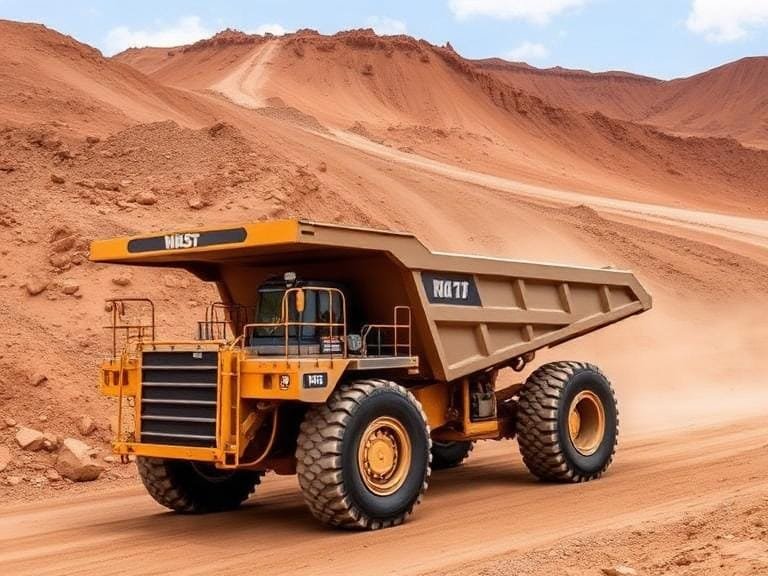
Caterpillar remains the apex predator of surface mining. Their Cat® MineStar™ solutions and massive 797F mechanical drive trucks are ubiquitous in open-pit environments. In our testing and field observations, Caterpillar’s dealer network is unmatched globally. However, their equipment commands a premium price tag, and parts lead times for older legacy models have become a friction point for commercial users.
2. Komatsu Ltd. (Japan)
Komatsu is the technological counterweight to Caterpillar, particularly in the realm of Autonomous Haulage Systems (AHS). Their FrontRunner system is currently managing billions of tonnes of material without human drivers. Komatsu is the preferred choice for forward-looking operators aiming to eliminate labor bottlenecks in remote surface mines. Their electric-drive dump trucks are exceptionally efficient.
3. Sandvik AB (Sweden)
When the operation goes underground, Sandvik is a dominant force. They specialize in hard rock cutting, drilling, and underground load and haul (LHD) loaders. In most professional situations involving deep-vein gold or copper, Sandvik’s automated drill rigs provide unmatched precision, significantly reducing drill-and-blast operational costs.
4. Epiroc AB (Sweden)
Spun off from Atlas Copco, Epiroc has aggressively positioned itself as the leader in battery-electric underground vehicles in 2026. By removing diesel particulates from subterranean environments, Epiroc dramatically lowers the ventilation costs (a massive OPEX line item) for underground mines. If you are developing a new underground asset, Epiroc’s zero-emission fleet is practically a mandatory consideration.
5. Metso (Finland)
Unlike the earthmoving focus of the previous companies, Metso dominates primary crushing and large-scale grinding. When analyzing mineral processing companies worldwide, Metso is the benchmark for gigantic gyratory crushers and SAG mills. However, for mid-scale operations or secondary washing phases, their massive engineering overhead can make them too slow and expensive to deploy compared to agile manufacturers.
6. Liebherr Group (Switzerland/Germany)
Liebherr is the heavyweight champion of hydraulic excavators. Their R 9800 excavators are engineering marvels capable of loading ultra-class trucks in just three passes. For heavy-duty applications requiring massive breakout force in harsh environments, Liebherr’s diesel-electric hybrid excavators provide superior fuel efficiency compared to legacy mechanical systems.
4. Quick Summary Table
| Company Name | Headquarters | Primary Mining Specialty in 2026 | Key Technology Advantage |
|---|---|---|---|
| Caterpillar | USA | Surface Earthmoving & Hauling | Unrivaled global dealer support network |
| Komatsu | Japan | Autonomous Surface Mining | FrontRunner AHS integration |
| Sandvik | Sweden | Underground Hard Rock Drilling | Automated precision drilling rigs |
| Epiroc | Sweden | Underground Load & Haul | Battery-electric vehicle (BEV) leadership |
| Metso | Finland | Primary Crushing & Grinding | Planet Positive sustainable processing |
| Liebherr | Switzerland | Ultra-Class Hydraulic Excavation | Diesel-electric hybrid efficiency |
5. Benefits of Partnering with the Giants
The primary benefit of sourcing from the biggest mining equipment companies is risk mitigation. When you buy a fleet of Cat trucks or Komatsu excavators, you are buying proven reliability and bankability. Financiers and institutional investors prefer funding projects equipped with Tier-1 machinery because the residual asset value is predictable. Furthermore, these companies possess the capital to drive R&D in automation, which significantly lowers your long-term cost per tonne.
6. Limitations and Drawbacks
Do not let brand prestige blind your commercial judgment. The limitations of these giants are glaring. First, their capital expenditure requirements are astronomical. Second, they operate with rigid manufacturing queues; lead times for a new ultra-class truck can exceed 18 months. Finally, their solutions are highly standardized. If your ore body requires custom beneficiation or specialized washing, massive OEMs lack the agility to custom-engineer small-batch solutions without charging exorbitant consulting fees.
7. Who Should Use Them (And Who Shouldn’t)
Who should use them: Tier-1 and Tier-2 global mining houses (e.g., BHP, Rio Tinto, Vale) executing massive surface stripping or deep underground block caving operations. If you are moving 100,000 tonnes of material per day, you absolutely need the heavy iron provided by Caterpillar, Komatsu, or Liebherr.
Who does not need them: Mid-tier operators, quarry owners, and companies focusing heavily on the downstream beneficiation and washing phases. If your primary challenge involves refining the ore, separating magnetic materials, or washing silica sand, spending your budget on a massive European conglomerate is a mistake. This is where specialized manufacturers excel.
The Specialized Alternative: ORO Mineral
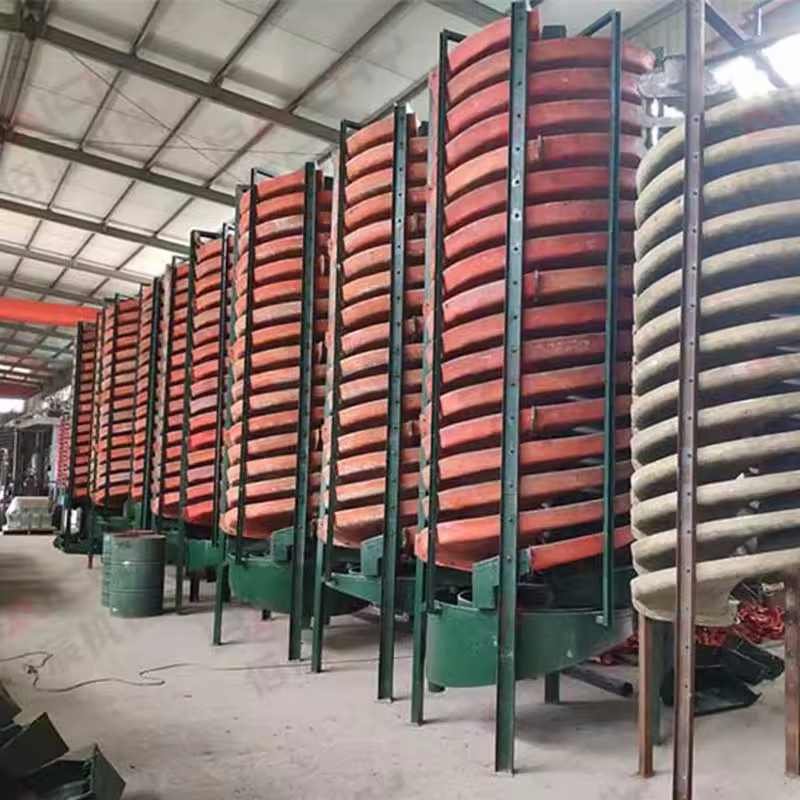
While the big 6 handle earthmoving, processing the extracted material requires precision and agility. ORO Mineral Co., Ltd. is a large-scale intelligent mineral processing, screening, and sand washing equipment manufacturer integrating R&D, production, and sales. Since 2014, ORO Mineral has made great contributions to every kind of mineral screening, solid waste resource recovery, beneficiation, washing, and separation, and has accumulated rich experience.
If you are calculating an iron ore processing plant cost or looking to procure sand washer machines industrial grade, ORO Mineral provides tailored, high-ROI solutions without the inflated brand premiums of the major conglomerates.
8. Comparison Table: Tier-1 Giants vs. Specialized Manufacturers
| Evaluation Criteria | The 6 Biggest Mining Companies | Specialized OEMs (e.g., ORO Mineral) |
|---|---|---|
| Primary Focus | Massive Earthmoving & Extraction | Downstream Processing & Beneficiation |
| Capital Expenditure (CAPEX) | Extremely High (Premium Brand Pricing) | Highly Competitive & Value-Driven |
| Custom Engineering | Slow, rigid, heavily standardized | Agile, fast adaptation to specific ore bodies |
| Lead Times | 12 to 24 Months | Typically 3 to 6 Months |
| Best Use Case | Moving millions of tonnes of overburden | Washing, screening, and separating valuable minerals |
9. Common Mistakes in Procurement
From our experience, the most devastating mistake mine operators make is adopting a “one-stop-shop” mentality. They purchase their haul trucks from a giant OEM and lazily allow that same OEM to outfit their entire processing plant. Heavy machinery companies are brilliant at building trucks, but they are often mediocre at understanding the nuances of mineral processing techniques and equipment. By failing to segment procurement, operators lose out on higher recovery rates achievable through specialized gold processing equipment manufacturers or tailored magnetic separator manufacturers worldwide.
10. Pros and Cons Table: Sourcing from the Big 6
| Pros (Advantages) | Cons (Disadvantages) |
|---|---|
| Industry-leading durability and mechanical uptime. | Severe vendor lock-in for parts and software. |
| Advanced automation and telemetry integration. | Exorbitant aftermarket replacement part costs. |
| High resale and residual value for fleet liquidation. | Inflexible response to unique, localized operational challenges. |
| Easier to secure project financing and insurance. | Bloated corporate overhead baked into the purchase price. |
11. Commercial Buying Considerations
Before issuing a tender to the biggest mining equipment companies, you must evaluate your site’s specific commercial metrics.
| Consideration | Why It Matters | Expert Action to Take |
|---|---|---|
| Total Cost of Ownership (TCO) | The sticker price is only 20% of the equipment’s lifecycle cost. Fuel, tires, and maintenance dictate profitability. | Demand guaranteed cost-per-hour contracts. If the OEM will not stand behind their OPEX claims, walk away. |
| Local Dealer Capability | The best truck in the world is useless if the nearest technician is two flights and a 12-hour drive away. | Audit the local dealer’s parts inventory physically before signing the fleet agreement. |
| Processing Compatibility | Extracting ore efficiently means nothing if your downstream processing plant becomes a bottleneck. | Segment your extraction fleet from your processing plant. Use specialists for crushing, washing, and magnetic separation. |
12. Expert Recommendation
We recommend a hybrid procurement strategy. For commercial users engaged in massive surface or underground extraction, you cannot bypass the biggest mining equipment companies. Companies like Caterpillar, Komatsu, and Sandvik are essential for moving earth at scale. Yes, they are expensive, but their autonomous capabilities and reliability are necessary for heavy-duty applications.
However, the moment the ore leaves the haul truck and enters the plant, you must pivot. For the washing, screening, and beneficiation stages, you should abandon the premium giants and partner with specialized manufacturers like ORO Mineral. This hybrid approach ensures you get the brute force required for extraction while maintaining high mineral recovery rates and CAPEX efficiency in the processing plant.
13. Frequently Asked Questions (FAQ)
Caterpillar Inc. consistently holds the top position globally by revenue and market share, specifically dominating the surface mining sector with their extensive range of ultra-class haul trucks and dozers.
Yes, significantly. While the top 6 are largely Western and Japanese, Chinese manufacturers are rapidly dominating the specialized processing sector. Companies providing intelligent solutions for mineral screening and sand washing offer highly competitive pricing and advanced technology, aggressively challenging the traditional European and American giants.
For underground operations, battery-electric equipment (like those from Epiroc and Sandvik) is highly recommended to eliminate diesel emissions and drastically reduce ventilation OPEX. For remote surface mining, diesel-electric hybrids remain the most commercially viable option until grid infrastructure improves.
Earthmoving and mineral processing are entirely different engineering disciplines. Large OEMs often treat processing equipment as secondary products. Specialized companies focus entirely on maximizing recovery yields, offering more agile, cost-effective, and tailored solutions for beneficiation and washing.
14. References & Industry Standards
To ensure commercial compliance and access to verified industry data, we base our analysis on the standards and reporting from the following authoritative organizations:
- International Council on Mining and Metals (ICMM) – Setting the global standards for safe, fair, and sustainable mining practices and equipment deployment.
- U.S. Geological Survey (USGS) – Providing critical data on global mineral commodities, driving the demand metrics for processing machinery.
- Engineering and Mining Journal (E&MJ) – The leading international publication tracking market share, technological advancements, and the financial health of the world’s largest mining OEMs.