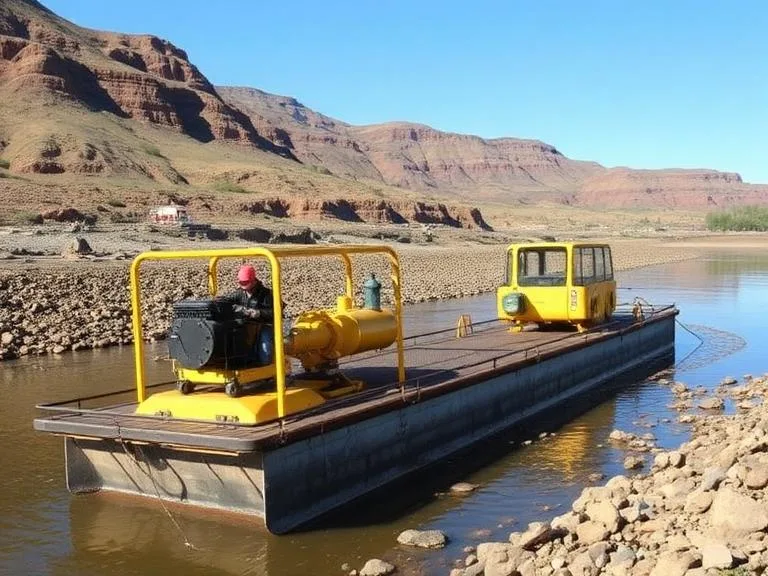
4 Ways to Safely Buy Used Gravity Separation Equipment
The processing of minerals, industrial sands, and solid waste resources requires substantial capital deployment for mechanical infrastructure. In the global mining and resource recovery industries, gravity concentration remains a highly efficient method for separating materials of varying specific gravities. However, purchasing brand-new spirals, jigs, shaking tables, or centrifugal concentrators often introduces heavy financial strain and lengthy lead times. Consequently, procurement managers frequently turn to aftermarket channels to acquire secondary machinery. Navigating an intake process for Used gravity separation equipment requires a structured framework that looks past cosmetic repaint jobs to evaluate core structural wear, dynamic balance, and mechanical fatigue thresholds.
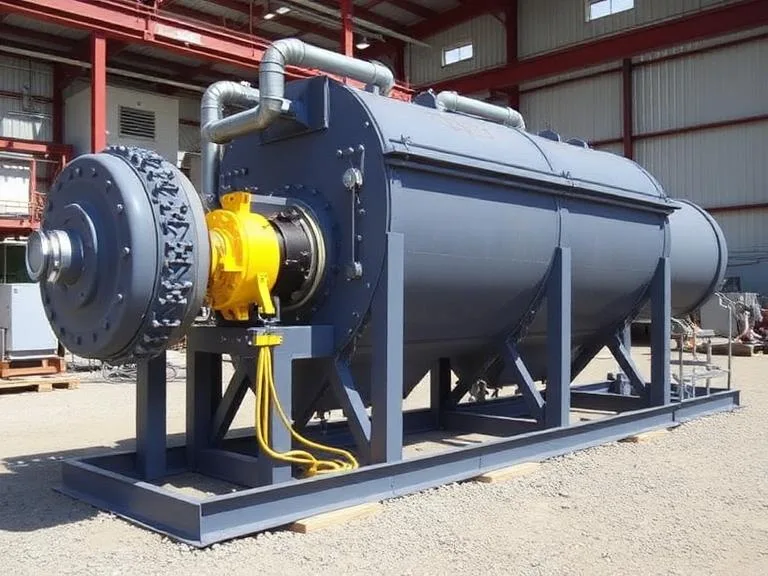
At ORO Mineral, a brand operating under Foshan ORO Mineral Co., Ltd., we specialize in the engineering, large-scale manufacturing, and international supply of intelligent mineral processing, screening, and sand washing systems. Since 2014, we have made deep technical contributions across mineral screening, solid waste resource recovery, beneficiation, washing, and separation. From our experience, many independent operators lose significant investment capital because they buy used machinery with compromised structural integrity, warped composite liners, or completely uncalibrated fluid velocity chambers. This guide provides a detailed technical analysis of the four primary ways to acquire Used gravity separation equipment safely, ensuring your secondary assets maintain optimal processing tolerances across decades of continuous service.
- 1. Summary Matrix: Aftermarket Procurement Paths and Risk Levels
- 2. Fluid Dynamics and Material Wear in Used Concentrators
- 3. 4 Strategic Ways to Acquire Used Gravity Separation Equipment
- 4. System Integration: Pairing Gravity Separators with Primary Ore Circuits
- 5. Frequently Asked Questions (FAQs)
- 6. Industrial Safety and Academic References
1. Summary Matrix: Aftermarket Procurement Paths and Risk Levels
Before allocating capital to any second-hand machinery dealer or online equipment listing, industrial procurement managers should evaluate the source through a standard safety matrix. The table below outlines how common secondary equipment channels compare regarding technical risk, inspection transparency, and cost efficiency in 2026.
| Procurement Pathway Method | Average Asset Discount | Inspection Transparency Level | Mechanical Risk Profile | Primary Advantage for Operators |
|---|---|---|---|---|
| OEM Certified Rebuilt Channels | 20% to 35% off retail | Excellent (Full internal telemetry provided) | Low (Includes partial factory warranties) | Guarantees precise component matching and verified tolerances |
| Industrial Liquidations & Auctions | 50% to 75% off retail | Limited (Sold strictly on an as-is basis) | High (Hidden structural cracks or fatigue) | Immediate physical asset acquisition and ultra-low pricing |
| Specialized Aftermarket Brokers | 30% to 50% off retail | Good (Facilitates detailed physical testing) | Moderate (Relies on broker tracking records) | Access to verified historical running logs and maintenance data |
| Direct Plant-to-Plant Transfers | 40% to 60% off retail | Excellent (Can view machinery running in active loop) | Moderate | Includes complete auxiliary piping and layout frames |
2. Fluid Dynamics and Material Wear in Used Concentrators
To successfully evaluate Used gravity separation equipment, a engineer must understand that these machines operate at the intersection of fluid dynamics and abrasive material tracking. Whether processing heavy mineral sands or extracting precious metals, a separator relies on the precise stratification of grains under fluid shear forces. Over years of continuous operation, slurry movement erodes internal surfaces, changing critical flow velocities.
From our experience, traditional polyurethane, rubber, or fiberglass liners inside mineral spirals and jigs suffer from invisible wear that can drastically compromise sorting efficiency. If the interior contour of a spiral chute wears thin by even a few millimeters, it alters the centrifugal velocity profile of the slurry. This alteration causes fine, heavy target minerals to bypass the collection splits and slip into the waste tailing lines. When looking at secondary machinery, we recommend utilizing ultrasonic thickness gauges to map the internal lining wear profile across all high-velocity impact zones before finalizing a purchase contract.
We recommend paying close attention to the structural sub-frames of used shaking tables and mineral jigs. Unlike static screening loops, these systems depend on precise rhythmic mechanical impulses to accelerate grain separation. If a used shaking table was anchored to a settling concrete pad, the resulting unaligned forces could cause microscopic fatigue cracks to form within the cast-iron toggles or structural beams. Running an unaligned machine will cause immediate bearing destruction and severe structural failure.
3. 4 Strategic Ways to Acquire Used Gravity Separation Equipment
Way 1: Secure Assets Through Factory-Certified OEM Rebuilt Channels
When operational downtime is not an option, we recommend sourcing second-hand machinery exclusively through factory-certified OEM rebuild pathways. Purchasing through a certified manufacturer program guarantees that the used separator is completely stripped down to its baseline cast or steel shell. The factory cleans out all internal components, replaces every bearing, and applies fresh, modern elastomer lining sheets. This technical refurbishment updates the machine back to its original performance profile while keeping your acquisition costs well below new market values.
Way 2: Utilize Specialized Mining Asset Brokers to Access Historical Running Logs
Working with an independent, verified industrial machinery broker provides a protective barrier against unverified private listings. Professional brokers act as intermediaries, checking the equipment’s history and securing historical maintenance tracking metrics, bearing replacement timelines, and chemical exposure profiles. From our experience, an asset broker allows your engineering team to request on-site dry runs or video telemetry checks of the machine’s drive motors, giving you the direct operational metrics required to mitigate early capital investment failures.
Way 3: Sourcing Direct Asset Acquisitions via Active Plant-to-Plant Transfers
The third pathway involves direct procurement from an active mine or recycling site that is transitioning its processing targets or undergoing a complete facility expansion. Executing a plant-to-plant transfer provides an exceptional engineering advantage: your team can inspect the Used gravity separation equipment while it is still actively operating in a live circuit. This transparent visibility allows you to record real-world slurry concentration speeds, verify exact motor heat dissipation metrics, and buy the matching auxiliary components, pumps, and structural frames as a cohesive unit.
Way 4: Capitalizing on Bank Liquidations and Industrial Bankruptcy Auctions
For operations focused on maximizing raw budget efficiency, commercial liquidations and bankruptcy auctions provide an immediate path to acquire heavy equipment at steep discounts. However, this method demands the absolute highest level of engineering caution, as auction items are sold completely as-is without warranties or technical field support. When utilizing this channel, we recommend bringing an experienced mechanical millwright to manually check eccentric drive shafts, inspect gearbox internal teeth for backlash defects, and confirm structural alignment before submitting active financial bids.
4. System Integration: Pairing Gravity Separators with Primary Ore Circuits
Integrating Used gravity separation equipment into an existing processing facility requires careful management to ensure all components work together safely without causing blockages or downstream efficiency losses.
Optimizing Material Sizing and Slurry Preparation
A gravity separator cannot handle raw, unclassified run-of-mine ore effectively; it requires precise upfront sizing to prevent material packing along the concentration beds. To establish a reliable preparation flow, we recommend reviewing our comprehensive guide on mineral processing techniques and equipment layouts. This analysis breaks down how to integrate industrial trommels and high-frequency screens to prepare an ideal, uniform feed for your secondary separators.
For aggregates, construction sands, or silica processing loops, ensuring your sand output is washed free of ultra-fine clays and organic silt is essential to maintain proper fluid densities. Production managers can explore our targeted manual on the best sand washing methods guide to understand how sorting circuits remove contamination. To select robust, high-volume washing hardware to support your gravity line, consult our industrial review of the 7 best sand washer machines available this season.
Combining Density and Magnetic Separators
Modern mineral and recycling facilities frequently combine multiple separation techniques to maximize material recovery rates across complex multi-element feeds. When your ore contains highly magnetic iron compounds, ilmenite, or cobalt alongside non-magnetic heavy target metals, deploying gravity tables alone will result in poor concentrate purity. In these complex scenarios, we recommend reviewing our expert industry evaluation of top magnetic separator manufacturers worldwide to add dynamic cross-belt magnetic protection ahead of your gravity concentrators.
Furthermore, when sorting non-ferrous metals from shredded solid waste or complex electronic scrap arrays, integrating specialized induction systems can optimize your recovery margins. Reviewing the latest technical data on eddy current separator cost factors helps operations design a balanced processing layout, combining physical gravity concentration with advanced electromagnetic sorting to maximize total plant profitability.
5. Frequently Asked Questions (FAQs)
6. Industrial Safety and Academic References
For official engineering dimensional codes, mineral extraction studies, and heavy machinery testing standards, consult these authoritative international organizations:
- Society for Mining, Metallurgy, and Exploration (SME). Mineral Processing and Extractive Metallurgy Handbook – Gravity Concentration Principles.
- International Organization for Standardization (ISO). ISO 21844 Solid Mineral Fuels – Mechanical Fluid Separation and Screening Test Standards.
- Institution of Mechanical Engineers (IMechE). Dynamic Balancing and Fatigue Crack Analysis in Eccentric Oscillating Industrial Drive Modules.