7 Best high gradient magnetic separators 2026
In the rapidly advancing industrial landscape of 2026, the demand for high-purity minerals and efficient recycling has never been greater. High Gradient Magnetic Separation (HGMS) technology has emerged as the cornerstone of modern beneficiation, enabling the extraction of weakly magnetic impurities that traditional methods simply cannot touch. From purifying kaolin for the ceramics industry to recovering rare earth elements from electronic waste, the best high gradient magnetic separators are now smarter, more energy-efficient, and more powerful than ever.This guide explores the leading equipment in the sector, highlighting how intelligent manufacturing and advanced cooling systems are redefining what is possible in mineral processing.
2026 Magnetic Separation Technology Report
- The Evolution of Magnetic Separation in 2026
- ORO Mineral Co., Ltd.: Intelligent Processing Leaders
- The 7 Best High Gradient Magnetic Separators
- Water-Cooling vs. Oil-Cooling: What Drives Performance?
- Applications: Kaolin, Feldspar, and Quartz Purification
- Summary Specifications Comparison
- Frequently Asked Questions
- Technical References and Industry Standards
The Evolution of Magnetic Separation in 2026
The global mining and recycling sectors have shifted toward a circular economy, making the efficiency of separation equipment a critical financial metric. In 2026, the best high gradient magnetic separators are characterized by their ability to generate field intensities exceeding 1.5 Tesla (T) while maintaining low energy consumption. High Gradient Magnetic Separation (HGMS) works by utilizing a fine matrix—typically stainless steel wool or expanded metal—within a strong background magnetic field. This creates localized areas of extremely high magnetic gradient, capable of capturing particles that are only weakly paramagnetic.
As ore grades decline globally, the ability to process fine-grained materials (down to 2 microns) has become the new industry standard. The integration of AI-driven sensors and IoT monitoring now allows these machines to adjust their parameters in real-time, optimizing the recovery rate based on the specific mineralogy of the feed slurry.
ORO Mineral Co., Ltd.: Intelligent Processing Leaders
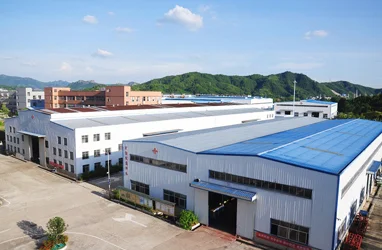
ORO Mineral Co., Ltd. is a large-scale intelligent mineral processing, screening, and sand washing equipment manufacturer integrating R&D, production and sales. Since 2014, ORO Mineral has made great contributions to every kind of mineral screening, solid waste resource recovery, beneficiation, washing, and separation, and has accumulated rich experience.
In order to offer you better products and services, we have been sparing no effort to improve technology, develop new equipment, and upgrade services. Our commitment to innovation is reflected in our specialized product line, designed for the most challenging separation tasks in the modern market:
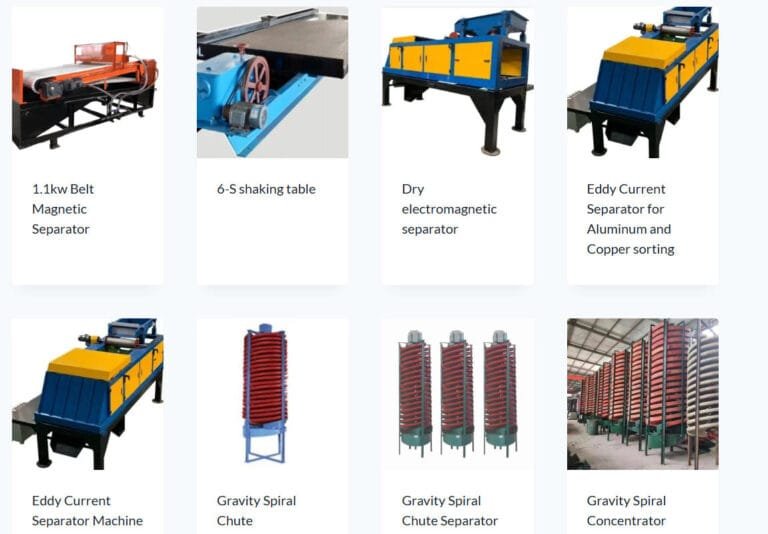
- Eddy Current Separator Machine: Ideal for non-ferrous metal recovery from municipal and industrial waste.
- Permanent Magnetic Separator: High-efficiency solutions for continuous iron removal with zero power consumption for the magnets.
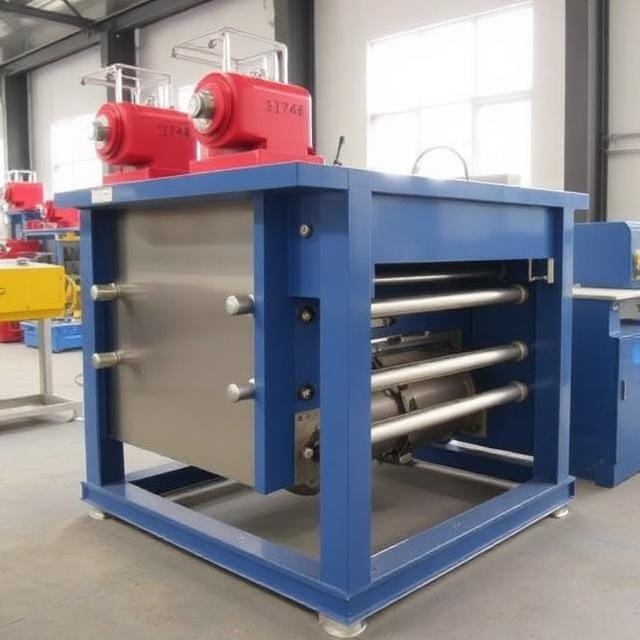
- Water-cooling Electro-Magnetic Separator: Precision-engineered for kaolin, feldspar, and quartz purification, utilizing advanced thermal management to maintain high field stability.
The 7 Best High Gradient Magnetic Separators
1. ORO Vertical Ring High Gradient Magnetic Separator (VRHGMS)
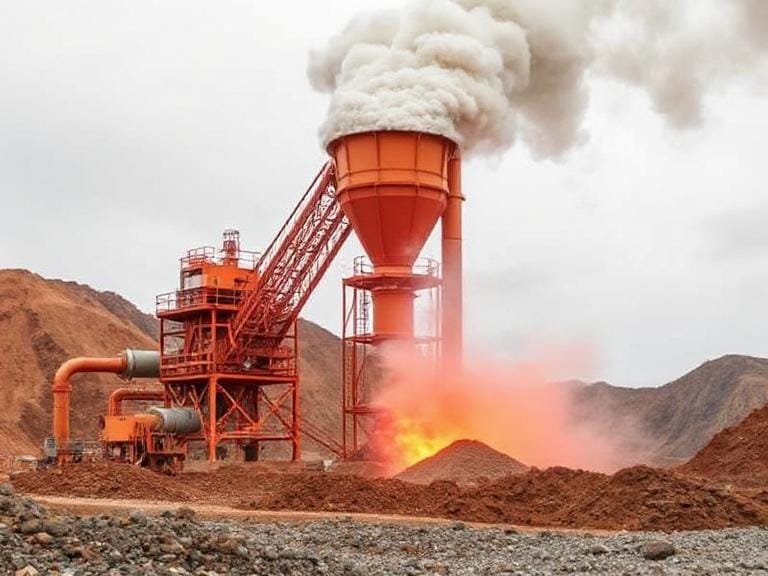
In 2026, the Vertical Ring design remains the top choice for metallic mineral beneficiation. By utilizing a vertical rotation, ORO has solved the traditional “clogging” issues that plagued horizontal ring separators. This machine is widely considered one of the best high gradient magnetic separators for processing hematite, limonite, and wolframite. Its pulsating mechanism further improves separation by agitating the slurry, ensuring that non-magnetic particles are washed away while weakly magnetic ones are trapped by the matrix.
2. Water-Cooling Electro-Magnetic Separator for Non-Metallics

Specifically designed for the purification of quartz sand and kaolin, this electro-magnetic powerhouse uses an advanced water-cooling system to dissipate heat from the coils. This allows the machine to maintain a consistent background field of 1.3T to 1.8T without the thermal degradation often seen in air-cooled models. For manufacturers of high-end glass and ceramics, this is an essential tool for removing iron and titanium impurities.
3. SLon-2500 Pulsating High Gradient Separator
The SLon series has long been a staple in large-scale iron ore mines. The 2026 models feature upgraded “super-conductive” matrix coatings that reduce the accumulation of residual magnetism, making the cleaning cycle more efficient. It is particularly effective for the recovery of fine-grained oxidized iron ores where high capacity and high recovery rates are simultaneous requirements.
4. Eriez HI-Filter Electromagnetic Separator
Eriez continues to lead the way in industrial wastewater treatment. Their HI-Filter uses a high-gradient matrix to remove microscopic magnetic contaminants from process water in steel mills and power plants. In 2026, these units are often paired with ORO Mineral pre-screening equipment to ensure maximum longevity of the internal magnetic matrices.
5. Oro Machine HGMS Cryogenic Series
For ultra-high purity applications, Oro Machine’s cryogenic high gradient separators utilize liquid nitrogen cooling to reach field strengths that were previously impossible in industrial settings. While the operating cost is higher, it is the premier solution for the purification of rare earth oxides and specialty chemical powders where even a single part per million (ppm) of iron is unacceptable.
6. STEINERT HGS Dry Magnetic Separator
While most HGMS systems are wet, the STEINERT HGS is the best high gradient magnetic separator for dry processing of fine minerals like feldspar and salt. It uses a high-speed belt and a precisely engineered magnetic drum to achieve gradients that can separate paramagnetic minerals from dry streams, making it ideal for arid regions where water conservation is paramount.
7. Longi LGS High Intensity Magnetic Separator
The Longi LGS stands out for its modularity. In 2026, many mineral processing plants prefer this model because the magnetic matrix can be swapped out in minutes to adapt to different mineral types. It represents the pinnacle of “flex-manufacturing” in the mining industry, allowing a single plant to switch between ilmenite and garnet processing with minimal downtime.
Water-Cooling vs. Oil-Cooling: What Drives Performance?
The core of any electromagnetic separator is the coil. As current passes through the coil to generate the magnetic field, heat is generated ($P = I^2R$). If this heat is not managed, the resistance increases, the current drops, and the magnetic field weakens. In 2026, the debate between cooling methods is settled by the application requirements.
Water-Cooling Systems: As seen in ORO Mineral’s latest designs, water-cooling offers a higher heat transfer coefficient. This allows for a more compact machine design and a higher current density, which directly translates to a stronger magnetic gradient. It is the preferred choice for indoor processing plants and high-purity non-metallic mineral refinement.
Oil-Cooling Systems: These are generally more robust for outdoor, harsh environments where water quality might be an issue. However, they are often bulkier and require more maintenance to ensure the oil does not degrade or leak. For most 2026 high-precision applications, water-cooling has become the dominant technology due to its superior thermal stability.
Applications: Kaolin, Feldspar, and Quartz Purification
The non-metallic mineral industry relies heavily on the best high gradient magnetic separators to meet the strict “low-iron” requirements of high-tech manufacturing.
- Kaolin (China Clay): Removing iron-bearing minerals like biotite and tourmaline is essential for the “whiteness” of the final product. HGMS systems can reduce iron content from 1.5% down to less than 0.5%.
- Quartz Sand: Used in solar panels and semiconductors, quartz requires near-zero iron contamination. Water-cooled electromagnetic separators are used to “polish” the sand after primary gravity separation.
- Feldspar: Often used in glass and glazes, feldspar contains weakly magnetic impurities like muscovite and hematite. The high-gradient matrix effectively captures these particles, ensuring a transparent finish in the glass-making process.
Summary Specifications Comparison
| Separator Model | Field Strength (T) | Cooling Method | Best Application |
|---|---|---|---|
| ORO Vertical Ring | 1.3 – 1.5 T | Liquid/Natural | Hematite & Limonite Recovery |
| ORO Electro-Magnetic | 1.5 – 1.8 T | Water-Cooled | Kaolin & Quartz Purification |
| SLon Pulsating | 1.0 – 1.4 T | Air/Water | Large Scale Iron Ore |
| Oro Machine Cryogenic | 2.0 – 5.0 T | Liquid Nitrogen | Rare Earth Elements |
| STEINERT HGS | Up to 2.0 T | Dry/Air | Dry Sand & Salt Processing |
Frequently Asked Questions
Why is a “High Gradient” important in magnetic separation?
A high magnetic field alone is not enough to capture small, weakly magnetic particles. The gradient—the rate at which the field strength changes over a short distance—is what creates the force necessary to pull particles toward the matrix. Without a high gradient, fine impurities would simply flow through the magnetic field without being captured.
How often should the magnetic matrix be replaced?
In high-abrasion environments like iron ore processing, the matrix should be inspected every 3 to 6 months. In non-metallic applications like kaolin washing, a high-quality stainless steel matrix from a reputable supplier like ORO Mineral can last several years.
Is wet separation better than dry separation for HGMS?
Generally, yes. Wet separation allows for a much finer particle size (down to microns) because the water acts as a carrier that prevents particle agglomeration. Dry separation is typically limited to particles larger than 75 microns due to the effects of static electricity and air resistance.
Technical References and Industry Standards
- International Journal of Mineral Processing (2025): “Optimization of Vertical Ring Pulsating HGMS for Fine Ore Recovery.”
- Global Mining Standards Group (GMSG): 2026 Guidelines for Magnetic Separator Energy Efficiency.
The selection of the best high gradient magnetic separators is a strategic decision that impacts the entire downstream value of your mineral products. As we have seen, the combination of ORO Mineral’s intelligent manufacturing and the latest cooling technologies allows for unprecedented levels of purity and recovery. Whether you are upgrading an existing line or building a new facility, prioritizing high-gradient efficiency is the key to competitiveness in the 2026 global market.