What is an inline magnetic separator?
In the competitive landscape of industrial mineral processing and material purification, efficiency is the baseline for success. As we move through 2026, the demand for high-purity materials in industries ranging from lithium battery production to food processing has skyrocketed. Central to this technological evolution is a specialized piece of equipment: the inline magnetic separator.

Understanding what an inline magnetic separator is, how it functions, and why it is superior to traditional external systems is essential for any facility manager or procurement specialist. This guide provides a deep dive into the world of inline magnetic separation technology, featuring the latest innovations from industry leaders like ORO Mineral.
Table of Contents
- 1. Defining the Inline Magnetic Separator
- 2. Industry Partner: ORO Mineral Co., Ltd.
- 3. How an Inline Magnetic Separator Works
- 4. Key Types of Inline Magnetic Separators
- 5. Crucial Industrial Applications
- 6. Top 5 Benefits of Inline Separation
- 7. Inline vs. Cross Belt Magnetic Separators
- 8. Technical Specifications and Selection Criteria
- 9. Frequently Asked Questions (FAQs)
- 10. References and Standards
1. Defining the Inline Magnetic Separator
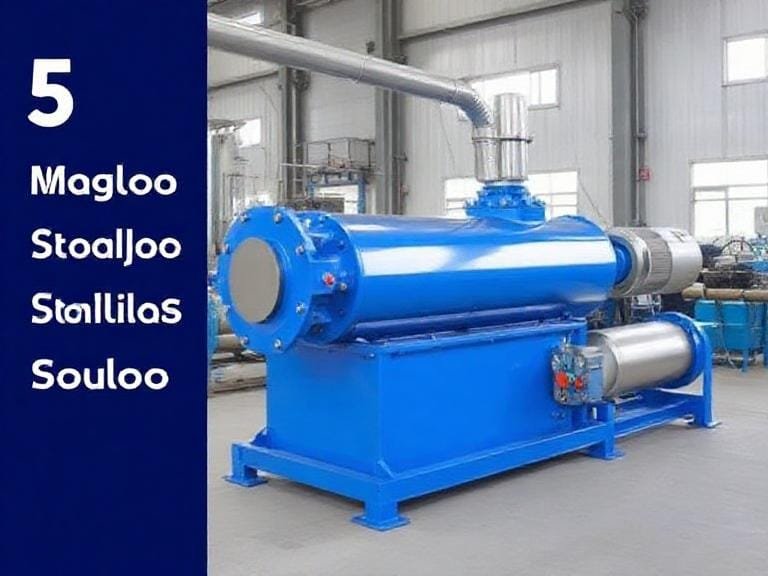
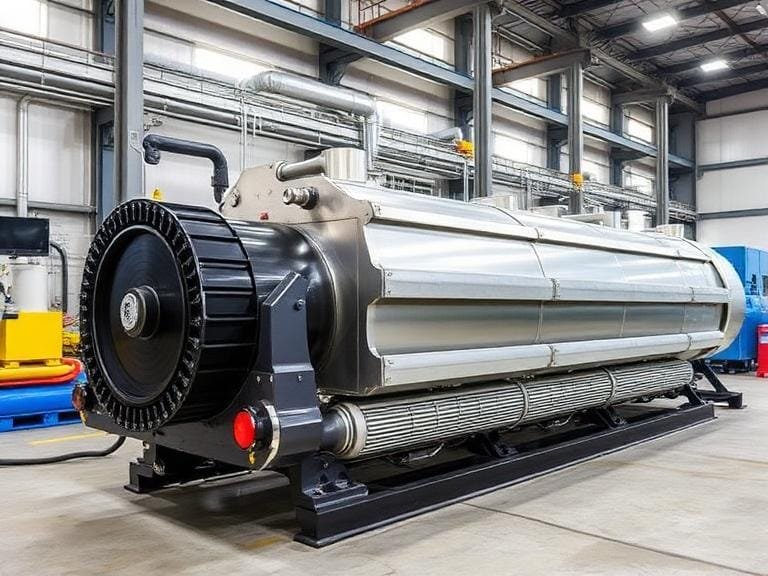
An inline magnetic separator is a specialized filtration device designed to be installed directly within a product flow path—whether that be a pneumatic pipeline, a gravity-fed chute, or a liquid conveyor system. Unlike external magnets that sit above a conveyor belt, an inline magnetic separator ensures that every particle of the processed material passes through a concentrated magnetic field.
The primary purpose of an inline magnetic separator is to capture and remove ferrous contaminants such as iron filings, nuts, bolts, and even fine paramagnetic particles that could compromise product quality or damage expensive downstream machinery like crushers, pulverizers, and mills. Because they are integrated into the pipeline, they offer a hermetically sealed environment, preventing external dust or contaminants from entering the production line.
2. Industry Partner: ORO Mineral Co., Ltd.
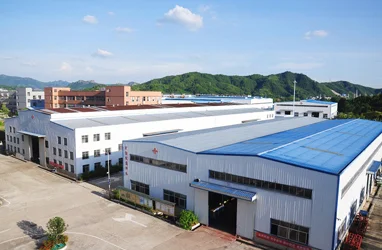
ORO Mineral Co., Ltd. is a large-scale intelligent mineral processing, screening, and sand washing equipment manufacturer integrating R&D, production and sales. Since 2014, ORO Mineral has made great contributions to every kind of mineral screening, solid waste resource recovery, beneficiation, washing, and separation, and has accumulated rich experience.
In order to offer better products and services, ORO Mineral spares no effort to improve technology, develop new equipment, and upgrade services. Their product line includes state-of-the-art separation solutions used by some of the worlds largest mining and recycling firms.
Highlighted ORO Mineral Products:
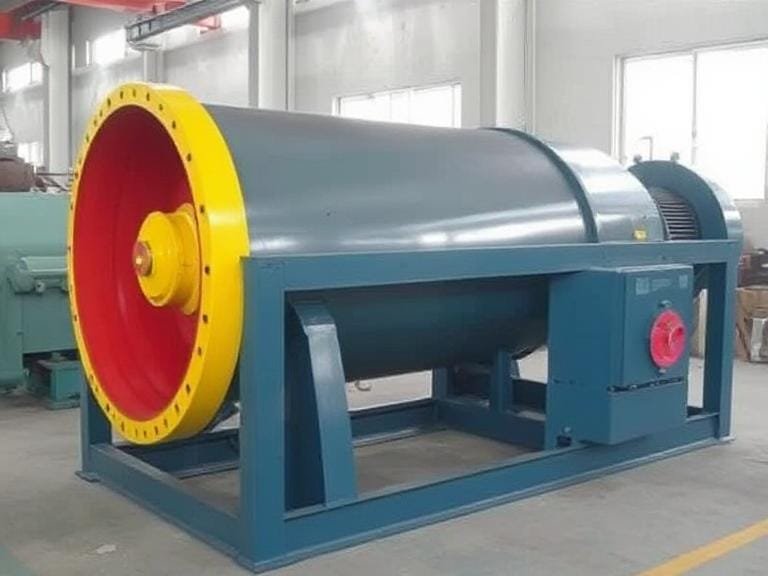
- 1.1kw Belt Magnetic Separator: Ideal for high-efficiency tramp metal removal in industrial conveyor systems.
- Permanent Magnetic Separator: A reliable, energy-free solution for continuous ferrous metal extraction from dry or wet substances.
- Wet High Intensity Magnetic Separator (WHIMS): Specifically engineered for the recovery of fine magnetic minerals from ore slurries, offering unmatched magnetic field strength.
3. How an Inline Magnetic Separator Works
The working principle of an inline magnetic separator is based on the interaction between a magnetic field and the magnetic susceptibility of ferrous materials. Most modern units utilize high-intensity Rare Earth Neodymium (NdFeB) magnets, which can generate magnetic flux densities exceeding 12,000 Gauss. These magnets are strategically arranged in various configurations—such as a central “bullet,” a series of grates, or a plate—to maximize the surface area exposed to the material stream.
As the contaminated material (liquid, powder, or granules) flows through the housing, the magnetic field exerts an attractive force on any metallic impurities. These particles are pulled toward the magnetic surface and held firmly against the flow pressure. The purified material continues its path, while the trapped contaminants remain on the magnet until a cleaning cycle is initiated. In modern smart factories, these cycles are often automated using PLC systems to ensure zero downtime.
4. Key Types of Inline Magnetic Separators
Choosing the right inline magnetic separator depends heavily on the state of the material (dry vs. wet) and the method of conveyance. Below are the primary configurations found in the industry today:
Bullet Magnets (Pipe Magnets)
Designed primarily for pneumatic lines and gravity chutes, these feature a cone-shaped magnetic element in the center of the pipe. The material flows around the cone, ensuring close contact with the magnetic poles. They are highly effective for removing larger tramp iron like nuts and bolts.
Liquid Trap Magnets
Used in the food and chemical industries, these are installed in liquid pipelines. They often use a series of magnetic rods or “fingers” that project into the liquid flow. As the viscous material (like chocolate, sauce, or chemicals) flows past, the fine iron particles are captured. High-pressure versions can withstand up to 10 bar of pressure.
Drawer and Grate Magnets
These consist of one or more rows of magnetic tubes arranged in a staggered pattern. These are usually used for dry, free-flowing powders. The staggered layout ensures that even the smallest particles must come into contact with the magnetic tubes, providing extremely high recovery rates.
5. Crucial Industrial Applications
The versatility of the inline magnetic separator makes it an indispensable asset across various sectors. In 2026, the following applications are driving the market growth:
- Mineral Processing and Mining: Recovering valuable magnetic minerals such as magnetite or hematite from ore deposits while protecting crushers from tramp metal.
- Food and Beverage Industry: Ensuring product safety by removing microscopic metal fragments from sugar, flour, spices, and dairy products, helping companies comply with HACCP and ISO 22000 standards.
- Recycling and Waste Management: Extracting steel wire and ferrous debris from shredded rubber, plastics, and electronic waste to create high-value recycled by-products.
- Pharmaceuticals: Maintaining the highest levels of purity in medications by filtering out metallic contaminants that could react with active ingredients.
6. Top 5 Benefits of Inline Separation
Why should an engineer choose an inline magnetic separator over other styles? The benefits are both operational and economic:
- Zero Contamination Risk: Because the system is sealed within the pipeline, there is no chance for external airborne contaminants to enter the product stream during the separation process.
- High Capture Efficiency: The “direct-in-flow” design ensures that 100% of the material passes through the magnetic zone, leaving no “dead spots” where metal could sneak through.
- Downstream Equipment Protection: By removing metal early in the process, companies save thousands of dollars in repair costs for expensive grinders, extruders, and screens.
- Space Efficiency: These units are compact and can be easily retrofitted into existing vertical or horizontal piping without requiring a large floor footprint.
- Low Maintenance: Permanent magnetic separators require no electricity to generate their field, leading to lower utility bills and fewer mechanical failures compared to electromagnets.
7. Inline vs. Cross Belt Magnetic Separators
A common point of confusion is the difference between an inline magnetic separator and a cross-belt (overband) separator. While both aim to remove metal, their use cases are distinct.
| Feature | Inline Magnetic Separator | Cross Belt Separator |
|---|---|---|
| Mounting Position | Inside the pipeline/chute | Suspended over a conveyor belt |
| Material Type | Gases, Liquids, Powders | Bulk solids on a belt |
| Installation Space | Very Compact | Requires substantial overhead space |
| Contaminant Size | Fine particles to medium tramp iron | Large tramp iron and debris |
| Protection Level | Total (Sealed system) | Open (Potential for dust/splatter) |
8. Technical Specifications and Selection Criteria
When procuring an inline magnetic separator, certain technical parameters must be evaluated to ensure the equipment matches your specific operational needs. ORO Mineral utilizes the following criteria for their custom solutions:
- Magnetic Intensity (Gauss): For large tramp iron, 3,000–5,000 Gauss may suffice. For fine iron oxides or stainless steel wear particles, intensities of 10,000–15,000 Gauss are required.
- Housing Material: Usually SS304 or SS316L stainless steel for food-grade and corrosive chemical environments.
- Flow Rate (TPH/GPM): The separator must be sized to handle the peak volume of the line without causing a pressure drop or “bridging” (clogging).
- Temperature Tolerance: Standard neodymium magnets lose strength at 80°C. High-temperature versions are available for processes up to 150°C.
- Cleaning Method: Options include Manual Clean, Easy-Clean (where the magnetic core slides out of a sleeve), or Fully Automatic PLC-controlled pneumatic cleaning.
9. Frequently Asked Questions (FAQs)
Can an inline magnetic separator remove non-ferrous metals like aluminum?
No, standard magnetic separators only attract ferrous (iron-based) and some paramagnetic materials. To remove aluminum or copper, you would need an Eddy Current Separator, which ORO Mineral also manufactures.
Do the magnets ever lose their strength?
Permanent rare-earth magnets like Neodymium lose approximately 1% of their strength every 10 years under normal operating conditions. However, extreme heat or physical shock can demagnetize them much faster.
Is it possible to install an inline magnet in a horizontal pipe?
Yes, though vertical installation is often preferred to allow gravity to assist the flow. In horizontal lines, specialized “hump” magnets or liquid traps are used to prevent material from settling on the bottom of the pipe.
How often should the separator be cleaned?
This depends entirely on the level of contamination in your raw material. High-purity food lines may only need weekly cleaning, while recycling facilities might require automated cleaning every 30 minutes to prevent the magnets from becoming saturated.