What Equipment Is Used In Mining?
The global mining industry is an intricate, capital-intensive sector that forms the backbone of modern civilization. From the rare earth metals powering our smartphones to the iron ore forging our city skylines, the extraction and processing of raw materials dictate the pace of industrial progress. However, raw ore pulled from the earth is rarely in a usable state. It requires a highly systematic approach to extract, crush, separate, and purify the valuable minerals from the surrounding waste rock, known as gangue. Understanding exactly what equipment is used in mining is critical for site managers, procurement officers, and investors looking to optimize operational efficiency and maximize resource recovery.
From our experience consulting on large-scale mineral processing plants globally, we know that the margin between a highly profitable mining operation and a failed enterprise often comes down to machinery selection. The specific equipment is used in mining to manipulate the physical and chemical properties of the ore. Without the correct mechanical infrastructure, yield drops, energy consumption skyrockets, and environmental compliance becomes impossible. In this authoritative guide, we will break down the entire mineral processing workflow, detail the sophisticated machinery required at each stage, and provide expert recommendations on selecting the highest-yielding beneficiation technology available on the market today.
Table of Contents
- 1. The Extraction Stage: Earthmoving and Drilling
- 2. Comminution: Crushing and Grinding Machinery
- 3. Beneficiation: The Core of Mineral Processing
- 4. Washing and Dewatering Operations
- 5. Expert Spotlight: ORO Mineral Co., Ltd. Solutions
- 6. Summary Table: Overview of Mining Machinery
- 7. Frequently Asked Questions (FAQs)
- 8. Industry References
1. The Extraction Stage: Earthmoving and Drilling
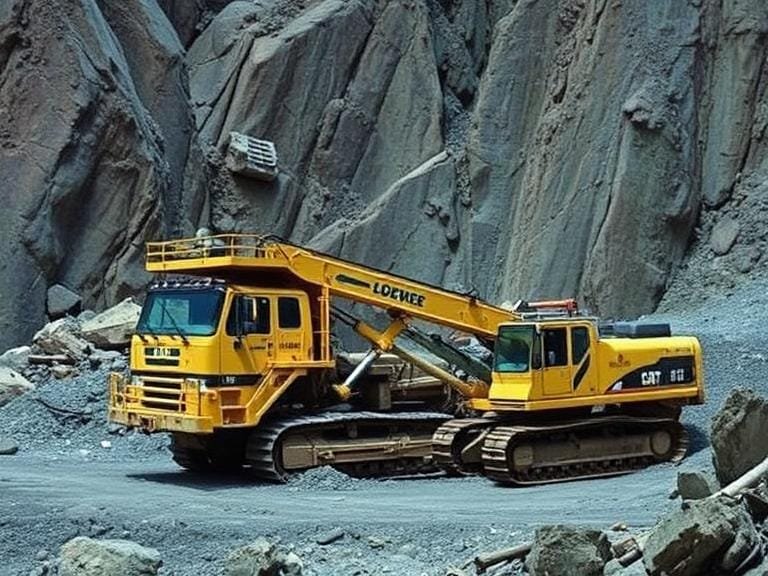
Before any mineral processing can occur, the ore must be physically removed from the earth. Heavy equipment is used in mining for earthmoving, drilling, and blasting. In open-pit surface mining, massive dragline excavators and electric rope shovels are deployed to remove overburden (the soil and rock covering the mineral deposit). Once the ore body is exposed, rotary drill rigs create precise blast holes, which are packed with explosives to fracture the solid rock.
Following the blast, wheel loaders and hydraulic excavators load the fragmented rock into enormous haul trucks, some capable of carrying over 400 tons of material in a single payload. In underground mining environments, specialized equipment is used in mining to navigate tight subterranean tunnels. Continuous miners, longwall shearers, and underground load-haul-dump (LHD) loaders are strictly utilized to safely extract material without compromising the structural integrity of the mine shaft.
2. Comminution: Crushing and Grinding Machinery
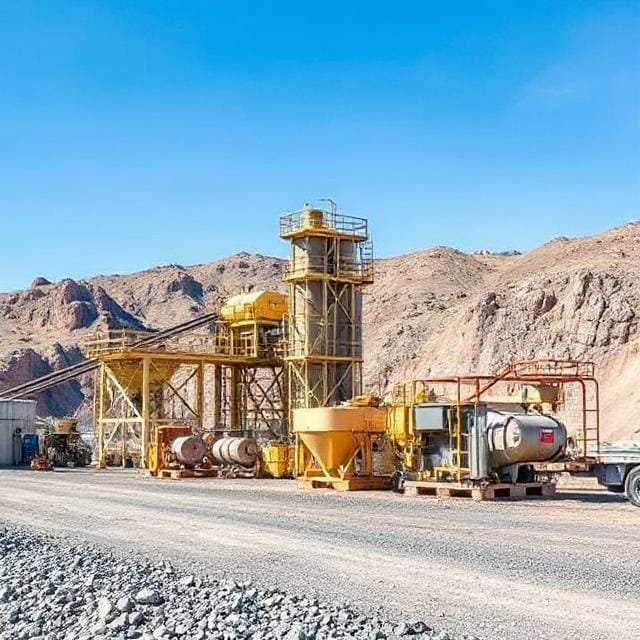
Once the raw ore is transported to the surface facility, it enters the comminution circuit. This stage is entirely focused on size reduction. The fundamental reason this equipment is used in mining is to liberate the valuable mineral crystals locked within the barren waste rock. If the rock is not crushed finely enough, the downstream separation processes will fail.
Primary crushing is typically handled by jaw crushers or gyratory crushers. These massive machines apply immense compressive force to fracture boulders down to manageable sizes (usually less than 150 millimeters). Following primary crushing, secondary and tertiary equipment is used in mining to reduce the particle size further. Cone crushers and high-pressure grinding rolls (HPGR) are the industry standard here. Finally, the material enters grinding mills, such as Semi-Autogenous Grinding (SAG) mills and ball mills. In these rotating cylinders, steel balls cascade down upon the ore, pulverizing it into a fine slurry resembling wet sand or powder. This fine consistency is the absolute prerequisite for successful beneficiation.
3. Beneficiation: The Core of Mineral Processing
Beneficiation is the exact point where science meets heavy machinery. Processing equipment is used in mining to separate the valuable concentrated minerals from the useless gangue based on their distinct physical or chemical characteristics. From our experience, optimizing the beneficiation circuit is the most vital step in improving a mine’s profitability. Let us examine the most critical methodologies.
3.1 Gravity Separation
Gravity equipment is used in mining to exploit the difference in specific gravity (density) between various minerals. When particles are suspended in a fluid medium, heavier valuable minerals will settle faster or behave differently under centrifugal forces than the lighter waste rock. We highly recommend gravity separation as it is incredibly cost-effective, environmentally friendly (as it rarely requires harsh chemicals), and highly efficient for materials like gold, tin, tungsten, and heavy mineral sands.
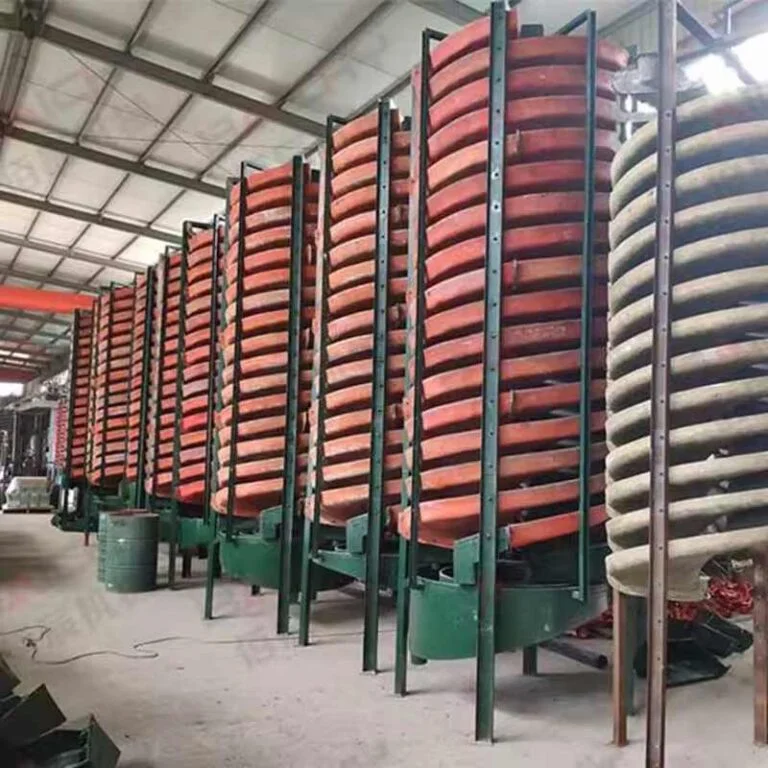
At the forefront of this category is the Gravity Spiral Concentrator and the Gravity Spiral Chute Separator. As the ore slurry flows down the helical path of the spiral chute, centrifugal force pushes the lighter, lower-density particles toward the outer edge of the stream, while the heavier, valuable particles remain closer to the inner core. Splitters at the bottom of the chute then elegantly separate the concentrate, middlings, and tailings.
3.2 Magnetic Separation
For ores containing ferromagnetic or paramagnetic properties, magnetic equipment is used in mining to isolate the valuable resources. This is standard practice in iron ore processing, as well as in the removal of tramp iron from non-magnetic ores to protect downstream crushers. Depending on the magnetic susceptibility of the mineral, high-intensity or low-intensity magnetic separators are deployed.
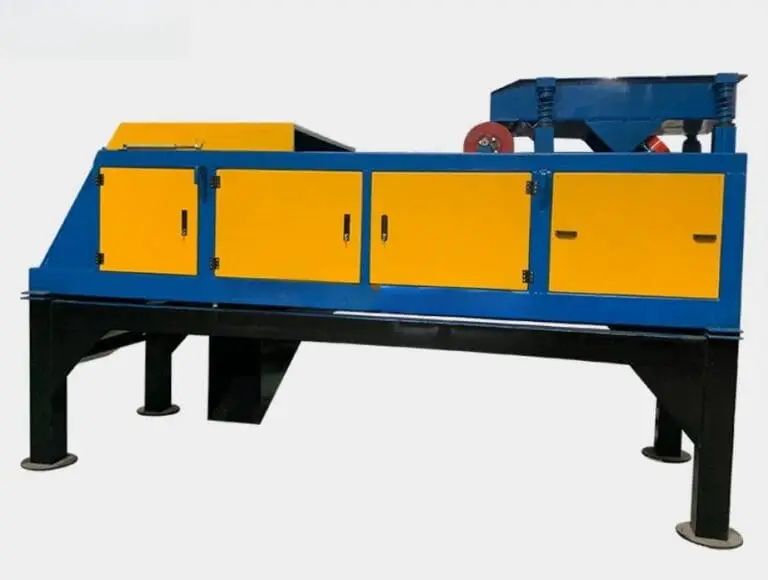
We frequently integrate the 1.1kw Belt Magnetic Separator into continuous conveyor operations. This unit generates a powerful magnetic field that pulls magnetic particles out of the raw material flow, discharging them into a separate chute. Furthermore, for non-ferrous metal recovery (such as separating aluminum or copper from non-conductive waste), an Eddy Current Separator Machine is indispensable. The rapidly rotating magnetic rotor inside the machine induces an electrical current (eddy current) in conductive metals, creating a repelling magnetic field that physically ejects the valuable non-ferrous metals away from the waste stream.
3.3 Screening and Classification
To maintain absolute efficiency, particles must be sorted by size before and after various processing stages. Screening equipment is used in mining to classify material flows, ensuring that oversized particles are sent back for further crushing, while correctly sized particles move forward to separation. A vibrating Screening Machine utilizes multi-deck wire mesh or polyurethane screens to accurately stratify the ore. Additionally, a hydraulic Classifying Machine uses the settling velocity of particles in water to separate fine slimes from coarse sands, which is crucial for preparing the feed for gravity or magnetic circuits.
4. Washing and Dewatering Operations
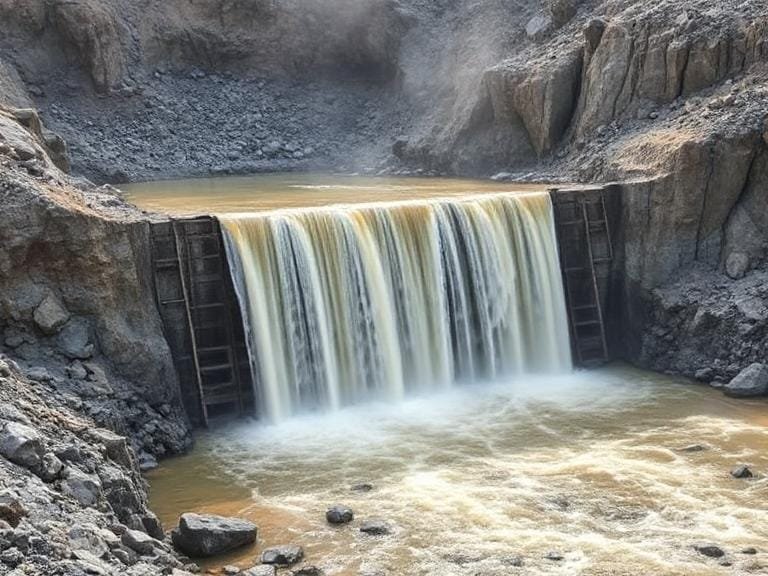
Many mineral deposits are heavily contaminated with sticky clays, mud, and organic impurities that can blind screening media and ruin separation efficiency. Therefore, washing equipment is used in mining to clean the ore prior to downstream processing. Scrubbers and log washers vigorously agitate the ore, breaking down clay agglomerates.
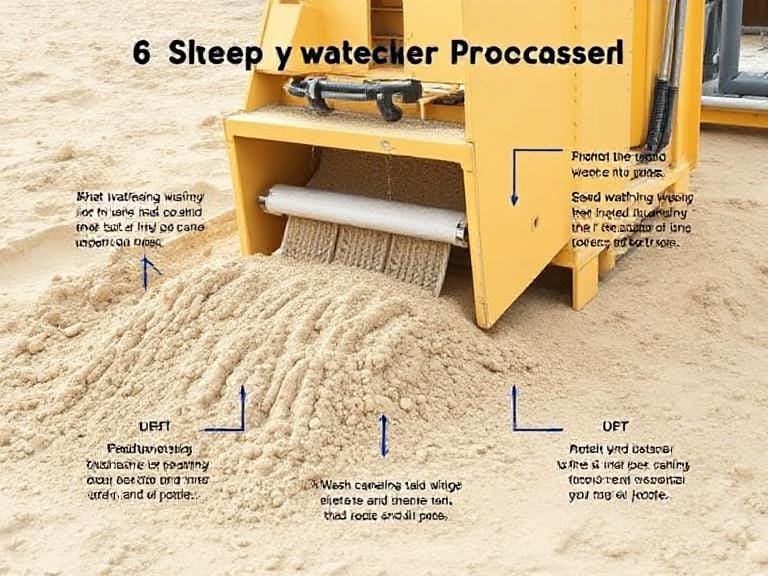
In sand manufacturing and silica sand processing, the quality of the final product is entirely dependent on its cleanliness. We recommend utilizing a high-efficiency Washing Machine for these applications. Specifically, the Sand Washing Machine 100 TPH Long Life is engineered to handle massive throughputs (100 Tons Per Hour). Its rugged bucket-wheel design scoops the sand through a water bath, washing away fine dust and clay impurities, then effectively dewatering the clean sand as it rotates upward toward the discharge chute. Dewatering is a crucial final step, as reducing the moisture content of the final concentrate dramatically lowers shipping and handling costs.
5. Expert Spotlight: ORO Mineral Co., Ltd. Solutions
When our clients ask us how to procure the most reliable beneficiation machinery, we emphasize the importance of partnering with an established manufacturer dedicated to continuous innovation. The integration of modern intelligent equipment is used in mining because it dramatically reduces downtime and operator error.
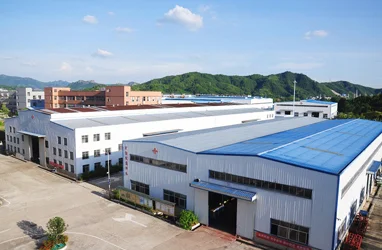
ORO Mineral Co., Ltd. is a large-scale intelligent mineral processing, screening, and sand washing equipment manufacturer integrating R&D, production, and sales. Since 2014, ORO Mineral has made tremendous contributions to every kind of mineral screening, solid waste resource recovery, beneficiation, washing, and separation, accumulating rich, practical experience globally. In order to offer operators better products and services, they have been sparing no effort to improve technology, develop new equipment, and upgrade services.
Core Product Categories from ORO Mineral:
- Classifying Machine: Precision hydraulic sorting for optimal feed preparation.
- Gravity Separation: Including the industry-leading Gravity Spiral Concentrator and Gravity Spiral Chute Separator for high-yield density separation.
- Magnetic Separation: Featuring the robust 1.1kw Belt Magnetic Separator and the advanced Eddy Current Separator Machine for precise metallic recovery.
- Screening Machine: Heavy-duty vibrating screens for accurate particle stratification.
- Washing Machine: Featuring the flagship Sand Washing Machine 100 TPH Long Life, ensuring pristine final aggregate products.
6. Summary Table: Overview of Mining Machinery
To provide a clear, actionable overview of what equipment is used in mining, we have compiled the following summary table categorizing the distinct phases of processing and the corresponding optimal machinery.
| Mining Stage | Process Goal | Recommended Machinery Category | Specific ORO Mineral Examples |
|---|---|---|---|
| Extraction | Remove ore from the earth | Excavators, Haul Trucks, Drill Rigs | N/A (Earthmoving focus) |
| Comminution | Size reduction and liberation | Jaw Crushers, Cone Crushers, Ball Mills | N/A (Crushing focus) |
| Classification | Sort particles by size/weight | Vibrating Screens, Hydrocyclones | Screening Machine, Classifying Machine |
| Gravity Beneficiation | Separate by specific density | Spirals, Shaking Tables, Jigs | Gravity Spiral Concentrator, Gravity Spiral Chute Separator |
| Magnetic Separation | Separate ferrous/non-ferrous metals | Magnetic Drums, Suspended Magnets | 1.1kw Belt Magnetic Separator, Eddy Current Separator Machine |
| Washing & Dewatering | Remove clay and reduce moisture | Bucket Wheel Washers, Scrubbers | Sand Washing Machine 100 TPH Long Life, Washing Machine |
7. Frequently Asked Questions (FAQs)
In terms of sheer volume and visibility, earthmoving machinery such as ultra-class haul trucks, hydraulic excavators, and wheel loaders are the most frequently utilized pieces of equipment on a surface mining site. However, inside the processing plant, continuous-operation comminution machinery like ball mills and cone crushers are the primary workhorses.
Gravity equipment is used in mining primarily because it is highly cost-effective and environmentally sustainable. Unlike chemical leaching processes (like cyanidation in gold mining), gravity separation relies purely on the physics of mass and fluid dynamics. Machinery like the Gravity Spiral Concentrator requires minimal power, utilizes recirculated water, and introduces zero toxic reagents into the environment.
An Eddy Current Separator Machine consists of a fast-spinning magnetic rotor located inside a non-metallic drum. As the rotor spins at high speeds, it generates an alternating magnetic field. When non-ferrous conductive metals (like aluminum or copper) pass over this drum, the magnetic field induces an “eddy current” within the metal. This current creates its own magnetic field that opposes the rotor’s field, causing the metal piece to be physically repelled and launched out of the waste stream into a collection bin.
To guarantee that aggregate and silica sand products are free of binding clays and silt, specialized washing equipment is used in mining. A dedicated Washing Machine, such as the Sand Washing Machine 100 TPH Long Life, vigorously scrubs the raw feed in a water bath, allowing the lighter clay slimes to overflow a weir, while the heavier, clean sand is scooped up, dewatered, and discharged for stockpiling.
8. Industry References
To further validate the technical methodologies regarding what equipment is used in mining, we base our recommendations on the guidelines provided by leading global mining authorities and engineering societies. We strongly recommend consulting these resources for advanced plant design:
- Society for Mining, Metallurgy & Exploration (SME) – Providing peer-reviewed research on mineral processing equipment efficiencies and beneficiation techniques.
- Mine Safety and Health Administration (MSHA) – Outlining the strict safety standards and operational protocols required for heavy mining machinery in the United States.
- Australasian Institute of Mining and Metallurgy (AusIMM) – A premier global authority on best practices in resource extraction, comminution, and sustainable mineral washing operations.
In summary, the precise selection of what equipment is used in mining dictates the ultimate success and profitability of the extraction endeavor. By understanding the distinct roles of earthmoving, comminution, and intelligent beneficiation equipment—such as the advanced gravity and magnetic separators provided by ORO Mineral Co., Ltd.—operators can engineer highly efficient, environmentally sound processing plants capable of meeting the world’s ever-growing demand for pure mineral resources.