Top 6 Equipments Used in Magnetic Separation 2026
As we move into 2026, the global demand for high-purity minerals and efficient recycling solutions has reached an all-time high. Central to this industrial evolution is the use of specialized Equipments Used in Magnetic Separation. This technology, which leverages the physical property of magnetic susceptibility to isolate different materials, has become indispensable in mining, food processing, and solid waste resource recovery. Whether you are dealing with ferromagnetic magnetite or weakly magnetic hematite, choosing the correct Equipments Used in Magnetic Separation determines the profitability and sustainability of your operations.

The latest advancements in 2026 focus on higher magnetic gradients, automated cleaning cycles, and the integration of IoT for real-time performance monitoring. In this professional guide, we break down the top six essential machines that define modern separation standards, helping plant managers and engineers optimize their beneficiation circuits for maximum yield.
- ORO Mineral: Intelligent Processing Solutions
- 1. Magnetic Drum Separators: The Heavy-Duty Standard
- 2. Eddy Current Separators: Non-Ferrous Metal Recovery
- 3. Belt Magnetic Separators: Automated Tramp Metal Removal
- 4. High-Gradient Vertical Ring Separators
- 5. Magnetic Head Pulleys
- 6. High-Intensity Magnetic Liquid Traps
- Summary Table: Equipment Comparison
- Frequently Asked Questions (FAQs)
- References
ORO Mineral: Intelligent Processing Solutions
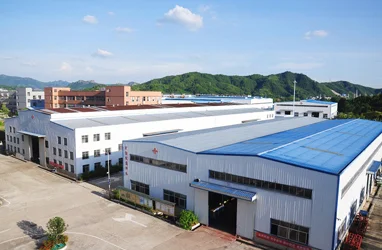
Success in modern beneficiation requires more than just standard machinery; it requires intelligent integration. ORO Mineral Co., Ltd. is a large-scale intelligent mineral processing, screening, and sand washing equipment manufacturer integrating R&D, production and sales. Since 2014, ORO Mineral has made great contributions to every kind of mineral screening, solid waste resource recovery, beneficiation, washing, and separation, and has accumulated rich experience.
In order to offer you better products and services, ORO Mineral has been sparing no effort to improve technology, develop new equipment, and upgrade services. Their expertise in high-throughput environments makes them a preferred partner for global mining operations seeking durable and cost-effective equipments used in magnetic separation.
Featured Product Portfolio:
1. Magnetic Drum Separators: The Heavy-Duty Standard
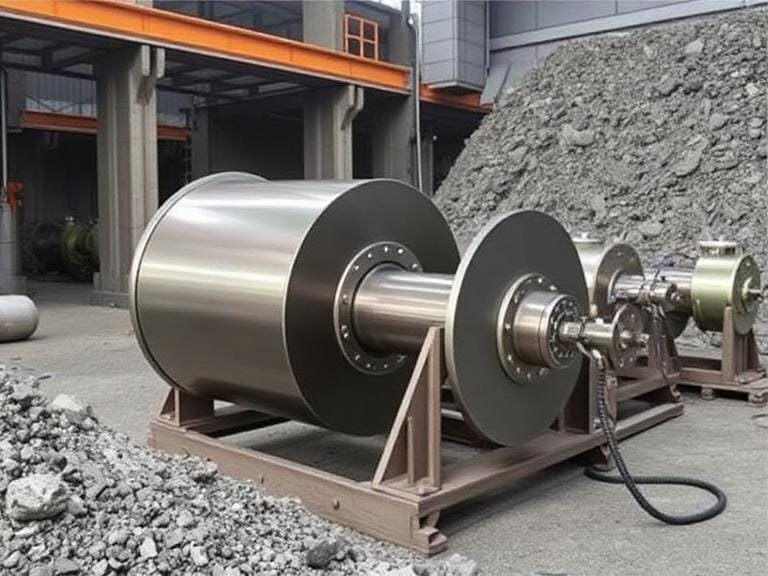
The magnetic drum separator remains the most widely recognized equipment used in magnetic separation across the globe. It consists of a stationary internal magnetic yoke surrounded by a rotating non-magnetic shell. As material flows over the drum, magnetic particles are attracted to the surface and carried to a discharge point, while non-magnetic materials fall off naturally following their trajectory.
In 2026, these machines are available in both wet and dry configurations. Wet drum separators are crucial for iron ore concentrate upgrading, while dry drums are increasingly used in pre-concentration stages to discard gangue early in the process, reducing grinding costs. High-intensity rare earth drums can now reach field strengths exceeding 7000 Gauss, allowing for the capture of even paramagnetic particles.
2. Eddy Current Separators: Non-Ferrous Metal Recovery
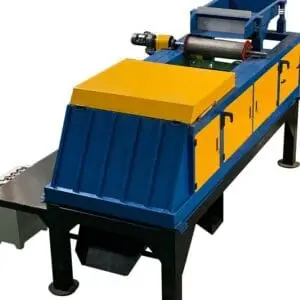
When discussing equipment used in magnetic separation for the recycling industry, the Eddy Current Separator (ECS) is vital. Unlike traditional magnets that pull ferrous metals, an ECS uses a rapidly rotating magnetic rotor to induce eddy currents in non-ferrous metals like aluminum and copper. This creates a repulsive force that “jumps” the non-ferrous metals away from the waste stream.
The Eddy Current Separator Machine provided by ORO Mineral is engineered for high-frequency vibration and precision timing, ensuring that even small particles of aluminum can be recovered from shredded municipal waste. By 2026, these machines have become standard in battery recycling plants where copper and aluminum recovery is essential for circular economy goals.
3. Belt Magnetic Separators: Automated Tramp Metal Removal

Protection of downstream machinery is the primary role of the belt magnetic separator. This equipment used in magnetic separation is typically suspended over a conveyor belt. It pulls “tramp iron”—such as bolts, nails, or broken tool bits—out of the material flow before it can damage expensive crushers or grinders.
A key innovation in 2026 is the 1.1kw Belt Magnetic Separator, which offers a self-cleaning mechanism. A secondary belt rotates around the magnet, continuously discharging the captured metal into a collection bin. This eliminates the need for manual cleaning and prevents the magnet from becoming “saturated,” which could lead to missed contaminants.
4. High-Gradient Vertical Ring Separators
For fine-grained, weakly magnetic minerals like hematite or limonite, standard drums are often insufficient. The Vertical Ring High-Gradient Magnetic Separator (HGMS) is the sophisticated equipment used in magnetic separation designed for these challenges. By using a pulsating mechanism and a matrix of steel wool or expanded metal, these machines create intense magnetic field gradients.
In 2026, oil-cooled and water-cooled electromagnetic systems dominate this category. They allow for adjustable field strengths, enabling operators to fine-tune the separation based on the specific mineralogy of the ore body. This precision is critical for the recovery of rare earth elements and the purification of kaolin clay.
5. Magnetic Head Pulleys
A magnetic head pulley replaces the standard drive pulley at the discharge end of a conveyor. It is perhaps the most cost-effective equipment used in magnetic separation because it serves a dual purpose: driving the belt and separating ferrous materials. As the belt turns over the pulley, the magnetic material is held against the belt until it passes out of the magnetic field, where it is then dropped into a separate chute.
Modern pulleys in 2026 utilize high-grade Strontium Ferrite or Neodymium magnets to provide deep-penetrating fields. They are exceptionally rugged and require almost no maintenance, making them ideal for remote mining sites or harsh aggregate processing environments where simplicity is a virtue.
6. High-Intensity Magnetic Liquid Traps
In industries such as food processing, pharmaceuticals, and chemicals, equipment used in magnetic separation must handle liquids and slurries. Magnetic Liquid Traps (or magnetic filters) consist of high-intensity magnetic rods housed within a pressurized stainless steel vessel. As the liquid flows through, sub-micron ferrous particles adhere to the rods.
By 2026, these filters have evolved to meet strict sanitary standards (such as HACCP and FSSC 22000). They are designed with “easy-clean” features that allow the magnetic cores to be withdrawn from the housing, causing the captured metal to fall off effortlessly. This is essential for protecting pumps and valves from abrasive magnetite buildup in cooling systems and process lines.
Summary Table: Equipment Comparison 2026
| Equipment Type | Primary Application | Magnetic Strength | Key Benefit |
|---|---|---|---|
| Magnetic Drum | Mining & Bulk Processing | Medium to High | High volume, continuous operation |
| Eddy Current Separator | Recycling (Al, Cu) | N/A (Repulsive) | Recovers non-ferrous metals |
| Belt Magnetic Separator | Machinery Protection | Low to Medium | Self-cleaning, removes tramp iron |
| Vertical Ring HGMS | Weakly Magnetic Ores | Very High | Captures ultra-fine particles |
| Magnetic Head Pulley | Aggregates & Scrap | Medium | Dual function (Drive & Separate) |
| Liquid Traps | Food & Chemical Slurries | High Intensity | Protects purity in liquid lines |
Frequently Asked Questions (FAQs)
What is the difference between permanent and electromagnetic equipment?
Permanent equipment used in magnetic separation uses magnets (like Neodymium) that never lose their field, requiring no electricity. Electromagnetic equipment uses coils and electric current, allowing you to turn the magnet on or off and adjust its strength, which is useful for complex mineral separation.
![What is a Magnetic Drum Separator? [2025 Full Guide]](https://oromineral.com/wp-content/uploads/2025/11/Magnetic-Drum-Separator.jpg)