5 Different Types of Mine Shovels: An Expert Buying Guide
In the heavy industrial extraction sector, the loading tool you select dictates the rhythm of your entire operation. From our experience, mine operators frequently waste millions of dollars in capital expenditure (CAPEX) and operating expenses (OPEX) by mismatching their primary loading units with their hauling fleet or material characteristics. The truth is, selecting among the different types of mine shovels is not about brand loyalty; it is a strict mathematical exercise in pass-matching, breakout force kinematics, and long-term cost per ton.
Extraction bottlenecks inevitably cascade downstream. If your primary shovel underperforms, your haul trucks sit idle, your primary crushers starve, and your downstream processing equipment—such as the advanced solid waste resource recovery systems built by ORO Mineral—fails to reach its designed nameplate capacity. In most professional situations, we see mine managers treat extraction and processing as separate silos, which is a catastrophic financial mistake.
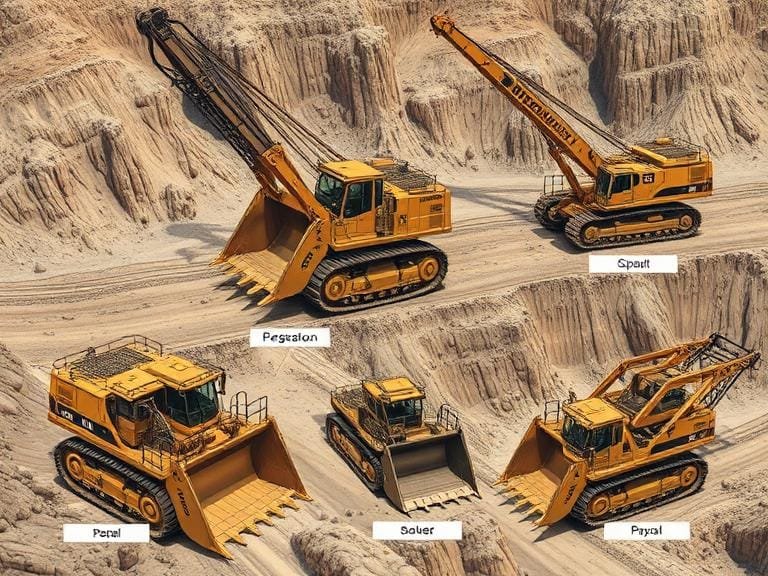
Quick Answer: What are the Different Types of Mine Shovels?
There are exactly 5 different types of mine shovels utilized in modern, large-scale surface mining operations:
- Electric Rope Shovels (ERS): Grid-powered titans offering the lowest cost-per-ton over a 30+ year lifespan.
- Hydraulic Front Shovels: Highly mobile, diesel or electric units offering unmatched breakout force against hard rock faces.
- Hydraulic Backhoe Excavators: High-selectivity machines designed for digging below track level and precise ore sorting.
- Dragline Excavators: Massive strip-mining machines designed specifically for stripping deep overburden without hauling trucks.
- Bucket Wheel Excavators (BWE): Continuous mining behemoths built for soft rock, lignite, and extensive sand operations.
Our Expert Recommendation: For commercial users operating a hard rock mine with a life-of-mine (LOM) exceeding 15 years and access to a reliable electrical grid, an Electric Rope Shovel is the superior financial choice. For shorter mine lives or highly fractured pit designs, Hydraulic Front Shovels provide the necessary mobility and lower initial capital.
Table of Contents
- What It Is and How It Works
- Detailed Breakdown: The 5 Different Types of Mine Shovels
- Benefits and Limitations
- Who Should Use It & Who Does Not Need It
- Common Mistakes in Shovel Selection
- Critical Buying Considerations
- The Impact on Downstream Mineral Processing
- Expert Recommendation
- The Bottom Line
- Frequently Asked Questions (FAQ)
- Authoritative References
What It Is and How It Works
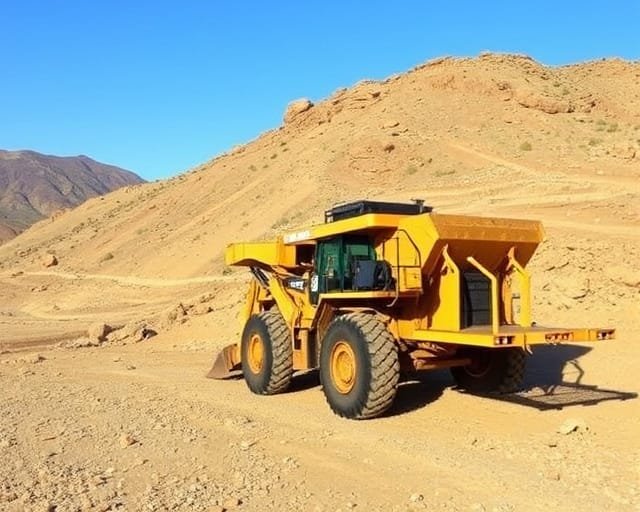
A mine shovel is a piece of heavy equipment used in surface mining to excavate fragmented rock and earth (muck) and load it into haul trucks or mobile crushers. How it works depends fundamentally on its kinematic design. Electric rope shovels use a system of wire ropes, winches, and a heavy boom to hoist a dipper through a rock pile. Conversely, hydraulic shovels utilize high-pressure hydraulic cylinders to force a bucket through the material.
Understanding the mechanical differences is vital because your extraction method directly affects ore quality. Poor selectivity at the rock face sends waste rock to your processing plant, severely increasing the wear and operating costs of your mineral processing techniques and equipment. Whether you are extracting gold ore or industrial sands, the shovel sets the baseline for the entire operation.
Detailed Breakdown: The 5 Different Types of Mine Shovels
To make a commercial and practical judgment, you must understand the exact operational envelope of the 5 different types of mine shovels.
1. Electric Rope Shovels (ERS)
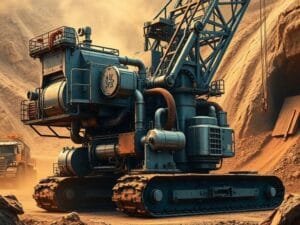
Electric Rope Shovels are the undisputed kings of high-volume, long-term hard rock mining. They are powered directly by high-voltage trailing cables connected to the mine’s electrical grid. Because they have very few moving hydraulic parts, their mechanical availability routinely exceeds 90%. ERS units attack the muck pile with a sweeping, upward motion, making them ideal for high benches. However, they lack mobility; moving an ERS to a new pit is a slow, tedious process.
2. Hydraulic Front Shovels
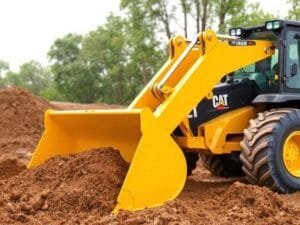
When you need extreme crowd force (the ability to push the bucket horizontally into the rock face), hydraulic front shovels are the answer. They use massive hydraulic cylinders rather than wire ropes. They are available in both diesel and electric drive options. In our testing, hydraulic shovels provide superior selective digging compared to rope shovels, allowing operators to separate ore from waste more cleanly before sending material to downstream gold processing equipment manufacturers systems.
3. Hydraulic Backhoe Excavators (Mass Excavators)
Unlike front shovels that dig upward and forward, backhoes dig downward and pull the bucket toward the machine. This allows the excavator to sit on top of the bench while loading trucks positioned on the bench below. For heavy-duty applications requiring precise ore sorting, or when working in wet, unstable underfoot conditions where a front shovel would sink, the mass excavator backhoe is the optimal choice.
4. Dragline Excavators
Draglines are primarily stripping machines, not loading machines. They do not load trucks. Instead, they cast a massive bucket out over the pit, drag it back to strip the overburden (waste dirt), and pivot to dump the waste directly into an adjacent mined-out area. For flat, shallow coal or phosphate deposits, a dragline offers an incredibly low cost-per-ton because it eliminates the haul truck fleet entirely.
5. Bucket Wheel Excavators (BWE)
Bucket Wheel Excavators are continuous mining machines. Instead of a single bucket taking individual scoops, a BWE features a massive rotating wheel with multiple buckets that continuously carve away soft rock, overburden, or compacted sand. The material drops onto a built-in conveyor belt. BWEs are completely useless in hard rock but are unmatched in massive open-cast lignite or sand mines. In continuous sand operations, a BWE can feed material directly onto overland conveyors leading straight to sand washer machines industrial setups without interruption.
Quick Summary Table
| Shovel Type | Primary Application | Expected Lifespan | Capital Expense (CAPEX) |
|---|---|---|---|
| Electric Rope Shovel | High-volume hard rock, long life-of-mine | 80,000 to 120,000+ hours | Extremely High |
| Hydraulic Front Shovel | Hard rock, shorter mine life, high breakout force | 60,000 to 80,000 hours | Moderate to High |
| Hydraulic Backhoe | Below-grade digging, selective mining | 60,000 to 80,000 hours | Moderate |
| Dragline | Overburden stripping (no truck hauling) | 40 to 50+ years | Massive (Often custom built) |
| Bucket Wheel Excavator | Continuous mining of soft materials/sands | 40+ years | Massive |
Benefits and Limitations
When evaluating different types of mine shovels, you must weigh their inherent mechanical traits against your mine plan.
| Shovel Technology | Key Benefits | Major Limitations |
|---|---|---|
| Electric Rope | Lowest operating cost per ton; exceptional reliability; zero local emissions. | Requires extensive electrical infrastructure; poor mobility; struggles with highly selective digging. |
| Hydraulic (Front/Backhoe) | High mobility; independent diesel power (usually); massive breakout force; excellent selectivity. | High maintenance costs due to hydraulic components; shorter overall machine lifespan compared to rope shovels. |
Who Should Use It & Who Does Not Need It
Who should use an Electric Rope Shovel: Major tier-one mining companies with copper, iron ore, or gold open-pit operations that have a confirmed mine life of over 15 years. You must have access to cheap, reliable grid power.
Who should use a Hydraulic Excavator: Mid-tier mining companies, quarries, or operations dealing with tightly banded ore bodies that require selective digging to avoid diluting the ore grade. If you are feeding a highly specialized magnetic separation process guide circuit, sending clean ore from the pit via selective hydraulic digging drastically improves recovery rates.
Who does not need these machines: Small aggregate quarries or short-term construction projects do not need actual mining shovels. A standard large wheel loader (Front-End Loader) is far more appropriate for small, 5-year quarry operations where flexibility outweighs pure volume.
Common Mistakes in Shovel Selection
From our experience consulting with major extractors, the most devastating mistake is failing to properly match the shovel payload to the haul truck capacity. The industry standard is the “3 to 4 pass rule.” If your shovel requires 6 or 7 passes to fill a truck, your shovel is too small, and truck wait times will ruin your economics. If it takes only 1 or 2 passes, the shovel is too large, resulting in massive shock-loading damage to the truck suspensions.
Another common error is ignoring blast fragmentation. Electric rope shovels require well-fragmented muck piles. If your drilling and blasting team leaves oversized rocks and tight toes, an ERS will struggle and sustain damage. In poorly blasted pits, the hydraulic front shovel is required to pry and force the rock loose.
Critical Buying Considerations
When looking at the top mining equipment manufacturers global market, base your procurement on Total Cost of Ownership (TCO), not just the initial purchase price.
| Consideration Factor | Why It Matters Financially |
|---|---|
| Power Infrastructure | Diesel fuel is subject to massive price volatility. If your mine has cheap hydro or grid power, tethered electric shovels will save tens of millions of dollars over the Life of Mine. |
| Maintenance Capabilities | Hydraulic shovels require highly skilled technicians to manage complex high-pressure pumps and hoses. Rope shovels require electrical engineers to manage IGBT drives. Buy what you can support. |
| Bench Height | A rope shovel requires a tall bench (often 12-15 meters) to achieve an efficient sweeping fill factor. If your geotechnical constraints limit you to 5-meter benches, you must buy a hydraulic shovel. |
The Impact on Downstream Mineral Processing
Your shovel dictates the physical characteristics of the ore arriving at the processing plant. ORO Mineral Co., Ltd., a leader in intelligent mineral processing since 2014, engineers equipment based on specific feed parameters. For example, if you are mining mineral sands, utilizing a continuous Bucket Wheel Excavator provides a steady, uniform feed rate.
This uniform feed is absolutely critical when utilizing complex wet processing. An inconsistent, surging feed caused by batch-loading rope shovels can overwhelm water management systems, making it difficult to optimize your sand washing methods guide protocols. Similarly, if your hydraulic shovel fails to sort ore effectively at the face, you will send too much tramp iron and waste rock into your circuit, forcing you to overcapitalize on primary separation equipment and worrying about eddy current separator cost constraints unnecessarily.
Proper extraction feeds directly into the sand washing plant working principle—steady, right-sized material yields the highest recovery of saleable product. Furthermore, clean extraction reduces the burden on downstream magnetic circuits, aligning perfectly with the magnetic separator machine working principle, where excessive waste rock limits magnetic recovery efficiency. To ensure maximum yield, many operations pair highly selective hydraulic backhoes with equipment from the top magnetic separator manufacturers worldwide.
Expert Recommendation
For beginners entering the mid-tier mining space, we recommend avoiding the complexity of Electric Rope Shovels. Instead, standardize your fleet around heavy-duty Hydraulic Mass Excavator Backhoes. They offer the greatest versatility, can sit safely above poor underfoot conditions, and require significantly less infrastructure to operate. For commercial users in legacy hard rock operations where millions of tons must be moved annually at the absolute lowest cost, the Electric Rope Shovel remains the untouchable standard.
The Bottom Line
Choosing among the different types of mine shovels is a permanent operational commitment that will dictate your cost-per-ton for decades. If you have a long mine life, high benches, and cheap electricity, buy an Electric Rope Shovel. If you need mobility, massive breakout force for tight toes, and selective digging capability, invest in a Hydraulic Front Shovel or Backhoe. Remember that extraction is merely the first step; your shovel must seamlessly integrate with your haulage fleet and provide a consistent, properly sized feed to downstream processing and washing plants provided by industry leaders like ORO Mineral.
Frequently Asked Questions (FAQ)
A front shovel digs by pushing the bucket forward and upward away from the machine, making it ideal for attacking tall rock faces from the pit floor. A backhoe digs by pulling the bucket downward and toward the machine, allowing the excavator to sit on top of the bench and load trucks positioned below.
Draglines are used specifically for stripping massive amounts of overburden in flat, strip-mining operations (like coal). Because their boom is incredibly long, they can dig waste rock and dump it directly into a mined-out pit without ever needing a fleet of expensive haul trucks.
Yes. In the long term, Electric Rope Shovels have a significantly lower operating cost per ton because grid electricity is generally cheaper than diesel fuel, and wire-rope mechanics require fewer expensive replacement parts than high-pressure hydraulic cylinders.