The 5 Best eddy current separator for copper in 2026
The global demand for high-purity recycled metals has never been more urgent. As modern infrastructure and electronics rely heavily on non-ferrous metals, recycling facilities face the extreme technical challenge of extracting these valuable materials from increasingly complex and contaminated waste streams. Among these materials, copper stands out due to its high market value, excellent thermal properties, and superior electrical conductivity. As a trusted leader in the mineral processing and recycling equipment industry, Oromineral has dedicated years of rigorous research to perfecting separation technologies. From our experience, selecting the Best eddy current separator for copper is the single most critical investment a facility manager can make to ensure operational profitability and high-yield recovery.
Table of Contents
- 1. Understanding the Science Behind Copper Separation
- 2. Engineering Criteria for Choosing the Best Equipment
- 3. The 5 Best eddy current separator for copper Solutions
- 4. Expert Tips for Optimizing Your Copper Recovery Plant
- 5. Summary Table: Copper Separation Configurations
- 6. Frequently Asked Questions (FAQs)
- 7. Industry and Academic References
1. Understanding the Science Behind Copper Separation
Unlike iron or steel, copper is completely non-magnetic, which means that traditional overhead magnetic belts cannot extract it from a moving waste stream. However, copper is highly electrically conductive. The entire process relies on Faraday’s Law of Induction. When non-ferrous, conductive metals pass through a rapidly alternating magnetic field, they generate their own localized electrical currents—known as eddy currents.
According to the principles of electromagnetism (specifically Lenz’s Law), these newly formed eddy currents create an opposing magnetic field around the copper piece. This sudden magnetic opposition violently repels the copper particles away from the source, physically ejecting them off the conveyor belt and over a precisely positioned splitter plate into a collection bin. For a more comprehensive look at how magnetic fields are manipulated to isolate different materials in an industrial setting, we strongly recommend reading our magnetic separator machine working principle guide.
2. Engineering Criteria for Choosing the Best Equipment
It is crucial to understand that not all separation machines are engineered to the same performance standards. Because copper is much denser than aluminum, it requires a significantly stronger magnetic force to achieve the exact same ejection trajectory. When evaluating the Best eddy current separator for copper, our engineers look for several critical specifications.
First, the internal rotor must be constructed using high-grade Neodymium rare-earth magnets to produce the immense surface gauss required to penetrate the conveyor belt. Second, the system must offer Variable Frequency Drives (VFD) to independently adjust both the rotor speed and the conveyor belt speed. Finally, the structural design and the thickness of the non-metallic outer shell determine how close the magnetic field gets to the material. To understand more about the broader landscape of extraction machinery and how global standards apply, you can explore our insights on the mining equipment manufacturers global market.
3. The 5 Best eddy current separator for copper Solutions
Based on our extensive field testing, metallurgical analysis, and global installations, we have categorized the optimal machinery setups for recovering copper from municipal solid waste (MSW), electronic waste (WEEE), and auto shredder residue (ASR). Here are the 5 Best eddy current separator for copper solutions available on the market today.
1. Oromineral Eddy Current Separator Machine

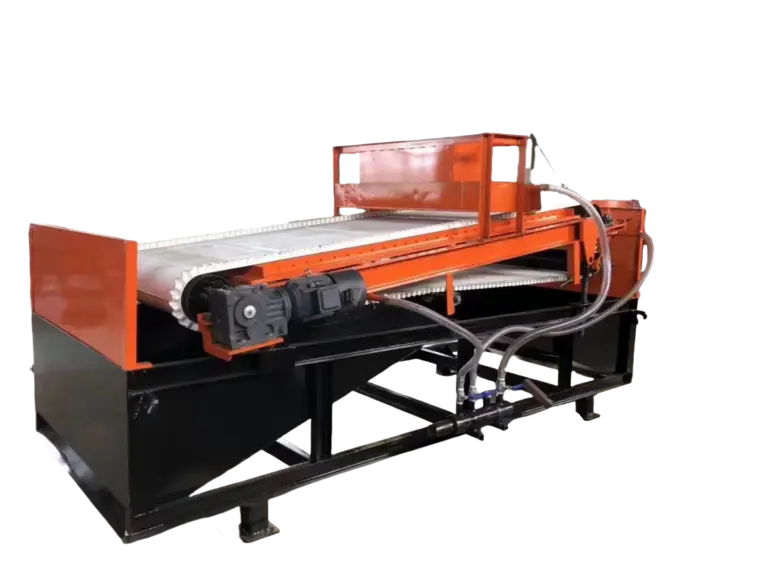
When searching for the Best eddy current separator for copper, versatility and industrial reliability are paramount. The flagship Eddy Current Separator Machine designed by Oromineral stands at the forefront of non-ferrous recovery technology. It features extraordinarily high separation efficiency driven by a powerful internal magnetic field and fully adjustable drum and belt speeds. This level of customization allows operators to fine-tune the machine specifically for the heavy density of copper fragments. Built with robust construction, it minimizes downtime and maintenance costs, ensuring maximum copper purity in your output bins.
2. Ultra-High Frequency (UHF) Eccentric Rotor Separators
If your facility processes chopped wire, granulated plastics, or ultra-fine electronic scrap, traditional separators will inevitably struggle. The Best eddy current separator for copper fines utilizes an Ultra-High Frequency (UHF) eccentric rotor. By spinning a high-pole-count rotor at exceptional speeds (often exceeding 3,000 RPM), these machines create thousands of magnetic pole changes per minute. This intense, rapid frequency is mechanically required to induce sufficient eddy currents in tiny, bare copper wires (down to 2mm) to repel them effectively from the waste stream.
3. Heavy-Duty Concentric Rotor Separators
For operations dealing primarily with bulk municipal waste or large, unsorted demolition scrap where the copper pieces exceed 10mm in size, a concentric rotor design is often the preferred choice. In a concentric system, the magnetic rotor is centered symmetrically within the outer shell, providing a continuous, even magnetic field across the entire drum. From our experience, this design generates a strong, consistent throw that is perfect for ejecting heavy copper pipes, thick communication cables, and heavy brass fittings.
4. Ultra-Fine Particle (BVIS) Separation Systems
Extracting copper dust, slag, and microscopic fragments from incinerator bottom ash (IBA) requires extreme mechanical precision. The Best eddy current separator for copper in this specialized niche uses exceptionally thin composite conveyor belts and advanced carbon fiber drum shells. By reducing the physical distance between the spinning magnetic rotor and the material surface to mere millimeters, the magnetic flux remains highly concentrated. This allows the machine to repel microscopic copper particles that would otherwise be permanently lost to a landfill.
5. Oromineral 1.1kw Belt Magnetic Separator (The Prerequisite Pre-Sorter)

It is a critical engineering fact that you cannot successfully operate an eddy current system without first completely removing ferrous metals from the feed. If iron or steel enters the high-frequency magnetic field of an ECS, it will violently heat up, potentially melting the conveyor belt and destroying the expensive non-metallic outer shell. Therefore, the Best eddy current separator for copper setup must seamlessly integrate an upstream overband magnet. We strongly recommend our 1.1kw Belt Magnetic Separator. Operating at a reliable 1.1kw power rating and certified to strict ISO9001 standards, this machine ensures that all ferrous contaminants are safely extracted before the material ever reaches the delicate copper separation phase. For a deeper dive into magnetic extraction steps, please review our detailed magnetic separation process guide.
4. Expert Tips for Optimizing Your Copper Recovery Plant
Investing in the Best eddy current separator for copper is only half the battle; the physical operational setup is equally important. From our experience, poor material presentation is the most common point of failure in recycling plants. If heavy copper is buried under wet paper, dense plastics, or glass cullet, the electromagnetic repulsion force will simply not be strong enough to eject it upward through the heavy debris.
We highly recommend utilizing vibratory pan feeders directly ahead of the separator to ensure the mixed waste forms a consistent, single-layer monolayer across the entire width of the conveyor belt. Additionally, pre-washing and accurately sizing your materials can drastically improve your overall yield. High moisture content can cause materials to stick together, bridging the gap between conductive and non-conductive waste. To understand the mechanics of material washing, you can review our technical article covering the sand washing plant working principle. Furthermore, leveraging classification techniques from top gold processing equipment manufacturers can provide valuable insights into fine particle screening prior to magnetic sorting.
5. Summary Table: Copper Separation Configurations
| Equipment Type | Primary Copper Application | Ideal Particle Size Range | Key Engineering Feature |
|---|---|---|---|
| Oromineral ECS Machine | Mixed E-Waste & Shredded Auto Residue | 5mm to 100mm | Fully adjustable speeds & robust high-yield recovery |
| UHF Eccentric Rotor | Chopped Wire & Electronic Fines | 2mm to 10mm | Ultra-high RPM for maximum magnetic flux changes |
| Heavy-Duty Concentric | Municipal Solid Waste & Bulky Scrap | 10mm to 150mm+ | Symmetrical magnetic field for heavy metal ejection |
| Ultra-Fine Ash Separators | Incinerator Bottom Ash (IBA) | 0.2mm to 5mm | Carbon fiber shell for minimal distance loss |
| Oromineral 1.1kw Belt Magnet | Ferrous Pre-Separation (Safety Prerequisite) | All Sizes | Prevents ECS rotor damage by extracting dangerous iron |
6. Frequently Asked Questions (FAQs)
What makes copper more difficult to separate than aluminum?
While both metals are highly conductive, copper has a significantly higher density (mass) than aluminum. Aluminum is relatively light, allowing it to be easily thrown a far distance by the repelling magnetic field. Copper’s heavy weight naturally resists this force, meaning the Best eddy current separator for copper must be equipped with exceptionally strong rare-earth magnets to achieve a clean and distant separation trajectory.
Can these separators recover insulated copper wiring?
Recovering insulated wire is incredibly difficult. The plastic or rubber insulation adds dead weight and creates a physical barrier that drastically hampers the ejection process. From our experience, we strictly recommend passing all cables through a granulator and wire stripper to expose the bare copper before feeding it into the eddy current separator.
Why is an eccentric rotor preferred over a concentric one for fine copper particles?
In an eccentric design, the magnetic rotor is positioned off-center toward the top-front of the outer drum. This concentrates the maximum repelling force exactly at the point where the material begins to free-fall off the conveyor belt. This intense, localized force is crucial for overcoming the inertia of very small copper particles, ensuring they are cleanly ejected without pulling ferrous dust under the drum.
7. Industry and Academic References
- Wikipedia – Eddy Current Separator Mechanics, Physics, and History
- United States Environmental Protection Agency (EPA) – Best Practices for Non-Ferrous Metal Recycling and E-Waste Management
- Department of Energy (DOE) – Advancements in Rare-Earth Magnet Technologies for Material Recovery
Ultimately, transforming a mixed waste stream into a highly profitable commodity requires precise engineering and the right technological partnerships. By integrating the systems discussed above, recycling facilities can dramatically lower their manual sorting costs while producing the cleanest copper fractions possible. Trust Oromineral’s decades of expertise to supply the heavy-duty solutions your operation demands.