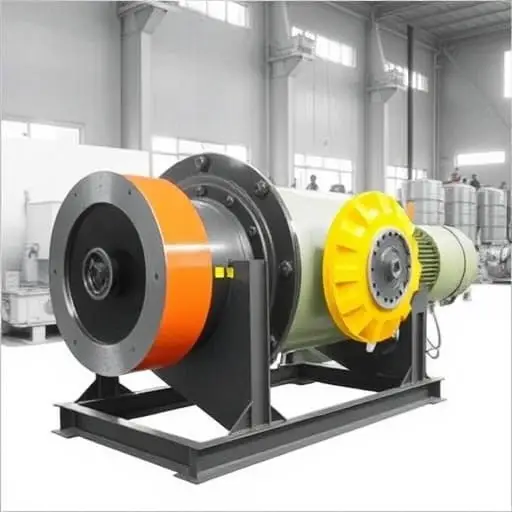
5 Engineering Steps for Optimal Sand Washing Machine Design
In the aggregate and mining industries, the quality of your final product is intrinsically linked to the cleanliness of your sand. Whether you are supplying concrete batching plants, glass manufacturers, or specialized foundries, impurities such as clay, silt, and organic matter must be rigorously removed. This necessitates a profound understanding of sand washing machine design. At ORO Mineral Co., Ltd., a large-scale intelligent mineral processing, screening, and sand washing equipment manufacturer, we integrate R&D, production, and sales to deliver elite machinery. Since 2014, ORO Mineral has made great contributions to every kind of mineral screening, solid waste resource recovery, beneficiation, washing, and separation, accumulating rich experience along the way.
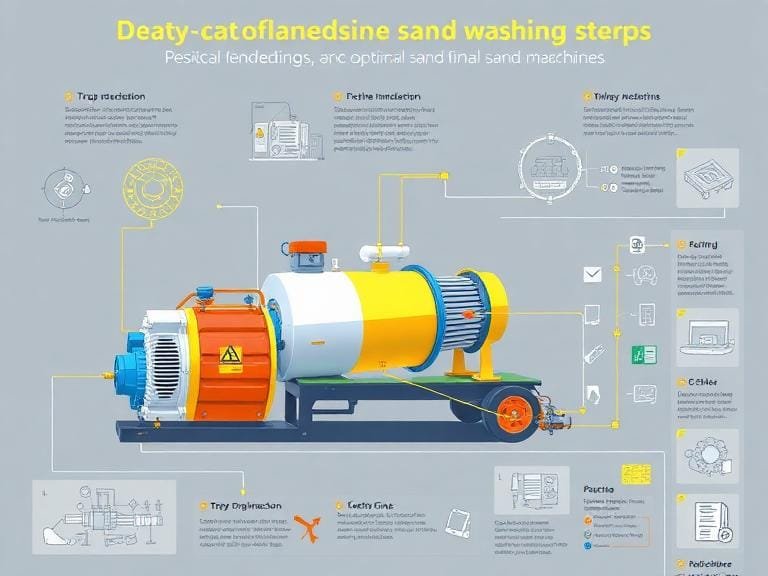
From our experience, many plant operators struggle with high water consumption, excessive fine sand loss, and frequent mechanical failures simply because the initial engineering phases were overlooked. In order to offer you better products and services, we have been sparing no effort to improve technology, develop new equipment, and upgrade services. In this authoritative industry guide, we will outline the critical steps involved in professional sand washing machine design. By understanding these engineering principles, facility managers and procurement directors can make highly informed decisions that maximize classification efficiency and ensure long-term profitability.
Table of Contents
- 1. Step One: Comprehensive Material Analysis
- 2. Step Two: Structural Engineering and Tank Configuration
- 3. Step Three: Designing the Raking and Lifting Mechanisms
- 4. Step Four: Fluid Dynamics and Weir Height Calibration
- 5. Step Five: Optimizing for Low Maintenance and Long Service Life
- 6. The ORO Mineral Solution: Sand Washing Machine 100 TPH Long Life
- 7. Summary Table: Stages of Sand Washing Machine Design
- 8. Frequently Asked Questions (FAQs)
- 9. Industry References
1. Step One: Comprehensive Material Analysis
The very foundation of sand washing machine design begins long before CAD models are drafted; it begins in the geology lab. We recommend starting with a strict analysis of the raw feed material. Not all sand is created equal. The particle size distribution, the specific gravity of the minerals, and the percentage of deleterious materials (like heavy clays or light organics) dictate the fundamental geometry of the washing equipment.
For instance, a feed heavily contaminated with sticky clay requires extreme mechanical agitation to scrub the particles clean, whereas a relatively clean alluvial deposit might only require gentle rinsing. Furthermore, understanding the desired output is critical. Are you aiming for coarse aggregate or ultra-fine foundry sand? When executing sand washing machine design protocols, engineers must calculate the settling velocity of the desired sand particles versus the suspension characteristics of the waste silt. Failing to accurately assess the feed material is the leading cause of inefficient classification and excessive loss of valuable fine sand to the overflow weir.
2. Step Two: Structural Engineering and Tank Configuration
Once the material parameters are established, the next phase in sand washing machine design is fabricating the primary structural components. The washing trough, or tank, is subjected to immense hydrostatic pressure, constant vibration, and severe abrasive wear. Therefore, a rigid tank and durable substructure design are absolute necessities.
From our experience, relying on thin-gauge steel to reduce initial capital expenditure inevitably leads to structural warping and catastrophic failure under maximum load. We strongly recommend utilizing heavy-plate steel reinforced with cross-bracing channels. In modern sand washing machine design, offering customizable tank design options allows the manufacturer to adapt the equipment footprint to existing plant layouts while optimizing the volume of the settling pool. A correctly proportioned tank ensures that the water velocity slows down sufficiently to allow the clean sand to drop out of suspension while keeping the lighter silt moving toward the discharge point.
3. Step Three: Designing the Raking and Lifting Mechanisms
The heart of a spiral-type washer is its internal moving parts. The implementation of a continuous spiral raking system is a critical milestone in effective sand washing machine design. As the heavy sand settles at the bottom of the inclined tank, the rotating spiral screw (or auger) physically drags the material upward, breaking apart agglomerated clay balls and scrubbing the individual grains against one another.
We incorporate a powerful self-contained spiral lifting device in our engineering blueprints. The torque required to move tons of wet, highly abrasive sand up an incline is massive. Therefore, the selection of the gearbox and electric motor must include a high service factor to prevent stalling during surge loads. Additionally, the pitch and diameter of the spiral flights are mathematically derived during the sand washing machine design phase to match the required tonnage per hour (TPH). If the pitch is too steep, the material cascades backward; if it is too shallow, the throughput capacity is severely diminished.
4. Step Four: Fluid Dynamics and Weir Height Calibration
Water management is arguably the most complex variable in sand washing machine design. The introduction of clean wash water and the expulsion of dirty effluent must be precisely controlled to achieve high classification efficiency with low maintenance requirements. This is heavily dependent on the design of the overflow weir.
In a professionally engineered machine, operators are provided with a wide choice of weir height for different applications. By adjusting the weir plates, the operator changes the volume of the settling pool and the velocity of the overflow water. A higher weir creates a deeper, calmer pool, allowing finer sand particles to settle and be recovered by the spiral. A lower weir increases the water velocity, purposely flushing away unwanted fines to meet specific coarseness modules. From our experience, integrating adjustable weir technology into the sand washing machine design is what transforms a basic washer into a precision classification instrument.
5. Step Five: Optimizing for Low Maintenance and Long Service Life
Industrial aggregate processing is a brutal environment. Constant exposure to water, silica, and continuous heavy loads will destroy poorly designed equipment in a matter of months. Therefore, an essential aspect of sand washing machine design is minimizing downtime through strategic material selection and accessible maintenance points.
We recommend outfitting the edges of the spiral flights with replaceable, bolt-on wear shoes cast from high-chrome alloys or heavy-duty polyurethane. Instead of welding new steel flights every season, operators can simply bolt on new protective shoes, drastically reducing maintenance hours. Furthermore, locating the lower bearing assembly outside of the submerged tank, or utilizing highly advanced watertight sealing arrangements, prevents water and grit from destroying the bearings. Ultimately, heavy duty construction with long service life is not just a marketing phrase; it is the direct result of applying rigorous stress analysis during the sand washing machine design process.
6. The ORO Mineral Solution: Sand Washing Machine 100 TPH Long Life
At ORO Mineral, we have synthesized years of field data and engineering innovation into our flagship products. Our Sand Washing Machine 100 TPH Long Life exemplifies the pinnacle of modern sand washing machine design. It is built specifically to address the rigorous demands of continuous aggregate production.
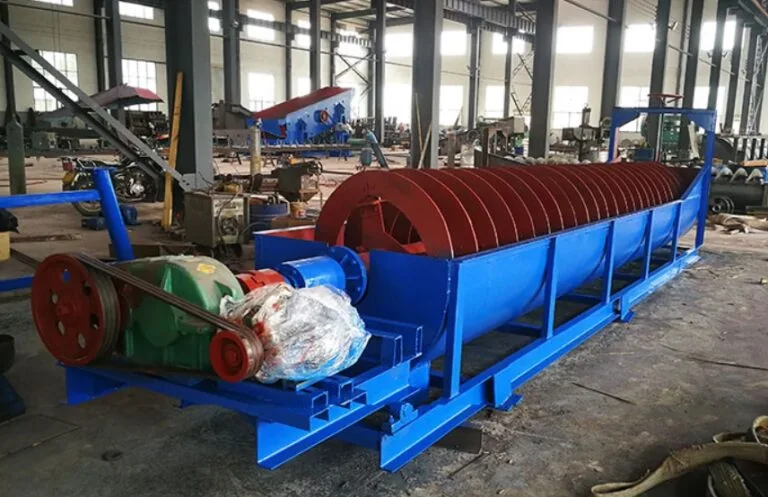
This unit features heavy duty construction with long service life and incorporates a powerful self-contained spiral lifting device that effortlessly manages high-capacity loads. The continuous spiral raking system ensures maximum scrubbing action, breaking down tough clay bonds. Our engineers have focused heavily on achieving high classification efficiency with low maintenance requirements, outfitting the unit with easily replaceable wear parts. Moreover, recognizing that no two quarries are identical, the machine features a wide choice of weir height for different applications, alongside customizable tank design options. Built upon a rigid tank and durable substructure design, this machine is highly applicable across a wide range of industries, from basic construction aggregate to advanced silica processing.
7. Summary Table: Stages of Sand Washing Machine Design
To assist plant engineers and procurement teams in evaluating equipment, we have summarized the critical phases of sand washing machine design below.
| Design Phase | Engineering Objective | ORO Mineral Applied Solution |
|---|---|---|
| Material Analysis | Determine feed size, clay content, and required TPH. | Customized processing parameters for 100 TPH capacity. |
| Tank Configuration | Provide a stable settling pool capable of withstanding hydrostatic pressure. | Rigid tank and durable substructure design with customizable options. |
| Mechanical Raking | Scrub material and transport heavy sand up the incline. | Powerful self-contained spiral lifting device and continuous raking system. |
| Fluid Dynamics | Control water velocity to separate fines from waste silt accurately. | Wide choice of weir height for different high classification applications. |
| Wear Management | Reduce unplanned downtime and extend equipment lifespan. | Heavy duty construction featuring low maintenance requirements. |
8. Frequently Asked Questions (FAQs)
Why is adjustable weir height important in sand washing machine design?
Adjustable weirs allow the operator to control the volume and velocity of the water exiting the tank. By fine-tuning this, you can dictate exactly what size of fine sand is retained by the spiral and what size of silt is flushed away. This flexibility is crucial for meeting strict construction material specifications.
How does a spiral washer differ from a wheel sand washer?
While both serve to clean sand, spiral washers excel in processing materials with heavy clay content because the continuous spiral raking system physically scrubs the material. Wheel washers generally consume less power and water but rely more on simple rinsing rather than aggressive attrition scrubbing.
What causes premature bearing failure in sand washing equipment?
Premature failure is usually the result of poor sand washing machine design regarding the lower bearing assembly. If the submerged bearing lacks adequate watertight sealing, abrasive silica and water will enter the housing, destroying the bearings. ORO Mineral utilizes advanced isolation techniques to prevent this exact issue.
Can ORO Mineral customize a sand washing machine for my specific quarry?
Absolutely. We offer customizable tank design options and drive configurations. Because we integrate R&D, production, and sales, our engineering team can modify the sand washing machine design to seamlessly fit your existing infrastructure and handle your specific mineral composition.
9. Industry References
To further expand your knowledge regarding mineral processing standards and the mechanical engineering principles behind advanced sand washing machine design, we recommend consulting the following authoritative resources: